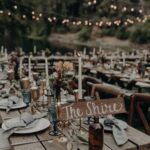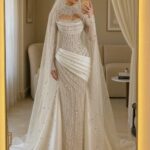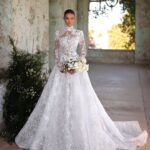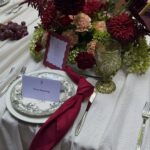
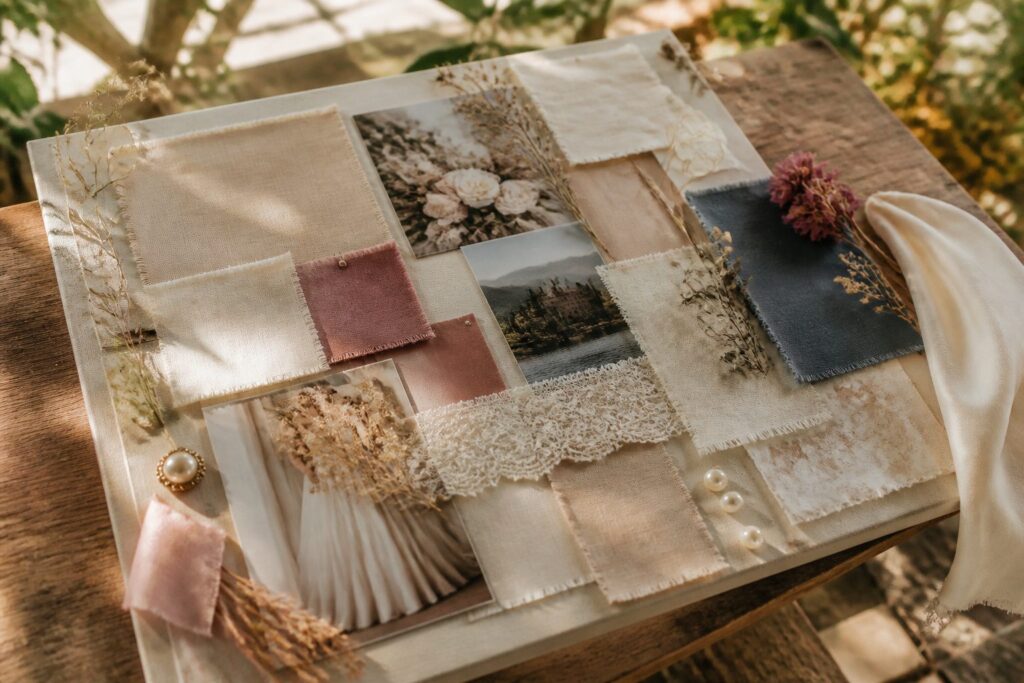
A wedding mood board is a single visual reference that collapses your thousand saved pins into one rectangle you can point at during vendor meetings.
It only works if you force the edit: the bride who brings 200 scattered Pinterest folders gets muddy advice, while the one who narrows to ten to fifteen repeating images walks into a salon with fabric weight and neckline depth already decided.
About 85% of brides used Pinterest for this in 2022, yet the ones who added physical swatches, grandmother’s pearl buttons, or handwritten notes to the board caught clashes a screen never would, like slate blue turning muddy against warm ivory walls.
[link-whisper-related-posts]1. Industrial Chic
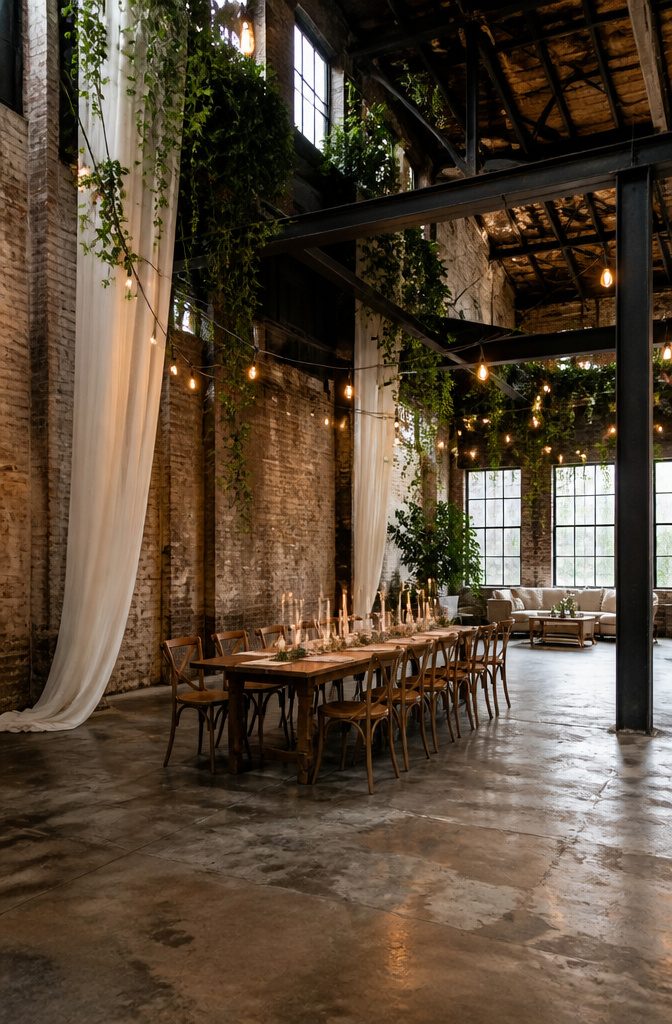
Urban warehouses and former factories carry the kind of history no florist can replicate. Rough brick walls, cast-iron girders, and exposed pipework give these spaces their skeleton; the mood board’s job is deciding what skin to put on it.
Swathes of natural greenery and gauzy white drapes offset the hard surfaces without hiding them.
The contrast works because nothing competes: the brick stays visible, the vines soften what would otherwise read as cold. Wood tones on tables or seating do similar work, bringing warmth that concrete floors alone cannot supply.
Ceiling height is the hidden asset here. In traditional ballrooms, suspended installations fight chandeliers; in industrial venues, the vertical space is yours for garlands, strings of fairy lights, or clusters of vintage-style bulbs.
Candles at table level finish the scale, pulling the eye down so the room does not feel like a warehouse with a party in it.
The mistake is over-decorating.
These venues already have character; the board should track restraint, not accumulation. One friend filled a Bristol space with so much draping the brick disappeared entirely, and guests asked why she had not booked a hotel ballroom instead.
2. Surreal
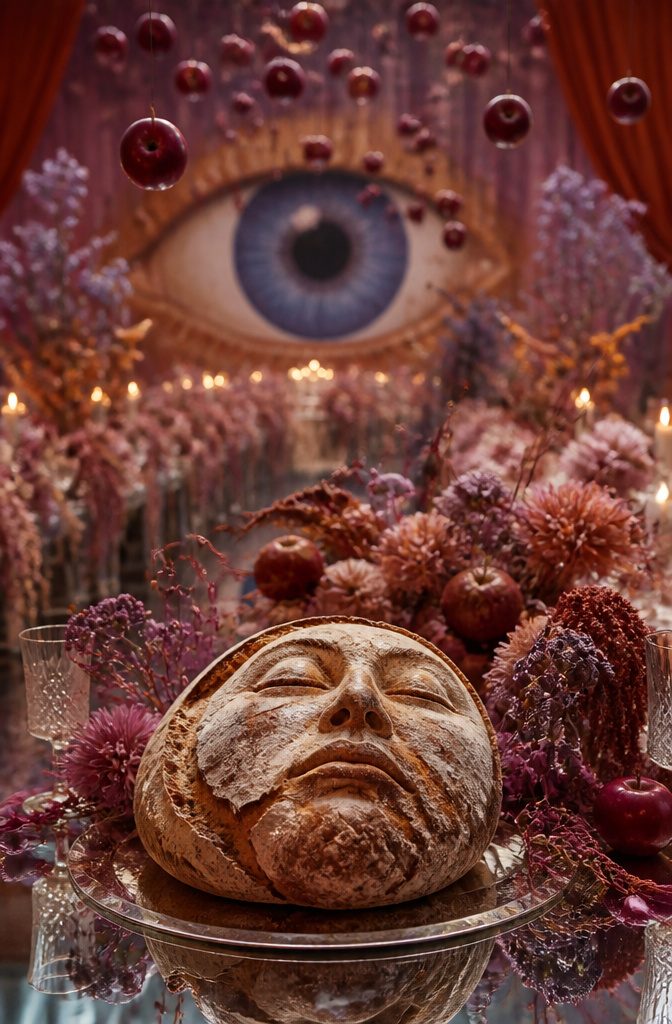
A surreal wedding mood board lives in the space between recognition and confusion.
It borrows from Dalí’s melting clocks and Magritte’s impossible skies, but the goal isn’t to recreate a museum piece. You want guests to feel like they’ve stepped into a dream they can’t quite explain the next morning.
The technique that makes it work is tilting familiar wedding elements slightly off-axis.
A centerpiece becomes a loaf of sourdough carved with a human face. Florals grow in directions they shouldn’t grow, or get replaced entirely by spirals of olive beads.
A single shock of red apples rains from the ceiling while a giant blue eye hovers above a banquet table that stretches into infinity through a field of mirrors.
Color palettes lean into the uncanny: dusty lavender against blood orange, or one jolt of red in an otherwise muted, dreamlike room.
Props get genuinely playful. A pink door set into drapery opens onto nothing.
Tiny glass cloches house a single object that means nothing and everything. Cakes crown themselves with asparagus spears or enoki mushrooms instead of flowers.
The couples drawn to this aesthetic usually want their wedding remembered in fragments and feelings, not as a checklist of details.
It asks more of your florists, set designers, and caterers than a traditional wedding would. The effect is both confusing and mesmerizing, because your brain registers "wedding" and "what is happening here" at the exact same time.
3. Wedding Dress
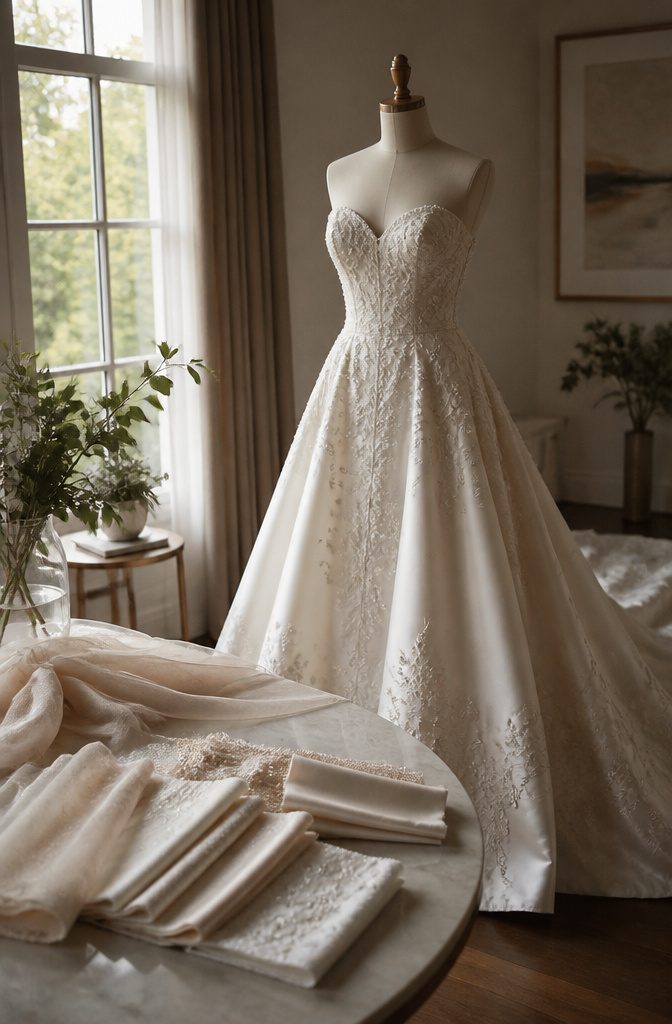
A wedding dress mood board works differently from the overall wedding board because the stakes are higher and the vocabulary is more specific.
Fabrics, silhouettes, necklines, and embellishments each carry their own language, and a bride who walks into a salon with "pretty white dress" as her brief will waste everyone’s time.
The board fixes that by forcing her to collect images where the actual construction matters: the weight of a crepe versus a satin, the difference between a bateau and a sweetheart, whether the beading is dense enough to read in photographs.
The practical value shows up in the first appointment. A designer or consultant can look at ten to fifteen pinned images and spot the thread the bride missed, the thing that made her save each one.
Maybe it is always an open back, or always a certain drape at the hip. The board makes that pattern visible so the search narrows instead of sprawling.
Pinterest dominates here for a reason: the visual search lets a bride move from one gown she likes to twenty similar ones without knowing the terminology.
Canva and Adobe Express work for brides who want to arrange their own layout, but the collection phase matters more than the presentation.
The board is not a collage for Instagram; it is a working document. The bride who brings it on her phone and points to specific details, fabric close-ups especially, gets better results than the one who describes a feeling.
The real test is whether the board still looks coherent when stripped to three to five colors and repeated shapes. If it does, the vision is focused enough to survive the pressure of a purchase deadline and a budget.
4. Building Your Dress Board Step by Step
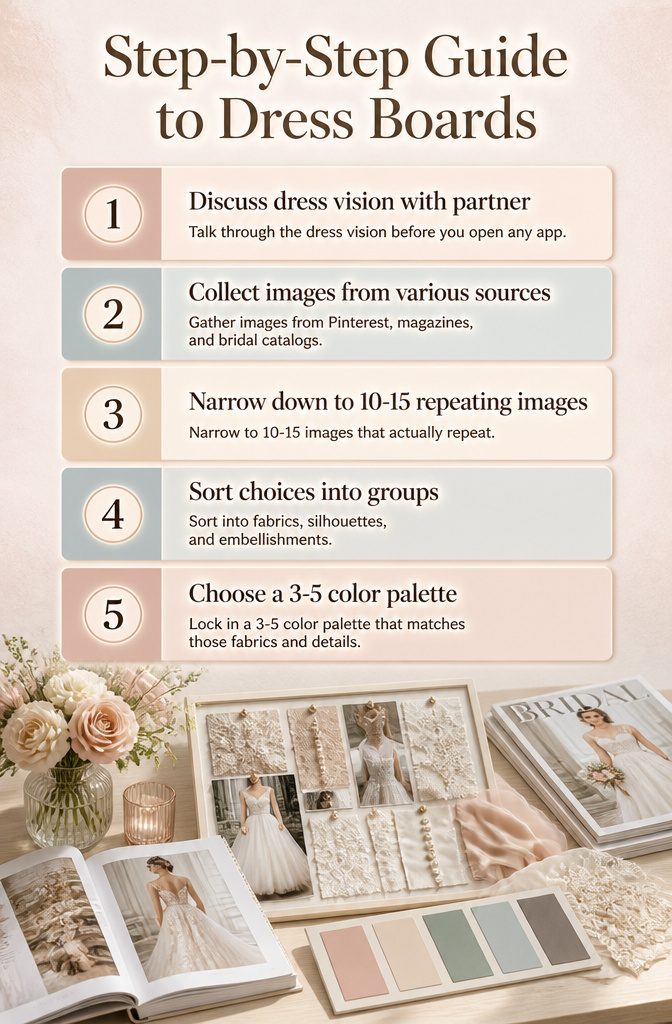
- Talk through the dress vision with your partner before you open any app. I skipped this once and spent an evening pinning ball gowns while my fiancé pictured a courthouse suit; the mismatch cost us a week.
- Gather images from Pinterest, magazines, and bridal catalogs. Pinterest alone drew 85% of brides in 2022, but the glossy pages still catch details a scroll misses. Pull more than you need.
- Narrow to 10-15 images that actually repeat. Quantity feels productive; a tight set forces you to see what you keep choosing.
- Sort those choices into three groups: fabrics (silk, tulle, satin), silhouettes (ball gown, sheath, trumpet), and embellishments (beading, appliqués, buttons). Patterns you did not notice emerge fast. Brides who found clear themes this way reported 72% more confidence at dress appointments.
- Lock in a 3-5 color palette that matches those fabrics and details. A lace-heavy, A-line mood wants softer tones than structured satin does.
Pinterest and the Tools That Build It
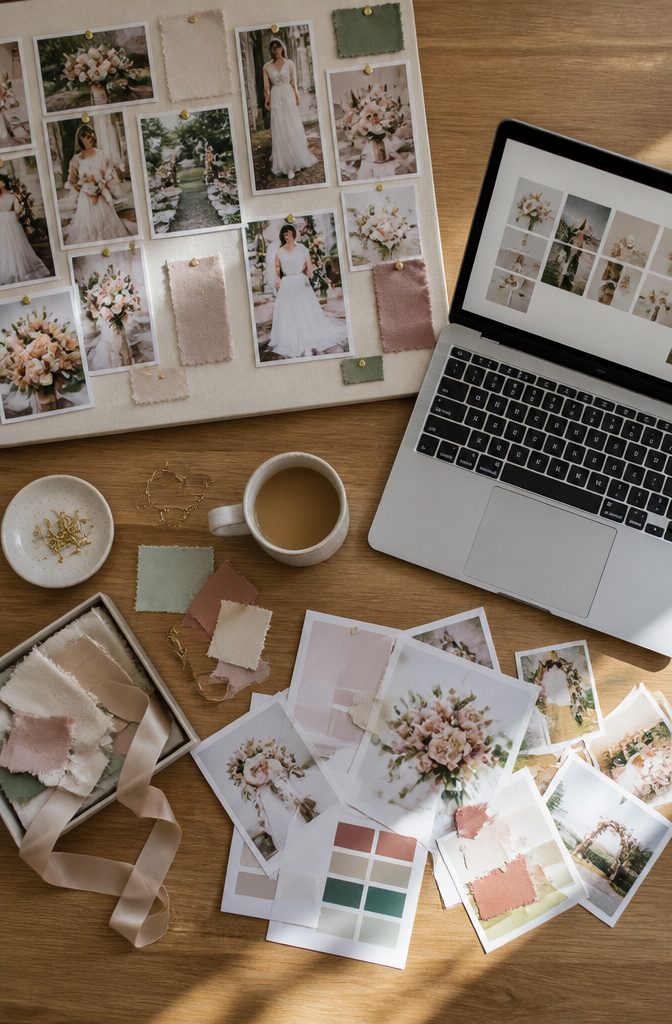
Pinterest sits at the center of most wedding mood boards for a reason. About 85% of brides used the platform in 2022, and the visual format makes it natural to collect dresses, table settings, and color palettes in one scrollable space.
That same year, searches for "bohemian wedding dresses" jumped 45%, which shows how quickly platform trends can reshape what ends up on a bride’s board.
A search one month might surface sleek minimalism; the next, it is all lace and wildflower crowns.
For actually arranging the images into something presentable, Canva and Adobe Express offer templates that keep the layout from looking like a chaotic scrapbook.
Both let you drop in photos, adjust spacing, and export a clean file to share with vendors or your wedding party.
The free tiers handle most of what a mood board needs; paid features are only worth it if you are already using them for invitations or signage.
The real choice is whether to keep the board private on Pinterest or build it in a design tool where you control the final look.
Pinterest wins for speed and discovery. Canva or Adobe Express win when you need to hand something polished to a florist who does not want to scroll through 200 pins.
Why a Board Beats Bookmarking
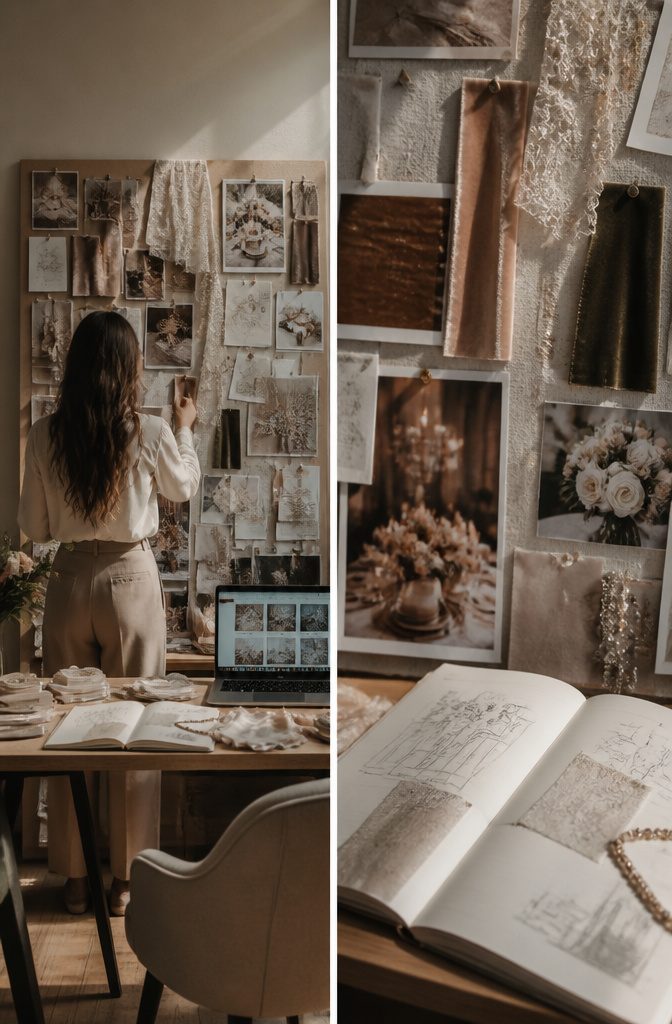
Pinterest folders full of cathedral veils and vintage brass candlesticks look organized until you sit down with a florist who needs an answer by Thursday.
A wedding mood board forces the thousand saved pins into one rectangle you can point at, and that pointing matters more than most couples expect.
When I built mine, the act of laying textures side by side showed me that the slate blue I loved turned muddy against the warm ivory of our venue walls. A folder never would have caught that.
The board also becomes the contract your memory cannot keep. Most brides look at over 100 dress styles before choosing, and each new tab erodes the last.
The physical or pinned board stays where you left it, so when a vendor pitches something off-script, you have a reference that does not depend on whether you slept four hours or eight.
Some brides find their final dress matches the board by 75% or more, not because the board was prophetic, but because it stopped the drift that starts with "what if we just looked at one more."
Designers prefer this too.
An image carries fabric weight, neckline depth, and lace density in a way adjectives cannot. Bring the board to every meeting, and the conversation moves from "romantic but not too romantic" to specific decisions about sleeve length and train weight.
The 85% of brides who now use Pinterest to share ideas with vendors are onto something practical: a screen or printed board removes the ambiguity that wastes deposits and revision rounds.
What Belongs Besides Photographs
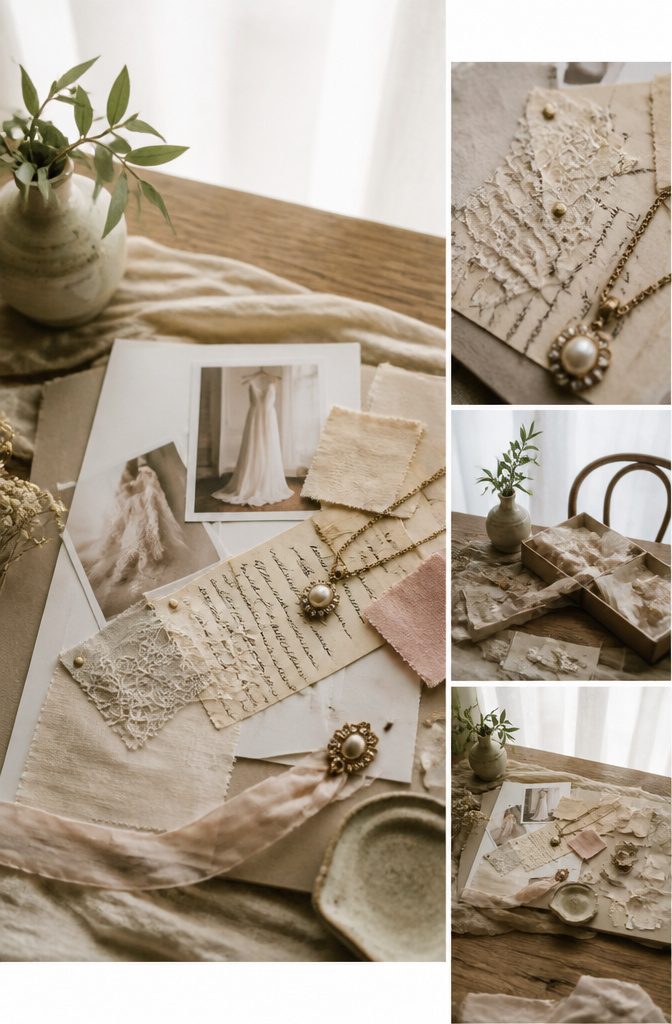
A wedding mood board lives or dies on the objects you can touch, not just the images you can pin.
Fabric swatches matter most: that linen you loved online turns stiff and clinical under daylight, while a silk sample you carried for a week softens into something you actually want near your skin.
The board gives you a place to pin that truth before you order eight yards of a mistake.
Jewelry and handwritten notes do the heavy lifting of memory.
A photo of your grandmother’s pearl buttons or your mother’s veil keeps the heirloom visible through months of planning, and the physical brooch or beaded trim itself, taped beside the photo, lets you test whether the old piece speaks to the new dress or fights it.
One bride I read about added her great-grandmother’s beaded trim to a modern gown; the board was where she first laid them together to see if the mix worked.
Lace from an older dress, a vintage note in familiar handwriting, even the spare thread from a family sewing kit: these items start conversations with your designer that photographs alone cannot.
The board becomes a working space rather than a wish list, and the wedding stops being a style you saw and starts becoming a story that was already yours.
Frequently Asked Questions
What is a wedding mood board?
A wedding mood board is a visual tool that collects images, textures, colors, and objects into one focused reference you can point to when talking with florists, designers, and vendors.
It forces your scattered inspiration into a single rectangle so you can spot clashes, like a slate blue that turns muddy against your venue walls, before you commit.
The board also becomes a fixed contract your memory cannot keep, since most brides look at over 100 dress styles and each new tab erodes the last.
Why is creating a mood board beneficial?
A mood board helps you visualize your wedding style and communicate effectively with designers, moving conversations from vague adjectives like "romantic but not too romantic" to specific decisions about sleeve length and train weight.
It stops the drift that starts with "what if we just looked at one more" option, and some brides find their final dress matches the board by 75% or more.
Vendors prefer it too, because an image carries fabric weight and lace density in a way words cannot.
Can ChatGPT make mood boards?
ChatGPT cannot generate visual mood boards itself, since it works in text, but it can guide you through the steps of building one and help you articulate the patterns you spot in your collected images.
For the actual visual work, Pinterest wins for speed and discovery, while Canva and Adobe Express let you arrange images into a polished layout to hand to vendors.
What are the top 10 wedding themes?
These four are treated as distinct aesthetic directions rather than a ranked list.