Church wedding decor runs from a simple white aisle runner to a full floral arch at the altar, and the right choice depends on what your church actually allows, not just what you picture.
Open flames, adhesives, and pew clips are governed by written rules that vary by building, and the damage deposit makes those rules worth checking before any purchase.
I hold the church’s policy list before buying a single taper candle or yard of tulle, because that list decides which of these ideas I can even use.
[link-whisper-related-posts]1. Floral Arrangements
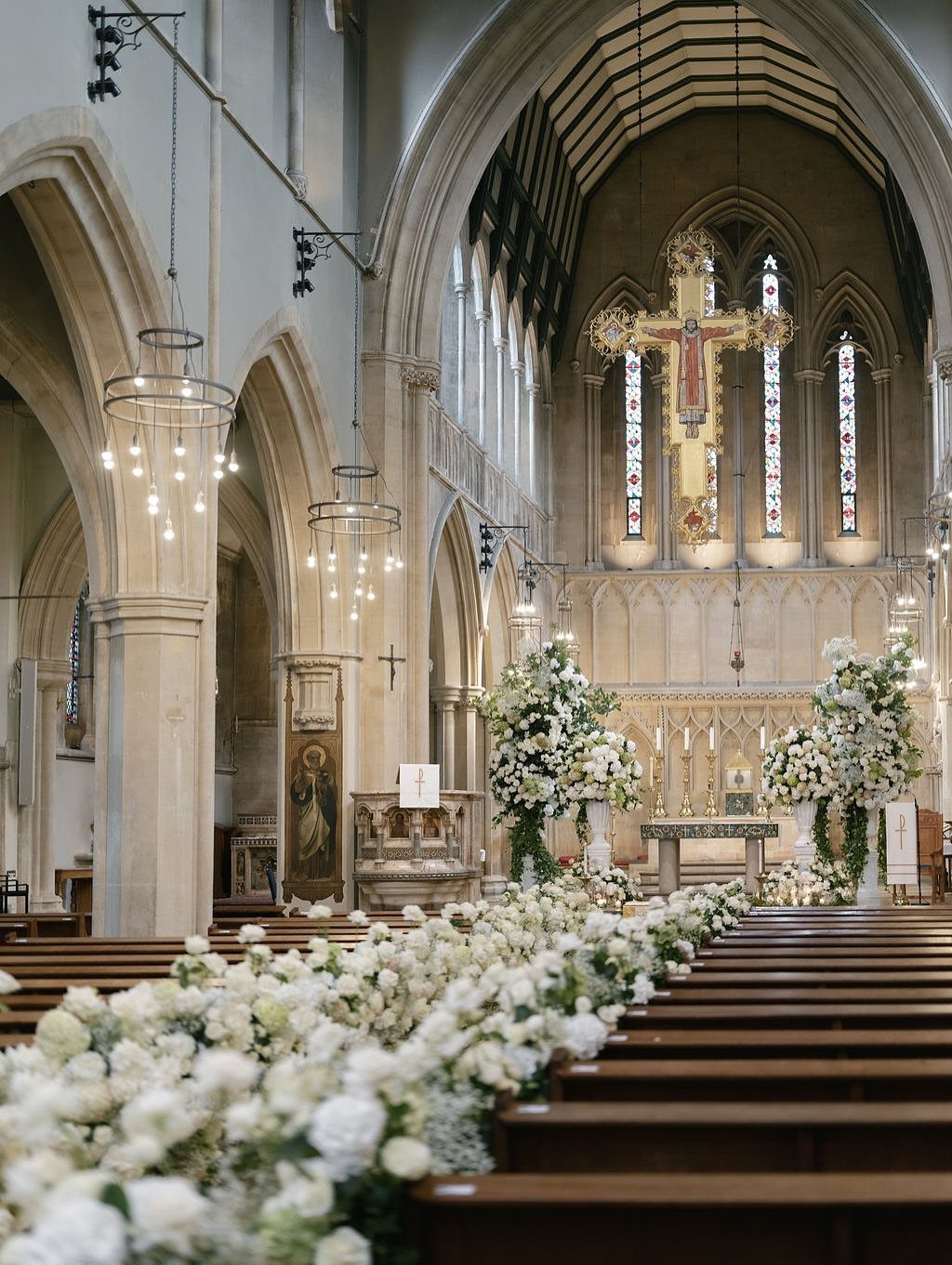
Fresh flowers turn a church interior into something intentional rather than borrowed. I like placing pedestal arrangements at the altar and smaller pieces along the aisle where guests will actually pass them.
Seasonal blooms keep costs reasonable and guarantee the stems hold up through the ceremony without wilting in church heating or cooling.
Paper flowers are worth considering if anyone in the wedding party has pollen allergies, or if you want the arrangements to last as keepsakes. Start early, though; hand-rolling dozens of petals takes longer than ordering from a florist.
Match your bridal party bouquets to the same palette so the whole aisle reads as one design, not two competing ideas.
2. Pew Bows
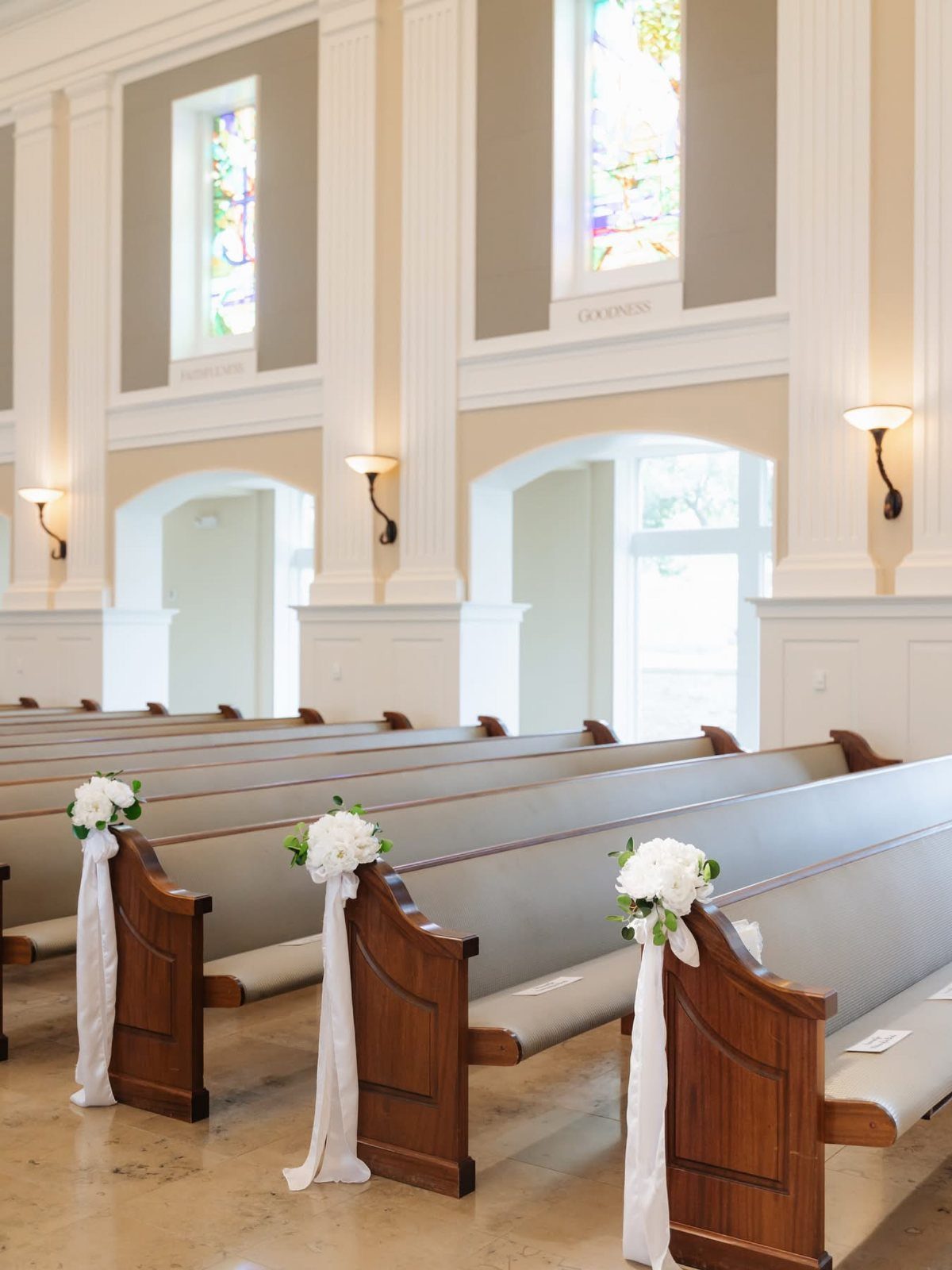
Pew decorations mark where the ceremony actually happens for guests, not just the couple at the front. Tulle works well because it ties into bows, wraps into sashes, or pairs with small floral accents without requiring much material per pew.
Pew clips hang it cleanly; if your church prohibits those, table skirt clips often grip the same edge.
I would skip adhesives entirely. Most churches ban glue, tape, and staples on their wood, and the damage deposit is not worth testing the rule.
Every third pew is enough; the eye fills in the rest and the budget stays intact. The eye fills in the pattern, and the budget stretches further.
3. Candle Arrangements
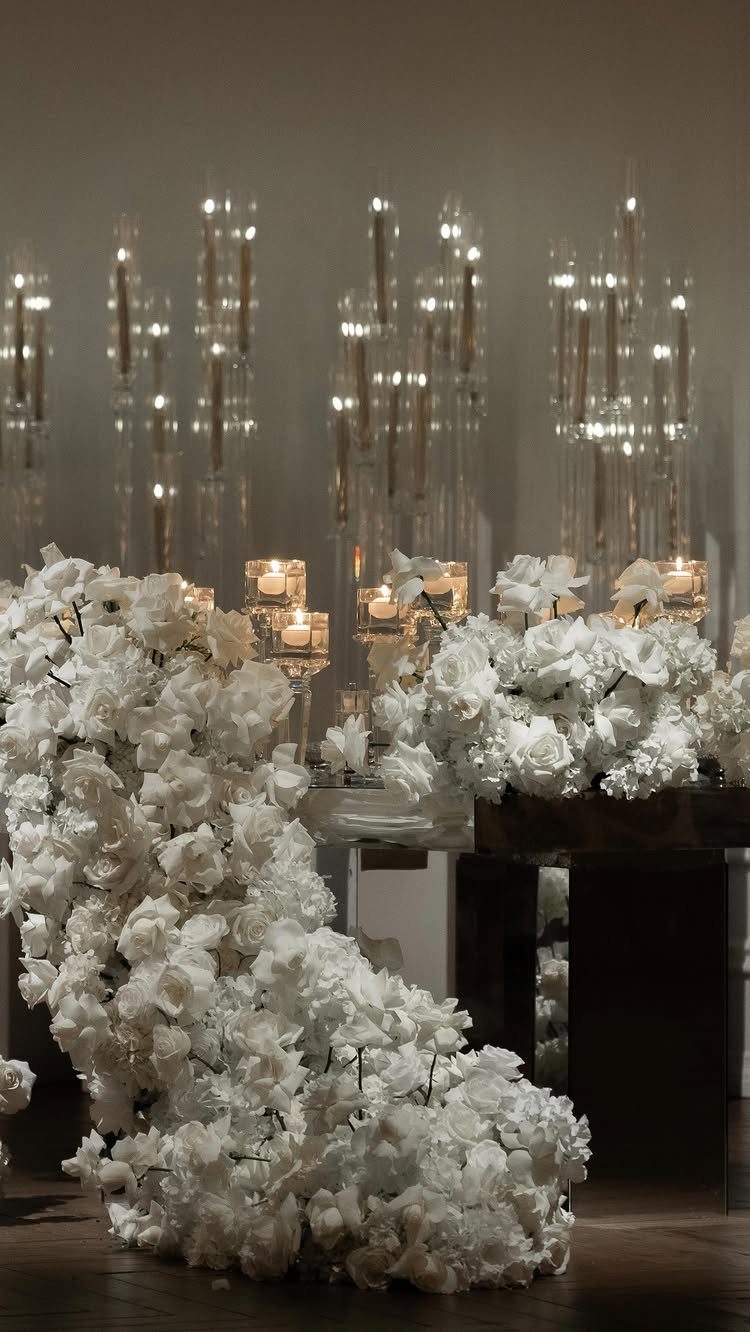
Candles warm up stone and wood interiors that can feel cavernous under overhead lighting.
Taper candles set inside tall hurricane cylinders paired with floating tea lights give you 2 heights of flame, and the glass keeps the open wicks away from where a guest might brush against them.
Check with your church before buying anything.
Some require enclosed flames only; others ban real candles entirely and will steer you toward LED versions that flicker convincingly now. Lanterns work as a backup plan, and they read as intentional rather than second choice.
Place them on side tables or window ledges where they will not block sightlines to the altar. The glow matters more than the candle itself being visible.
4. Tulle Draping
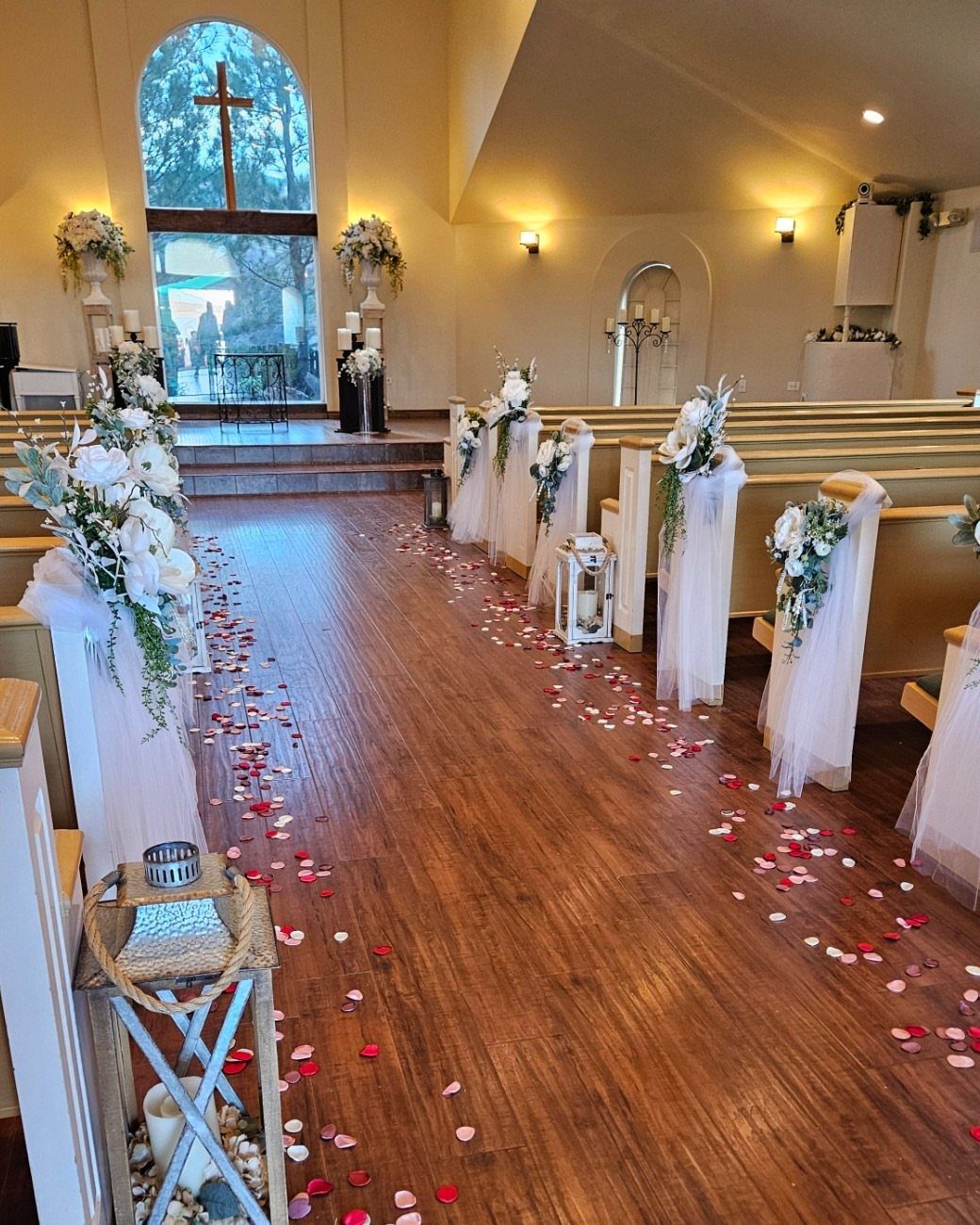
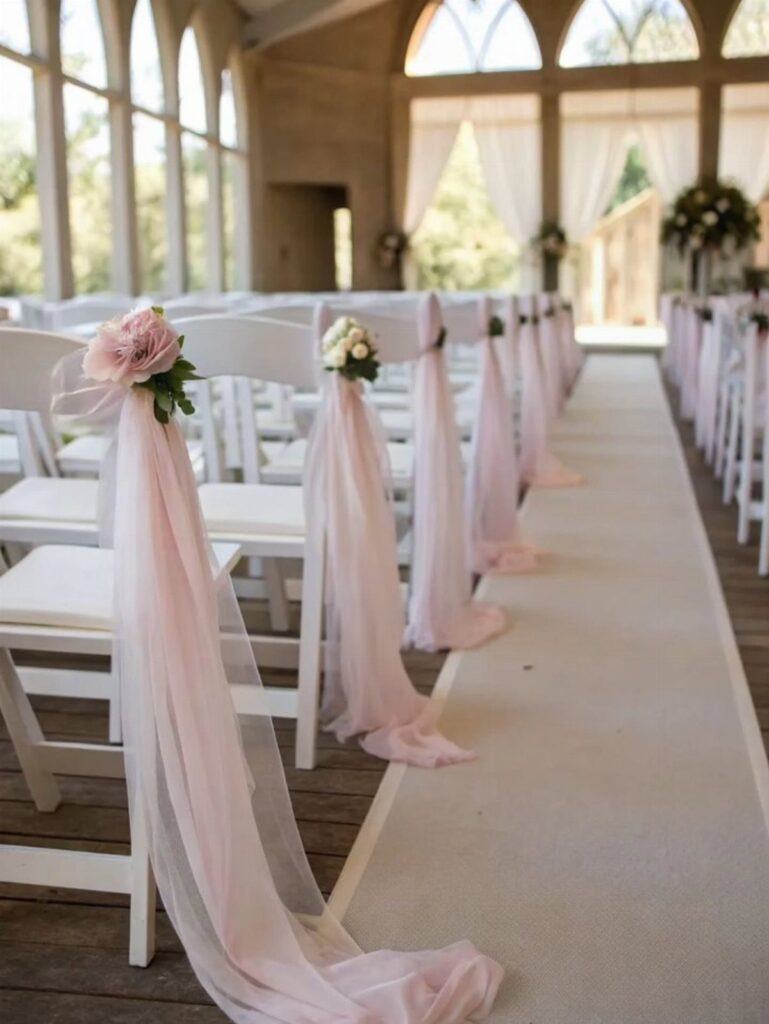
Tulle softens hard edges in churches with exposed beams, plain columns, or minimal architectural detail.
Drape it around pews, loop it from column to column, or gather it at doorways where guests enter; the fabric catches light and adds movement without demanding attention.
The color matters more than you might think.
Ivory reads as traditional and church-appropriate, while blush or sage can look muddy against stained glass or dark wood. Hold a fabric swatch against the actual interior before committing.
Silk works as an alternative if you want more weight and less static cling. Either way, buy extra length; draping always consumes more yardage than measuring suggests.
5. Balloon Arrangements
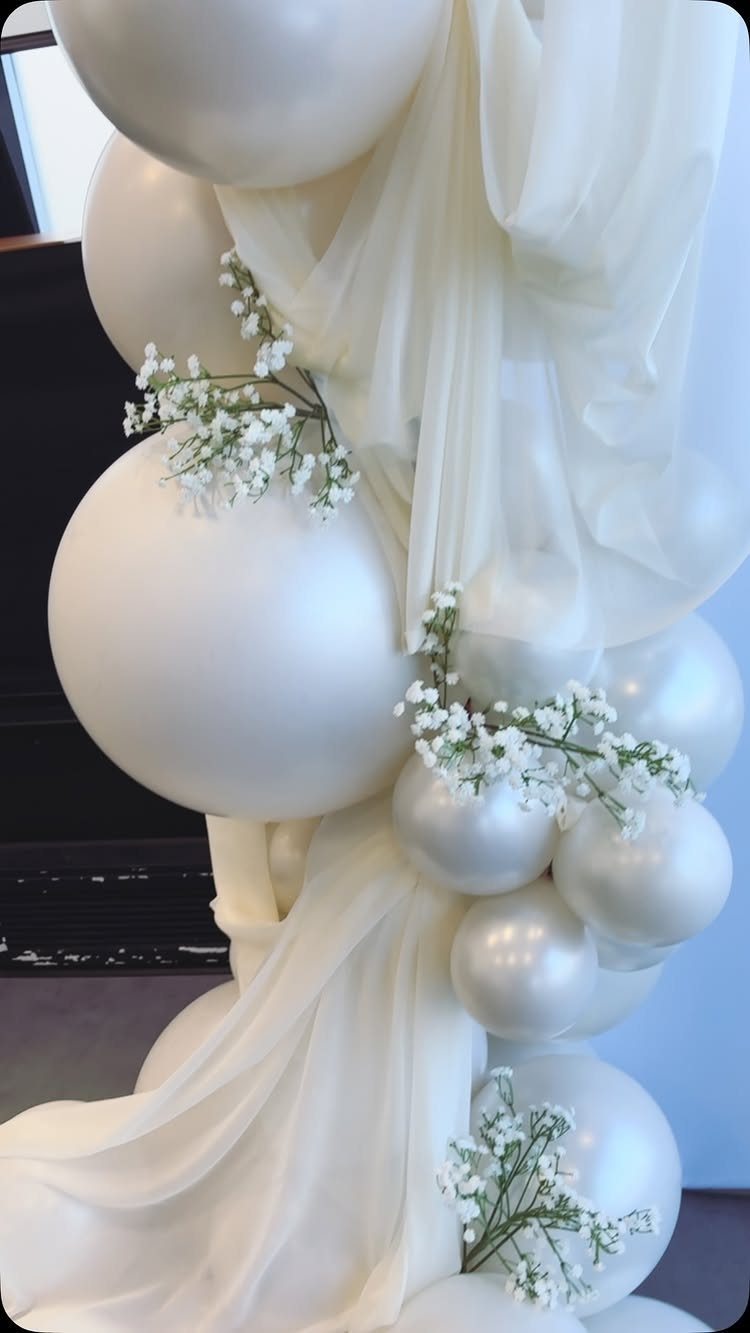
Balloons in a church need a light hand, but used sparingly they can give a celebration tone that flowers alone rarely manage. A garland at the entrance or clustered beside the altar sets the mood without crowding the sacred space.
Stick to a tight palette: cream, white, and one metallic at most.
Silver reads as modern without feeling like a birthday party. Baby’s breath and tulle woven through the garland keep it feeling grounded rather than apt to float away.
I would avoid helium arrangements that drift upward; they draw the eye away from the ceremony and can interfere with lighting rigs or ceiling fixtures.
6. Decorative Columns
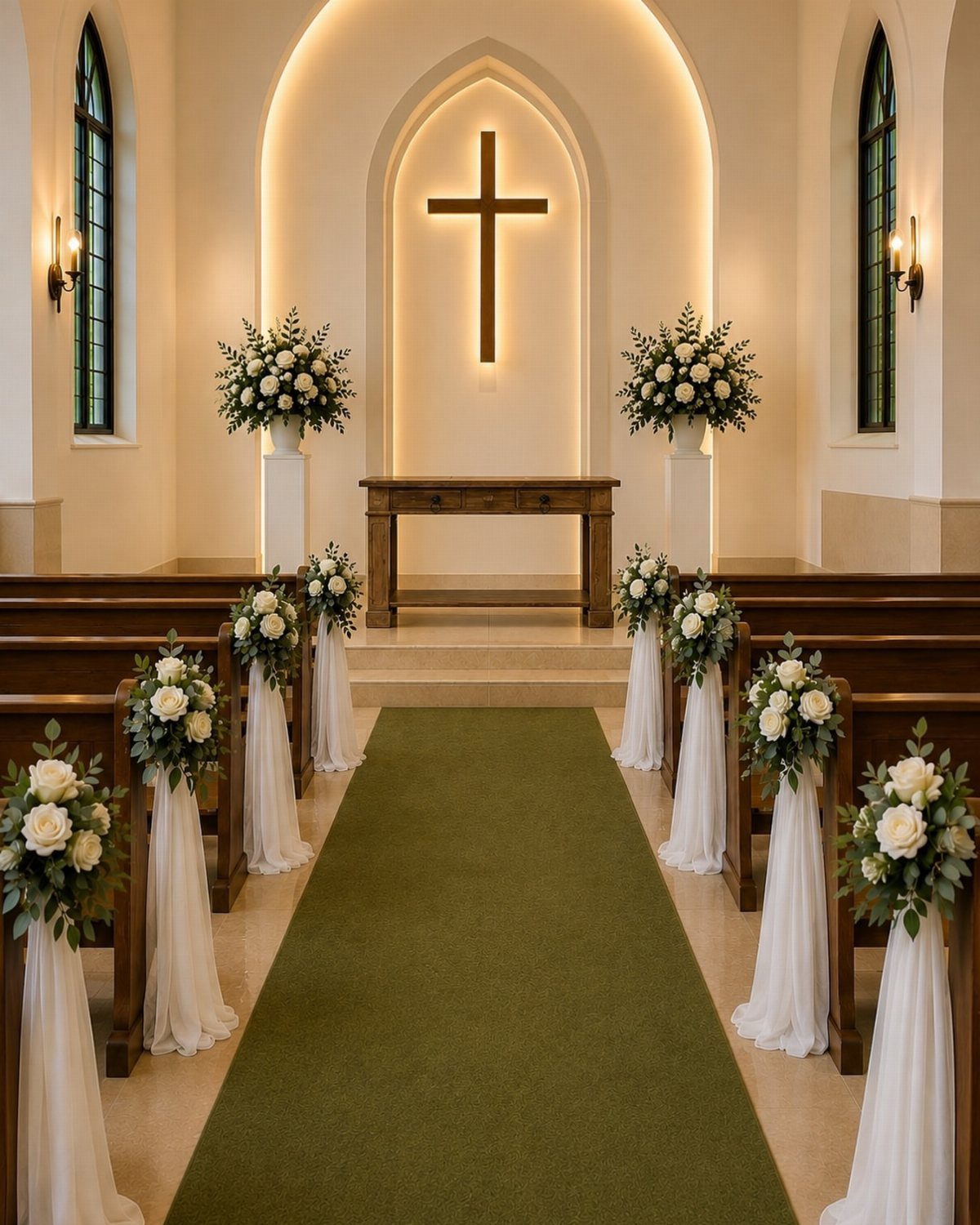
Columns frame the altar the way bookends frame a shelf, giving height and weight to a space that can feel flat against a distant wall.
White pedestals topped with floral arrangements beneath a cross draw the eye upward and center the ceremony.
You can rent these rather than buy, and the same columns move to the reception if the logistics work.
Fill them with flowers, candles, or both; LED candles inside acrylic columns with water create a completely different evening effect if your church allows the setup.
Check the base width against your aisle. Too wide and they become obstacles for processional traffic.
7. White Aisle Runner
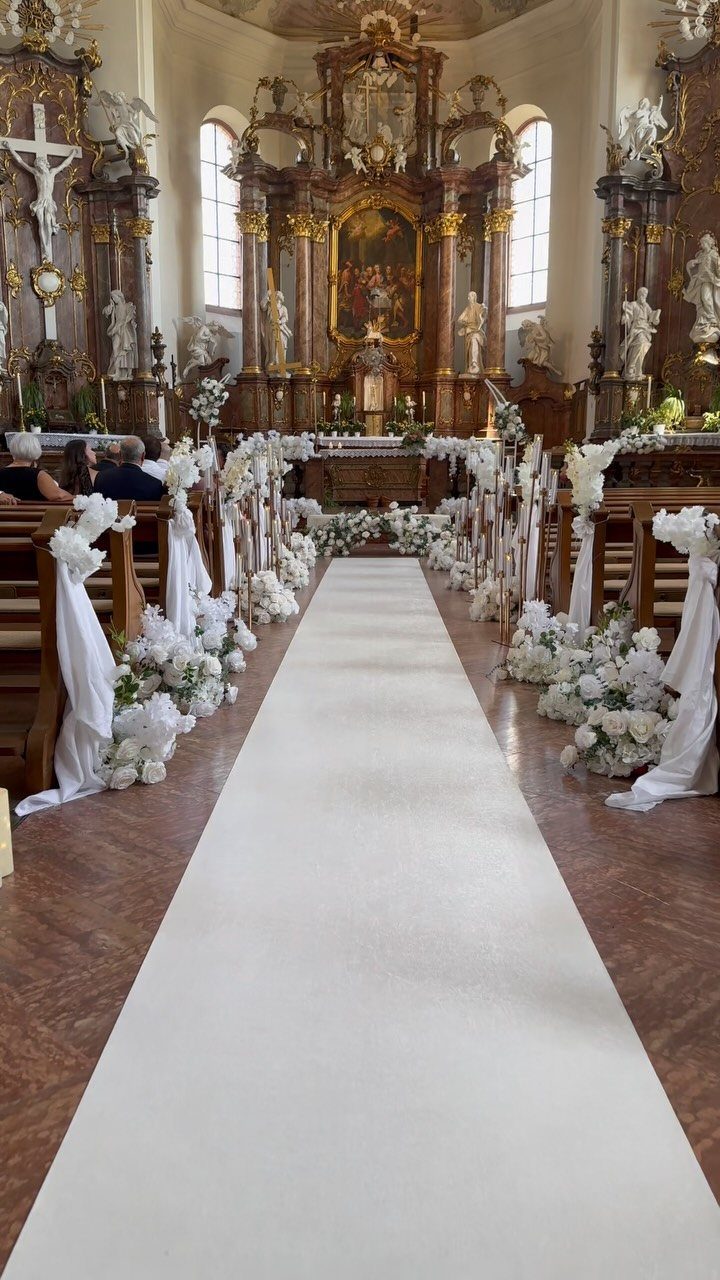
A white aisle runner gives the bridal party a clean path and protects the church carpet from whatever comes before or after.
Many churches keep one on hand; ask before buying. If you supply your own, have the ushers roll it out moments before the procession starts so it stays uncreased and guests do not walk over it early.
Some churches require a runner specifically to catch flower petals, since real petals can stain. A white aisle runner works best in churches that already keep their floors uncovered for ceremonies, which is more common than you might expect.
8. Church Aisle Floral Arch
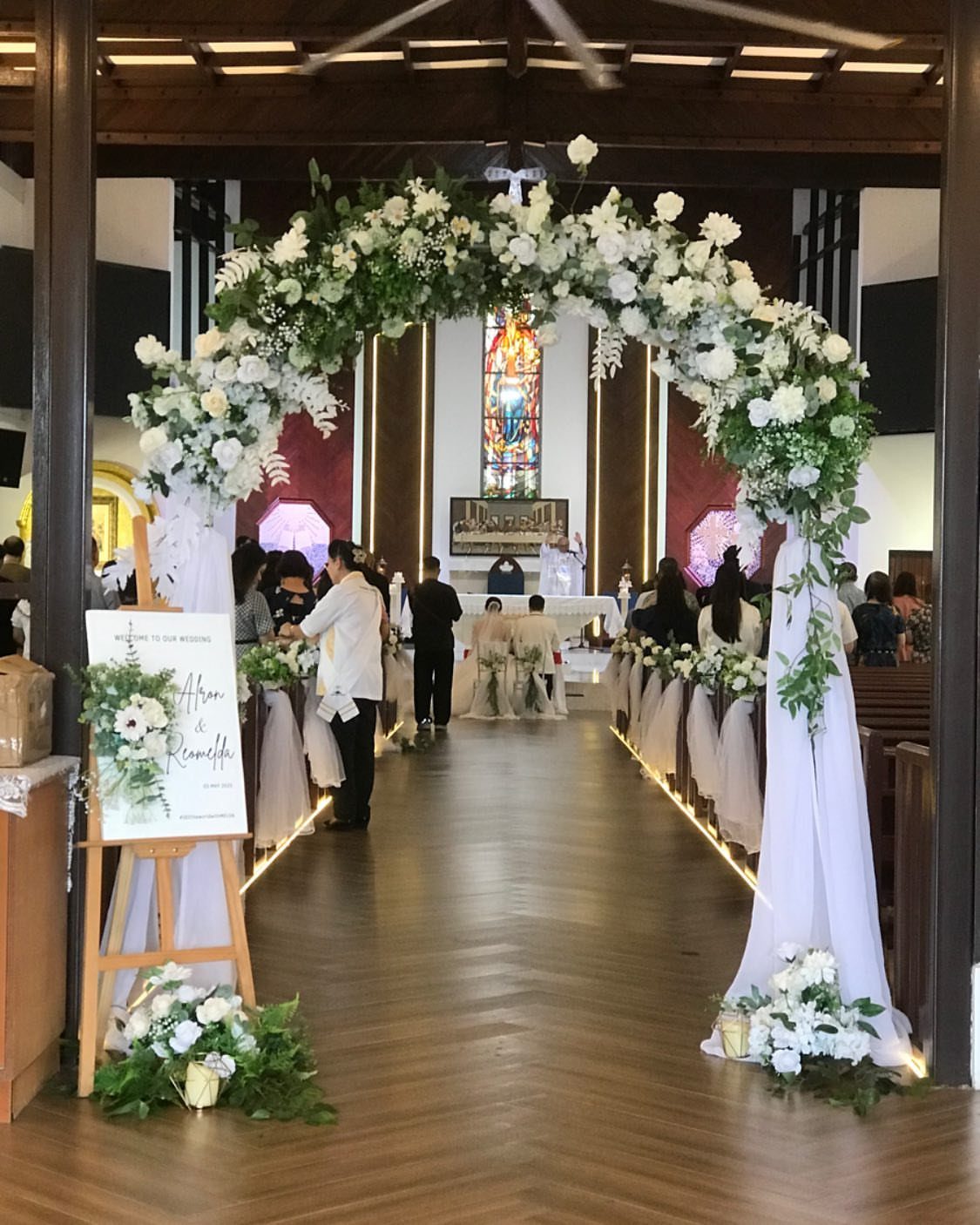
A floral arch at the church entrance turns the threshold into a deliberate moment. Guests pass through it on their way in, and it photographs as a backdrop for greetings without pulling focus from the altar ceremony.
Work with your florist to size the structure to the doorway; too wide and it blocks traffic, too tall and it competes with existing architecture.
Greenery carries more of the design than blooms here, which keeps costs lower and the look softer against stone or brick. The arch can echo your palette through flower choice without demanding attention the way altar flowers do.
9. Petal-Strewn Church Aisle
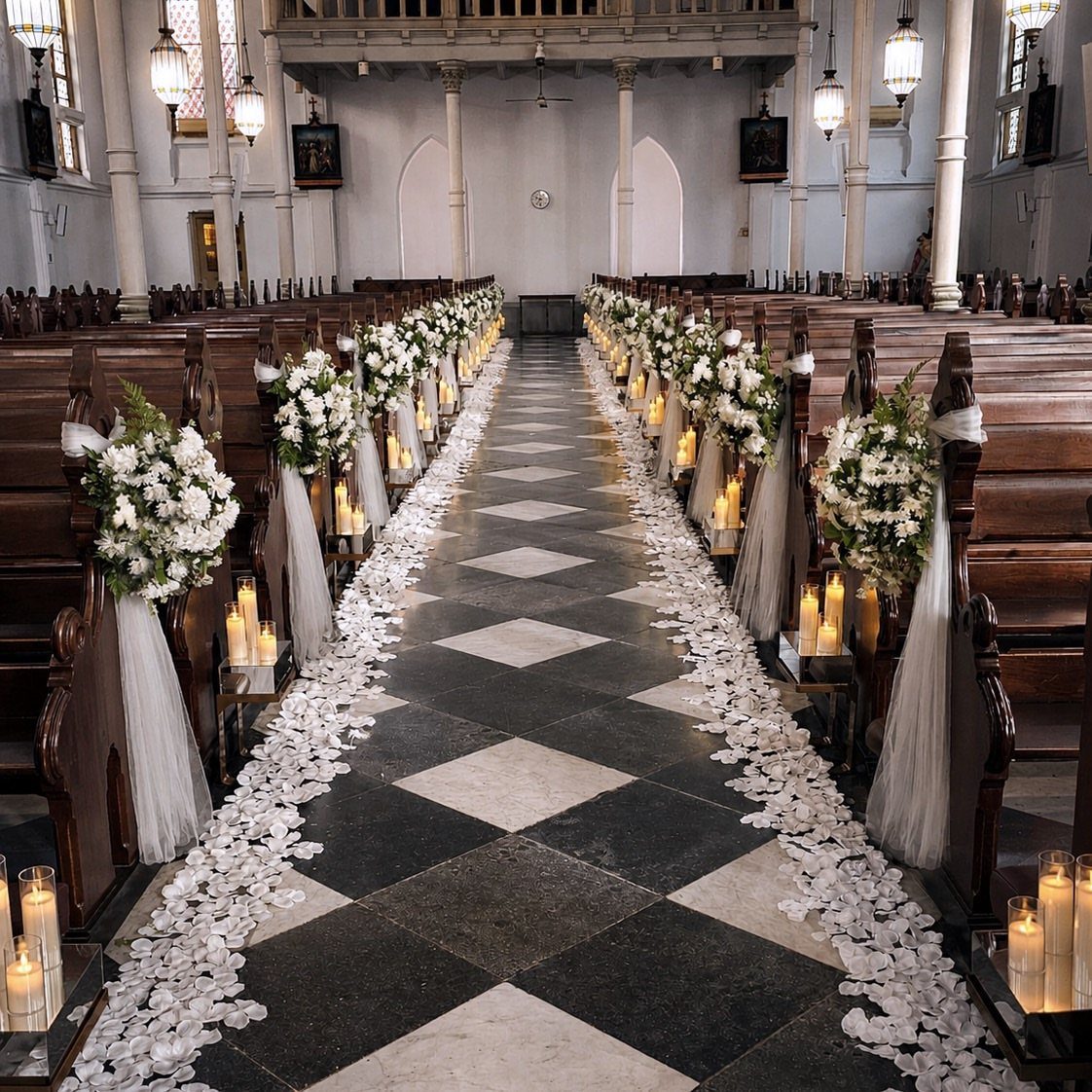
Scattered petals read as effortless, but someone has to scatter them and the church may have rules about who and when.
Real petals stain carpet, which is why some churches require a runner underneath; faux petals skip that problem entirely and vacuum up afterward.
Scatter them along the aisle edges rather than the center, where the bridal party will actually walk.
The effect holds from guest sightlines and avoids the crushed, slippery patch that forms underfoot. One bag of petals covers more ground than you would guess; buy less than you think and test the spread the night before.
Confirm Church Policies
Ask specifically about open flames, tape or adhesives, and pew clip styles.
Find out how early you can access the space for setup. Most churches have written rules about candles, real and faux flowers, and how decor attaches to pews, altars, or balconies.
Some ban outdoor items like birdseed and have specific clean-up instructions. I keep a short note of the rules in my wallet so I check before any purchase.
Breaking them costs more than embarrassment; damage deposits and fines are real. A few minutes of conversation up front prevents last-minute changes that throw off your whole timeline.
Consider Existing Features
Start with what the church already gives you.
An ornate altar needs only small supporting accents, while simple pews can carry more interesting arrangements without competing. The building’s own architecture, stained glass, and woodwork are doing half your decorative work already.
Church staff know how your ideas will sit in the space, so run your plans past them. Your culture, identity, and heritage matter here, but they need to fit inside what the building actually is.
Budgeting for Decor
Focus your spending where guests and cameras actually point: the altar and the aisle.
Balconies and windowsills can stay bare; no one looks up or sideways during the ceremony. Reusable materials stretch furthest.
Fabric rolls and silk florals move from altar to aisle to pews, then on to the reception if logistics allow. Renting decorative columns for both spaces costs less than buying for one.
The same tulle drapes at the church doorway can reappear at the reception entrance. Four focal points cover what matters; decorating every corner drains money no one will notice.
Personal Touches
Small personal details carry more weight in a church than in a rented hall because the building already has character.
Your heritage, culture, and identity come through in what you choose, not how much. A single meaningful object placed where the ceremony centers reads louder than scattered generic accents.
Church staff can tell you whether your idea fits the space before you invest the hours. I would rather see one handmade piece that matters to the couple than a dozen store-bought items that do not.
Keep the approach simple; the church architecture is already speaking. Your job is to add your voice, not drown it out.