Groomsmen outfits in this list run from a single burgundy tie on a borrowed grey suit to a full tan linen set with cowboy hat and boots, and the deciding factor is how formally your own venue reads, not how much you want to spend.
[link-whisper-related-posts]1. White Shirts
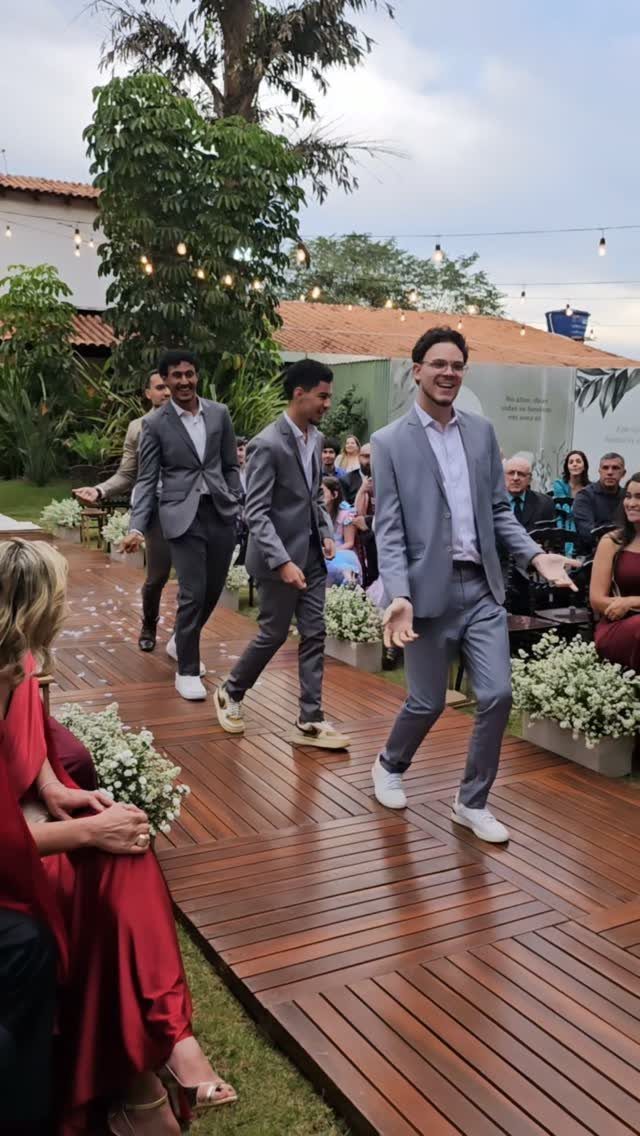
A white shirt is the one piece that lets groomsmen match without looking uniform.
Grey suits or vests over white long-sleeves read polished but not corporate, and the same shirt works with denim and a tan cowboy hat if the groom wants a western thread running through the party.
I would check the collar height against the vest neckline before buying; a gap or overlap shows in photos. Light green ties or brown leather belts from the western setups both pick up color without competing.
2. Cowboy Hats
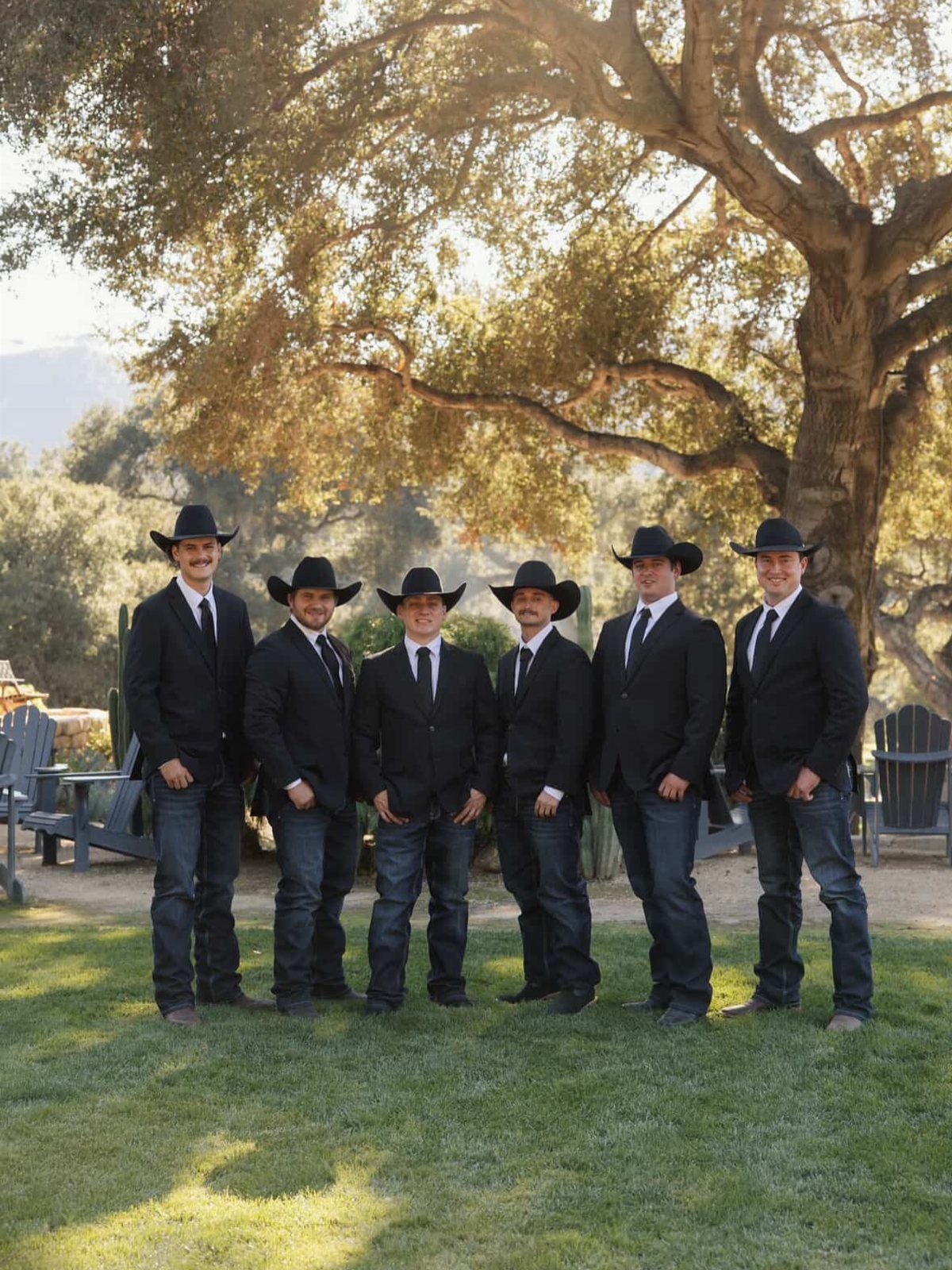
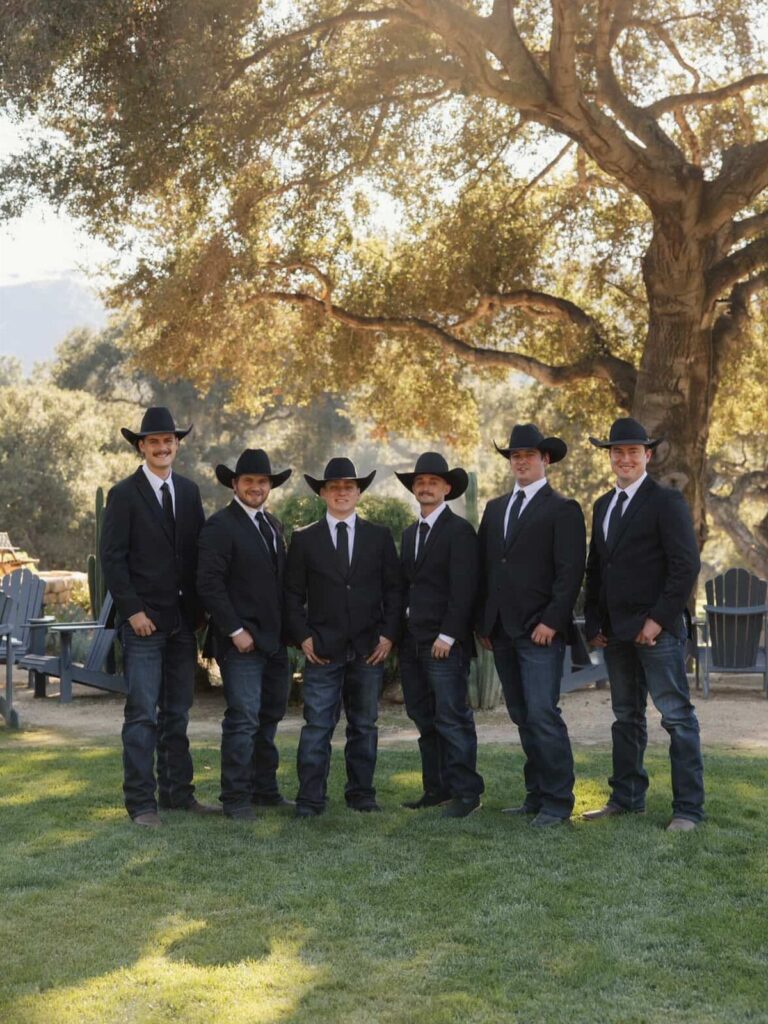
Black cowboy hats against black blazers and jeans give a wedding party immediate cohesion without identical suits. The hat does the grouping; the jeans keep it from reading costume.
Tan hats soften the look for afternoon light, which matters if your ceremony runs earlier in the day.
I would confirm the brim width with your photographer, since a wide brim shadows faces in group shots. The groom can distinguish himself with a lighter hat or none at all.
3. Floral Boutonnieres
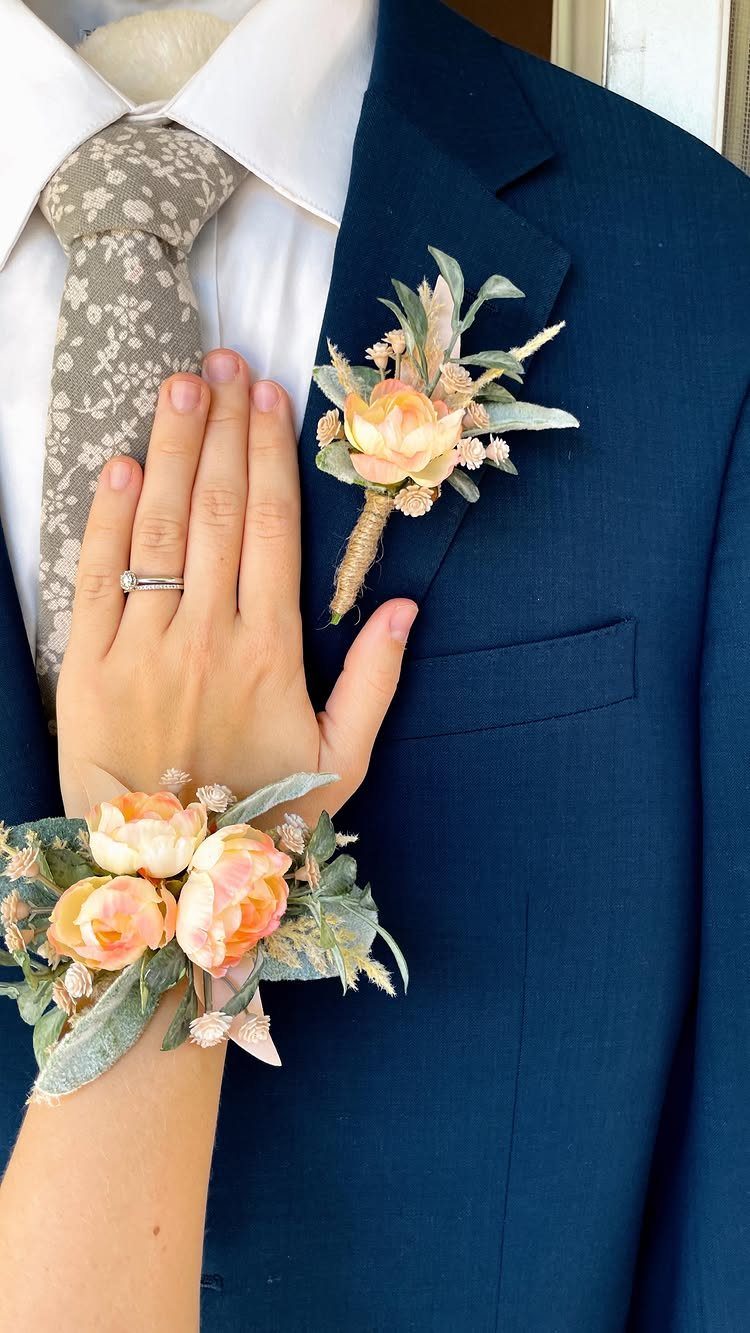
A small peach or white boutonniere on navy or tan lapels adds color precisely where the eye already goes. I like that the scale stays small; oversized flowers tilt toward prom.
Wire the stems thin so they sit flat without bowing the lapel.
White blazers with denim and tan hats take the same boutonniere to a western register, so the flower type can bridge themes if your wedding mixes them. Match the groom’s boutonniere to the bridal bouquet, not the groomsmen’s.
4. Tan Suits
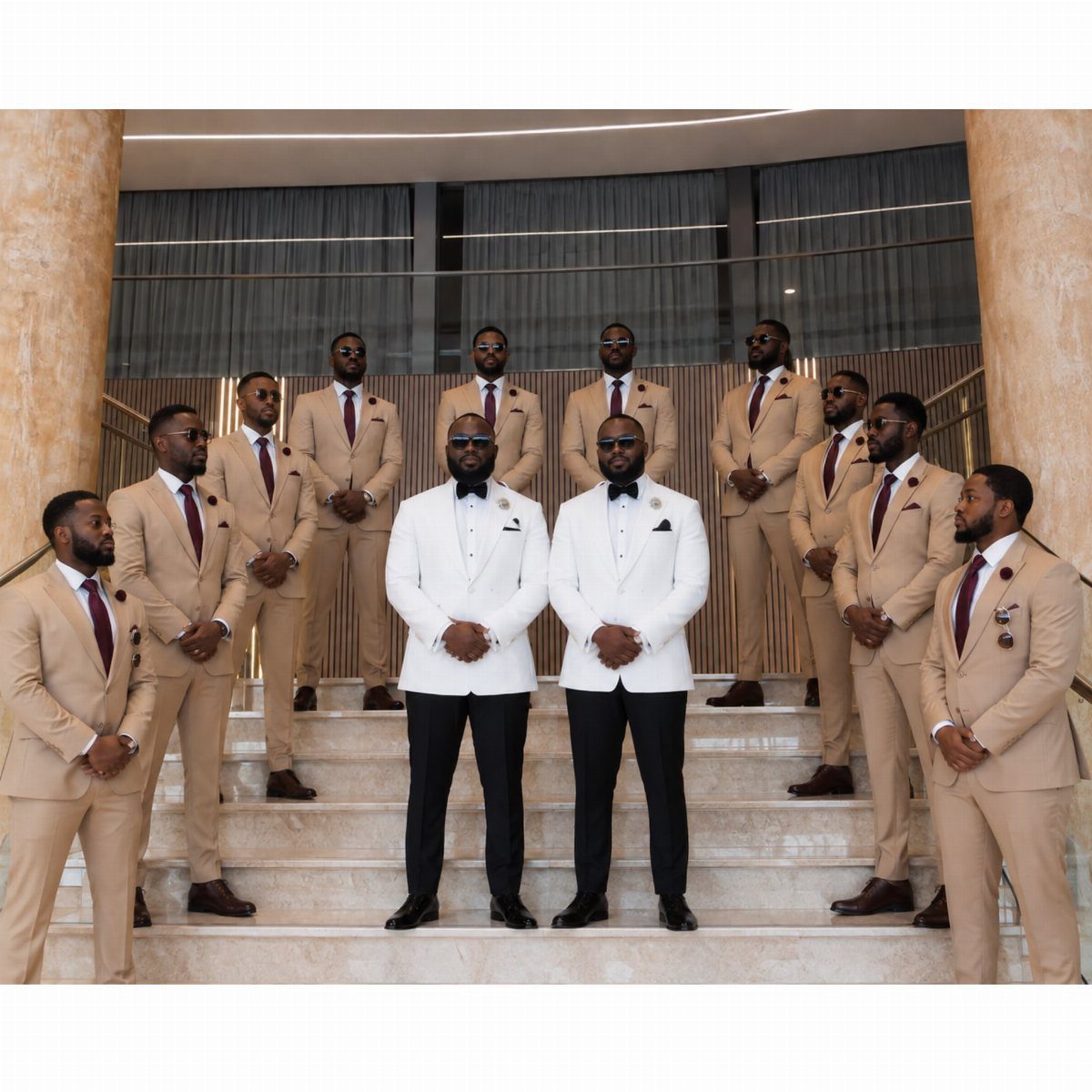
Tan suits carry summer light better than charcoal, and they photograph warm against green or coastal backdrops. I would keep the tie narrow to avoid a country-and-western kitsch that wide ties can tip into.
Brown leather belts and boots extend the tone; a cowboy hat completes a western reading, but the suit stands alone for a garden or vineyard setting. Check the fabric weight; cheap tan poly reads orange in direct sun.
5. Linen Blazers
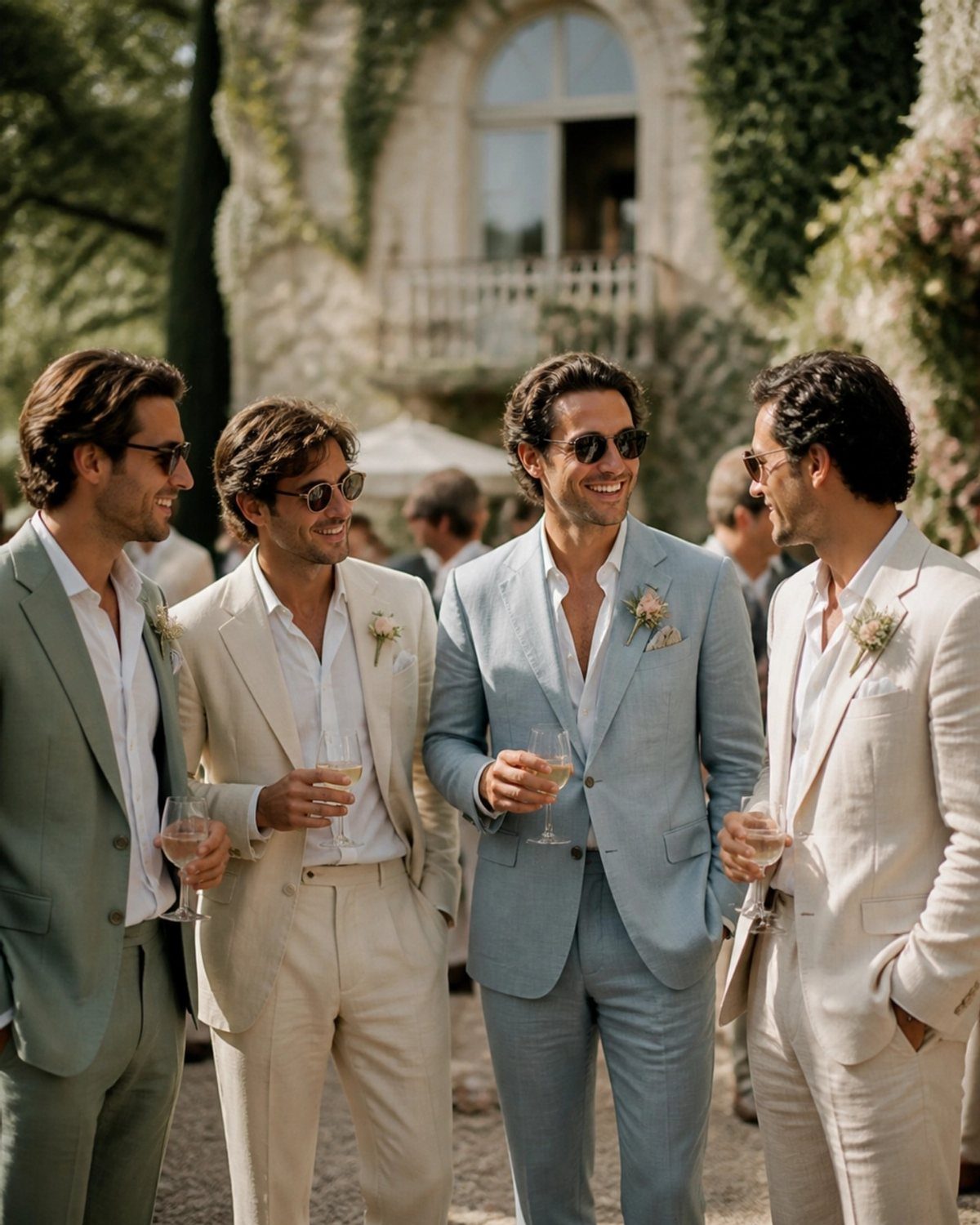
Pastel linen suits in sage, blush, or pale blue work for outdoor summer weddings where heavier cloth would show sweat within minutes. The wrinkling is part of the look; I would not press them stiff.
Light-colored blazers over white shirts and denim, or full suits with boutonnieres, both fit.
The fabric needs breathing room, so size for the heat, not the morning chill. A beach wind will lift unlined linen; weighted hems or a vest underneath solves that.
6. Casual Beach Attire
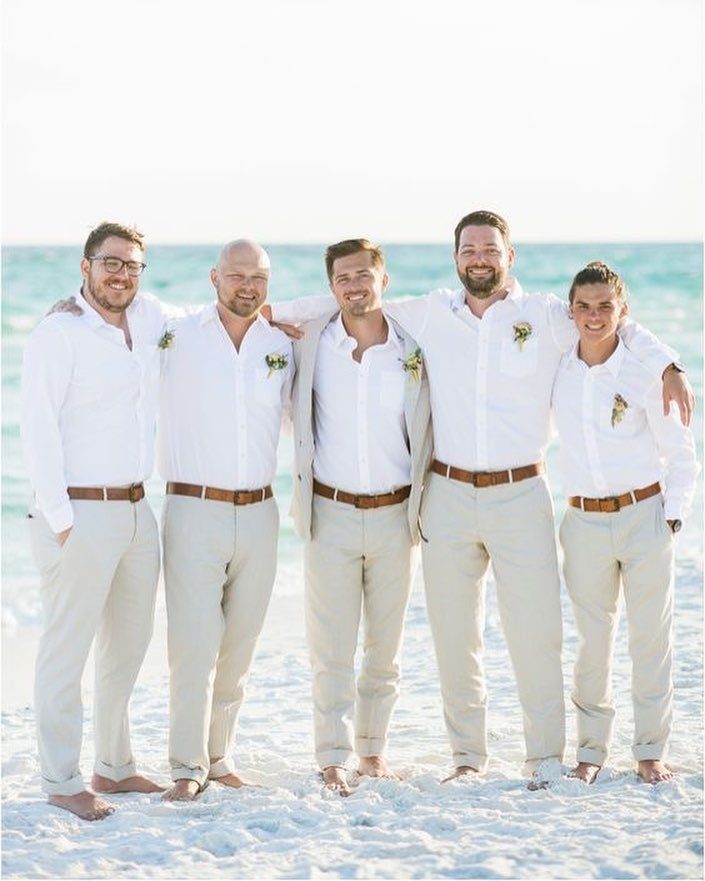
Barefoot on sand, white shirts untucked or half-tucked over beige trousers, reads intentional rather than forgotten. I would skip the blazer entirely for this version; the belt and boutonniere supply enough structure.
Linen or linen-blend trousers hold shape better than cotton chinos once humid air hits.
Brown leather belts bridge to the groom’s look if he wears a light blazer. Assign someone to carry sandals for the reception boardwalk; asphalt after sunset burns.
7. Black Suits
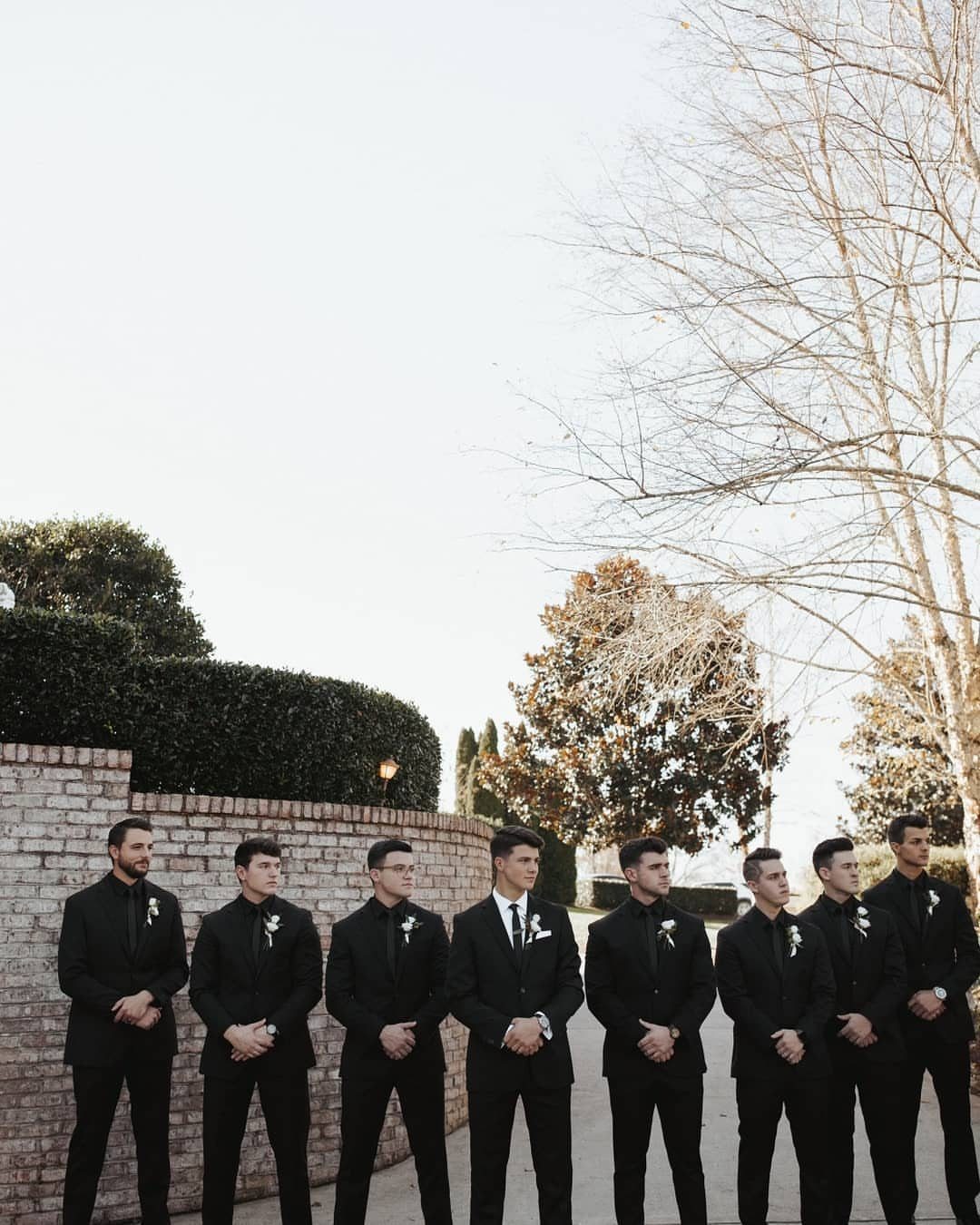
Black suits with black shirts read formal without drifting into rental tuxedo territory. The groom separates out with a white shirt while groomsmen stay in black, a reversal that photographs cleanly.
I would check that the black matches across the party; three different blacks in one frame turn into an accidental gradient.
This setup suits evening ceremonies and candlelit receptions where lighter colors would look washed out. For a beach version, the same black suit works with the trousers rolled and no jacket, though that trades some cohesion for comfort.
8. Mismatched Suits
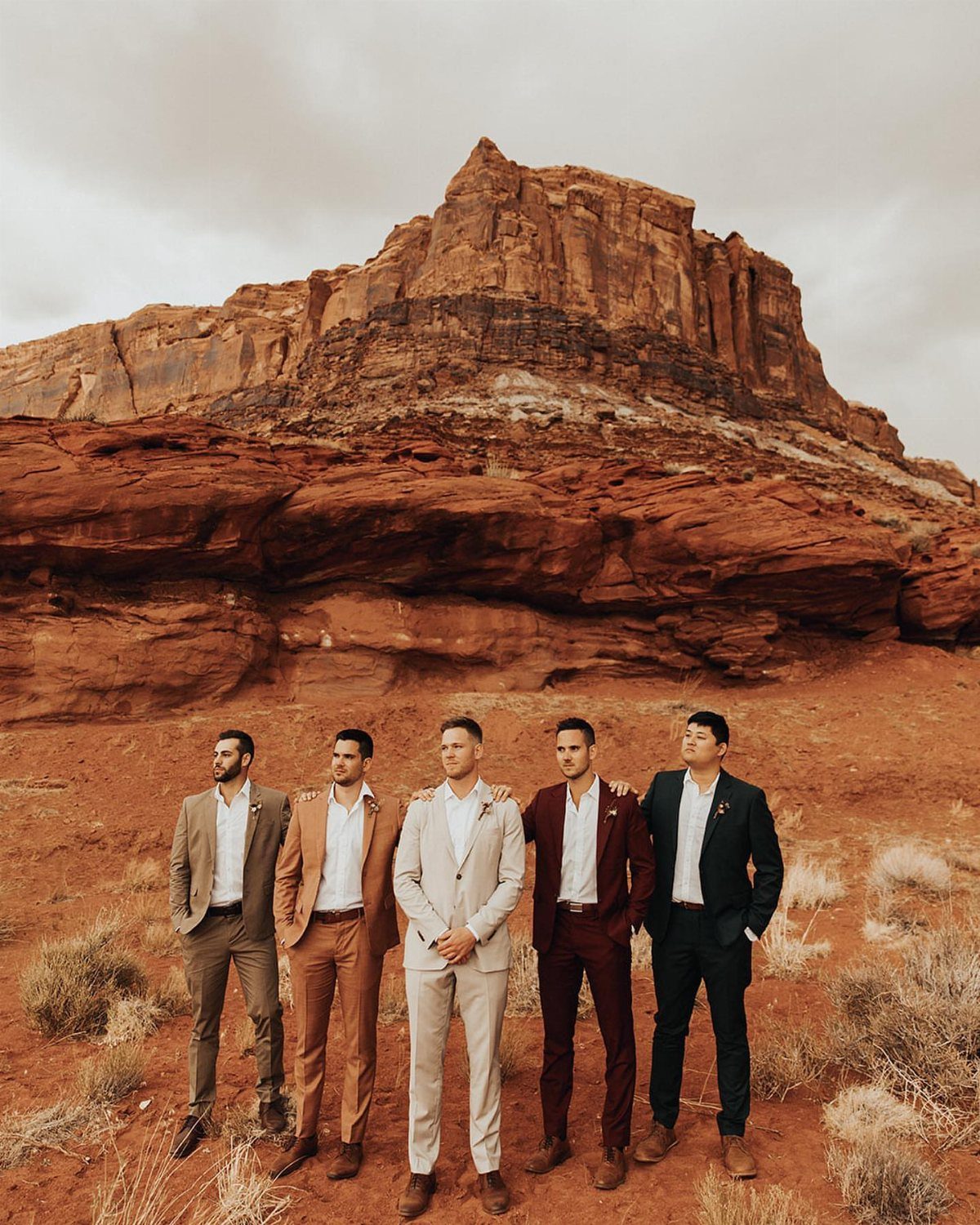
Letting each groomsman choose his own suit in a shared palette, tan through charcoal and olive, keeps the group from looking like a catering crew while still reading as intentional. White shirts and patterned ties supply the actual match.
The risk is one cousin showing up in a suit too far outside the range; I would send a physical swatch or a single reference photo rather than trusting verbal descriptions.
Brown leather belts and shoes ground the variation so it does not scatter. This works best when the groom’s suit sits at the center of the range, neither the lightest nor the darkest.
9. Burgundy Ties
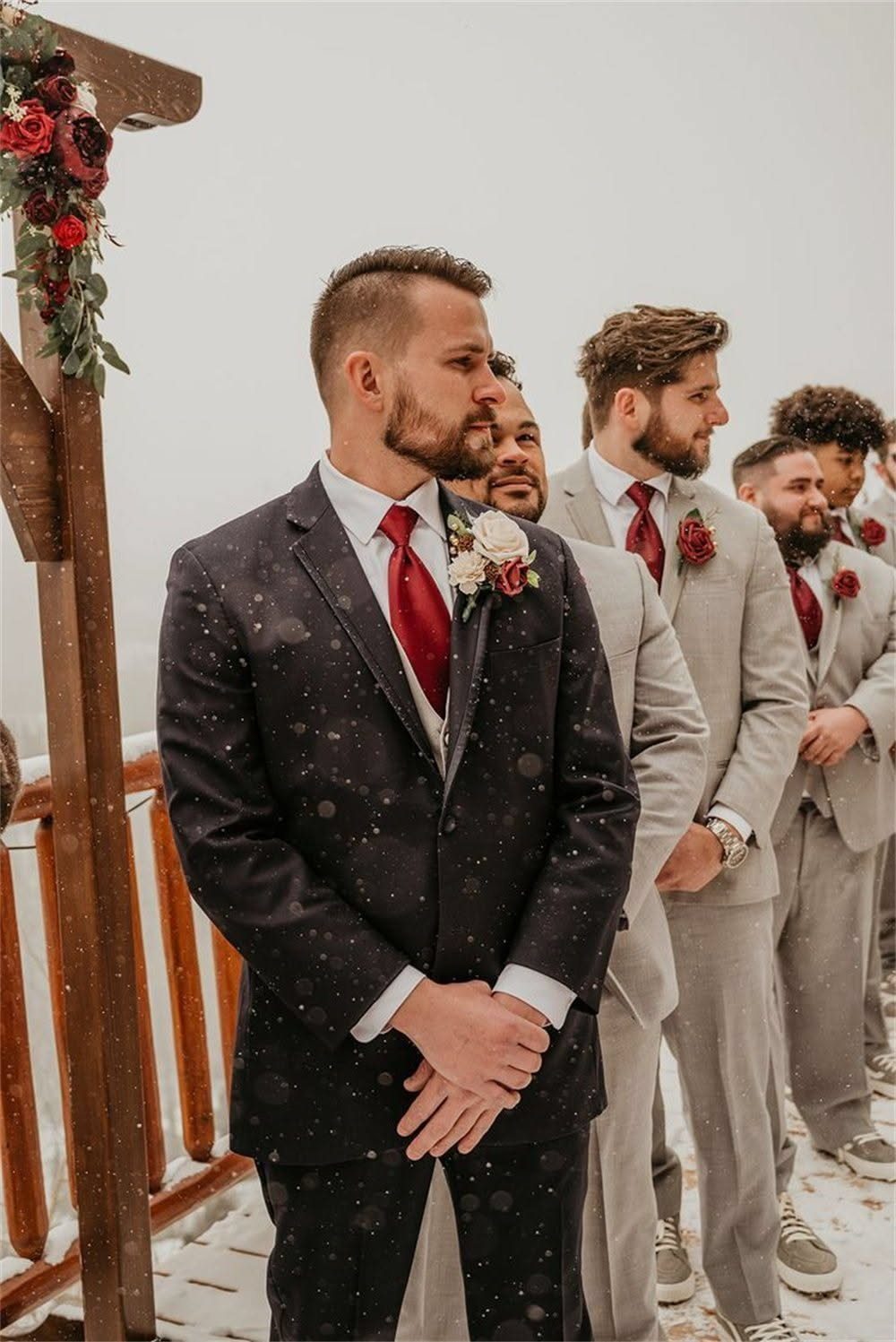
Burgundy ties against light grey suits add depth without the heaviness of a full dark suit, and they carry through to a western version with burgundy vests over tan shirts and denim.
The color suits winter light especially; snow reflects grey back up and the tie keeps the face from disappearing.
I would test the tie width against the lapel; a skinny tie on a wide lapel looks like an afterthought.
Velvet ties or vests dress up further for evening, cotton or wool hold better for afternoon. Match the boutonniere to the tie rather than the suit to keep the color story tight.
Groomsmen Attire Coordination
Coordinating groomsmen without matching suits comes down to controlling one or two variables.
The white shirt does more work than people credit it for; against tan, grey, charcoal, or olive, it reads as intentional group membership even when nothing else matches.
Patterned ties pull the same trick for mismatched suits.
A brown leather belt and the right shoes finish the look without anyone trying too hard.
They sit at the same height across the group in photos, which matters more than most planners realize; faces vary, but a line of mismatched belt buckles at six different waist heights breaks cohesion fast.
Seasonal Attire Considerations
Summer heat makes fabric weight the decision that matters most. Linen in sage, blush, or pale blue wrinkles visibly, which reads as texture rather than mistake if you commit to it; pressing it stiff fights the material.
Winter light flattens color, which is where burgundy earns its place against grey or tan. Snow reflection alone will grey-wash a face; the tie has to carry what the sun used to.
Black suits for evening ceremonies make sense for the same reason candlelight does: they absorb rather than reflect the available light, so the party reads as solid shape instead of scattered brightness.
For afternoon winter weddings, I would swap to charcoal; black under weak sun can look borrowed.
Accessories for Groomsmen
The boutonniere placement matters more than the flower choice. Wired thin and sitting flat, it reads as detail; bowing the lapel, it reads as error.
Cowboy hats work as group identifiers because they sit at the same level across every head. Tan for afternoon, black for evening, and the groom lighter or bareheaded.
Belts do more than hold trousers.
Brown leather against tan, grey, or olive suits extends the earth tone so the variation in suits reads as range rather than accident. In formal setups, the belt disappears; in casual ones, it is doing visible work.
Casual Vs. Formal Attire
The same black suit moves between formal and casual by losing the jacket and rolling the trousers.
That trade costs some group cohesion for comfort, which is why I would reserve it for beach versions where the setting already relaxes the dress code.
Remove both and the same clothes look like you forgot the occasion.
Frequently Asked Questions
What do groomsmen usually wear at weddings?
Groomsmen usually wear suits or coordinated separates that match the wedding’s tone, not identical uniforms. Most groomsmen end up in a white shirt under a grey suit or vest, which photographs clean and reads formal without trying hard.
A western wedding shifts the same shirt into denim with a tan cowboy hat, and the look still holds together. The specific pieces depend on whether the wedding runs formal, casual, beach, or country.
Do the dads match the groomsmen?
Fathers typically coordinate with groomsmen without matching exactly. Fathers and groomsmen can share a palette, tan through charcoal and olive, with white shirts and patterned ties, without anyone wearing identical pieces.
The group looks intentional, not uniform. Fathers might sit at one end of the color range while groomsmen spread across it.