Extravagant wedding dresses run from crystal-covered ball gowns that catch every light in the room to embroidered lehengas that take months of handwork to finish.
The right choice depends on whether your venue can hold what the dress demands; a cathedral-length train needs floor space to spread, while a narrow aisle will compress a voluminous lace skirt before you reach the altar.
[link-whisper-related-posts]1. Zuhair Murad Gown
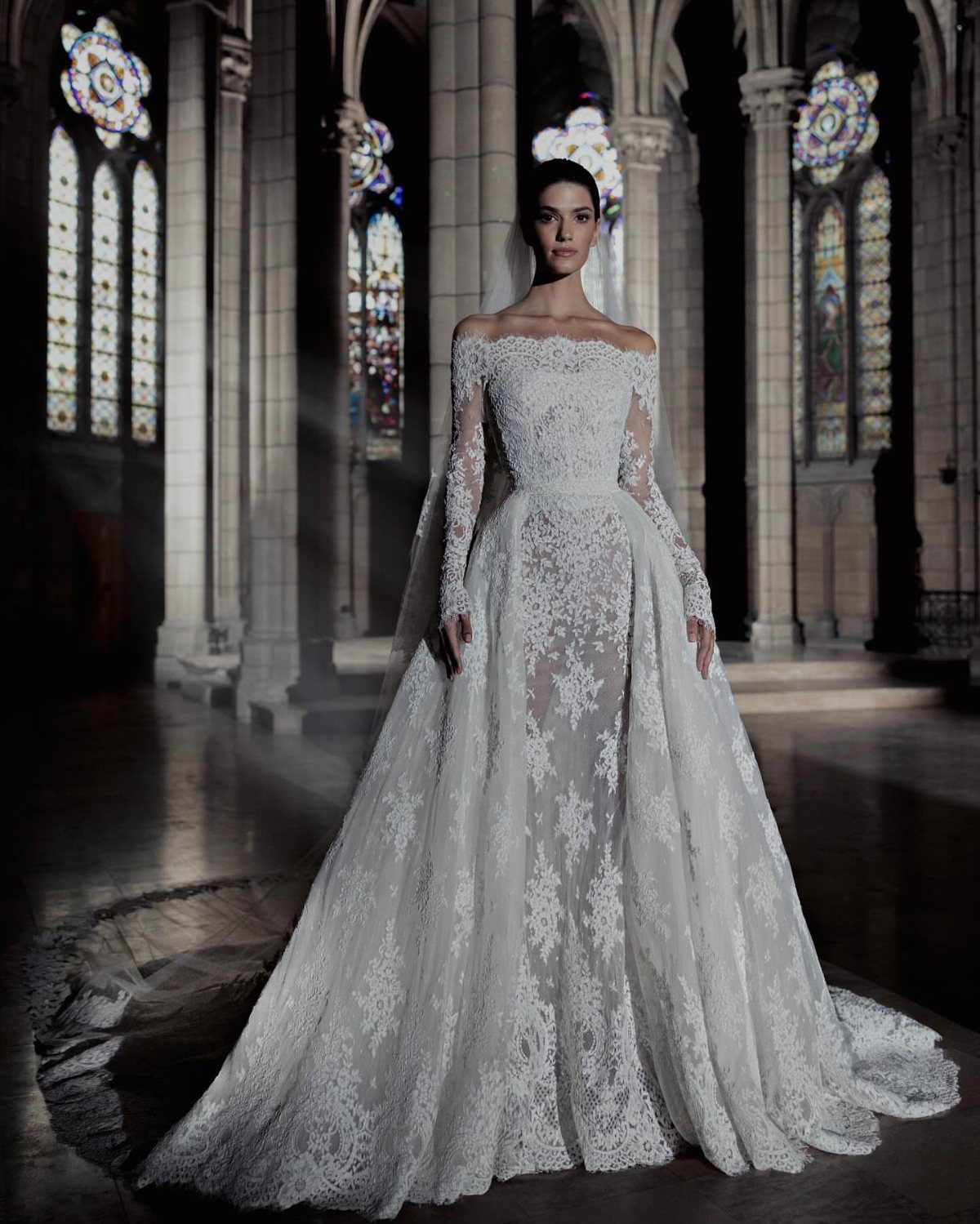
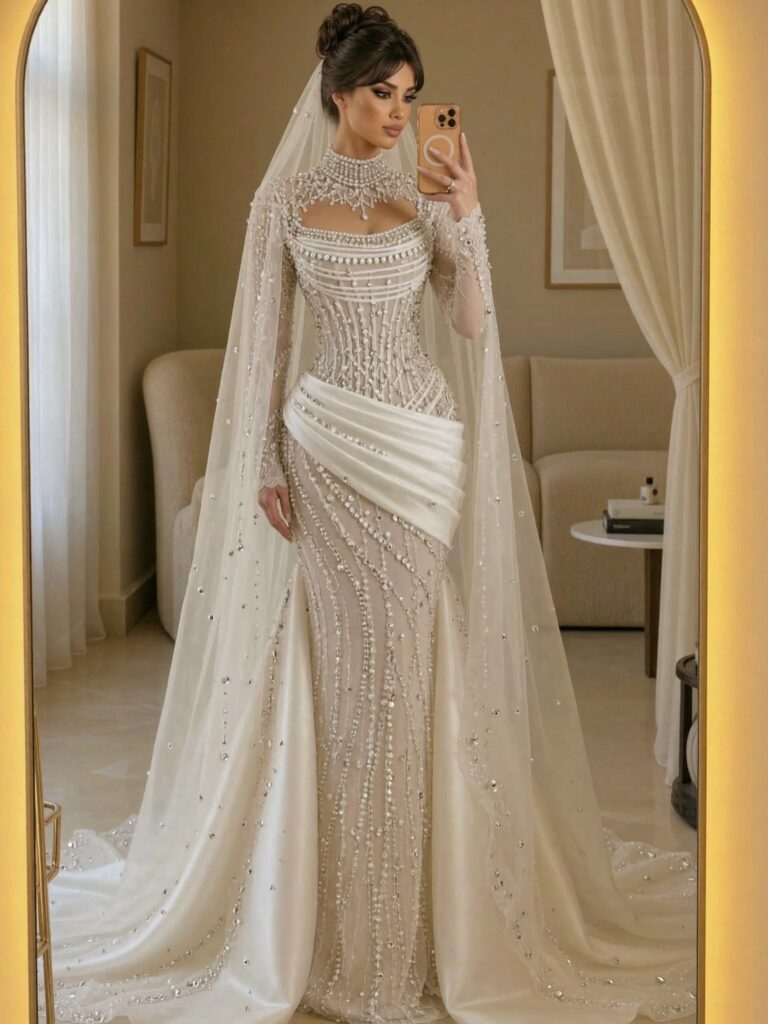
A Zuhair Murad gown does the work of 2 dresses: the inner sheath follows your shape while a detachable overskirt gives you the ceremony volume you want and the reception freedom you need.
The bead and sequin counts on these pieces run high enough that the gown reads as metallic from a distance, then resolves into warm gold and lavender up close. I would plan the photography around that shift, catching both effects.
These are made-to-order pieces with the price tag that implies, so the timeline starts almost a year out for most brides. For the bride who wants the room to go silent when the doors open.
2. Modern Classic Gown
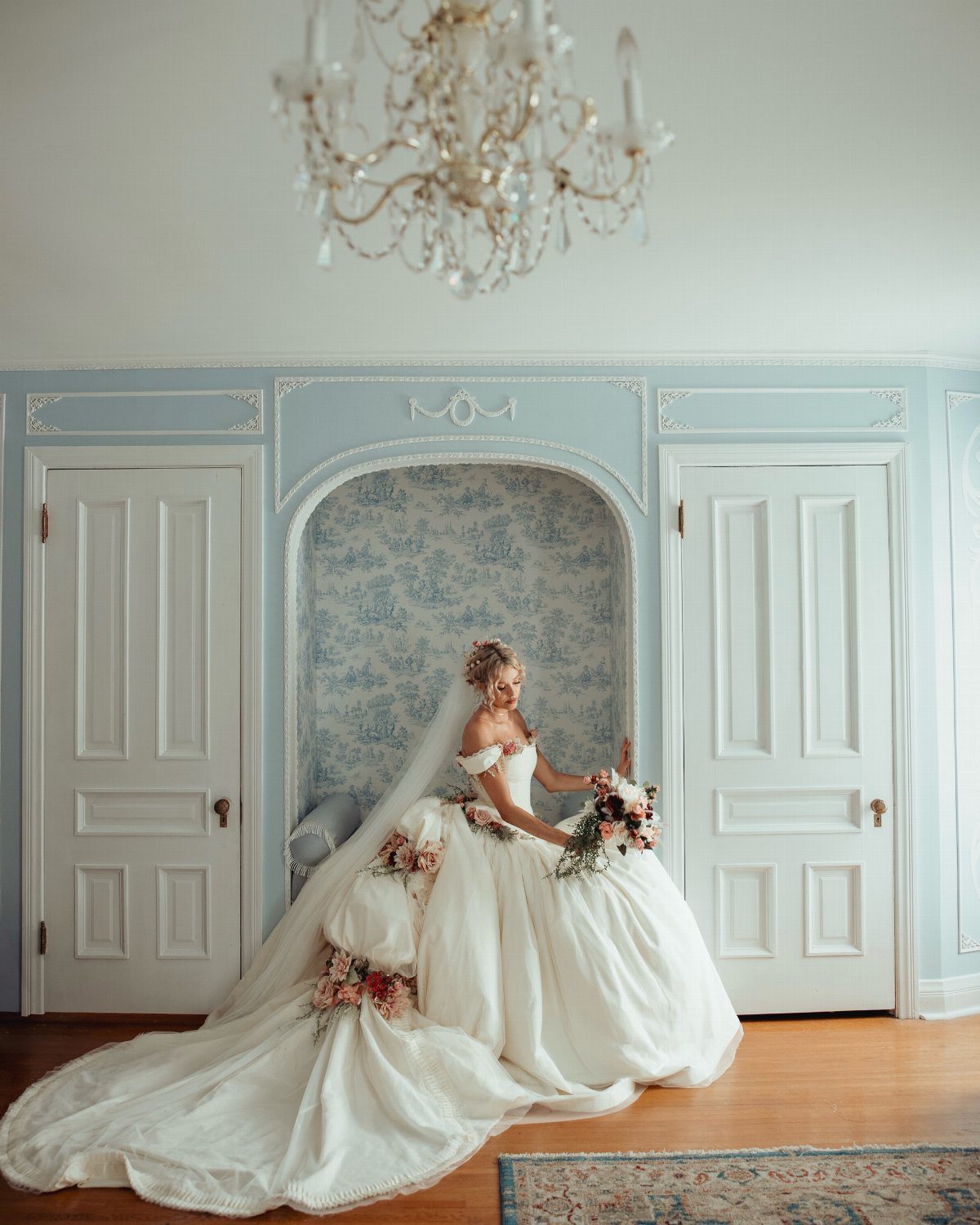
Lea Michele wore this exact balance: strapless, asymmetrical skirt, nothing that pins it to one season or one trend.
That is the modern classic trick, mixing elements that each age at different rates so the whole dress never looks entirely of its moment or entirely antique.
Brad Goreski’s styling kept the accessories minimal, which I take as a signal that the gown itself carries enough interest.
Monique Lhuillier does this silhouette well, though Madison James and other quiet-luxury lines have picked up the same idea at lower price points.
The asymmetry flatters if you carry height; if you do not, the eye line cuts horizontally in a way that can compress.
3. Monique Lhuillier Gowns with Ruffles
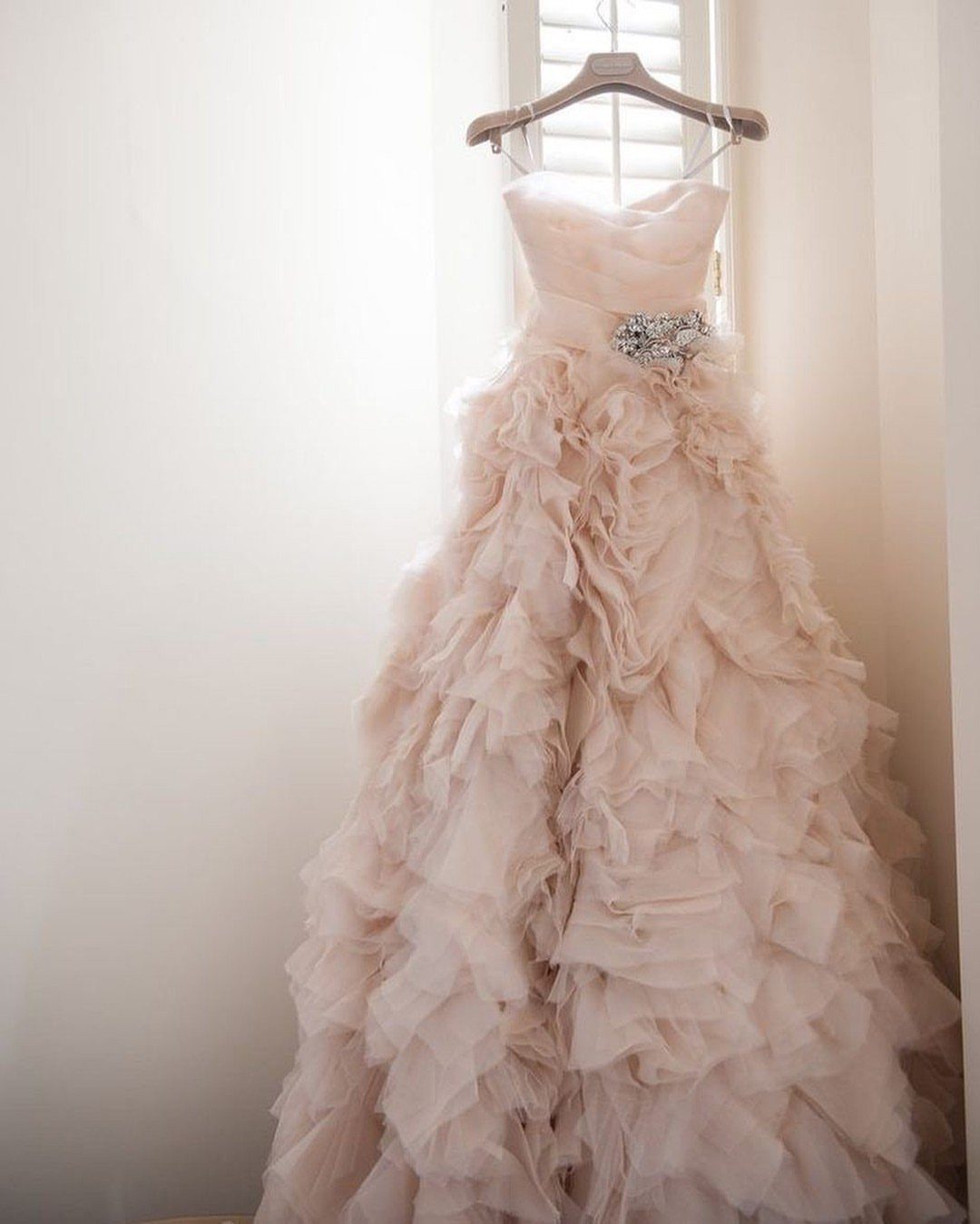
Ruffles on a Monique Lhuillier gown are not trim; they are the architecture, layered tulle built out until the skirt owns the room.
A blush tone softens the volume into something almost edible, which is why the cotton candy comparison sticks. These skirts need space, literally: a narrow aisle or tight sweetheart table will flatten what the dress is doing.
I would check the venue doorway widths before committing, and I would budget for a second pair of hands during bathroom trips. The embellishment at the waist is doing real work, anchoring all that lightness to a visible structure.
4. Gowns with Floral Appliques
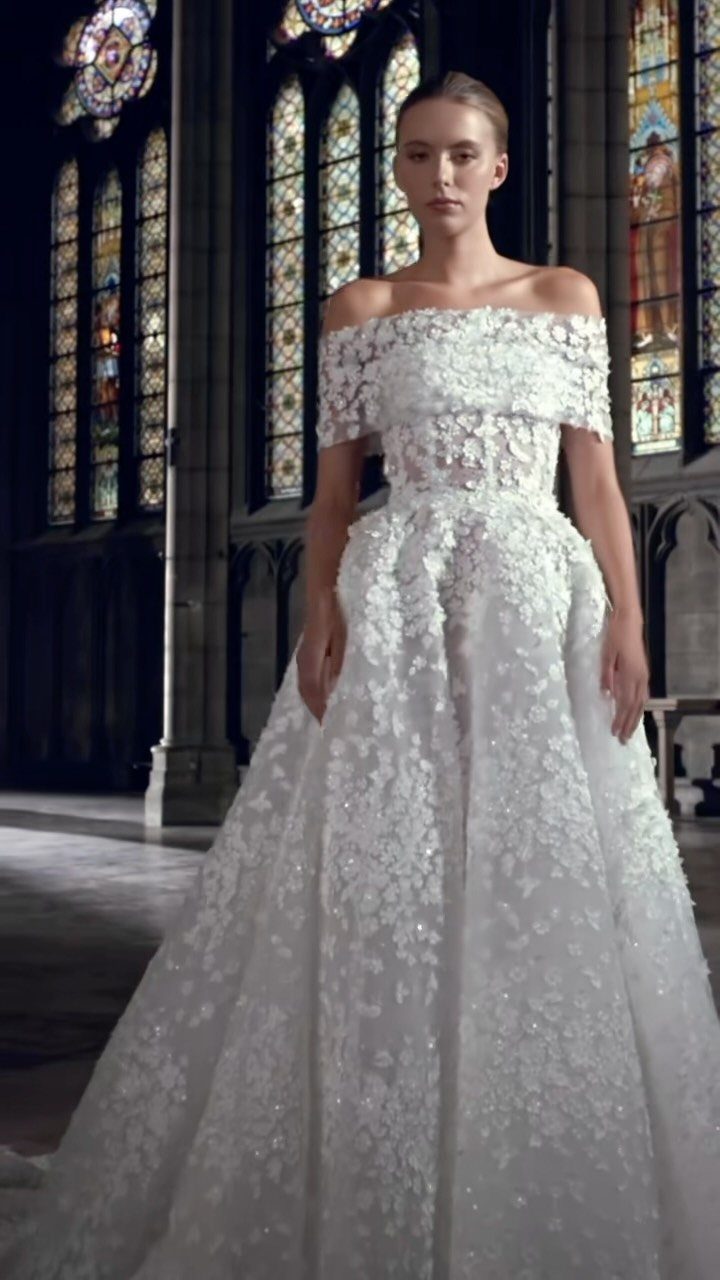
Three-dimensional florals turn a white gown into a garden that moves with you, each applique catching light differently as you turn.
Nicole + Felicia adds a gold thread to some versions, barely there on the bodice but enough to warm the whole piece; the effect is less metallic than candlelit.
The construction matters more than the flower count: appliques sewn flat will crease and crumple through the night, while those attached at multiple points keep their shape.
Ask your salon how the flowers are anchored, and test sitting down before you buy. Cathedral settings suit the scale; a backyard may swallow the detail.
5. Crystal and Beaded Ball Gown
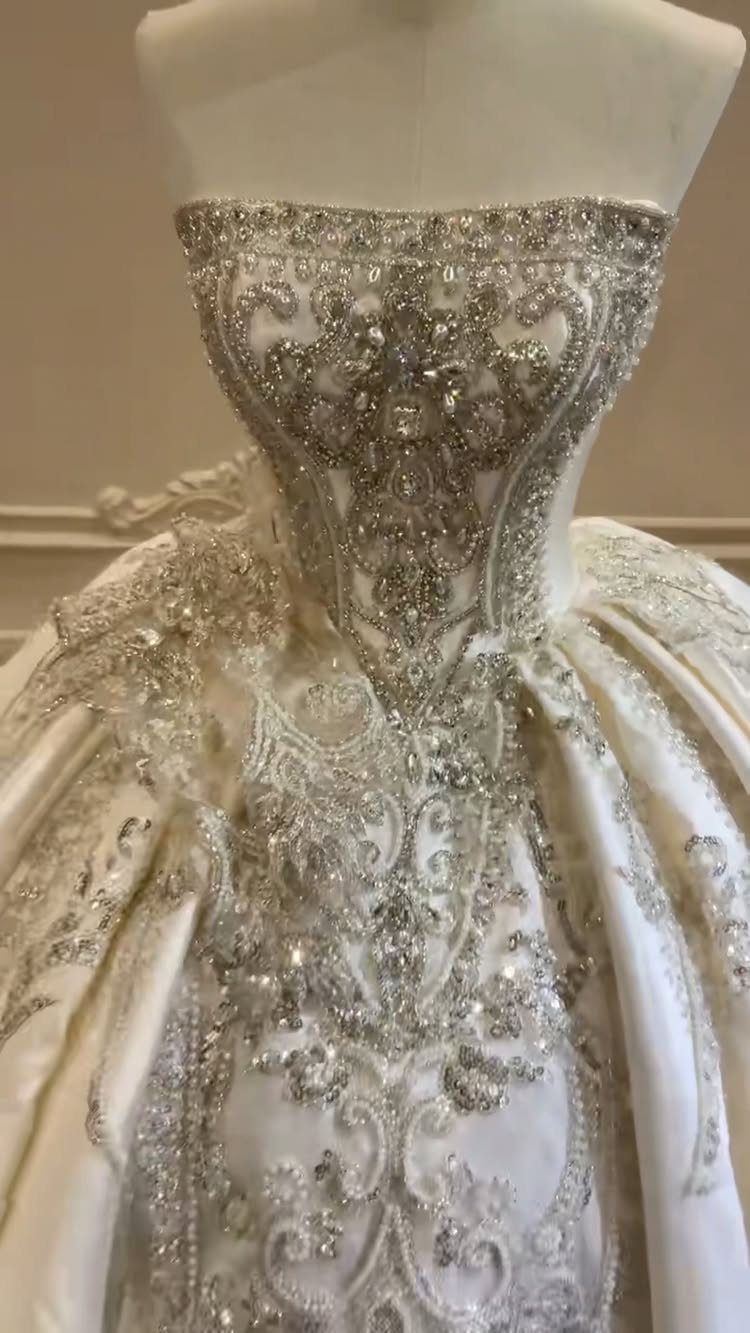
Crystal density this heavy reads as armor and celebration at once: silver embroidery carries across both corset and skirt, no blank space left to rest the eye.
Lazaro builds these at Kleinfeld with a blush undertone so subtle it registers only against true white, a trick that flatters most skin tones without committing to color.
The weight is real; I have heard brides describe the first hour as majestic and the sixth as endurance.
Plan your bustle carefully, since the beadwork complicates the attachment points, and consider whether your reception involves dancing that would benefit from a lighter second look.
6. Voluminous Lace Ball Gown
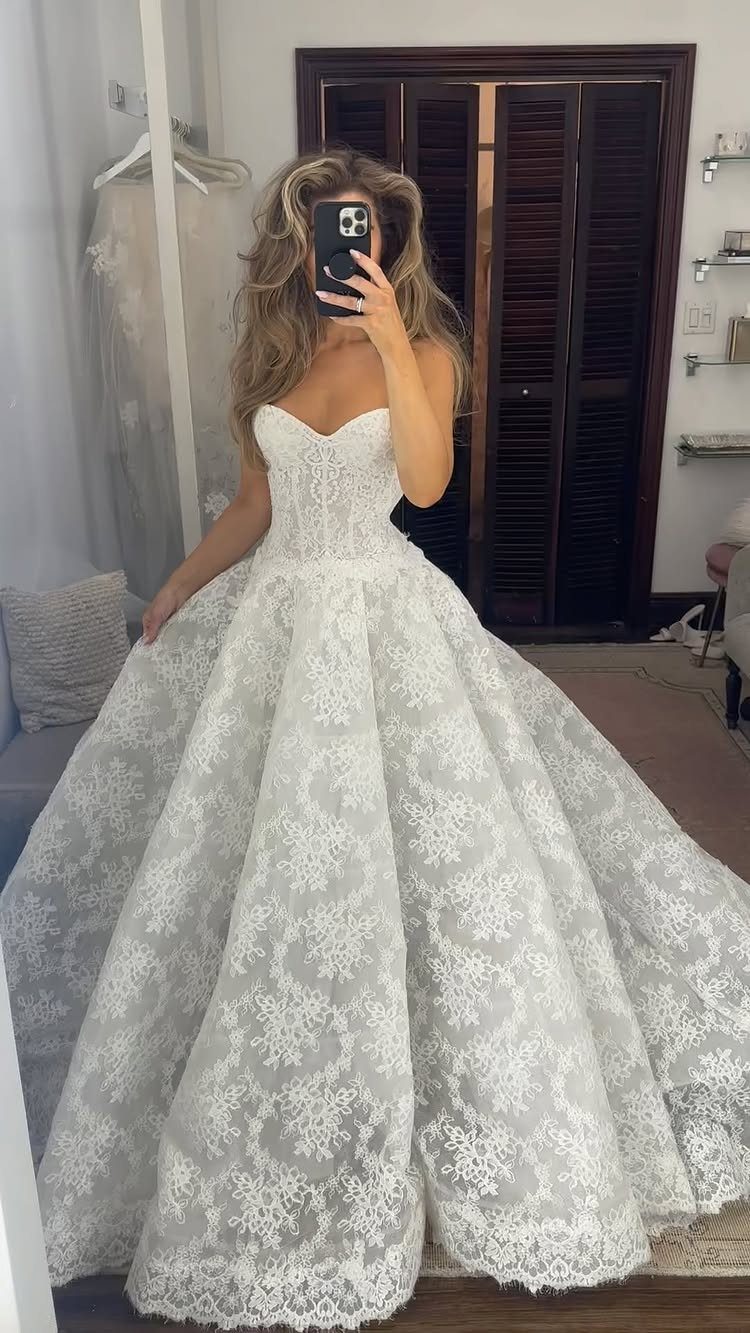
Lace built to ballgown volume is a technical feat: the pattern has to scale up without going blank at the seams, and the structure has to hold without the stiffness of satin.
The effect from the bride’s own angle is worth studying before you commit to a skirt this wide. Allure’s bolero option suggests one practical path, adding sleeves or coverage without changing the gown itself.
Lace this dimensional photographs beautifully but drinks alteration time; buy as close to your size as possible rather than planning to take it in dramatically. A sweetheart neckline suits a necklace or none, not both.
7. Long-Sleeved Lace Ball Gown
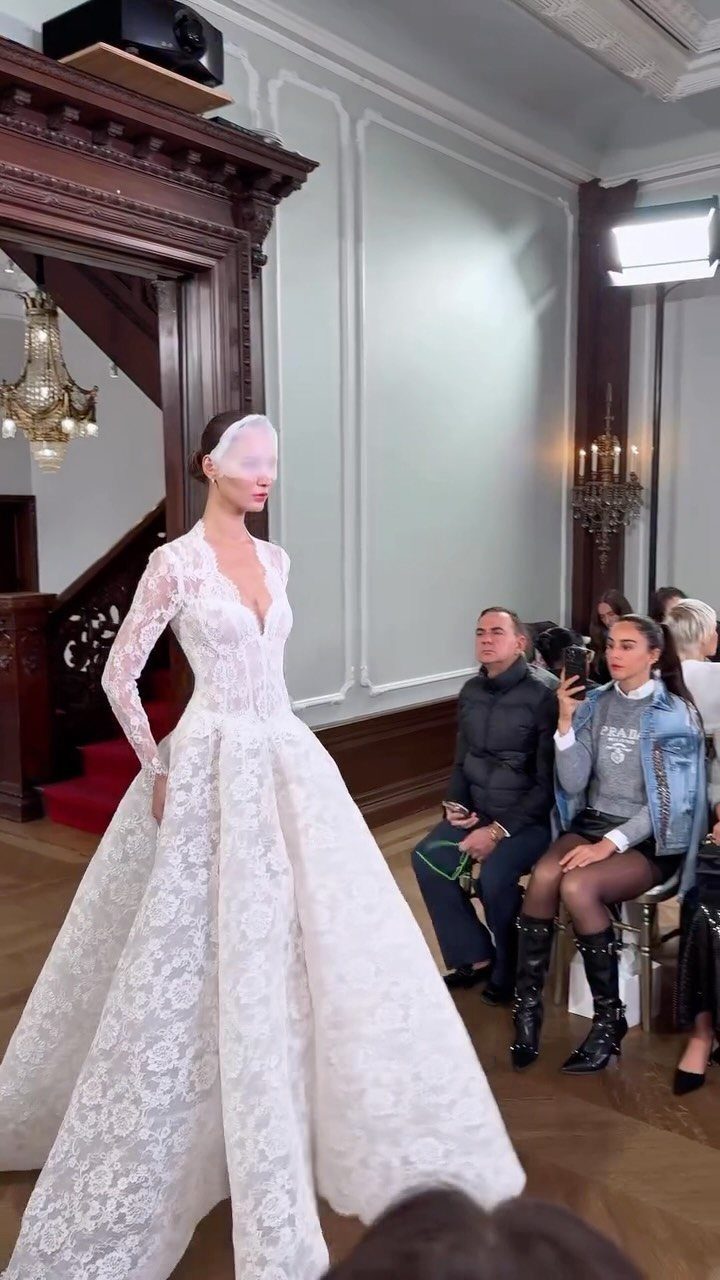
Long sleeves in lace carry a formality that strapless gowns trade away for breeze.
The coverage reads as modesty or drama depending on the neckline; a high neck frames the face like a portrait, while a deeper cut keeps the sleeves from feeling borrowed from another era.
Allure builds these with separate lace jackets, which I prefer for the flexibility. You get the ceremony photograph with full coverage, then remove the layer for the reception without a full change of clothes.
The lace pattern has to match exactly or the join shows in every photo, so buy the pair together rather than hoping to source the jacket later.
Alterations on lace sleeves run narrow; the pattern distorts if taken in more than a size. Order closest to your actual measurements and plan the timeline earlier than you would for satin.
8. Embroidered Traditional Lehenga
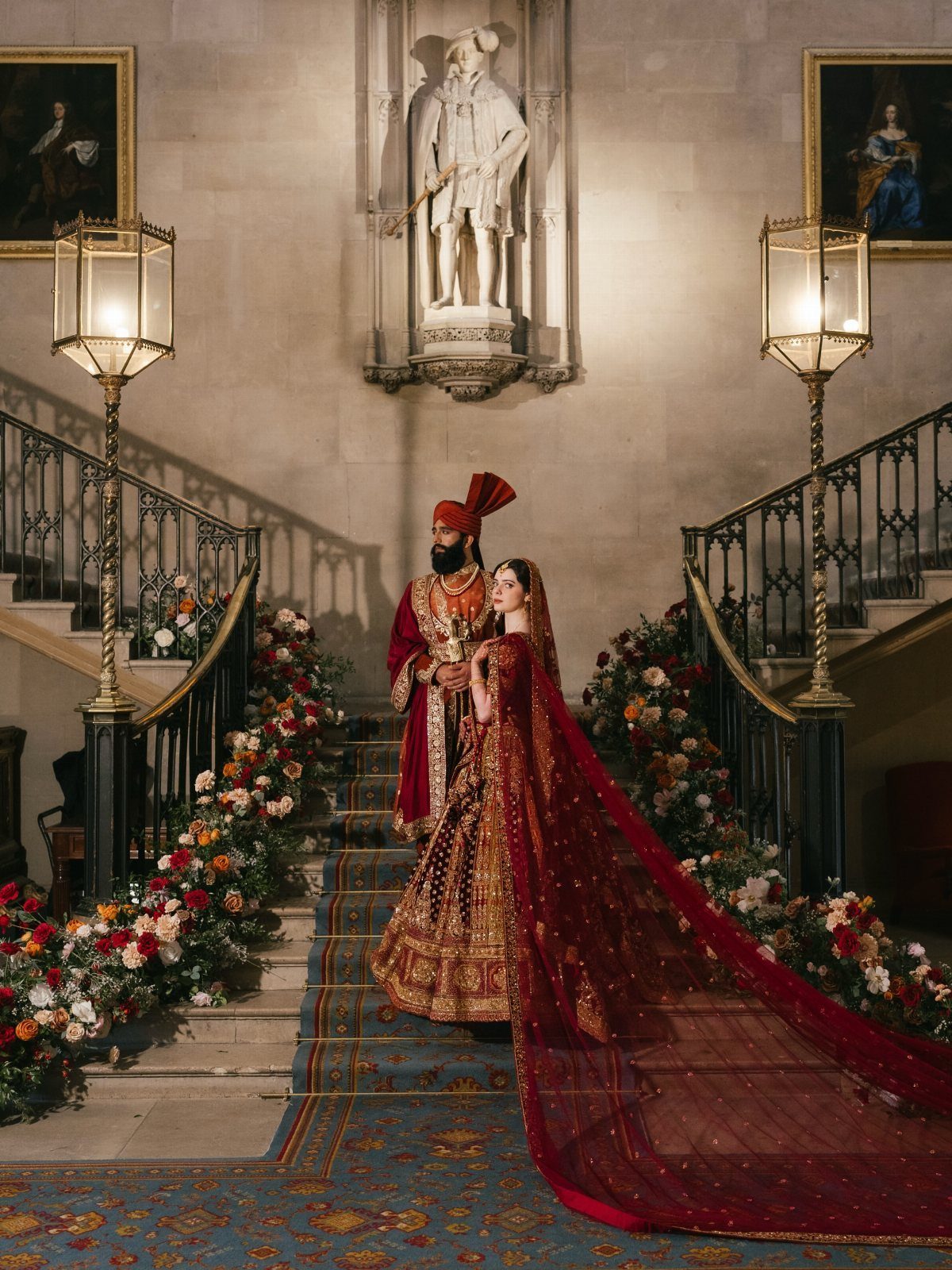
A traditional lehenga carries color density that Western white gowns rarely attempt: the embroidery is the event, gold thread on silk or velvet building a surface that registers from the back of the hall.
The separate pieces, skirt and blouse and dupatta, let you adjust the silhouette across the day, draping the veil forward for the ceremony or pinning it back when you need your hands.
Nadine’s custom piece by Élan took the full planning timeline; bespoke embroidery on this scale does not rush.
Budget for that, and for the matching jewelry set that completes the silhouette without competing. The weight is substantial; plan seated moments into the schedule and a second, lighter outfit if your reception runs late.
Red and gold photograph warm against most skin tones, though outdoor midday light can push the red toward orange. Test your photography timing with your planner before the day.
Choosing the Right Gown
The Zuhair Murad and Monique Lhuillier entries both warn about physical space, but the constraint starts earlier: the fitting room itself.
Sit down in every gown you try on, not just the ones with volume. The crystal ball gown and the lehenga both run heavy, and what feels manageable in the fitting room becomes something else entirely by the last dance.
Your venue shapes the choice more than most brides account for. That cathedral-length floral applique gown needs a cathedral, or at least a ballroom with the ceiling height to match; a backyard compresses the scale into something awkward.
The Allure lace ball gown with its bolero option gives you climate flexibility without a second dress, which matters for an outdoor fall wedding.
The modern classic approach, that asymmetrical Lea Michele silhouette, ages better than anything tied to a single season’s trend. If you are buying rather than renting, this is the argument for restraint.
Current Wedding Dress Trends
Bold lace patterns and dramatic silhouettes are what the Maggie Sottero sourcing describes as this year’s direction, which matches what I see in the list: the voluminous lace ball gown, the long-sleeved lace with its separate jacket, the three-dimensional florals that register as sculpture rather than trim.
The personal expression angle shows up in the customization options, the detachable overskirts and interchangeable pieces that let one gown serve two moods.
What I do not see in the list is the minimalist reaction, the plain satin sheath that lets the wearer do the work.
That may be its own trend by now, or it may have peaked; the notes do not say, so I will not guess.
Where fashion meets fine art. Inspired by a summer in Europe, Abella’s 2026 “L’Artiste” Collection transforms bridal gowns into sculptural statements with brushstroke textures, romantic draping, and couture craftsmanship—for the bride as muse.
Customization Options
Detachable pieces are the most practical form of personalization, and the list offers several: the Zuhair Murad overskirt, the Allure bolero, the Allure lace jacket sold with its matching gown. Buy these together.
The corset back on the Allure A1474 gives you a fit range without alteration, which matters if your timeline is tight or your weight fluctuates. There is no middle week where you can rush the work.
What the list does not cover is color customization, though the blush undertone on the Lazaro and the blush tone on the Monique Lhuillier suggest the option exists.
Ask your salon about dip-dyed hems or contrast linings if you want color without committing to the full lehenga.
Bridal Sizing Differences
Order up.
The Maggie Sottero notes are explicit: your stylist will likely choose a larger size than your street size because removing fabric is straightforward and adding it is often impossible. This is not vanity sizing; it is construction reality.
For the gowns in the list, this matters unevenly. Lace distorts if taken in more than one size, so the Allure lace ball gown and the long-sleeved lace version both need you closest to your actual measurements.
Satin and tulle forgive more. The crystal and beaded ball gown complicates this further: the beadwork itself limits where seams can go, so your alterations specialist needs experience with weighted fabric, not just bridal.
The lehenga runs on a different system entirely, with the separate pieces sized independently. Your blouse measurement may not match your skirt; plan for that in your fitting schedule rather than assuming one appointment covers both.
Frequently Asked Questions
What styles of wedding dresses are trending this year?
This season’s standout gowns lean into texture and shape: oversized lace motifs, full ball skirts that hold their own silhouette, and florals built up from fabric so they catch light like built-in shadows rather than flat overlay.
Convertible pieces keep gaining ground, overskirts that peel away for the reception or sleeves that detach so the same dress reads formal for the ceremony and lighter for what comes after.
How do I choose the right wedding gown for my body type?
Start with how the silhouette interacts with your height and proportions. Asymmetrical necklines or hemlines work with length; without it, that diagonal can land like a hard horizontal line that halves the figure.
A-line shapes create a harmonious silhouette on most frames, while mermaid styles accentuate curves for hourglass figures. The real test is sitting down in every gown you try on, since comfort across hours matters more than the mirror moment alone.
What should I consider when trying on wedding dresses?
Sit down in every gown, not just the ones with volume. Walk the length of the salon, raise your arms, bend; the hours on your feet and the dancing after dinner will outlast any ten-minute appointment.
Check your venue’s doorway widths and aisle space before committing to a wide skirt; a narrow aisle flattens what the dress is doing.
Think about where and when: a lace gown with a separate bolero layer lets you add or subtract warmth for an outdoor October ceremony without renting a second outfit.