Beach weddings run from a single bottle of local salt water taffy to a full underwater lantern installation overhead, and the right pick depends on whether your guest count stays small enough for floor cushions or demands standard chairs at the edges.
The common thread is wind: it flips lightweight aisle runners, drowns floating candle wicks, and turns hanging lanterns into projectiles unless you weight them for packed sand.
I would check my rental company’s wind ratings and driftwood stock before committing to either end of that range.
[link-whisper-related-posts]1. Beach Wedding Dresses
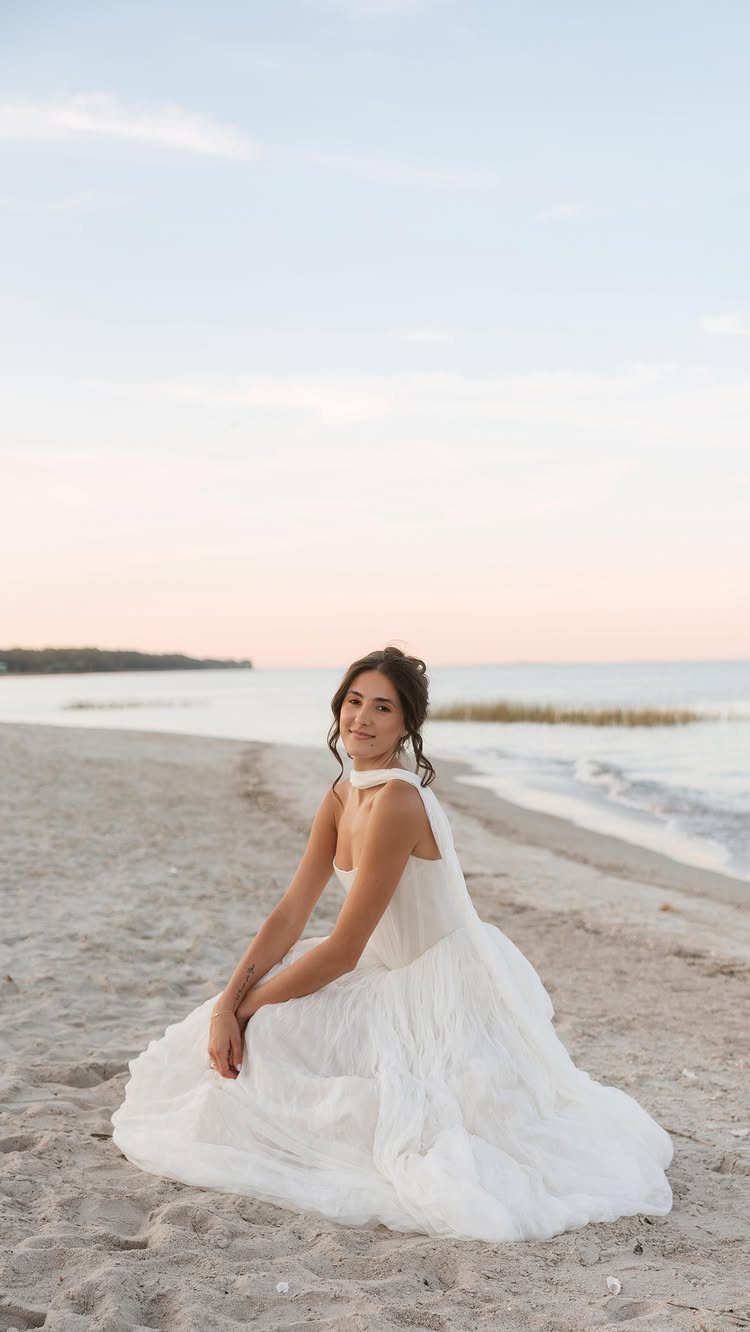
A chiffon dress catches the sea breeze without fighting it, and that matters more than most brides guess until their first fitting outdoors.
I would skip the ballgown entirely; the sand pulls at heavy skirts and the wind turns structured volume into a wrestling match.
Lace or tulle over a simple slip cut keeps you cool and moving freely. A high-low hem gives you the portrait silhouette for photos without dragging through tide pools.
The real trade-off is the train. Even a short one collects sand and salt water, and nobody wants to remember their ceremony by the stain that did not come out.
2. Ceremony Arch
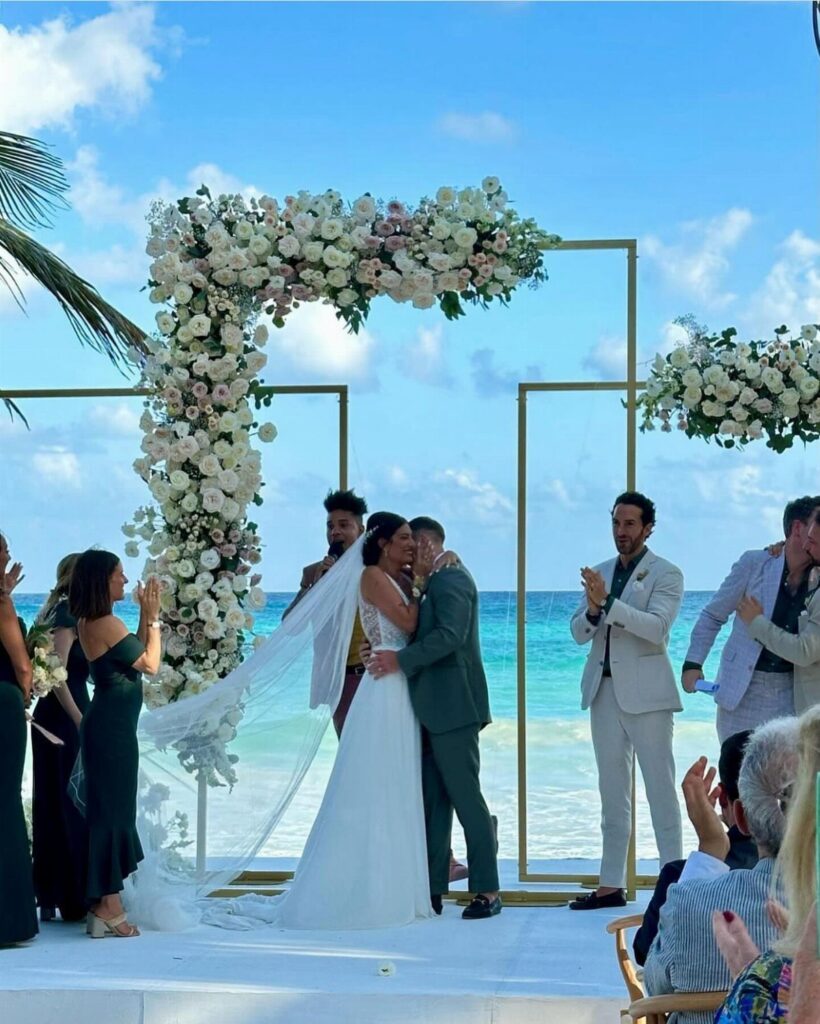
Your guests need somewhere to look besides the horizon, and an arch gives their eyes a place to land.
Chiffon drapes catch late light beautifully, though they need staking or weighting against the wind; palm fronds hold still and read as more casual, which suits a smaller guest count or a morning ceremony.
Florals work anywhere on that scale, from a few anchored clusters to full coverage dripping down the frame.
I like the mixed approach: greenery as the base, with flowers concentrated where you two stand. It photographs cleanly without the cost of an all-floral build.
3. Water Ceremony
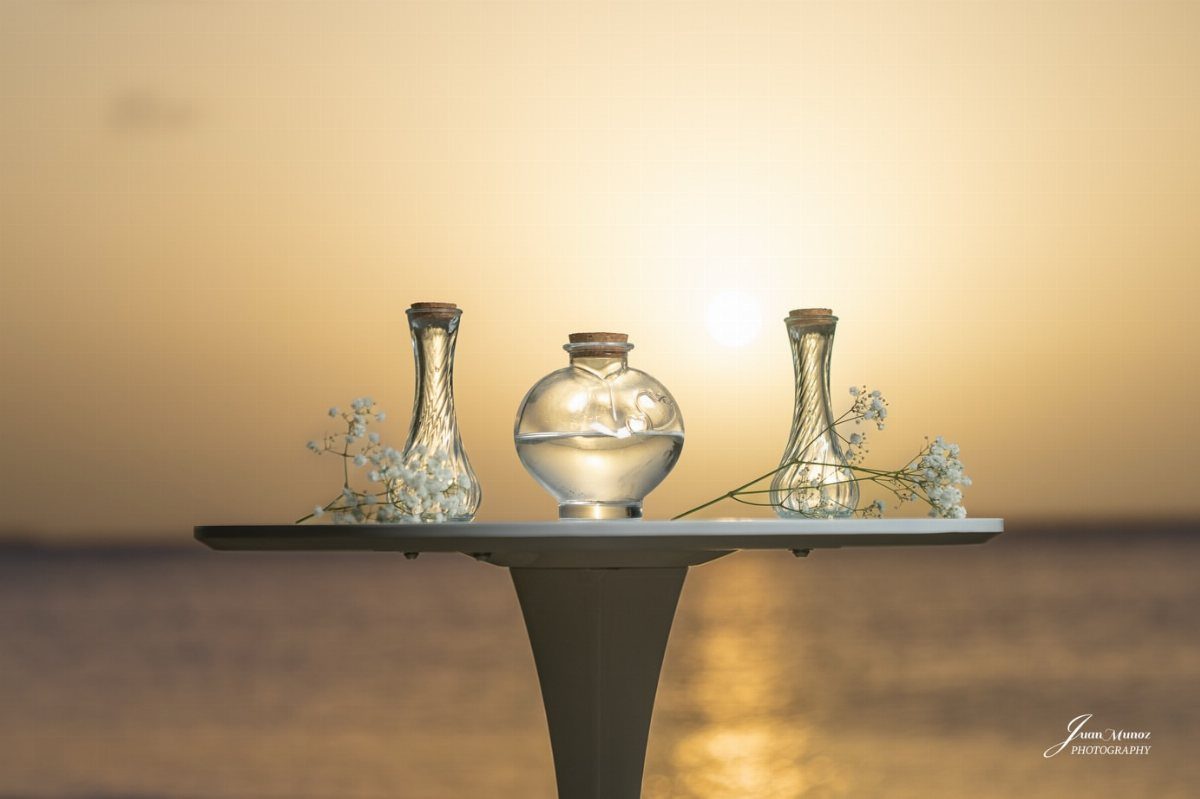
Three small vessels, each holding water from a meaningful place, merge into one during the vows. The ritual reads clearly even to guests seated at a distance, and it keeps the ceremony feeling specific to where you are.
Colored sand is the common version; I prefer water itself when the ocean is right there, collected at the shoreline before the processional.
You will want a stable table and a vessel wide enough that the pouring does not splash. Practice once with your officiant so the transfer feels deliberate, not rushed.
4. Underwater Inspiration
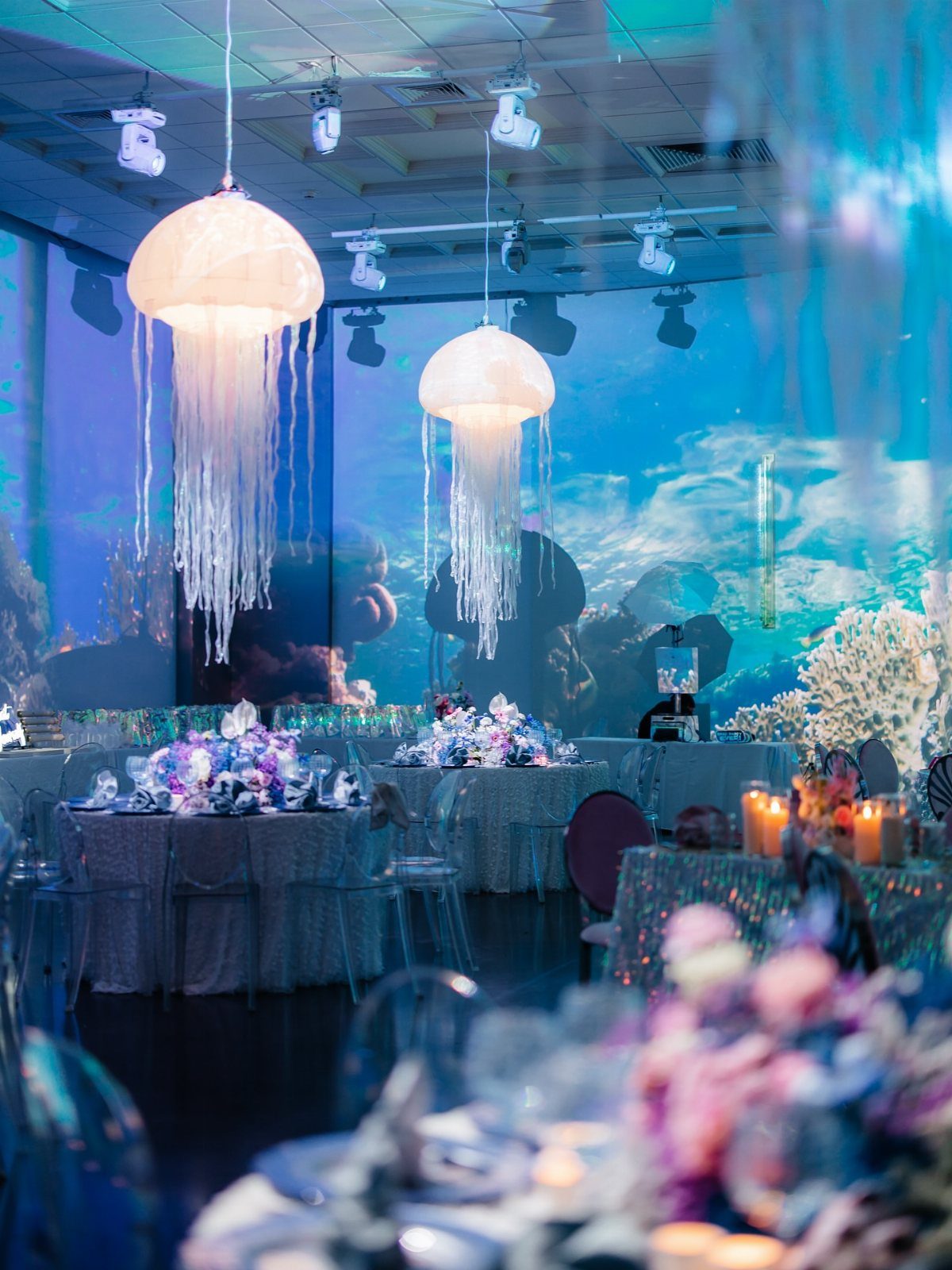
Hanging jellyfish lanterns turn a reception tent or indoor space into something that belongs near the water without quoting it literally.
Fabric lanterns catch the same breeze as glass ones would, but they won’t shatter if a guest bumps the table or the wind tips them over.
Starfish or coral motifs on tableware or in centerpieces extend the idea in smaller, cheaper pieces.
I would use this for an evening reception rather than the ceremony itself; the projections need dim light to read properly, and guests spend more time seated then anyway.
The full build is labor-intensive. A single accent wall or the ceiling alone still delivers the effect without the production budget.
5. Shoe Valet
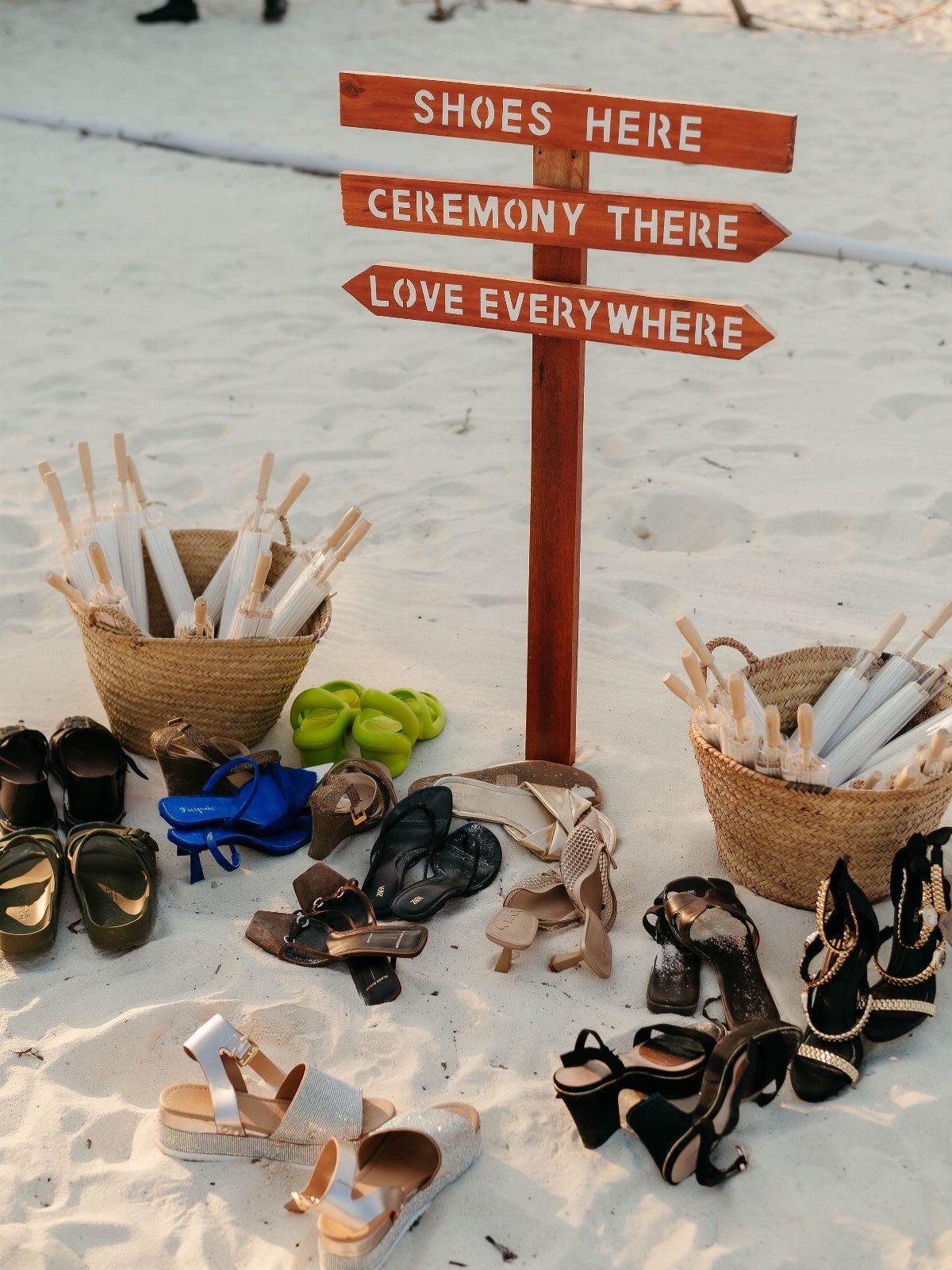
A shoe valet saves guests from choosing between ruined leather and sore feet; by midnight the flip-flop basket is always emptier than the heel pile.
I would set the station at the transition point where pavement meets beach, with a sign visible from both directions so nobody carries their good pair farther than necessary.
A cleanup station with a foot rinse is worth adding if you have caterer access to water; otherwise, the flip-flops do double duty as favors guests actually use.
A hand-painted wood sign sets the tone, though a chalkboard or framed print does the same job for less.
6. Tropical Bouquets
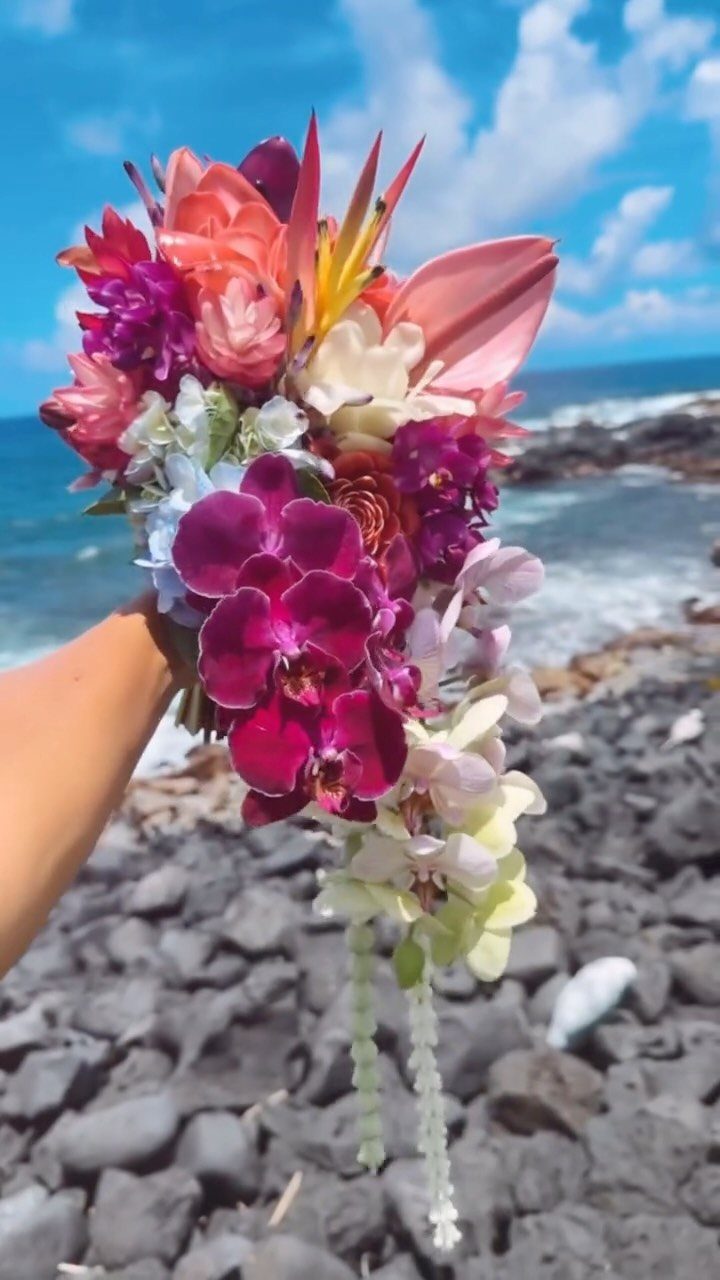
A cascading bouquet of orchids and bird of paradise already looks like it grew where you are standing, which saves you from forcing garden flowers into a setting they never belonged.
Peonies and tea roses soften the tropical edge if your taste runs more traditional; palm leaves or a few wired seashells anchor it to the shore without reading as costume.
I would ask my florist which tropicals hold up in salt air and direct sun, because some wilt fast and others tighten up.
Sweetgrass or sawgrass bouquets last forever if you want to keep something from the day, though they read more rustic than formal.
7. Beach-themed Invitations
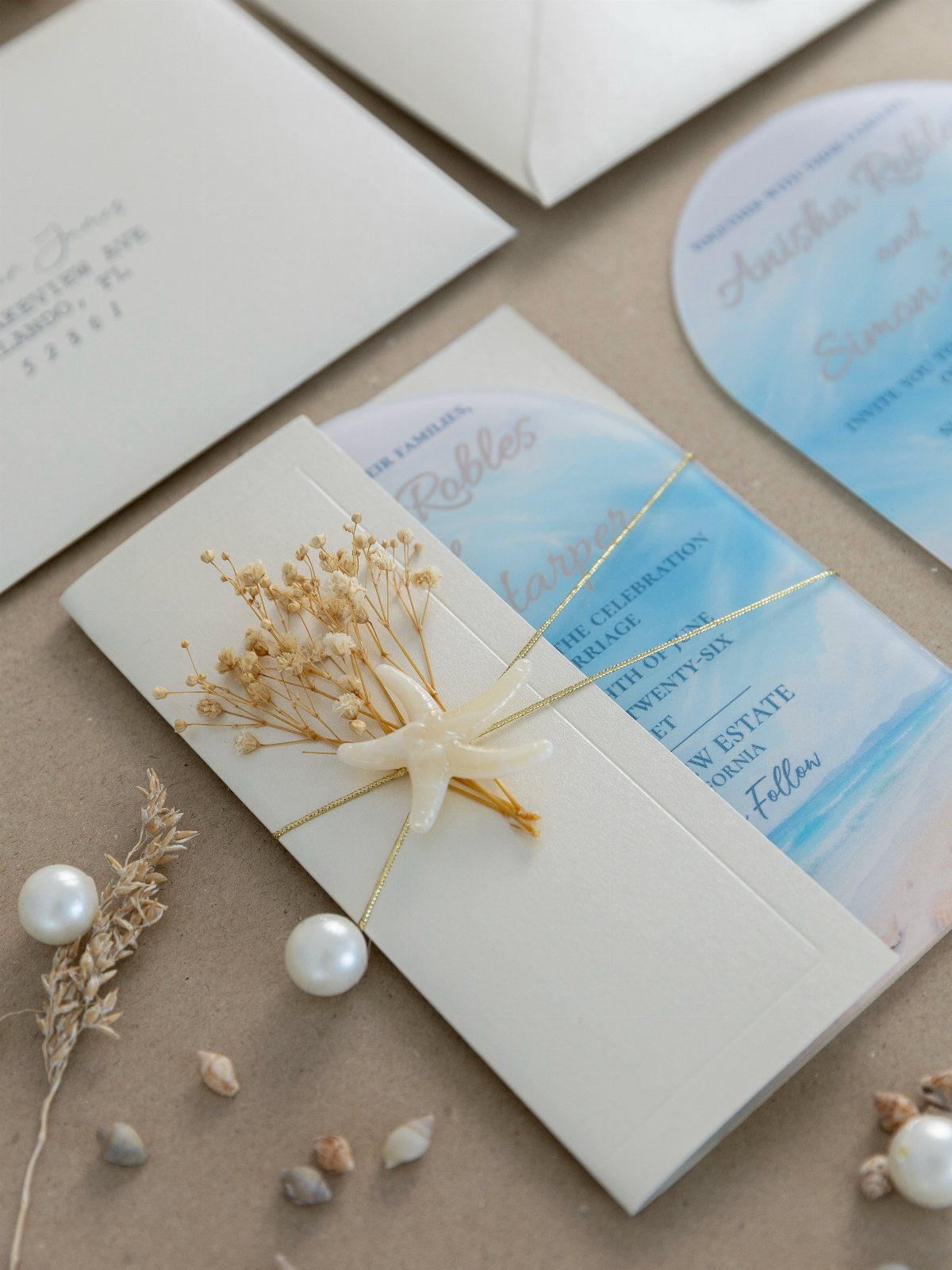
Acrylic cards printed with watercolor waves and tied with gold cord feel specific to the day without looking like a seafood restaurant menu.
Starfish and pearl accents work best when they read as found objects rather than costume pieces, which is the line to walk.
I would match the invitation formality to the dress code you actually want.
A cream folder and cord signal "beach chic" clearly enough that guests do not arrive in black tie; a more casual cardboard or glass-bottle delivery asks even less of them.
Coordinate the print colors to whatever palette you settle on for the day itself, so the invitation does not promise something the decor contradicts.
Kent Drake, owner of Kent Drake Photography recalls a time when noteworthy place cards made a meaningful impact. “These hand-painted and scripted place cards made out of shells were the perfect touch for a Jamaican beach wedding!” he says.
8. Soft Pastels Color Palette
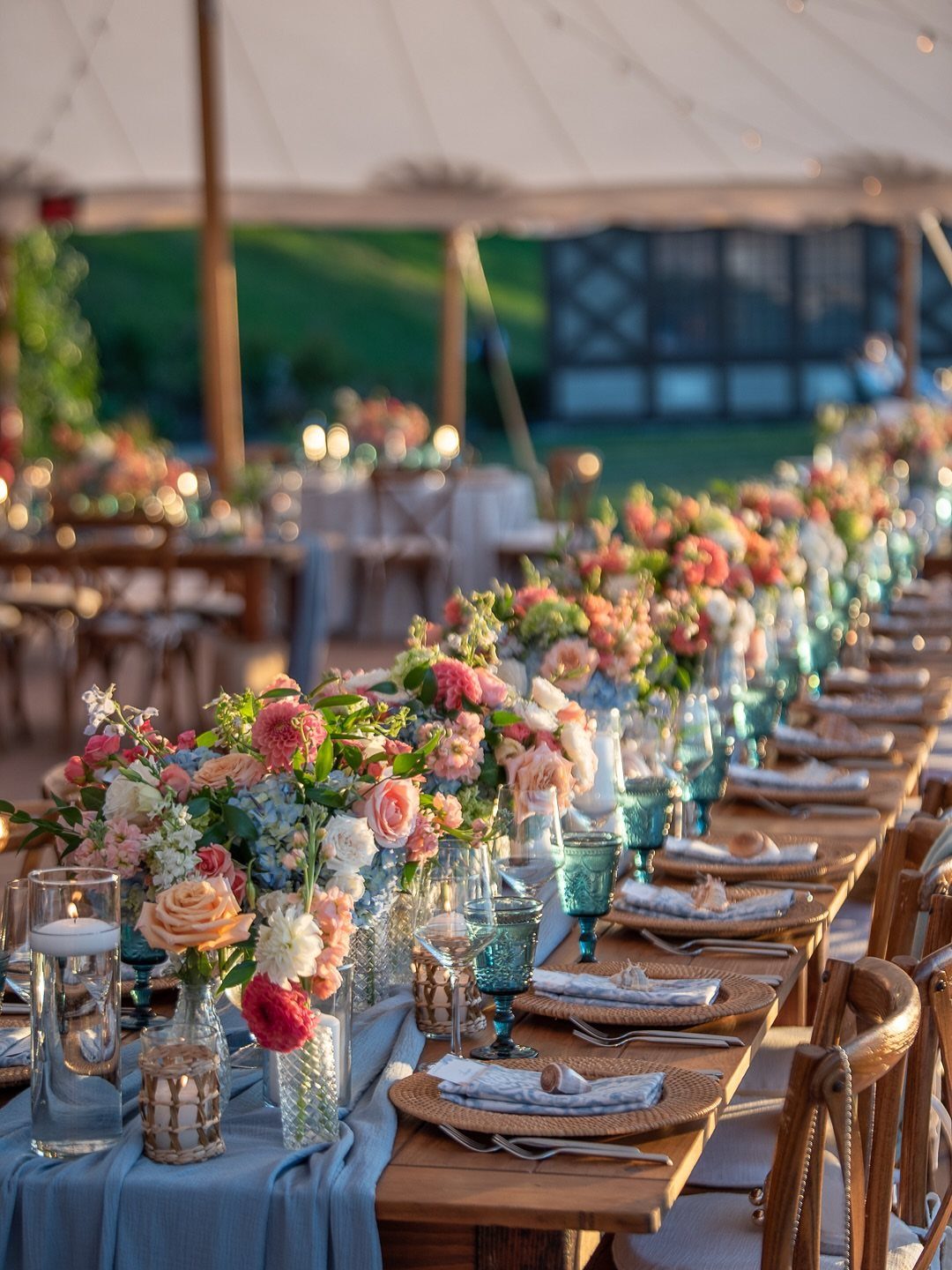
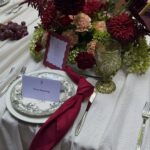
Soft pink and peach flowers against blue runners and turquoise glassware give the tent a washed-sky quality that photographs well in open daylight without competing with the water behind it.
The decision is whether to push the color into the details or keep it in the flowers alone. Woven placemats and wood tables already read as beach without any help; adding blue linens throughout risks a themed restaurant feel.
I would keep the pastels in the florals and glassware, let the wood and weave stay neutral, and trust the location to do the rest.
Check your rental company’s turquoise glassware stock early; it is not standard and runs out fast in summer.
9. Seashell Decorations
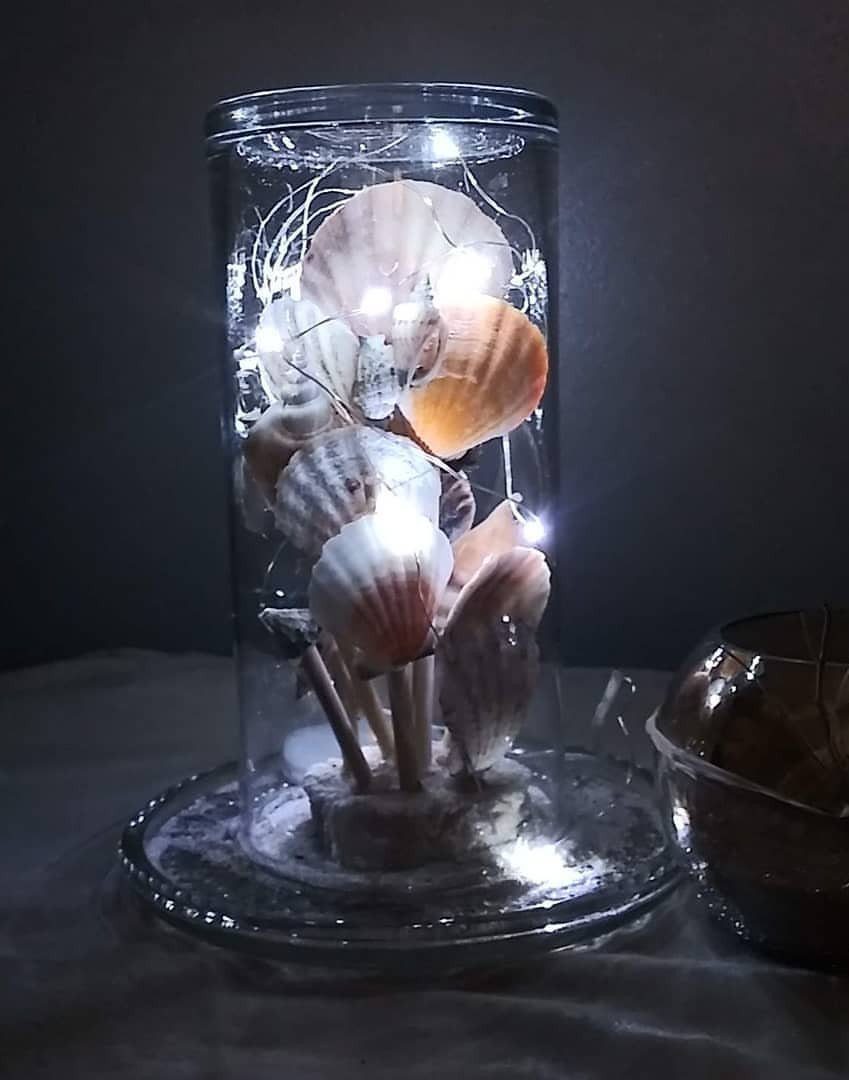
Seashells under glass keep the beach reference literal without letting sand migrate into the salad.
A cloche or tall cylinder contains the arrangement and protects it from wind; loose shells on a table scatter by cocktail hour.
I would use real shells for the ones guests handle, like place cards or ring bearer pillows, and resin or sugar ones anywhere food sits, since real shell dust is not food-safe.
Sea glass adds color variation if the all-white palette feels too uniform.
10. Surfboard Guest Book
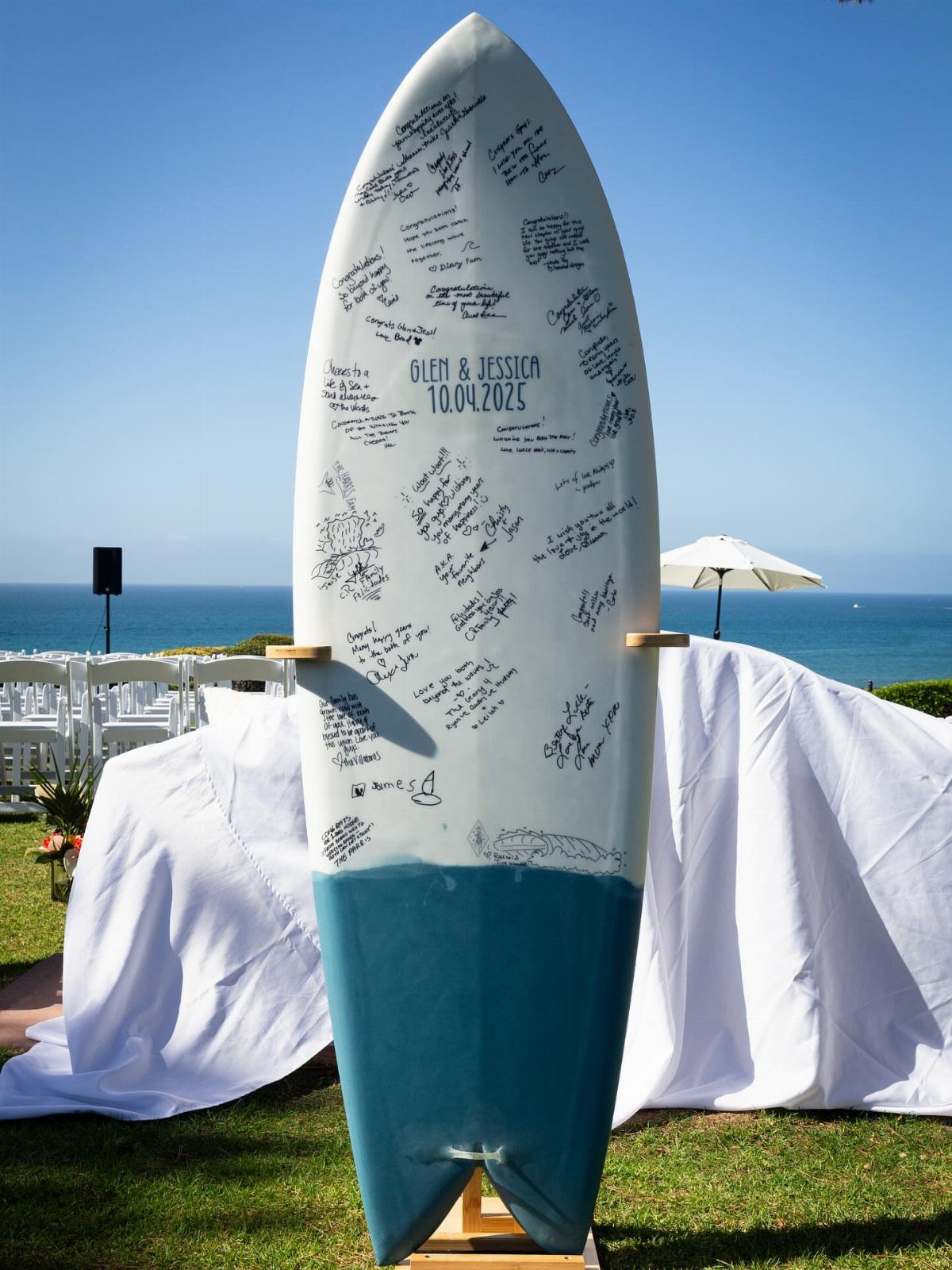
A surfboard guest book becomes wall art after the wedding, which is more than most traditional books manage. A standing surfboard on grass with the ocean behind lets guests sign during cocktail hour without blocking ceremony sightlines.
A real board is heavy and needs an easel that will not tip in sand; a hollow decorative version is lighter but may not survive decades of hanging.
I would choose based on where it lives after: a garage or beach house tolerates the weight, an apartment wall wants something lighter.
Paint the base color and add the date before the wedding so guests sign in permanent marker over a dry surface.
11. Floating Candles
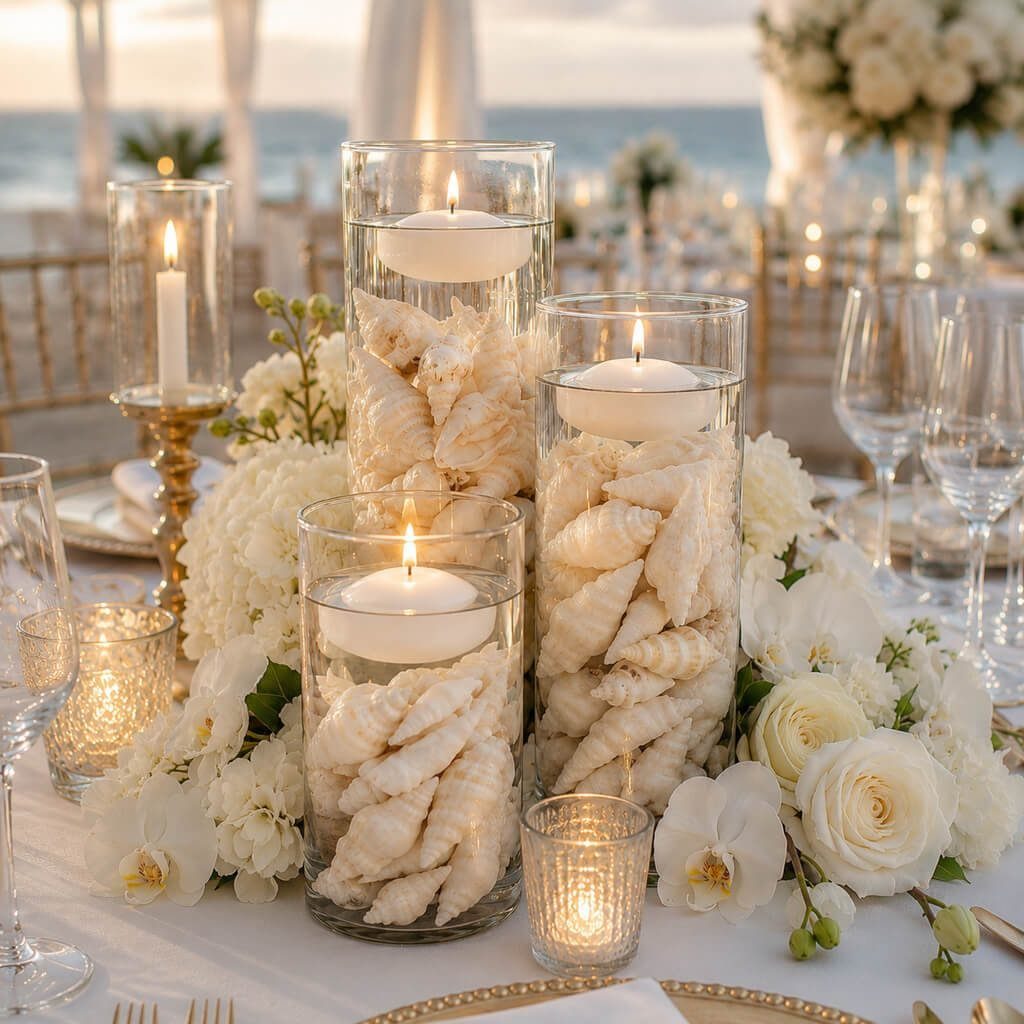
Water, shells, and a floating candle in a glass cylinder give you a centerpiece that does not fight the view behind it.
The transparency keeps sight lines open across the table, which matters more at a beach reception than in a ballroom where walls are the view.
Plain tap water clouds over hours; distilled water stays clear for the evening. Shells placed below the candle, not around it, keep the flame stable and let light reflect upward through the water.
I would set these out last, after wind checks; a cylinder is stable, but a gust across open water can still ripple the surface enough to drown the wick.
12. Beach-themed Favors
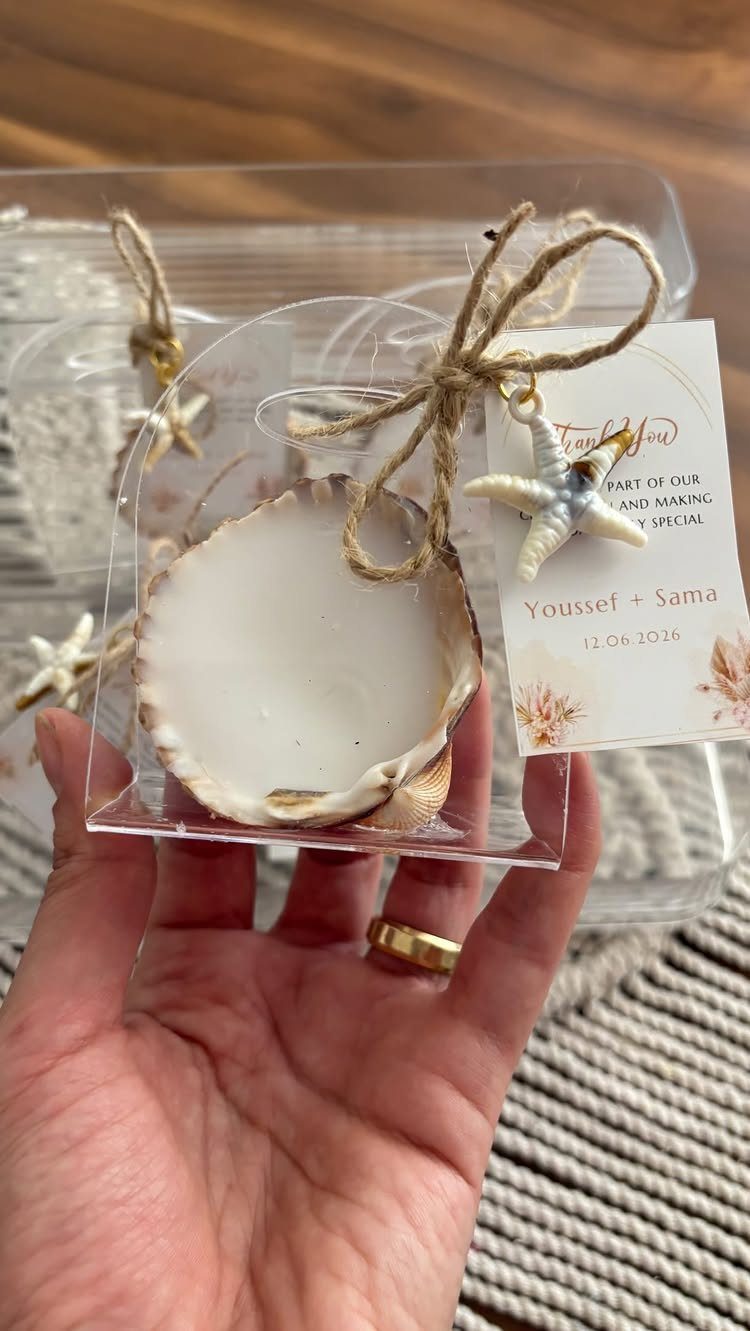
Packaging that seals tight keeps favors clean through travel, which matters when sand and humidity are already working against you.
Practical favors survive the beach better than decorative ones.
Sunglasses, personalized sunscreen, or a hand fan handle the sun and heat directly; a mini bottle of local salt water taffy or a regional spirit gives guests a taste of where they traveled.
I would skip anything with the wedding date prominently displayed, since dated keepsakes age badly. A small thank-you card hits the right scale: personal without demanding permanent shelf space.
13. Beach Seating
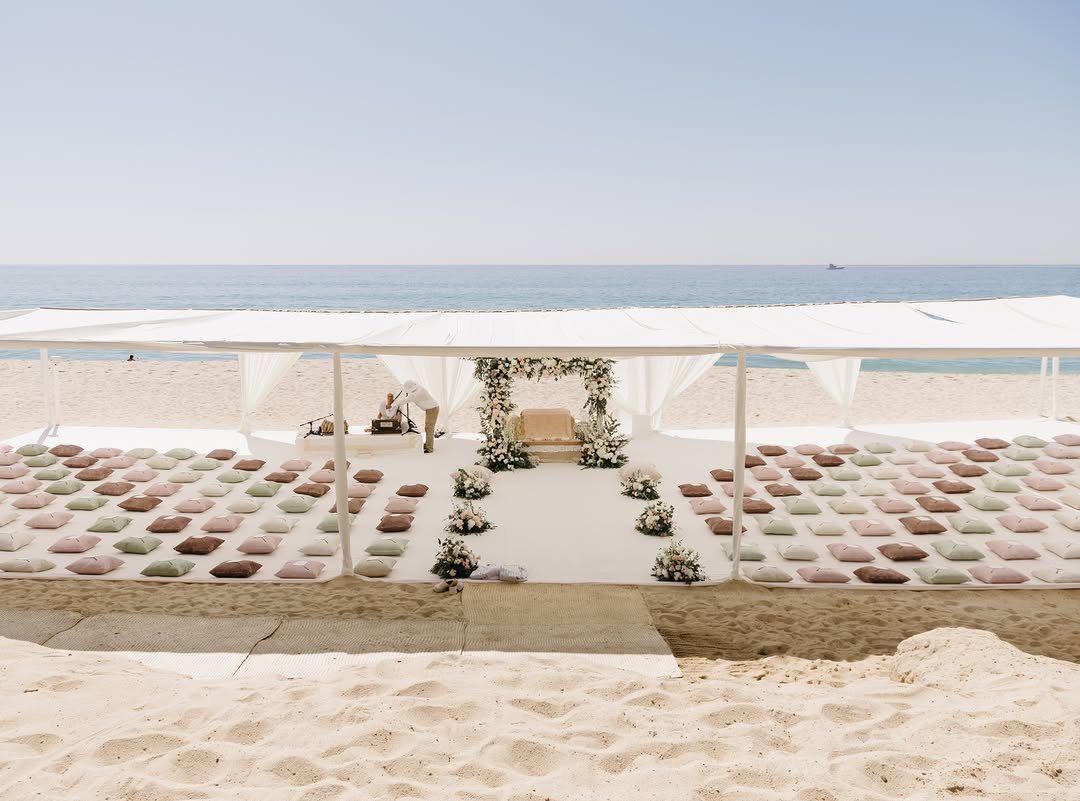
Floor cushions on woven mats keep guests at eye level with the horizon instead of perched above it on folding chairs that sink and tilt.
The low setup suits a smaller guest count; anyone with limited mobility needs a standard-height option, and you should plan a few near the aisle edges.
A canopy overhead is not optional if the ceremony runs past mid-morning.
Sand heats up fast, and bare legs burn where a hat does not reach. I would place the cushion station at the transition point, so guests grab theirs after the walk from parking.
14. Reception Photo Booth
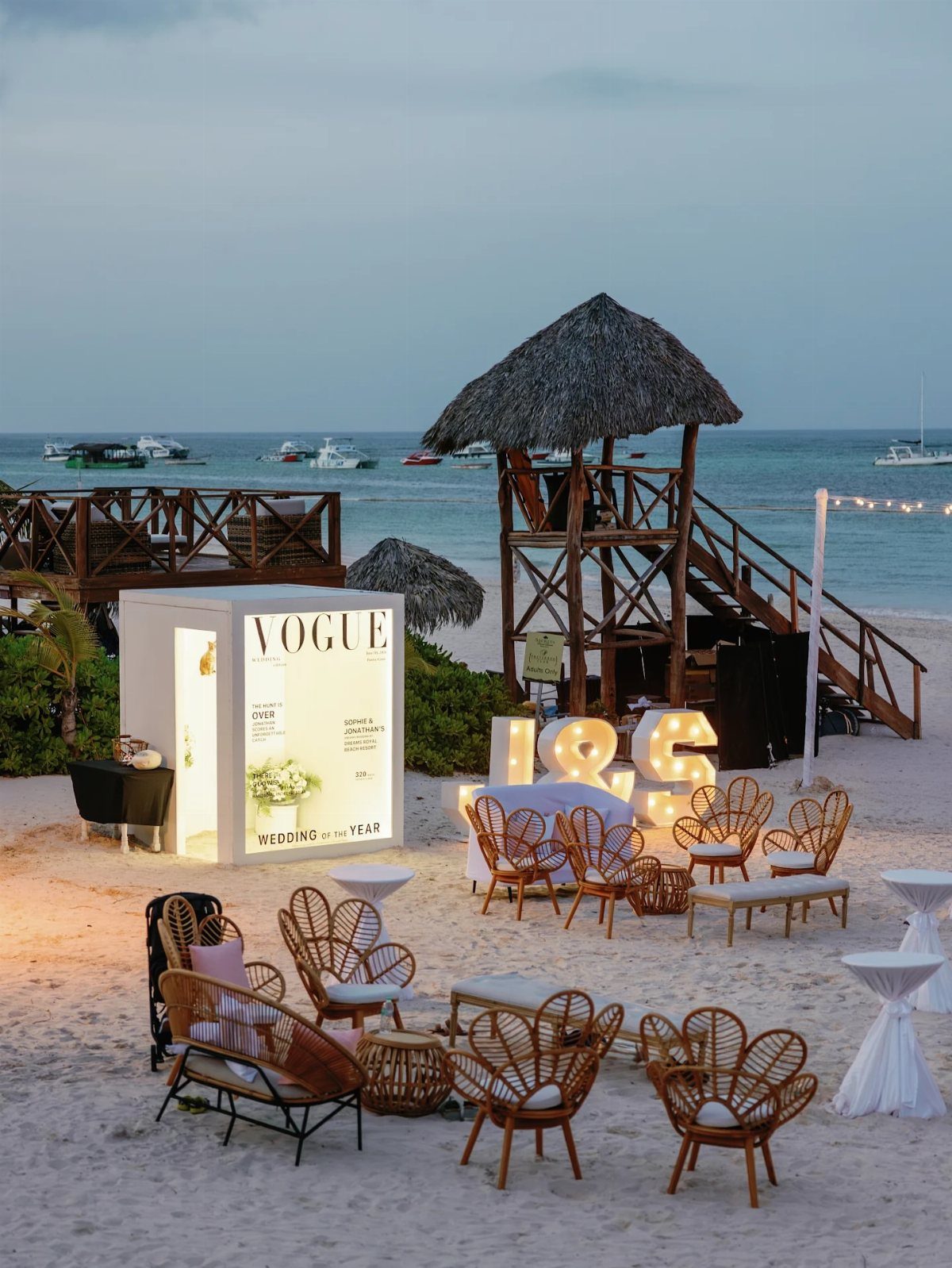
A walk-in booth gives guests a private moment to perform instead of the awkward hover that open-air backdrops create. The lit box reads clearly after dark, when beach receptions usually hit their stride.
Wicker seating nearby lets groups wait without blocking the shot, and the marquee initials mark whose party this is from a distance.
I would stock the booth with props that match the setting: sunglasses, maybe a single surfboard leaner, nothing that requires the guest to undress or hold something heavy.
Check your rental company’s power access; a generator hum ruins the audio on video messages.
15. Local Seafood Dishes
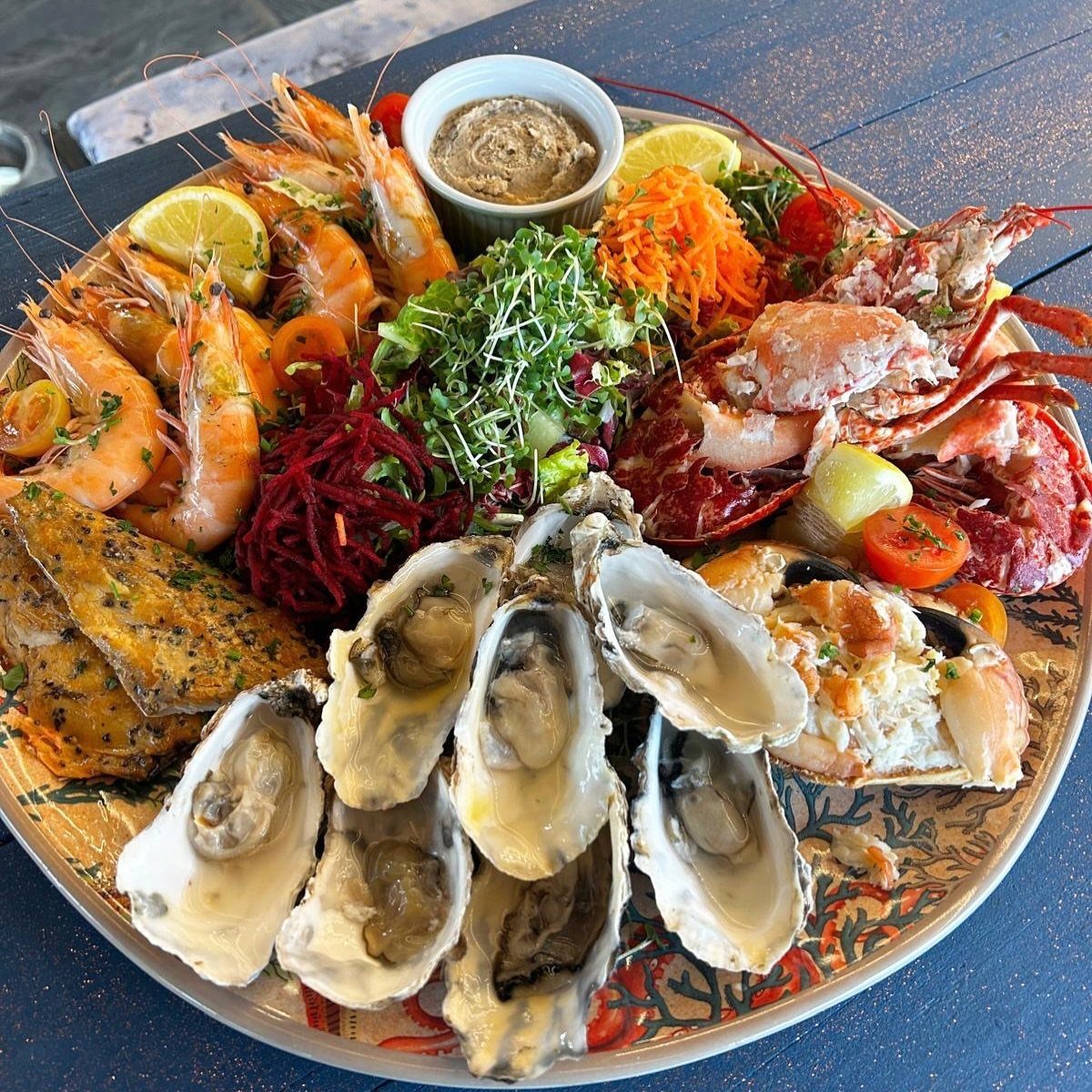
A raw bar or grilled fish station brings in what the surrounding water actually produces, which tastes fresher than flown-in alternatives and usually costs less.
Oysters on ice, peel-and-eat shrimp, or a Low Country boil let guests serve themselves and eat with their hands, which fits the sand-between-your-toes mood.
Ask your caterer what runs local in your month, not just your region. Blue crabs in season are worth the splurge; out of season they are frozen and the premium is wasted.
A single regional specialty anchors the menu; pairing it with one safe option covers guests with shellfish allergies without diluting the point.
16. Beach Bonfire
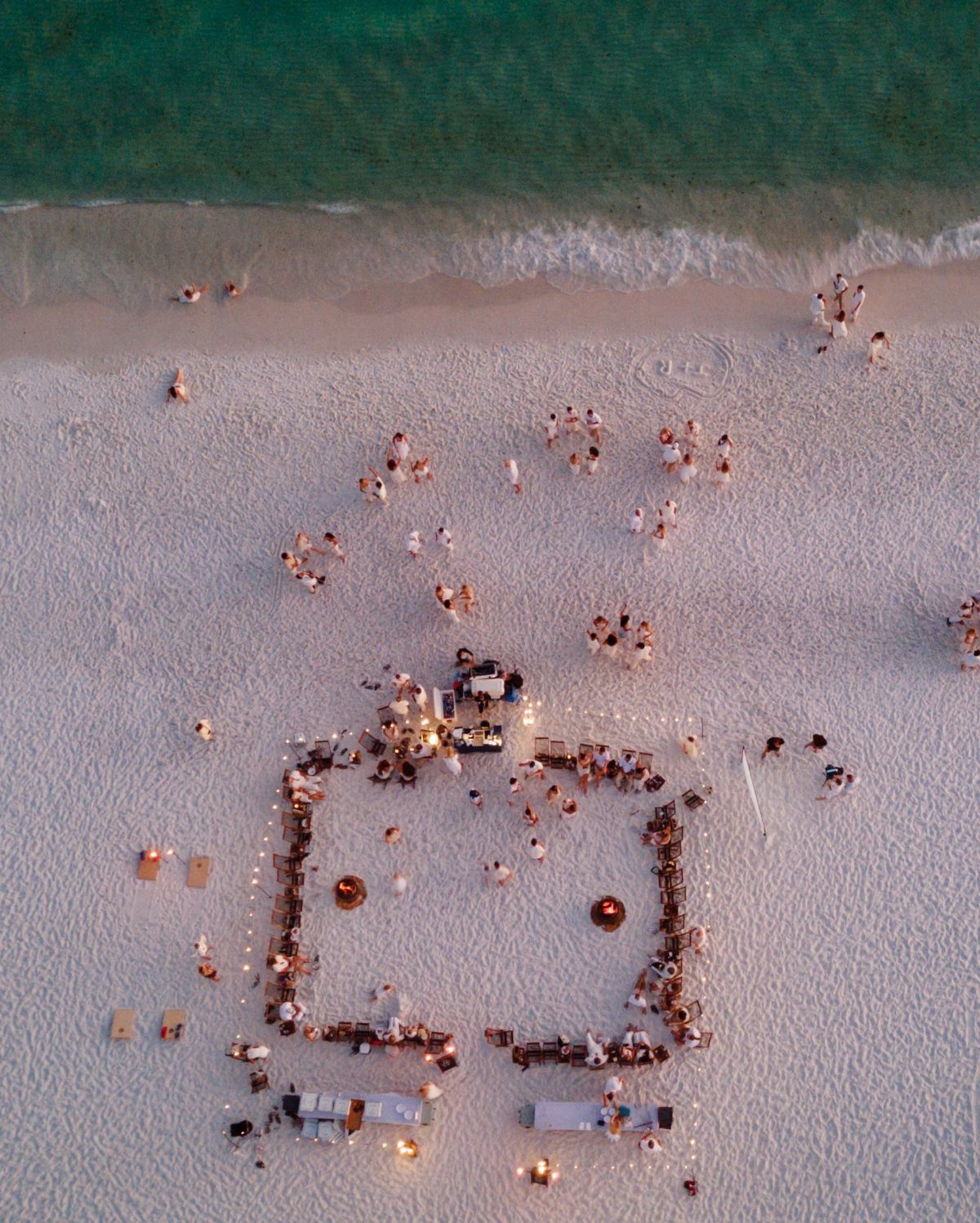
Two pits instead of one split the crowd naturally and keep anyone from monopolizing the flame.
Check your permit first; many beaches ban open flame after certain hours or during dry months.
String lights overhead extend the usable light without the wind risk of candles, and buffet tables near but not between the pits keep the food accessible without crowding the seating ring.
I would keep the bonfire short; smoke clings to formalwear, and guests with early flights need a graceful exit.
17. Beach-themed Props for Photos
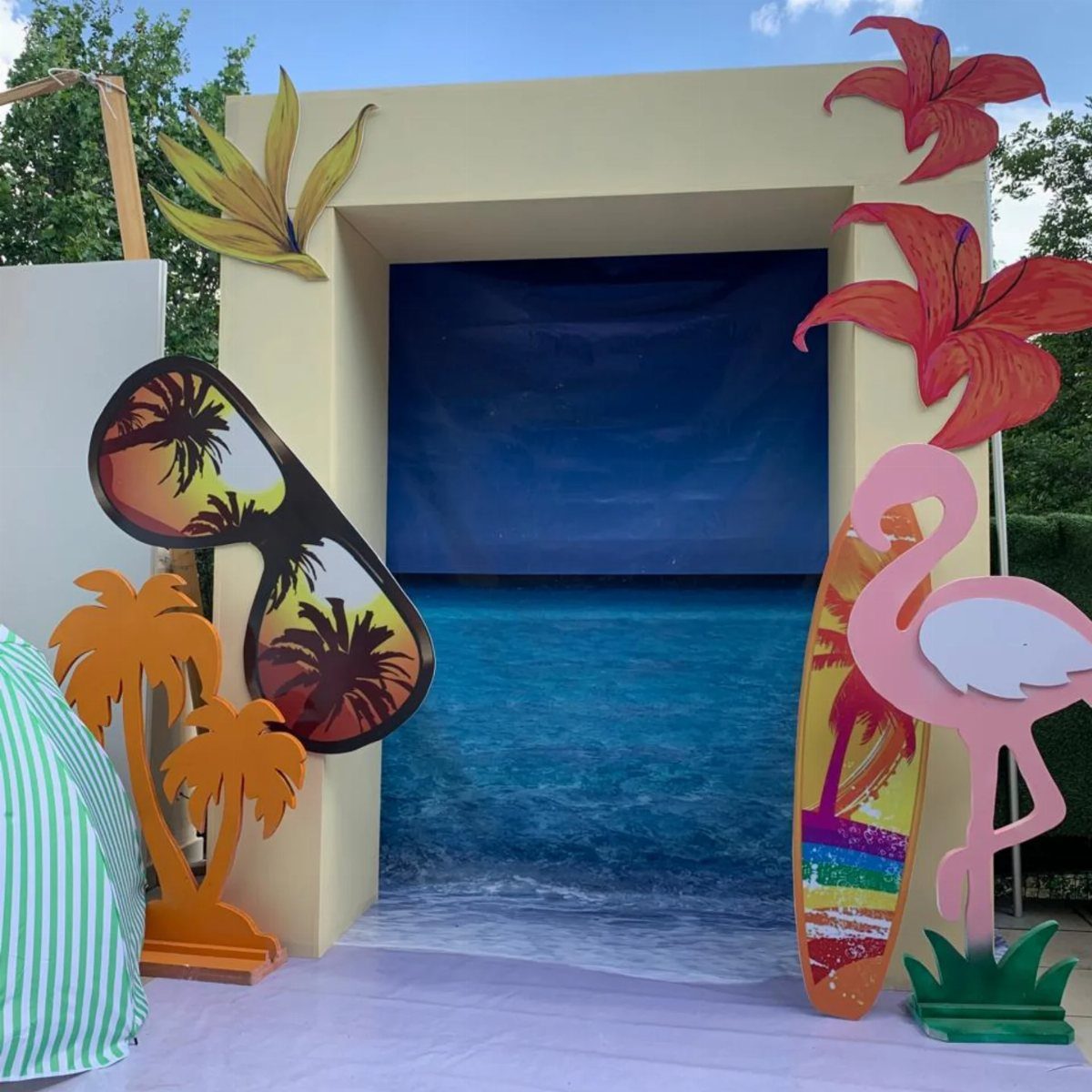
The scale matters; anything smaller than a person’s torso disappears in group shots.
A surfboard leaner works as a single prop for couples who want something less cartoonish; sunglasses and beach balls suit bigger groups where the energy carries the joke.
Check the wind before you set up; cardboard cutouts need sandbagging or they become projectiles.
18. Hanging Lanterns
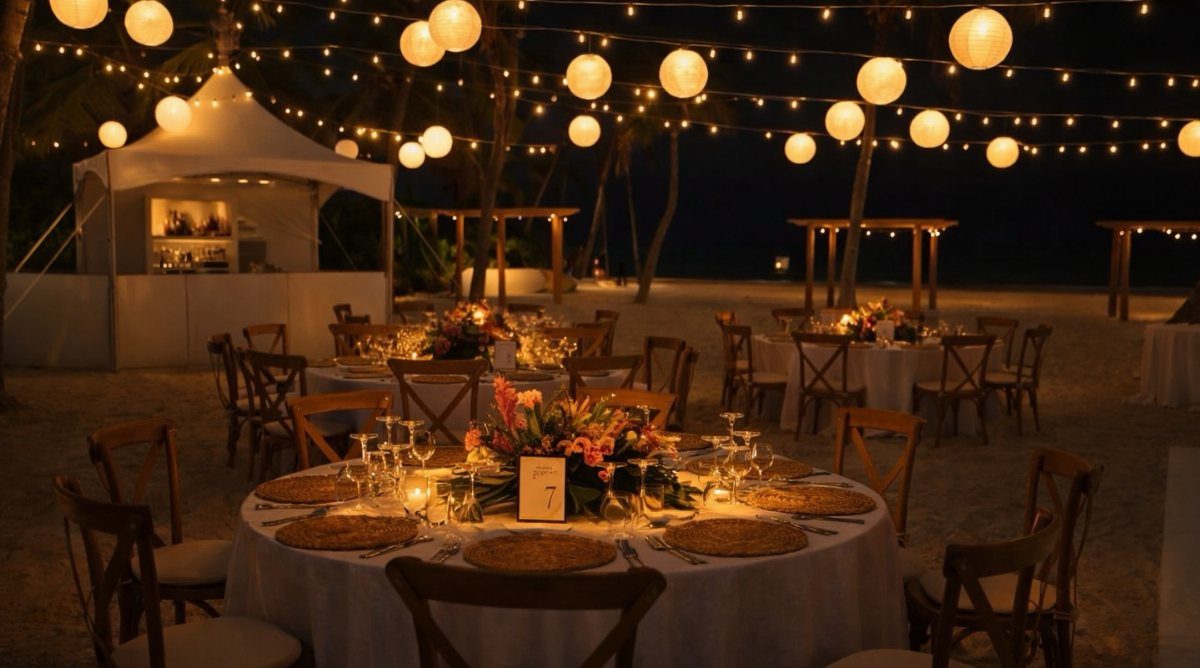
Paper spheres and string lights overhead turn a tent or open sky into a ceiling, which matters when the sun drops and the beach loses its shape against dark water.
The warm glow reflects off sand better than white light does.
Wicker basket lanterns handle wind better than paper, though they cost more to rent. I would hang clusters at varying heights rather than a uniform grid; the irregularity catches gusts differently and keeps the whole installation from swaying as one.
Check that your stakes or weights suit the substrate; standard tent weights skid on packed sand, and you do not want a heavy lantern dropping into dinner.
19. Beach Ceremony Aisle
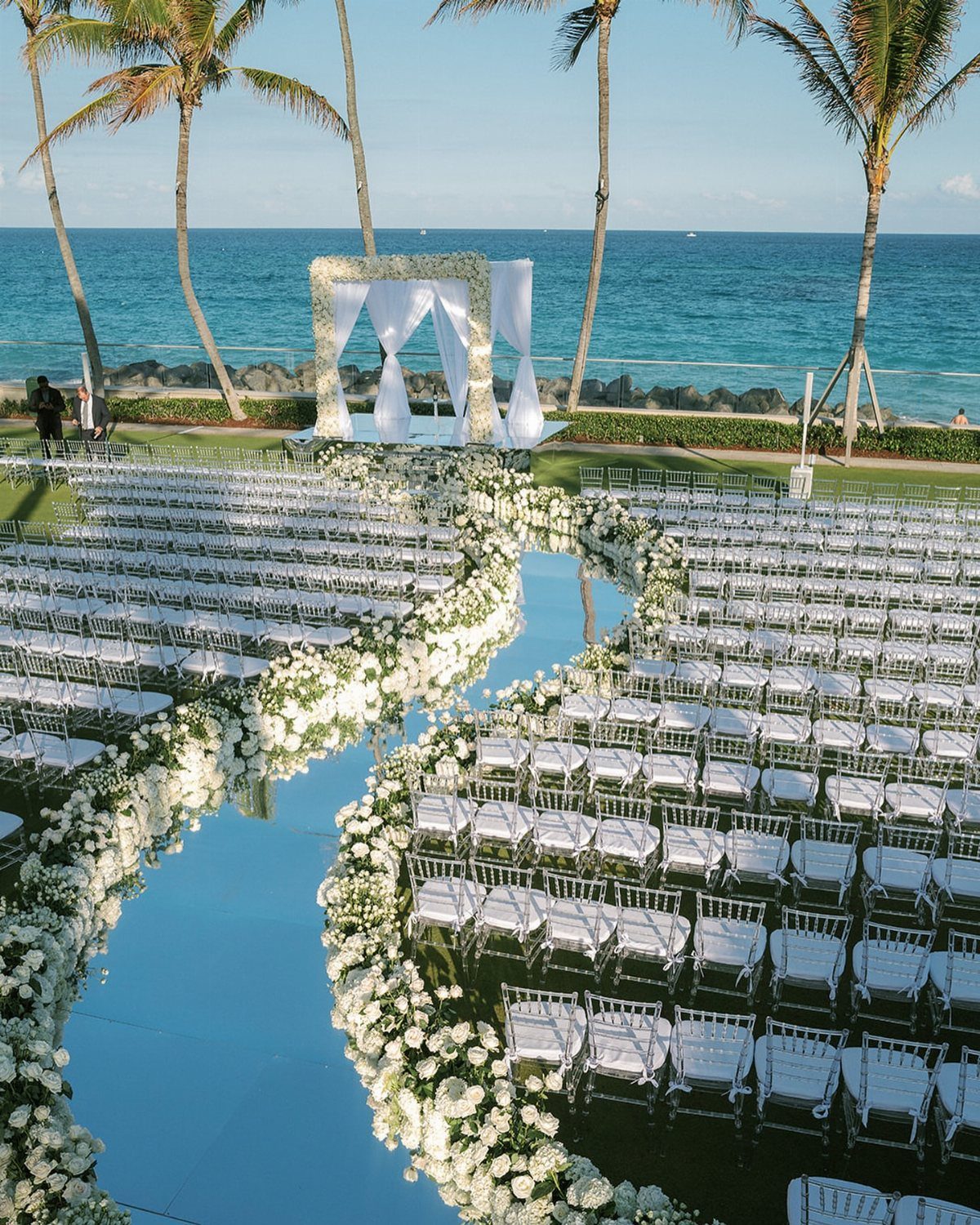
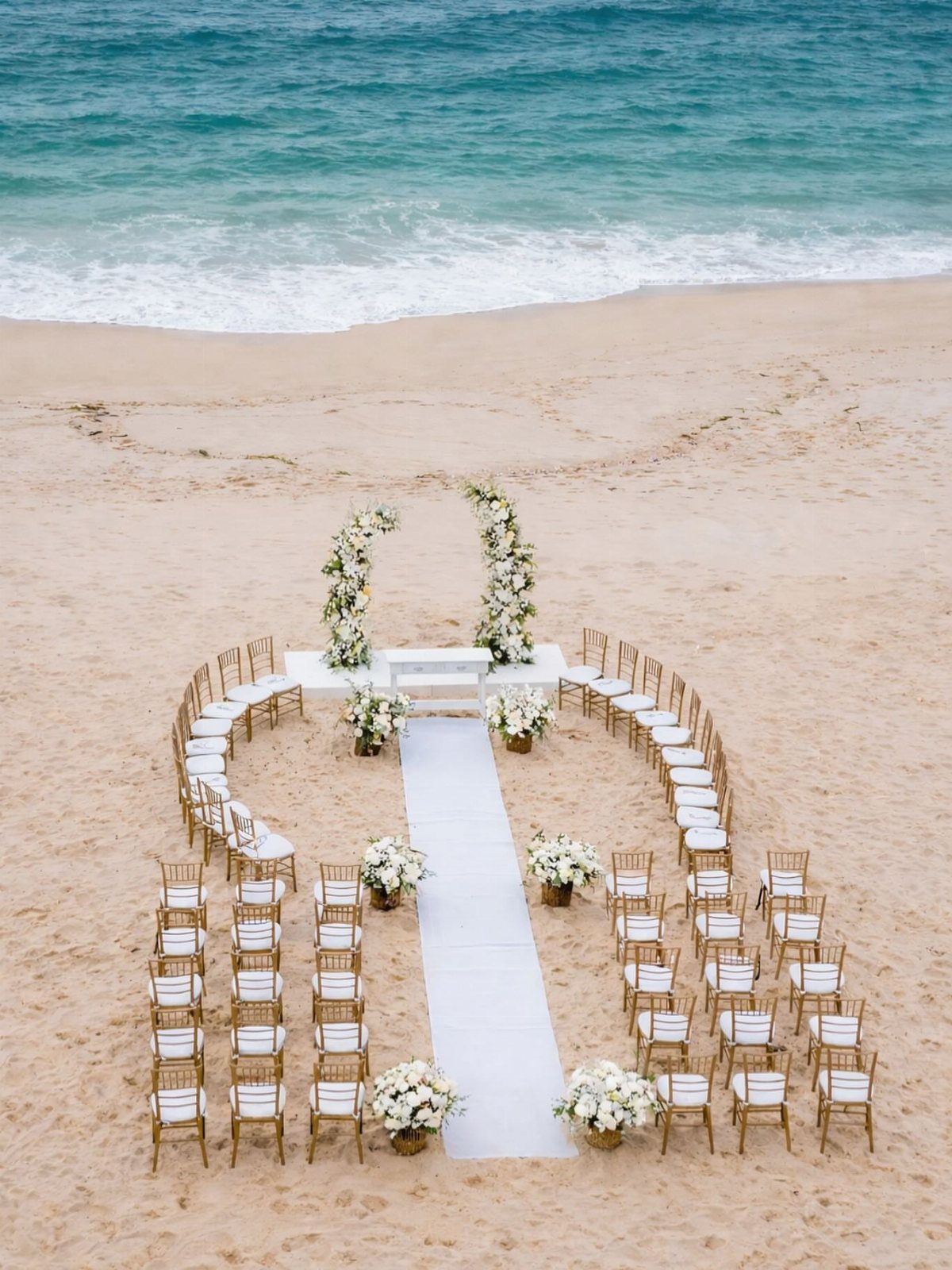
A mirrored aisle runner catches the sky and the water behind the altar, which doubles the horizon without adding any height that blocks the view.
The reflection works best when the aisle curves; a straight run mirrors only the officiant’s back.
I would check the wind before committing to anything loose on the ground.
Flower petals scatter, and lightweight runners flip. Anchored grasses in low planters give you the vertical anchor without the cleanup, and they handle salt air better than cut stems.
20. Beachy Veil

Pearls sewn onto tulle catch light the way wet sand does, which ties the veil to the shore without adding anything that reads as costume.
The weight of dense embellishment changes how the fabric hangs; a heavily pearled veil needs a comb that grips hard, especially in wind.
I would ask my seamstress to anchor the heaviest clusters near the crown, where the comb sits, rather than letting them drift toward the hem.
A fingertip or chapel length keeps the detail visible against open sky; a cathedral train in sand is a tripping hazard.
21. Colorful Wedding Attire

A yellow suit and matching parasols turn the wedding party into the color accent against blue water, which saves you from renting flowers to do the same job.
Matching the couple to each other matters more than matching the decor; guests in their own bright colors fill the frame without coordination.
Lightweight tailoring is the tradeoff.
Linen and cotton wrinkle, but they breathe; tropical wool holds shape and cooks the wearer. I would put the wedding party in the lightest fabric that still photographs structured, and let the guests wear whatever they brought.
22. Picnic-style Reception
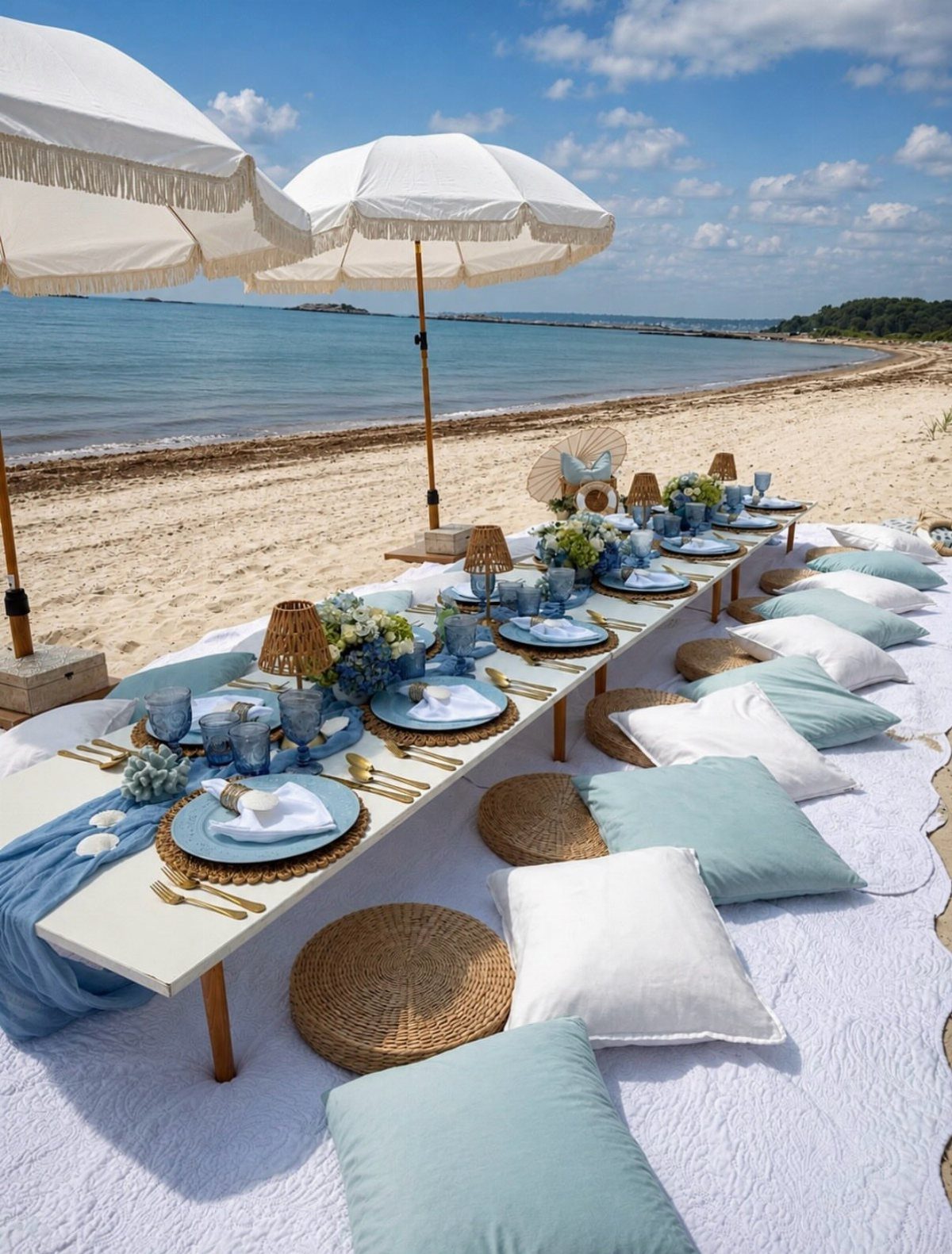
Low tables on woven mats keep the meal at sand level, which only works if your guest count stays small enough that servers can reach every plate without stepping over seated people.
Fringe umbrellas make good decorative shade, but they will not hold up in a real downpour; have a backup plan that gets everyone under solid cover fast.
I would rent real dishware rather than trusting paper in wind, and weight every napkin with a shell or stone.
Floor cushions need a dry run; older guests and anyone in a fitted dress need a chair option, and you should place a few standard seats at each table’s ends without making them look like the penalty row.
23. Driftwood Accents
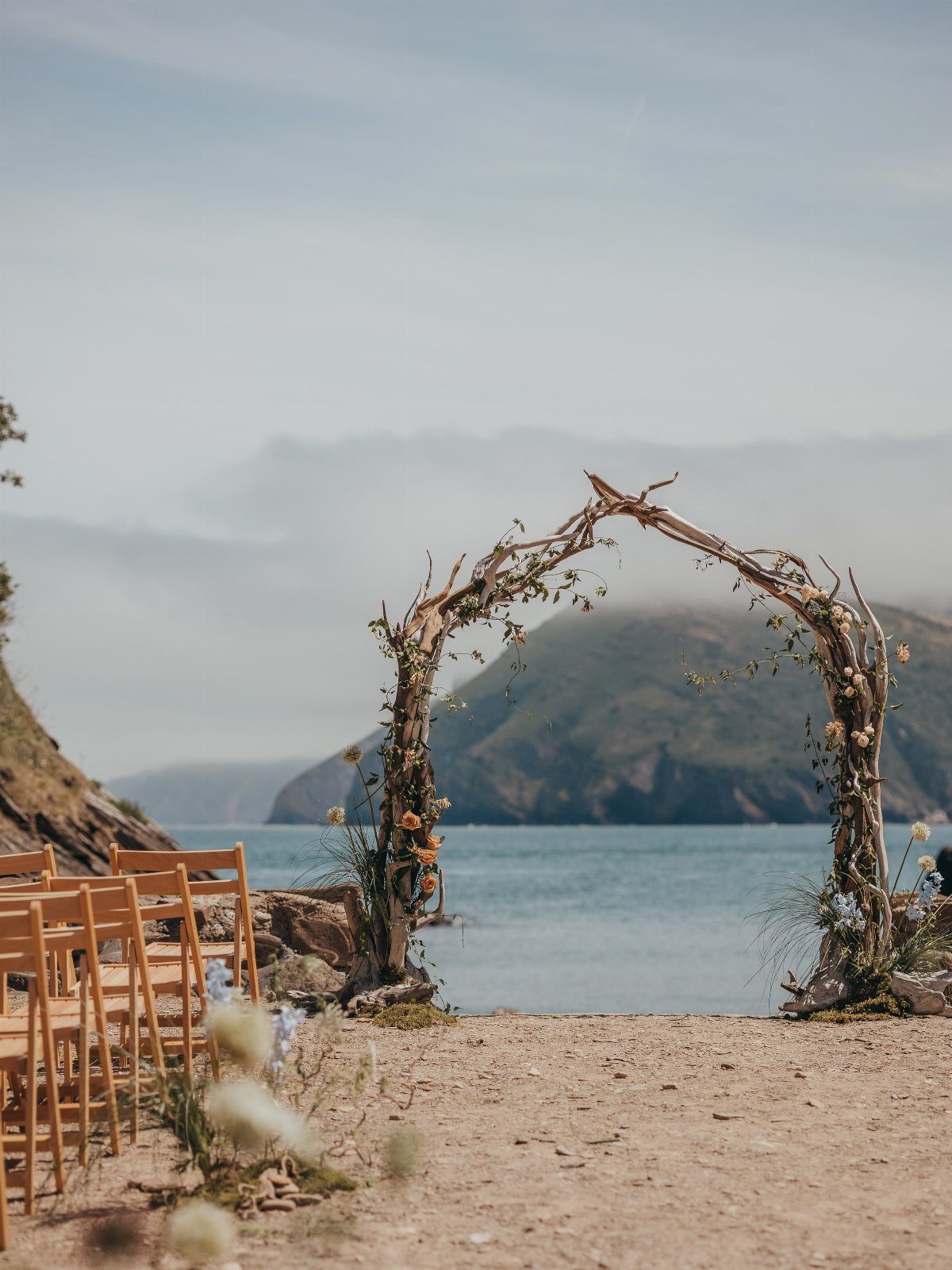
Driftwood arches carry their own weathering, which saves you from distressing new lumber to look like it belongs on the coast. The irregular branches need more structural support than straight posts; wire and fishing line hold the shape without showing.
I would source pieces already bleached and dried, since fresh driftwood shrinks and cracks indoors. For centerpieces or signage, a single substantial branch anchors a table better than many small pieces that read as scattered debris.
Check local regulations before collecting; some beaches prohibit removal, and rental companies stock finished pieces for roughly the cost of a florist’s arch.
24. Sunset Ceremony
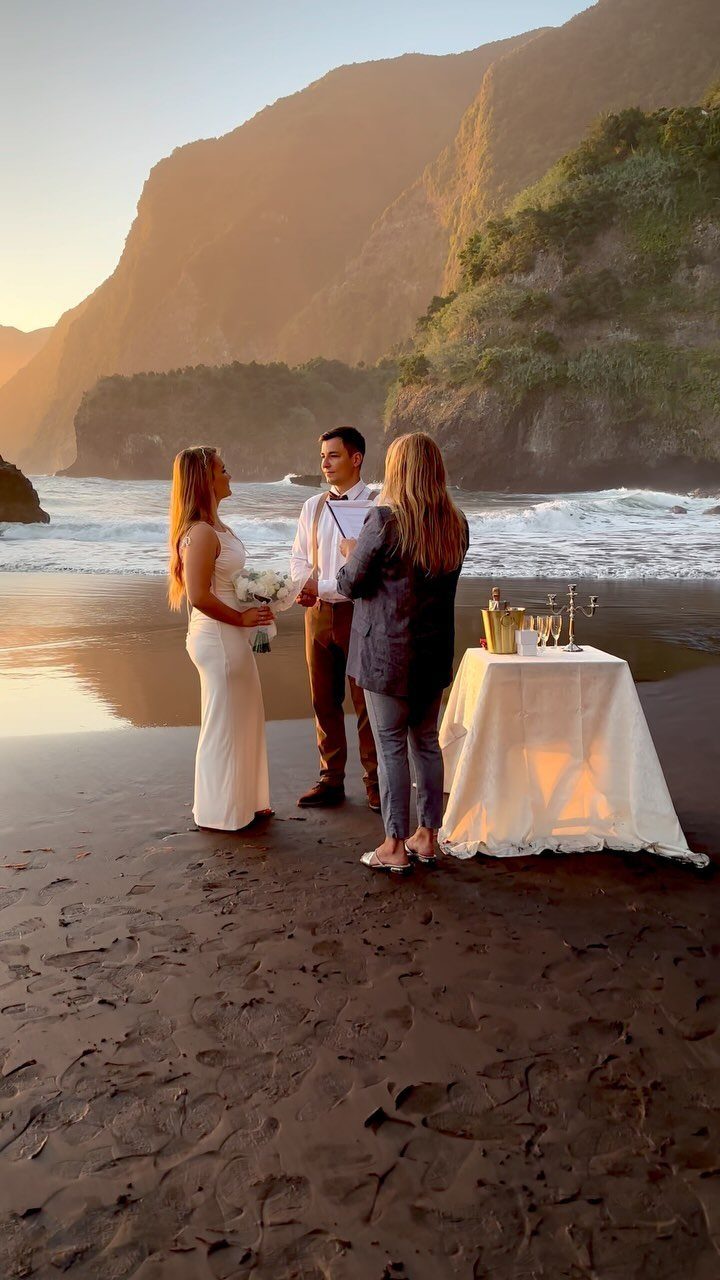
A sunset ceremony gives you a narrow window of light that photographs warm and flatters every skin tone, so the officiant needs to start exactly on time and you need to know how long that light actually lasts for your location and season.
A tight schedule between invitation time and ceremony start risks missing the color entirely if traffic backs up on coastal roads; build in more buffer than you think you need.
I would schedule the processional well before official sunset, and confirm the exact time for your date and latitude; sunset shifts by a surprising amount across the year.
A small champagne table near the ceremony gives guests something to hold during photos after, when the light has dropped but the party has not started.
Plan for Weather Unpredictability
Rain on a beach wedding is not the only problem; wind reshapes everything it touches.
A tent rated for your guest count on grass may not handle gusts across open water, so ask your rental company specifically about wind ratings and side-panel options.
I would book the backup tent even if the forecast looks clear; cancellation windows are short and beach sites turn muddy fast.
If your ceremony space and reception space are different locations, the backup plan needs to cover both.
Moving guests from wet sand to a dry tent is straightforward; moving them to a parking lot or a second venue is not. Map the route before you sign the contract.
Communicate with Vendors
Vendors who work beaches regularly already know what fails. Your caterer needs to understand that standard serving equipment sinks in sand; your florist needs to know which arrangements hold up in salt air.
Each vendor gets asked directly what they have done at this specific beach or one like it, and what went wrong.
Sound carries differently over water, so your DJ or musicians need to test levels on-site, not assume indoor settings transfer.
The same goes for generators; a rental company that usually powers backyard lights may not have the quiet models a ceremony requires. Get the equipment list in writing and confirm who delivers it to the sand.
Utilize Local Resources
Local vendors already know which parks departments issue permits and how long the paperwork takes. A non-local planner or caterer will figure it out, but the delay can cost you a date that someone else books while you wait.
Public beaches run by city government or parks departments are affordable but competitive, and the permit is only half the battle.
You will need someone reserving your spot the morning of, since the public does not clear out for your ceremony. Build extra time into the rental for setup and breakdown; tide and traffic do not wait.
Local seafood is the same logic applied to the menu.
Frequently Asked Questions
What should I consider for a beach wedding?
Weather, guest comfort, and local regulations top the list. Wind flips lightweight runners and scatters petals, so anchor anything loose and check gust patterns before committing to decor.
Older guests need standard-height seating options near aisle edges, and open flame permits vary by beach and season. A backup plan for sudden storms is not optional.
What are popular colors for beach weddings?
Soft pastels like blush and seafoam read romantic against open water, while coral and turquoise turn tropical.
Pastels work best in the flowers and the glassware, while wood and woven pieces can stay in their natural tones; the shoreline supplies the rest of the palette on its own.
Sandy beige and white stay classic if you want less color overall.
How do I choose a beach wedding dress?
Chiffon and tulle over a simple slip cut move with the wind instead of fighting it; skip the ballgown, since sand pulls at heavy skirts.
A high-low hem keeps the formal line in photos without letting the skirt dip into tide pools or wet sand.
Sand and salt water cling to even a short train, and that particular stain is not one that dry cleaning fixes.