Altar decor for a wedding runs from grocery-store roses in mason jars to a carved wooden mandap with brass oil lamps, and the gap is not just money but logistics: whether you are hauling your own structure through a 144-inch rental hall doorway or watching a crew level a circular oceanfront stage before guests arrive.
The right choice lands where your budget and your setup window overlap, and the 18 ideas below run from a driftwood frame you haul yourself to a carved mandap you rent, with plenty in between.
[link-whisper-related-posts]1. Flower Altar
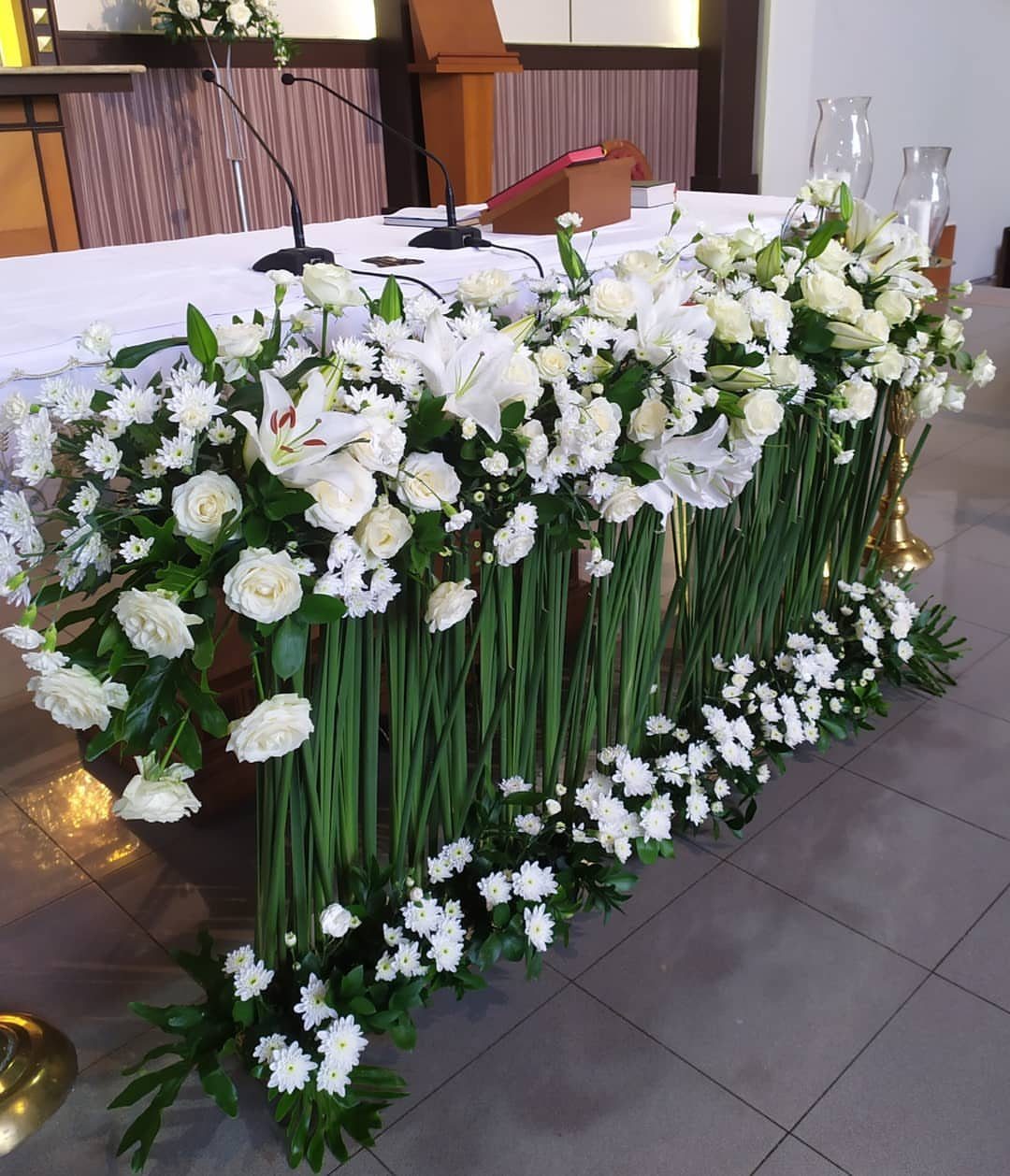
A flower altar still reads as traditional because it is, and that is exactly why it works for couples who want ceremony decor that will not look dated in the album years later.
White lilies and roses with long green stems give you a clean, front-facing arrangement that photographs well from the aisle and does not block the officiant.
Seasonal grocery-store roses or carnations in bulk, arranged simply, hold up fine in photographs.
Creative arrangement matters more than exotic stems; asymmetry, varied heights, or a single oversize focal flower can lift a standard palette into something that feels specific to your day.
Check whether your venue has a permanent altar table or if you are bringing your own, since that changes what supports the arrangement and how far forward it can sit.
2. Driftwood Altar
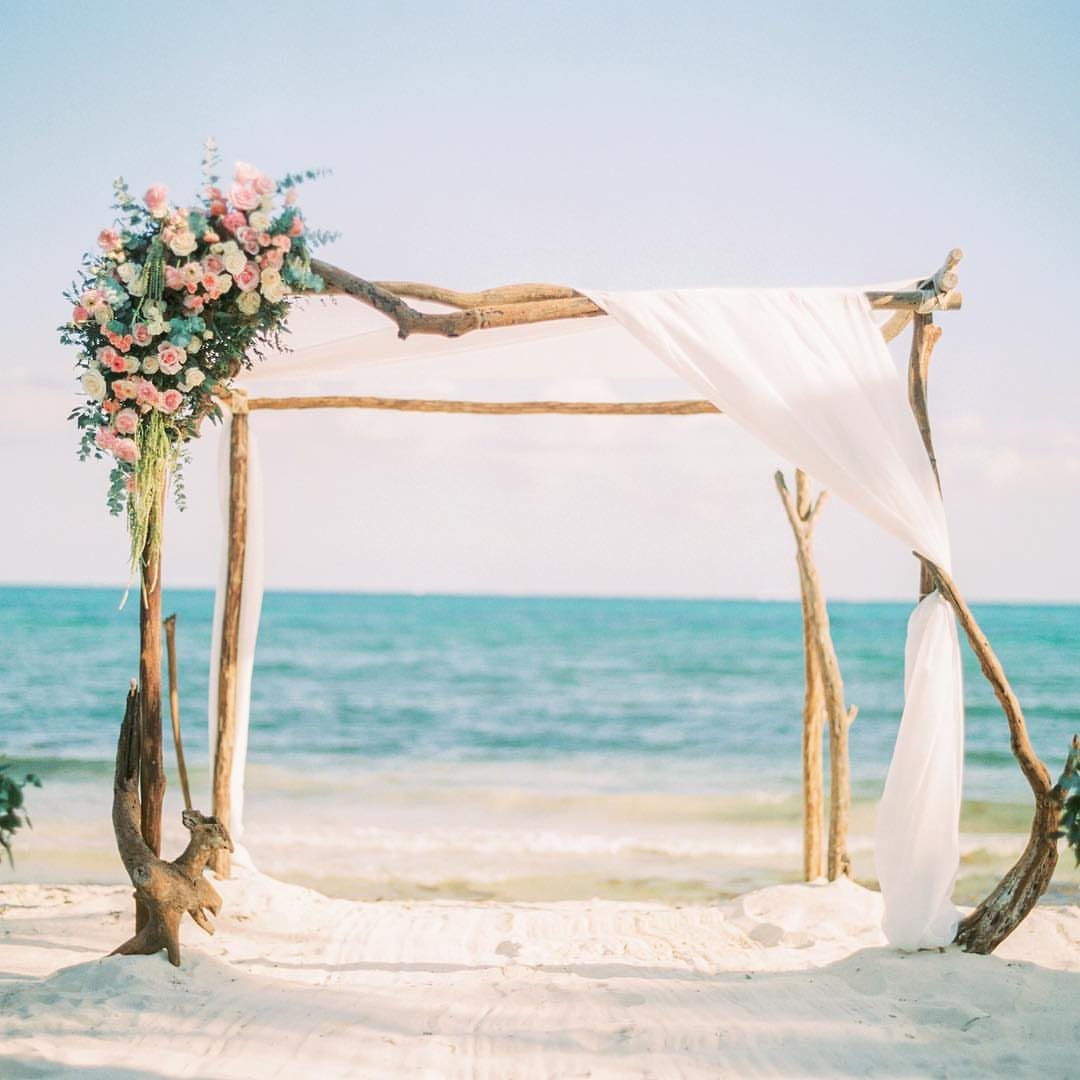
Weathered driftwood carries the setting with it. The salt and sun that bleached it have already done the finishing work, so you are not starting from raw lumber and trying to force a look.
For a beach ceremony, driftwood posts give you structure without heaviness; the gaps between them let the ocean stay in frame. Drape white fabric loosely, nothing tailored, and add one floral cluster rather than spreading decoration evenly.
The wood itself should carry the visual weight. Source from a coastal salvage yard or ask your florist if they stock it; some do, especially in shore towns, and it saves you the drive.
3. Vintage Door Altar
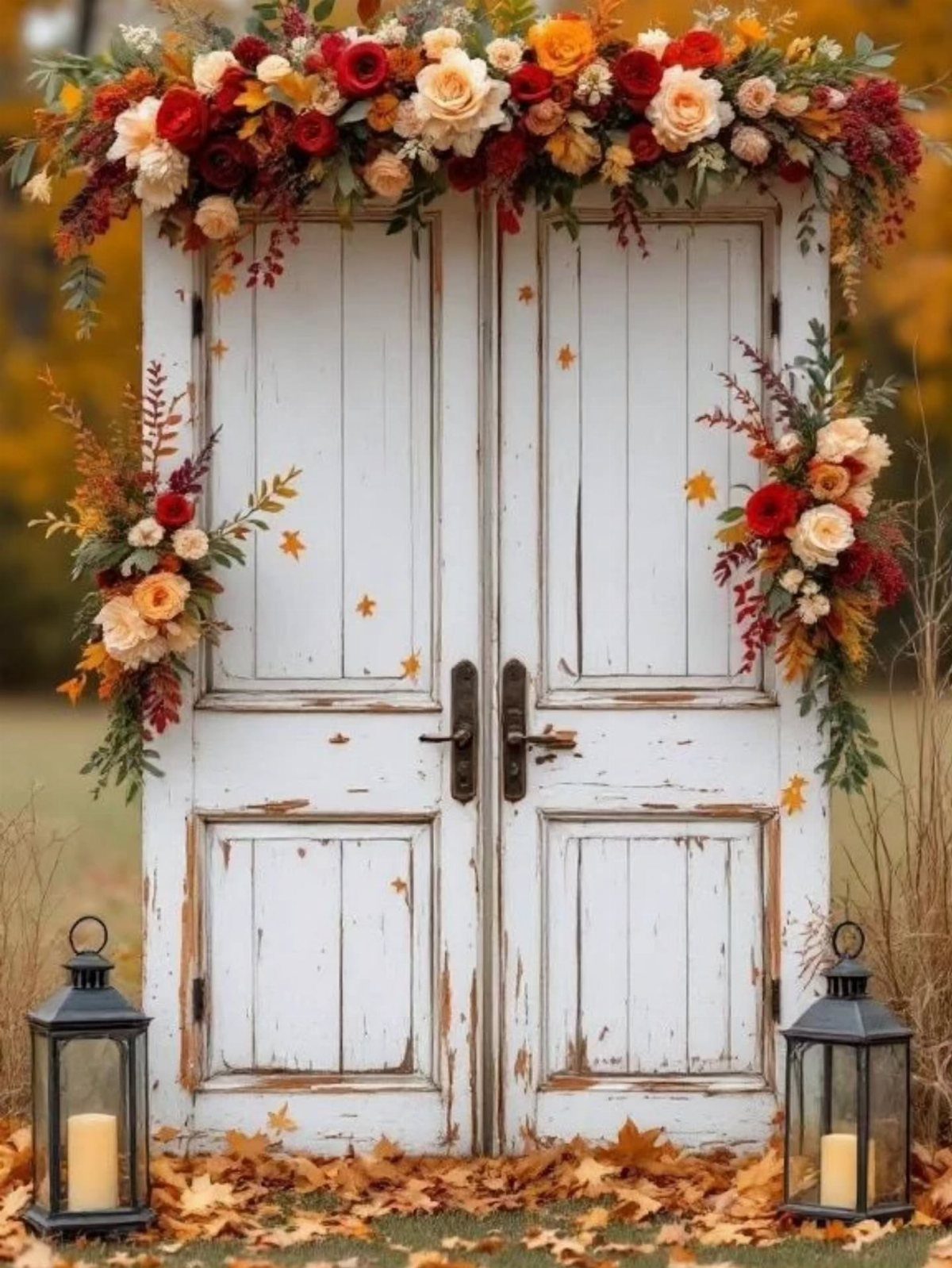
Repurposed doors give you height and narrative at once, and they solve a problem freestanding arches often have: they do not wobble in grass or on uneven ground because their weight is already distributed.
Distressed white paint with autumn florals and lanterns reads vintage-romantic, but the same structure in bare wood with wild greenery would read rustic.
Auctions and online listings move fast on farm doors, so start hunting early if you want first pick.
Repaint them to match your palette or leave the existing wear; either way, check that both doors are structurally sound enough to stand without sagging. The hinges and frame do the work of an arch kit you would otherwise rent.
4. Greenery Arch
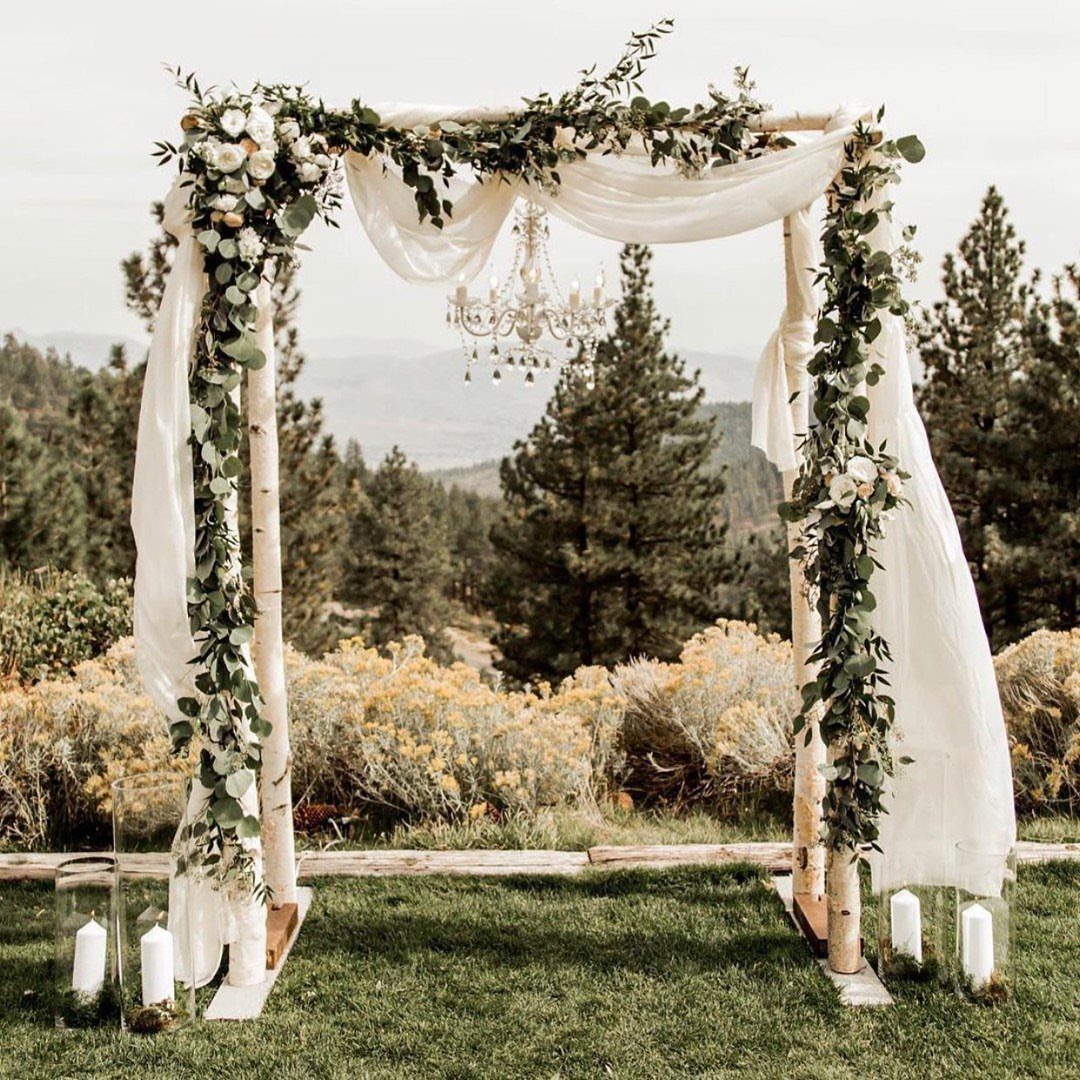
Eucalyptus on a birch arch gives you a ceremony backdrop that stays soft even in bright sun; the silvery green does not compete with white fabric or a chandelier the way bolder colors might.
Covering the arch entirely in greenery creates a natural frame without hard edges, which helps if your backdrop is a view you want to keep visible.
Tall pillar alternatives to a full arch, built on foam or wire cage cores with lush fillers, work better in narrow spaces or where a center structure would block sightlines.
Either way, greenery is forgiving; stems out of place read as movement, not mistake.
5. Wood Altar
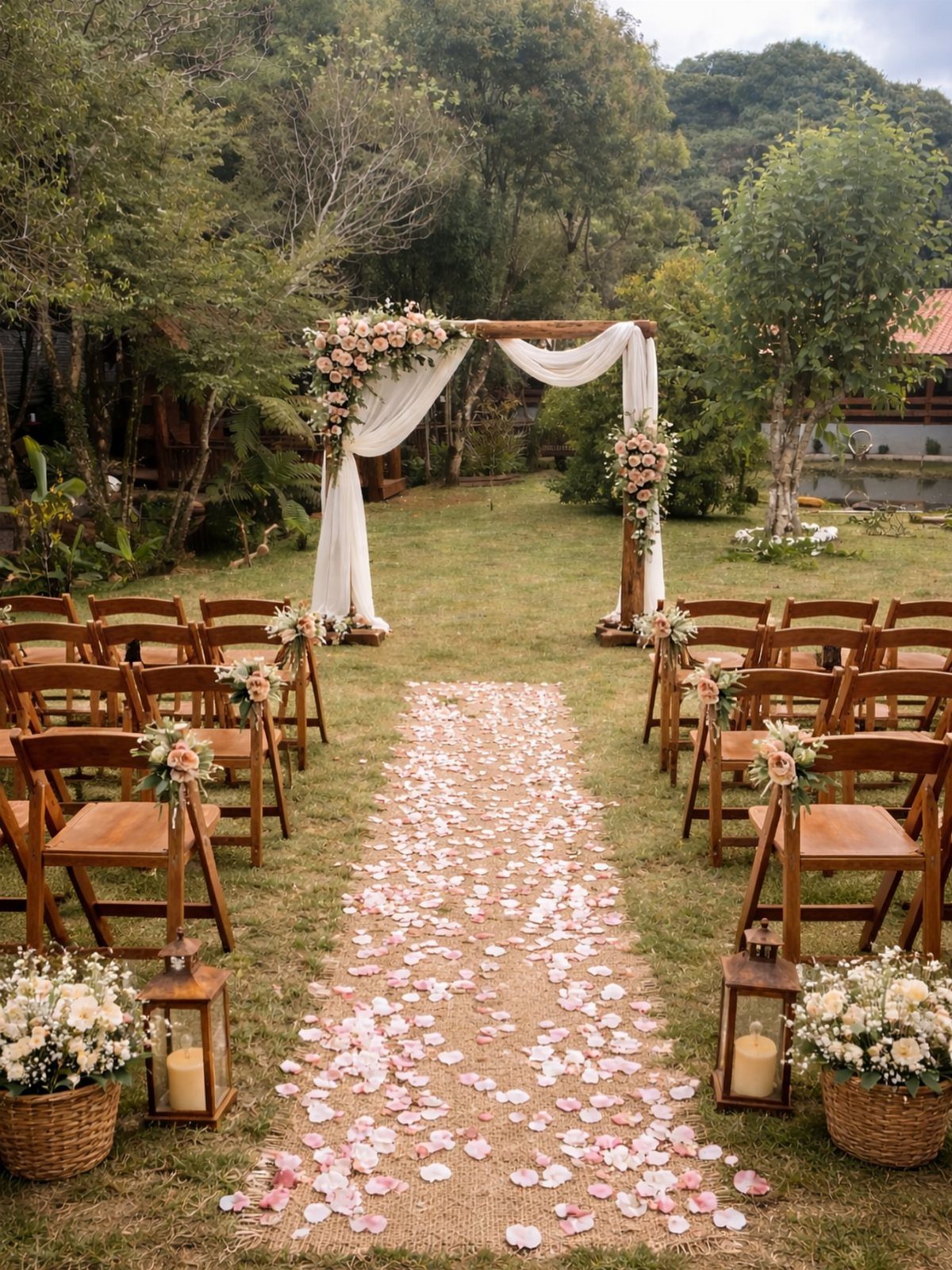
Wooden altars have become the default for outdoor and rustic weddings because they adapt. The same structure that carries burlap and blush flowers for a spring ceremony can take plaid and pine in December.
Start with the wood itself; reclaimed barn beams, cedar posts, or even finished lumber from a hardware store each give a different grain and weight.
Drapery and floral arrangements can shift with your season, but the proportions of the arch, its width relative to your aisle and its height relative to the tallest person standing beneath it, are fixed once built.
Plan those to your space, not to a photo you saw online.
6. Wildflower Altar
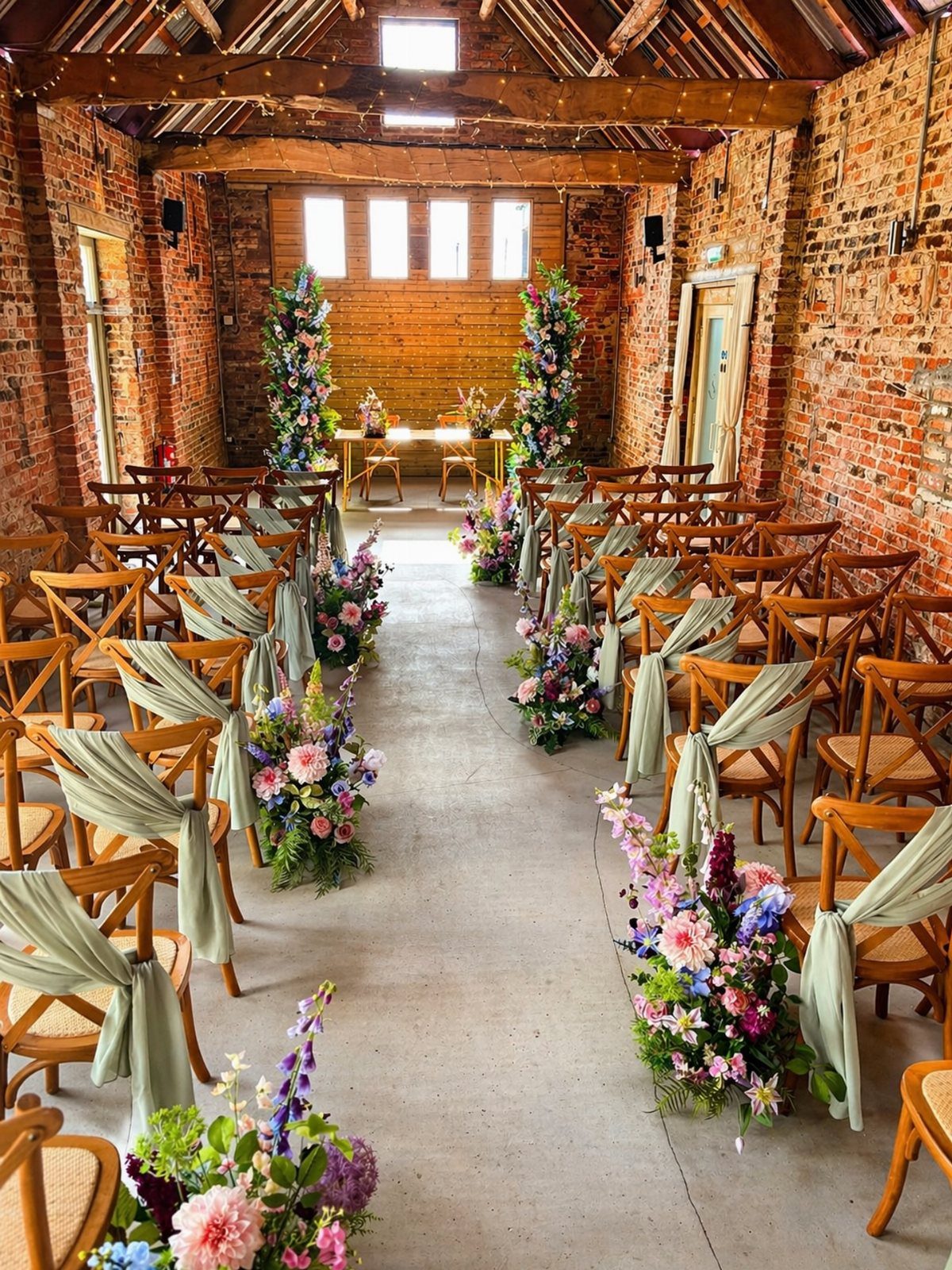
Wildflowers in mason jars or wooden crates give you a ceremony look that costs less than formal arrangements and stays relaxed without looking unfinished.
Rough textures in a barn or outdoor space want decor that does not try to out-polish them.
Mixing fabrics and floral pieces that coordinate without matching exactly keeps the eye moving down the aisle. For your own version, gather jars in one size or vary them deliberately; a mix that looks accidental reads as error, not charm.
Check what blooms are native to your season and region, since that affects both price and how long they hold up out of water.
7. Flowers and Macrame Arch
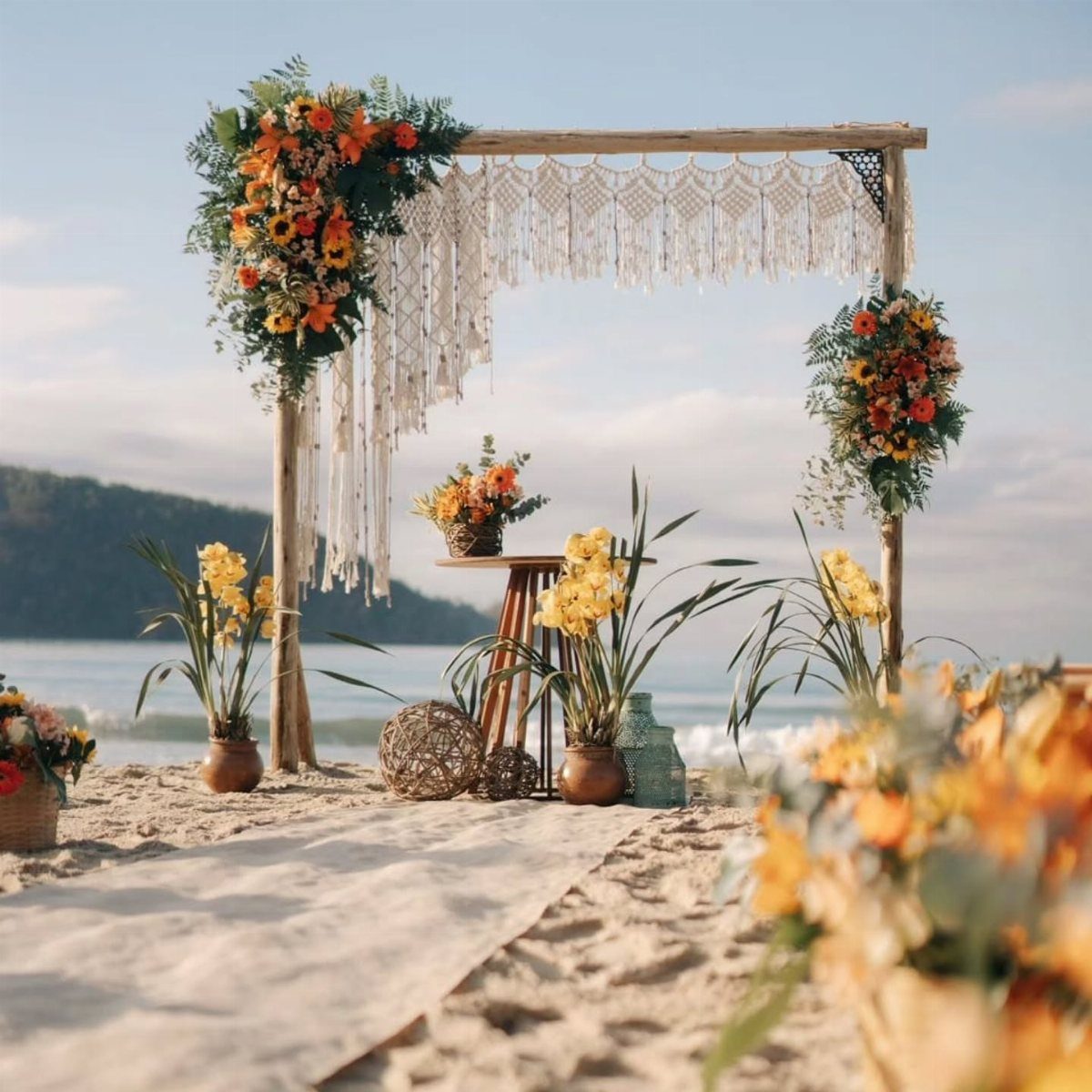
Macrame softens the geometry of a standard arch into something that reads handmade without looking homemade.
The knotted cotton catches breeze and light in ways fabric panels do not, and orange flowers against white rope give you saturated color that still feels beach-appropriate.
For your own version, hang the macrame first, then weave in floral stems rather than trying to arrange both at once; the knots give natural anchor points.
Cotton rope from a craft store works, though vintage or hand-dyed pieces from makers’ shops cost more and carry more texture.
Check that your arch feet sit deep enough in sand or soil to take the added weight of wet rope after rain.
8. Macrame Paneling
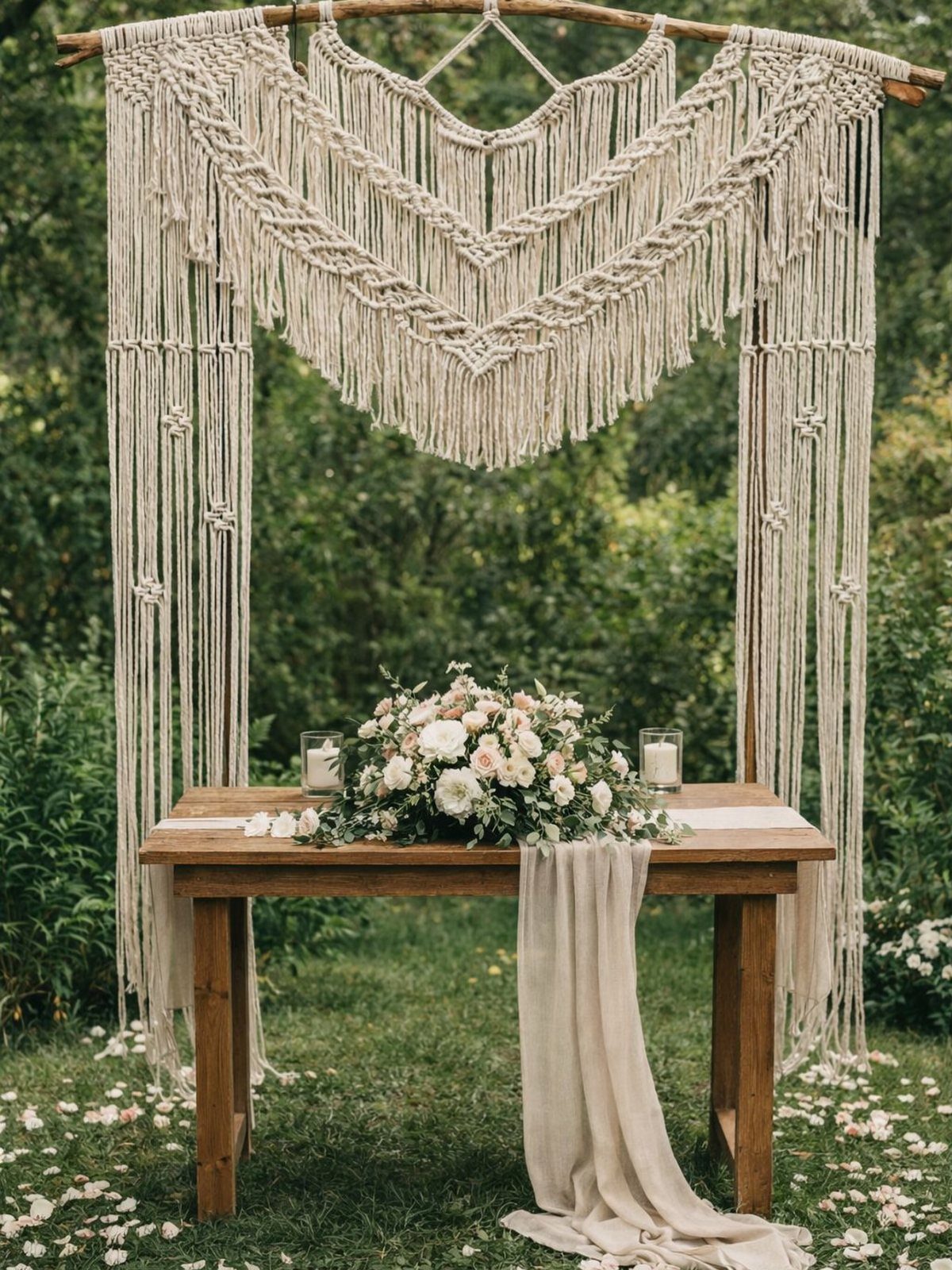
A single macrame panel behind your altar table gives you backdrop texture without the visual busyness of pattern or print.
Cream thread against wood reads neutral in photographs and does not shift color cast under changing daylight the way dyed fabric can.
Mounting is the practical question. If you are renting the arch, check whether you can drill or clamp, or plan to lash the dowel with jute that matches the macrame tone.
The panel itself can come from a fiber artist, a craft marketplace, or your own hands if you knot; expect to lose most of a weekend to a piece big enough for an arch.
9. Fairy Light Strings
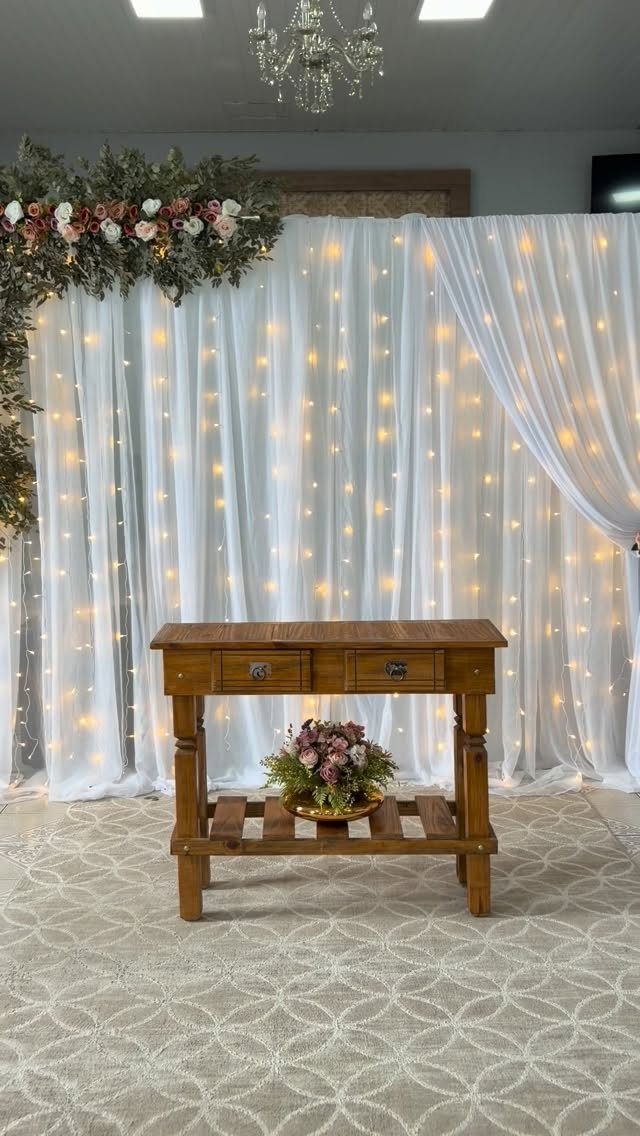
Vertical light strings behind your altar turn a plain curtain or wall into depth you cannot get from uplighting alone. The warm bulbs read as candlelight in photographs but stay lit in wind and do not need tending.
Battery or plug-in strands each have limits. Battery sets let you place the backdrop anywhere, but you are checking and swapping cells for hours before the ceremony.
Plug-in strands need a grounded outlet within cord reach, and you are taping down cables so no one trips. For either, LED bulbs run cooler than incandescent if your fabric is synthetic.
Space strands close enough to read as a glow, not so tight that they become a solid wall of light or so loose that they look like scattered dots.
10. White Fabric and Hanging Chandeliers
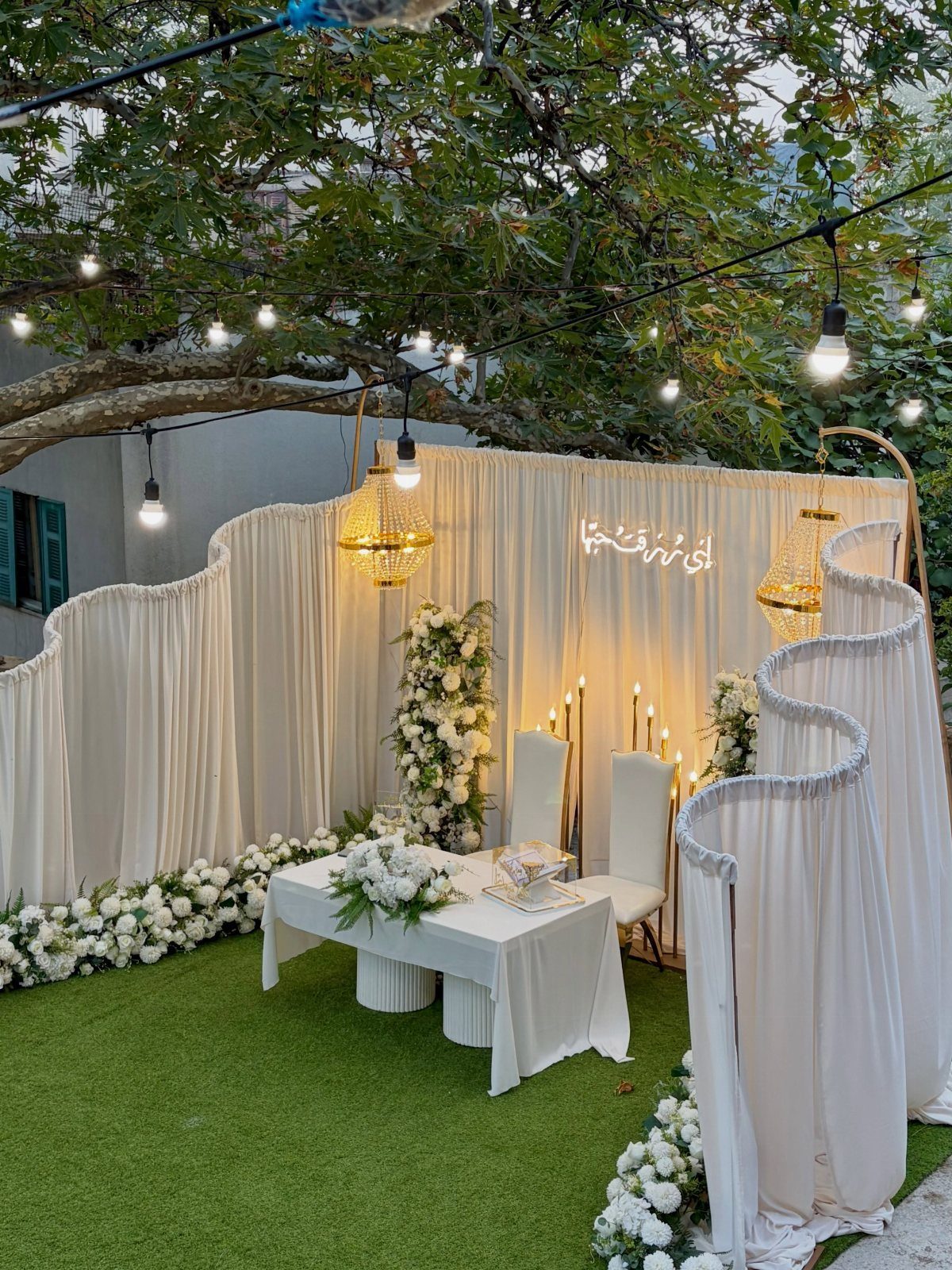
Outdoor drapery with chandeliers asks you to commit to the contradiction: you are building an interior room outside, which means planning for weather you cannot control.
Sheer voile moves beautifully in breeze but needs weighting at the hem; muslin stays put better but photographs heavier.
The chandeliers are the practical sticking point. Battery-operated crystal fixtures exist, though they give less light than wired ones, and you are hanging them from a rig that can take the weight.
Check your rental contract for power access and for whether the venue allows overhead rigging at all.
11. Paper Flower Backdrop
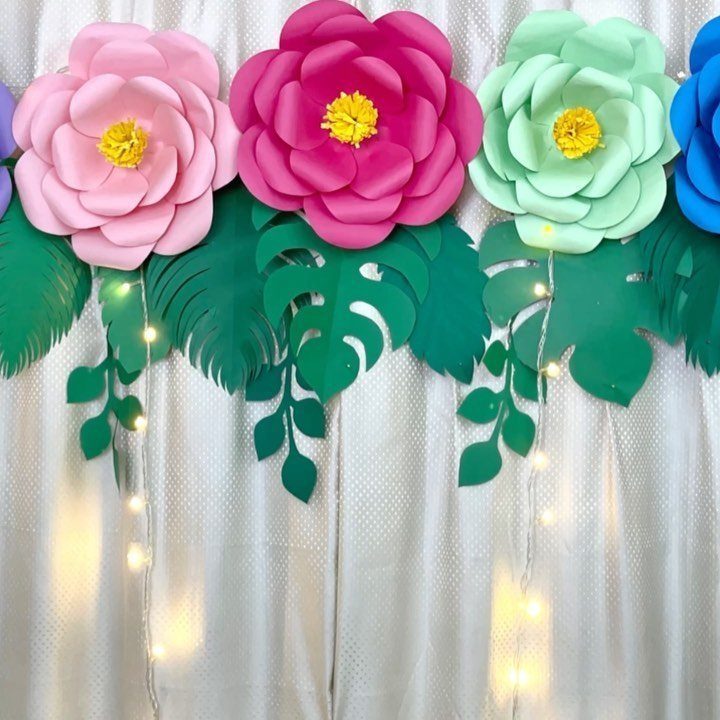
Oversized paper flowers give you color and scale that fresh flowers cannot match for the price, and they do not wilt in heat or sink in humidity.
Pink, magenta, and blue together read celebratory rather than thematic, which suits a couple who wants joy without a strict palette story.
The construction is straightforward but not fast; a large bloom is an evening of cutting, shaping, and assembly, so count your flowers against your calendar before you commit.
Cardstock or crepe paper each behave differently; crepe stretches and curves more naturally, cardstock holds crisp edges.
Attach finished flowers to your fabric backdrop with safety pins or removable clips rather than adhesive, so you can repurpose or store them. LED fairy lights behind the blooms give depth; in front, they flatten the color.
12. Fabric-Draped Wooden Arch
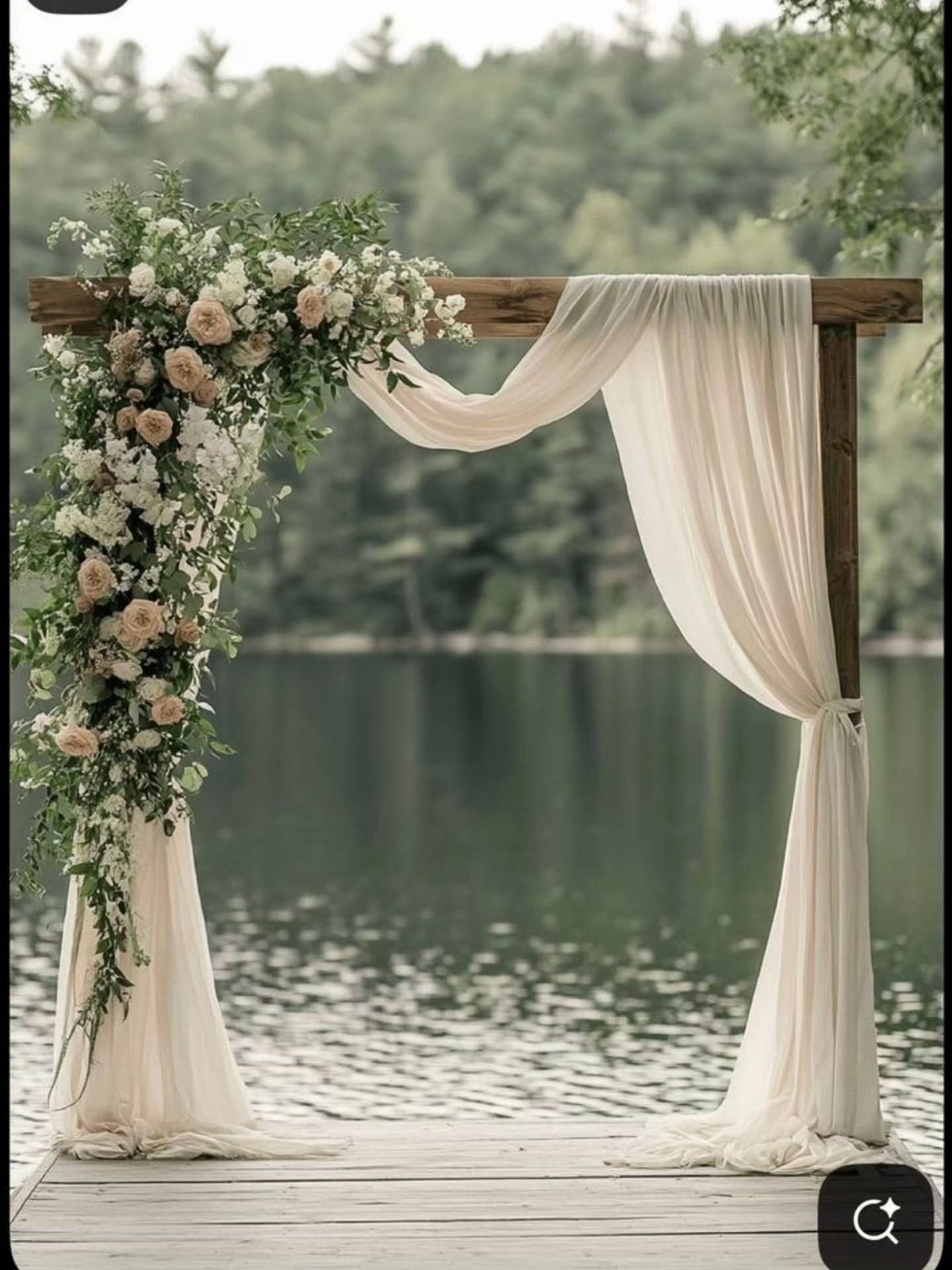
Sheer cream fabric on wood over water gives you reflection and movement together, though the dock or platform limits your guest count and setup window.
The asymmetrical floral placement, heavier on one side, keeps the look from feeling too balanced, too staged.
For a lakeside or riverside version, wind is your real planner.
Fabric too light lifts and tangles; too heavy drags the arch frame. Test your drape length and weight on the actual structure before the day, not on a stand in your garage.
Asymmetry in the flowers means planning the anchor point carefully; the heavy side needs wiring to the frame so it does not pull the drape out of place.
Water access for delivery and for guest parking is worth confirming before you commit to the spot.
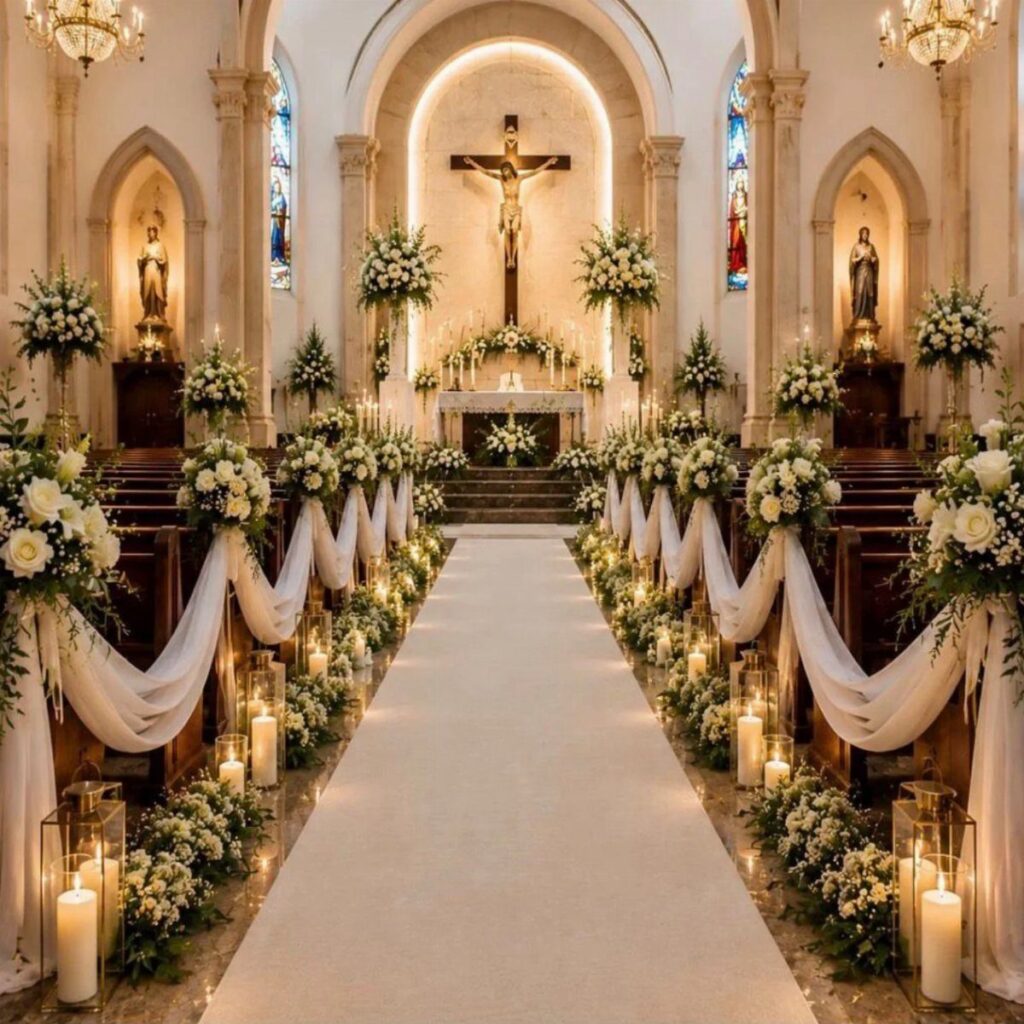
13. Church Altar Floral Display
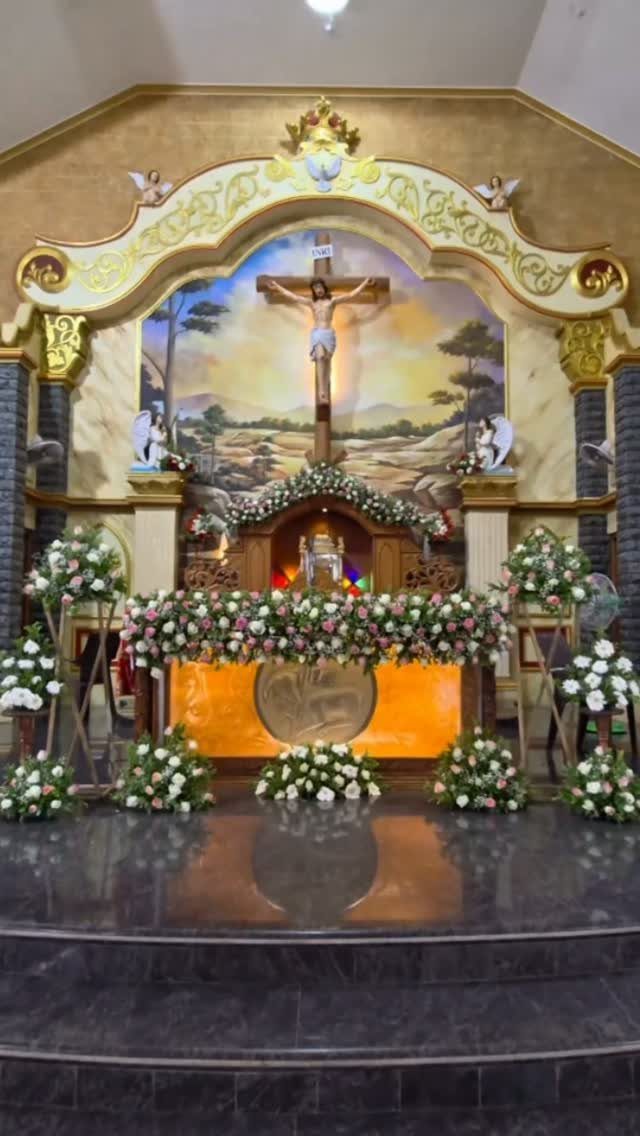
A church altar already holds the architecture; your flowers and fabric work within it, not around it.
Check your church’s policy before you plan. Some parishes restrict placement near the tabernacle, limit fresh petals on the floor, or require florists to set up after the morning Mass.
Fabric drapes need flame-retardant certification if they sit near candles. The INRI plaque and crucifix stay central; your arrangement should draw the eye there, not away.
14. Moody Black Fabric Backdrop
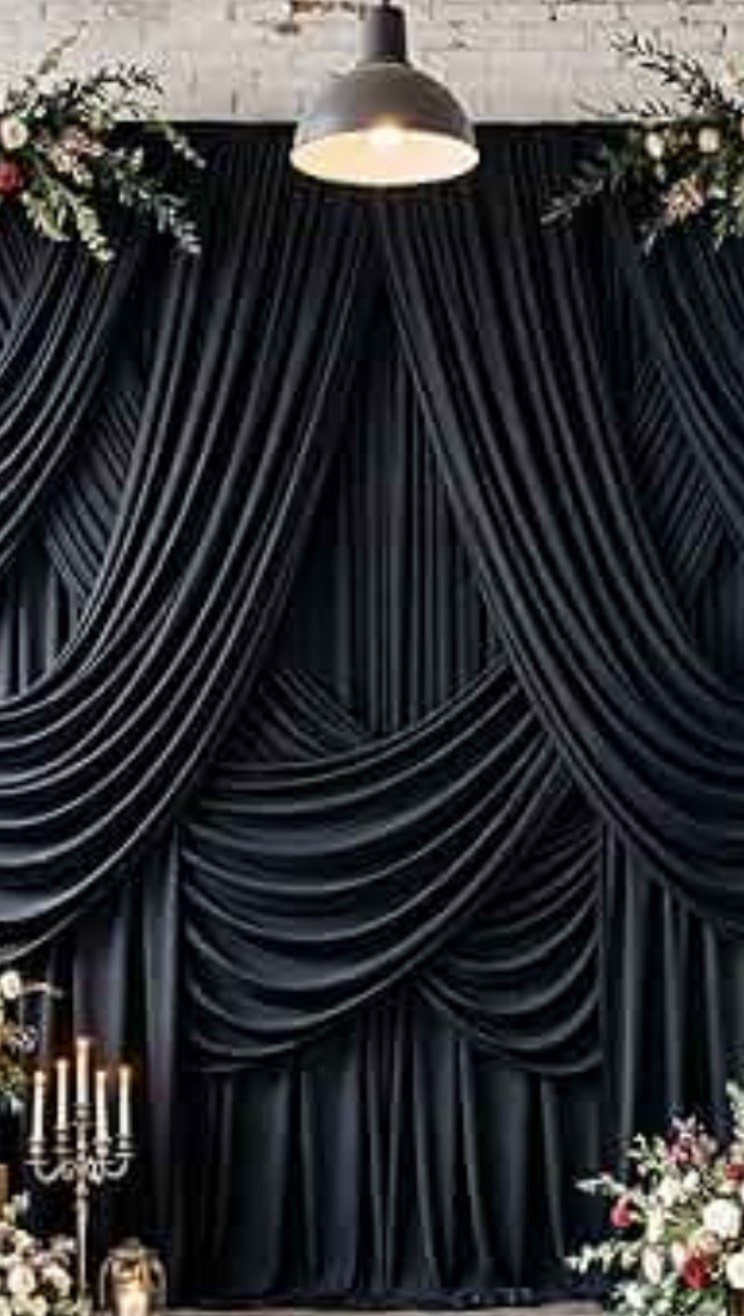
Black fabric absorbs light instead of reflecting it, which makes the floral clusters and candelabras at the corners read as deliberate points of brightness rather than decoration spread thin.
The pendant light overhead becomes your main source of shape; without it, the draping loses dimension and goes flat.
Volume in the fabric matters more than yardage. Layer lightweight chiffon or velvet in folds deep enough to catch shadows, since a single flat panel reads as a blank wall.
Candles need real attention in a dark space; LED versions remove the fire risk but check their color temperature against the pendant bulb so everything warms together.
This suits a small guest count in an intimate room where the backdrop becomes the whole setting.
15. Floral Parasol Altar Accent
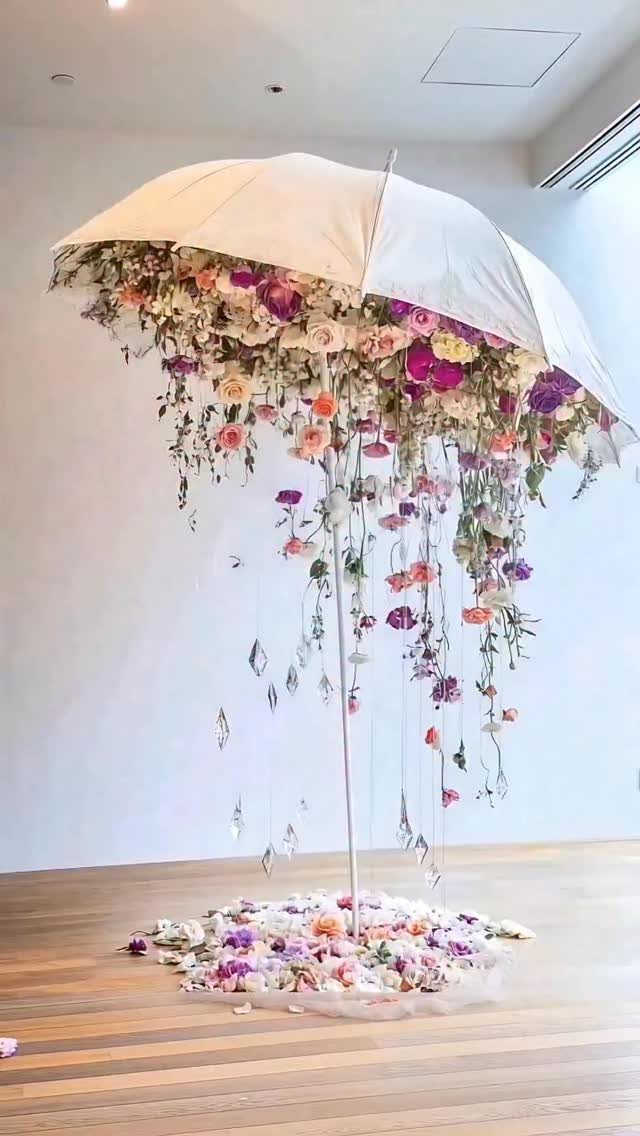
A parasol hung above the ceremony spot gives you a ceiling where there is not one, and the flowers falling from it mark the exact place to stand.
Pink and purple blooms with crystal prisms catch any light in the room and scatter it downward.
The structure holding it needs to be certain.
A parasol this size, once filled with wet floral foam and flowers, weighs more than a single ceiling hook or a thin branch will take. Test your hanging point with the weight loaded before the morning of.
Floor petals below extend the idea to the ground, but they are optional; the parasol alone defines the space. This works indoors or under a solid tent where wind cannot spin it.
16. Gold-Framed Translucent Panels
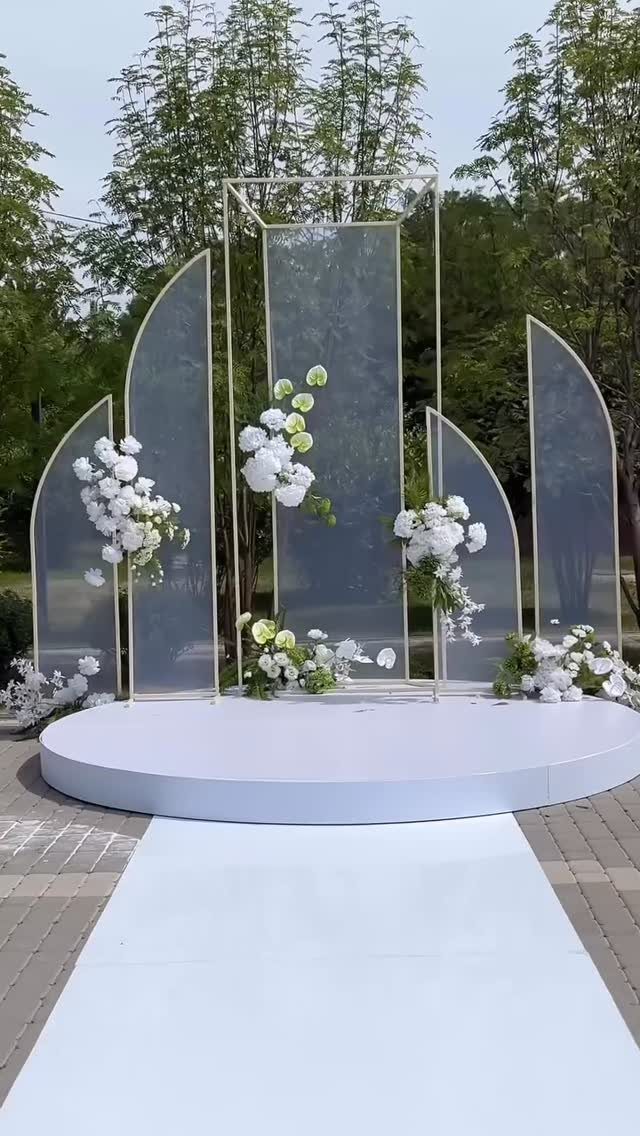
Gold-framed translucent panels give you an altar that reads modern without going minimalist.
The acrylic or mesh inside each frame catches light differently from every angle, and the varied heights keep the eye moving across the setup rather than fixing on a single point.
The circular white platform is doing real work here; it centers the couple and separates the ceremony space from whatever ground sits behind it.
For your own version, rent panels from an event company or build simple frames with brass or gold-anodized aluminum and stretched organza.
White flowers at the joints soften the geometry. Wind is the enemy outdoors; these panels need weight at the base or staking through the feet, and the round platform must sit level or it will read as mistake, not design.
17. Circular Oceanfront Ceremony Stage
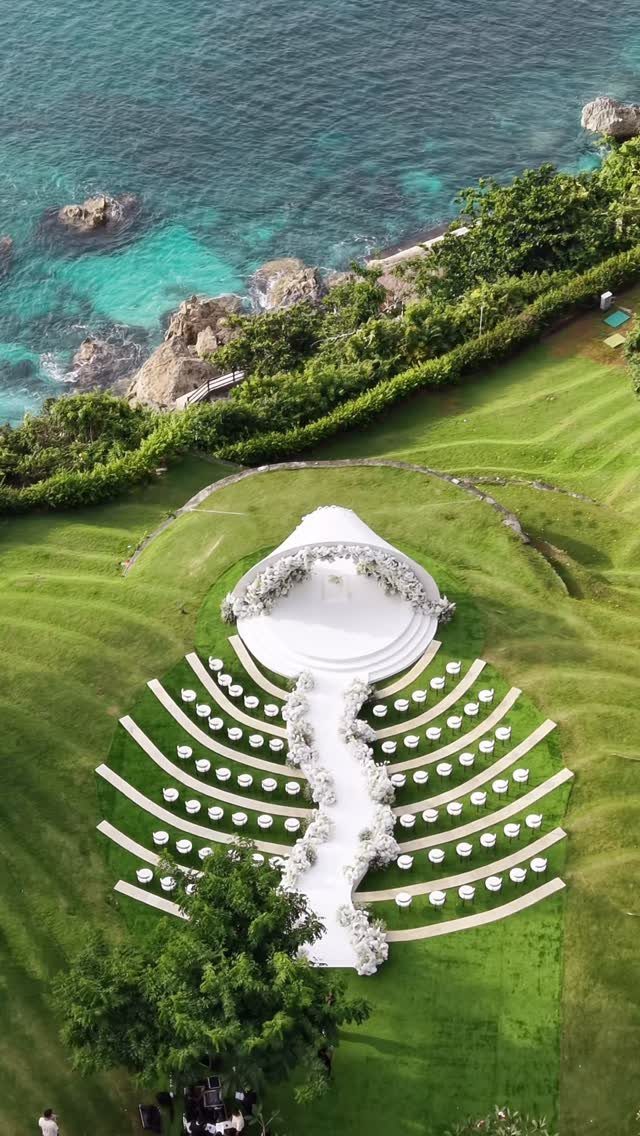
A circular stage facing the ocean turns the whole horizon into your backdrop.
The white cover reflects daylight up onto faces, which flatters in photographs, and the winding aisle gives each guest a longer view of the processional than a straight path would.
This is a rental and logistics proposition, not a DIY one.
The stage, the aisle runner, and the curved chair rows all need delivery, assembly, and breakdown by a crew that has done it on grass before. Check soil stability; a slope that looks gentle can shift under load.
Flower petals along the aisle need replenishing if wind picks up before the procession. Guest count is fixed by the platform size and the chair arc, not the other way around.
18. Carved Wooden Mandap Pavilion
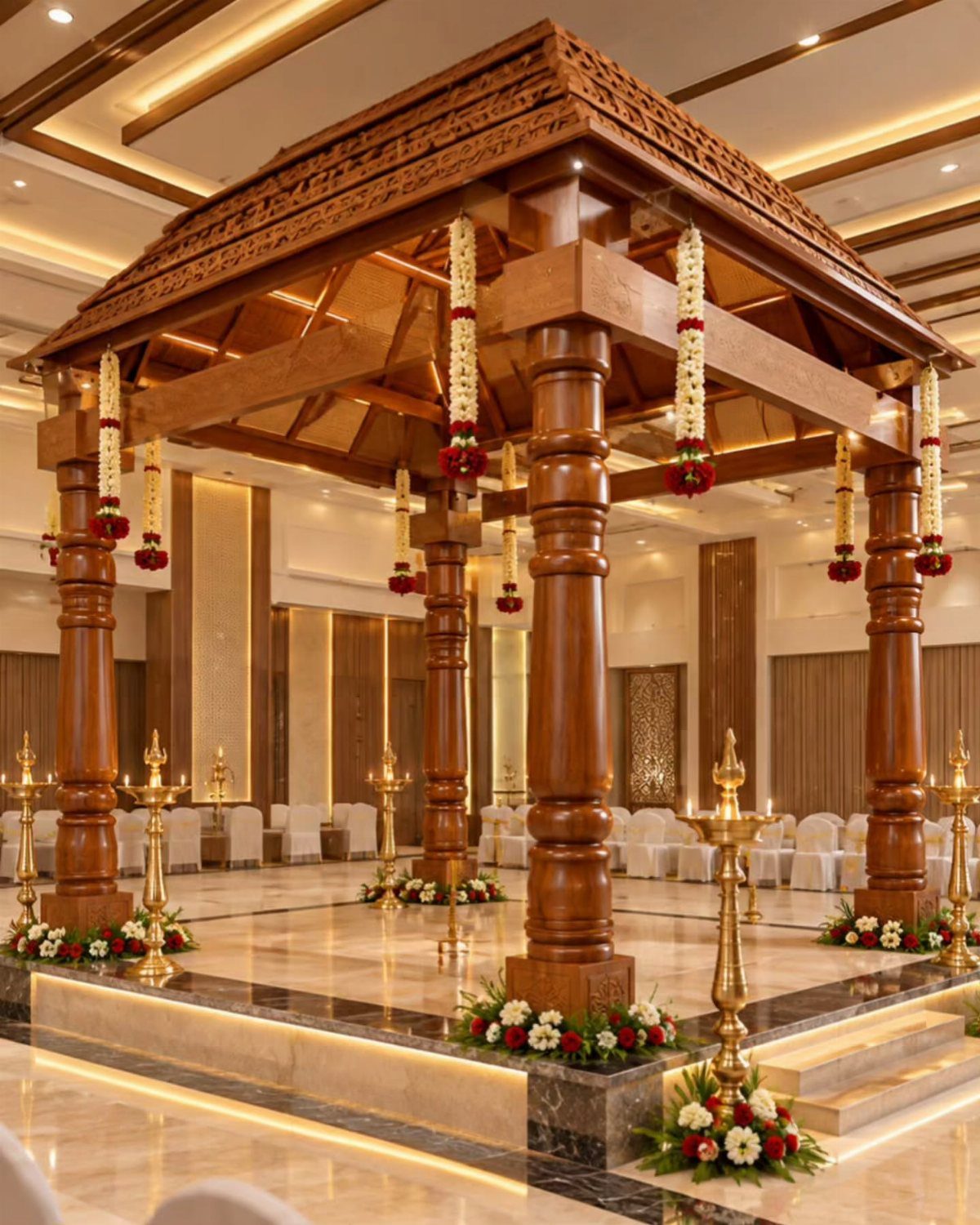
A carved wooden mandap brings the ceremony structure itself as ornament; the pillars and roof are already doing the visual work before any flowers go up.
Marble underfoot keeps it formal and gives the brass oil lamps a surface to reflect against.
Hanging garlands of fresh flowers are traditional, but they dry and drop petals through a long day. For a multi-hour event, consider silk or a mix that puts fresh blooms only at eye level and dried or artificial ones overhead.
The platform needs level footing and access wide enough for the assembled pieces; most mandaps are built in sections offsite and finished on location.
Check hall ceiling height against the pavilion peak, and confirm your venue allows open-flame lamps or plan for LED substitutes in the same brass housings.
DIY Altar Decoration Tips
If you are building your own altar, start with the doorway.
A standard arch runs about 144 inches tall, and that is the number that has to fit through the rental hall’s entrance with the structure still in one piece. Measure before you cut.
Fresh flowers are the easy place to save money. Wedding decorations overall run around $1,810 on average, and altar work takes only a slice of that.
Grocery-store blooms in jars, paper flowers built over a few evenings, or wildflowers gathered in crates each cut the floral budget without looking like a compromise in photographs.
Keep takedown in mind too; what breaks down fast matters as much as what sets up fast when you are renting by the hour.
Altar Visibility and Design
Your altar has 2 jobs that pull against each other. It needs to read as interesting while guests wait, then fall back during the vows so the focus stays on you and your partner.
Tall enough to clear your heads in photos, visible to the back row, but not so busy it competes with the ceremony itself.
Color and theme are what tie it to the rest of the day.
The arch or structure should carry your palette, not introduce a new one. Think of it as a frame: it shapes what guests notice, not what they remember.
Cohesive Decor Elements
The aisle and altar share flowers, colors, or materials, and the eye reads that repetition as intention.
Carry one element through both spaces: the same greenery from the arch trailing down aisle markers, the mason jar shape repeated at the altar and along the path, the candle type matching.
Leave walking room. Petals, garlands, and vases narrow the aisle in ways that look fine in a photograph and trip a grandmother in heels.
Check that chair rows still open for seating after your decor is placed. The match between aisle and altar is visual; the practical work is keeping the path clear.
Frequently Asked Questions
What is traditionally on a wedding altar?
Flowers, candles, and personal items are the usual elements.
The altar needs to be tall or large enough that guests in the back row can see it once you and your partner are standing in front of it, and it should carry your wedding’s color scheme rather than introduce a new one.
The altar’s real test comes during those minutes before you walk out, when guests are watching it and nothing else, then again during the vows, when it needs to quiet down enough that people see only you.
What are some good decorations for an altar?
Floral arrangements, arches, vintage doors, driftwood, greenery, macrame, fabric draping, and light strings all work well.
White lilies and roses on an arch or frame give you the classic look and read clean on camera; a piece of driftwood does the same job for sand and surf without looking shipped in from a warehouse; old doors stood upright add vertical lines and handle grassy or sloped ground better than anything prefab.
The right choice depends on your venue, your palette, and whether you need the structure to travel through a 144-inch doorway in one piece.