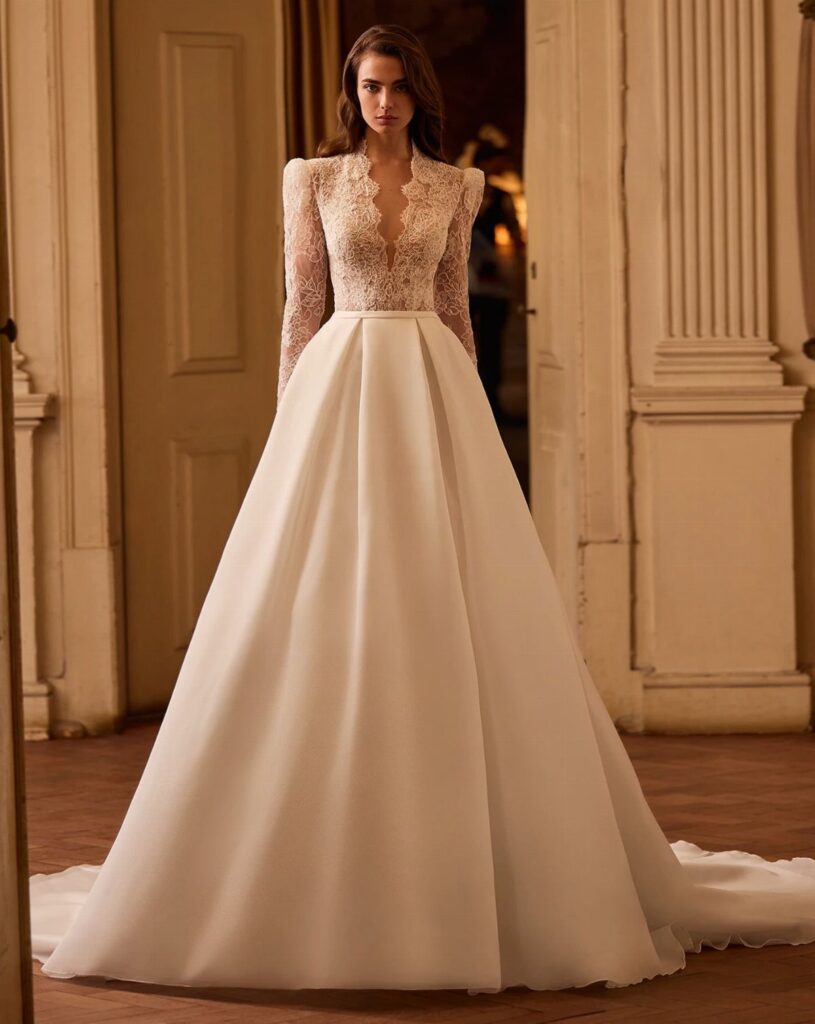
A classy wedding dress can run from a clean A-line that needs almost no alterations to a satin ballgown requiring a dedicated assistant just to manage the skirt, and the styles that keep coming up in my research fall into a few clear categories.
The deciding factor is your alterations budget and timeline: a mermaid demands exact tailoring while an A-line forgives rushed fittings.
[link-whisper-related-posts]1. Mermaid Silhouette Dress
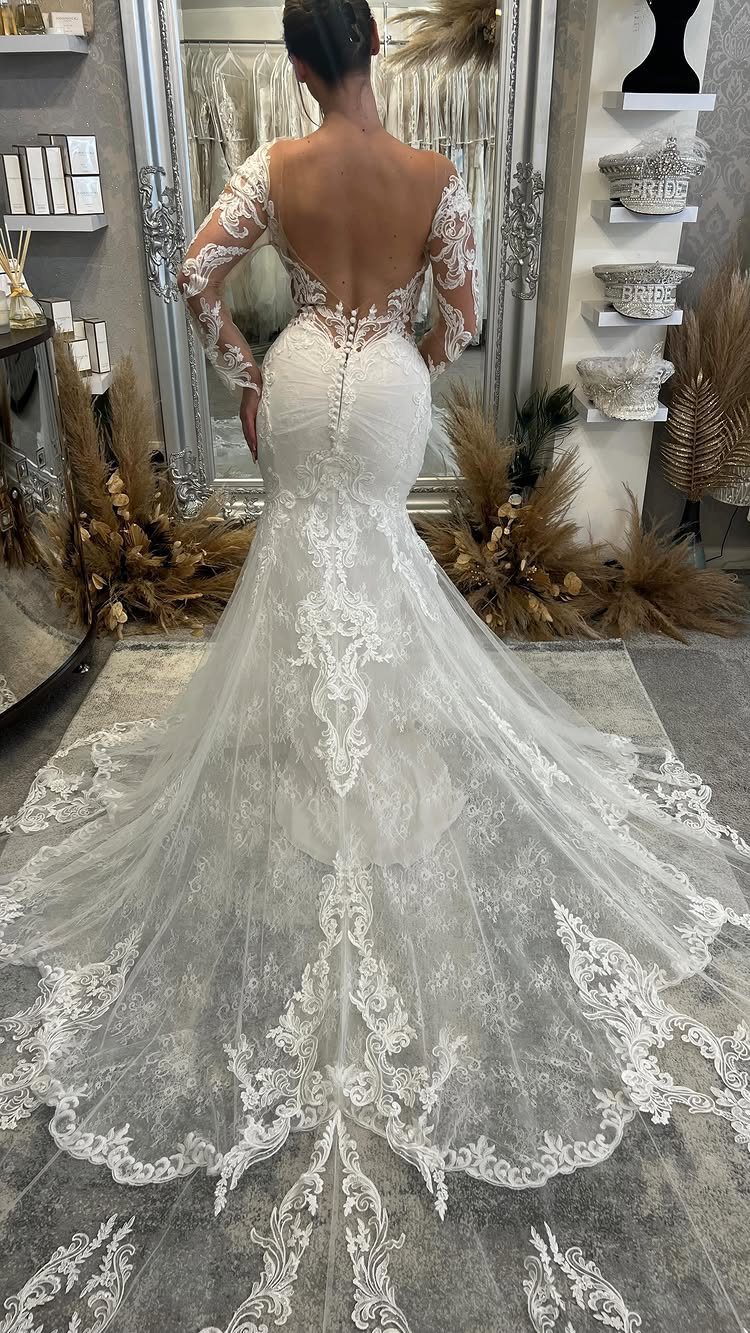
A mermaid silhouette keeps its shape through the hips and thighs, then flares below the knee into a skirt that moves when you walk.
White lace with an open back and no sleeves gives this version its particular tone: covered but not heavy, structured but not stiff.
The fit matters more here than in most dresses. I would budget extra for alterations at the hip and through the calf, since the flare has to hit at exactly the right spot to read as intentional rather than accidental.
A long embroidered train adds weight; ask whether it can be bustled for the reception, or whether you will need a second, shorter dress.
2. Off-the-shoulder Gown
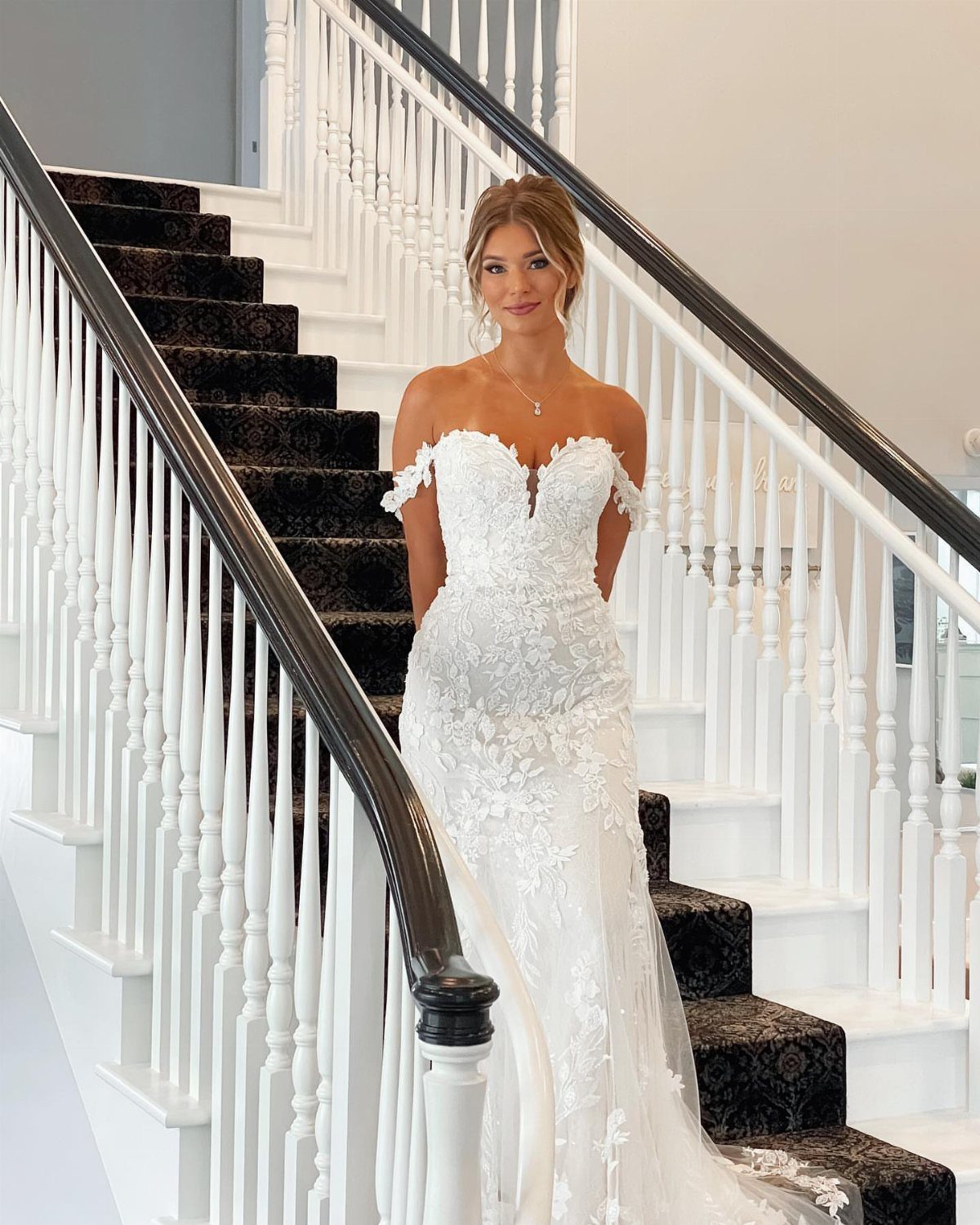
An off-the-shoulder neckline draws the eye up and leaves the collarbone bare, which photographs well and reads as formal without needing much jewelry.
The structured bodice in this version is doing real work: it holds the dress up so you are not tugging at it through the ceremony.
The off-the-shoulder neckline and fitted lace are the practical details to ask about. The overskirt gives you volume for the ceremony and photographs, then comes off for easier movement at the reception; one dress does two jobs.
Satin or crepe both work here, though satin shows every wrinkle and crepe travels better. I would choose crepe if the wedding involves any travel at all.
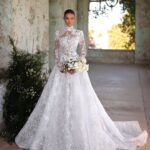
3. Long-sleeved Lace Gown
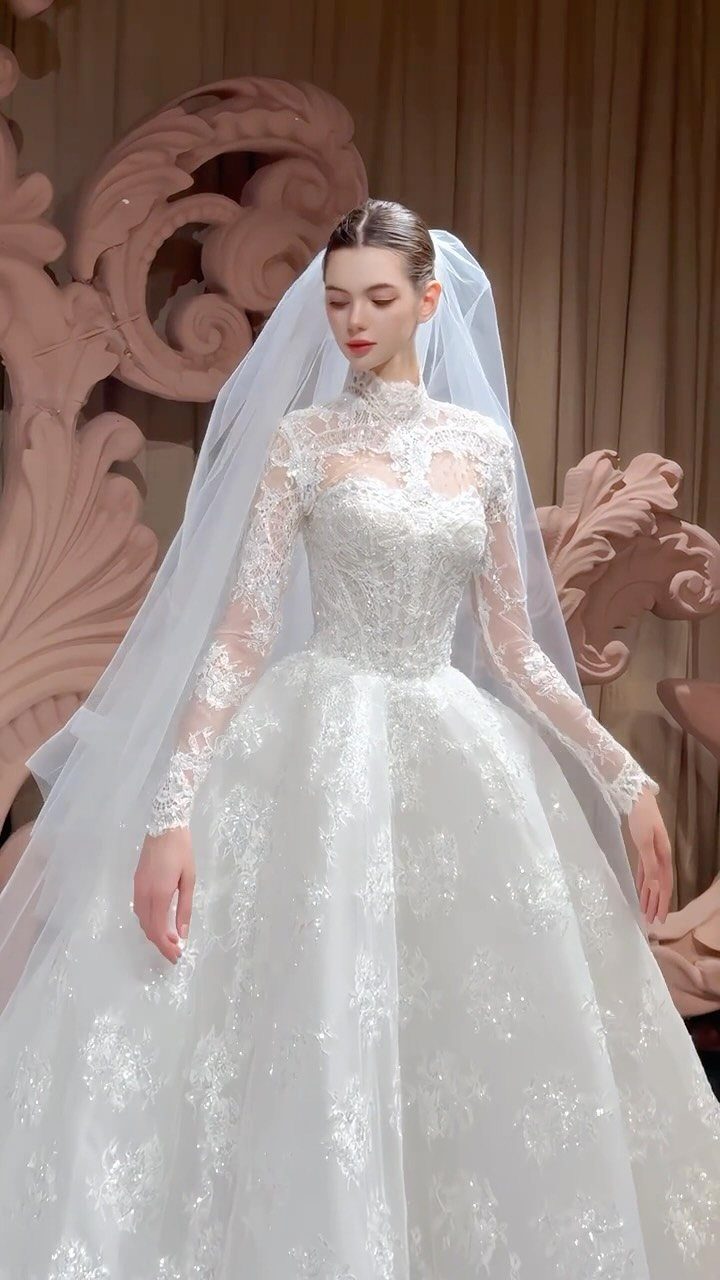
Long sleeves on a wedding dress serve a purpose beyond coverage: they balance a voluminous skirt so the whole figure reads as proportioned rather than overwhelmed.
Intricate floral lace overlays add texture that reads from a distance, which matters in a large venue where small details flatten out.
The high neckline in this version means you will not need a necklace; that is one less decision and one less expense.
What to check: whether the lace has any give across the shoulders, since raising your arms to adjust a veil or embrace someone will test that seam.
A fitted bodice with a flowing skirt suits most body types, though the high neck can shorten the appearance of the neck; I would try this with your hair up and with it down before deciding.
4. Satin Ballgown
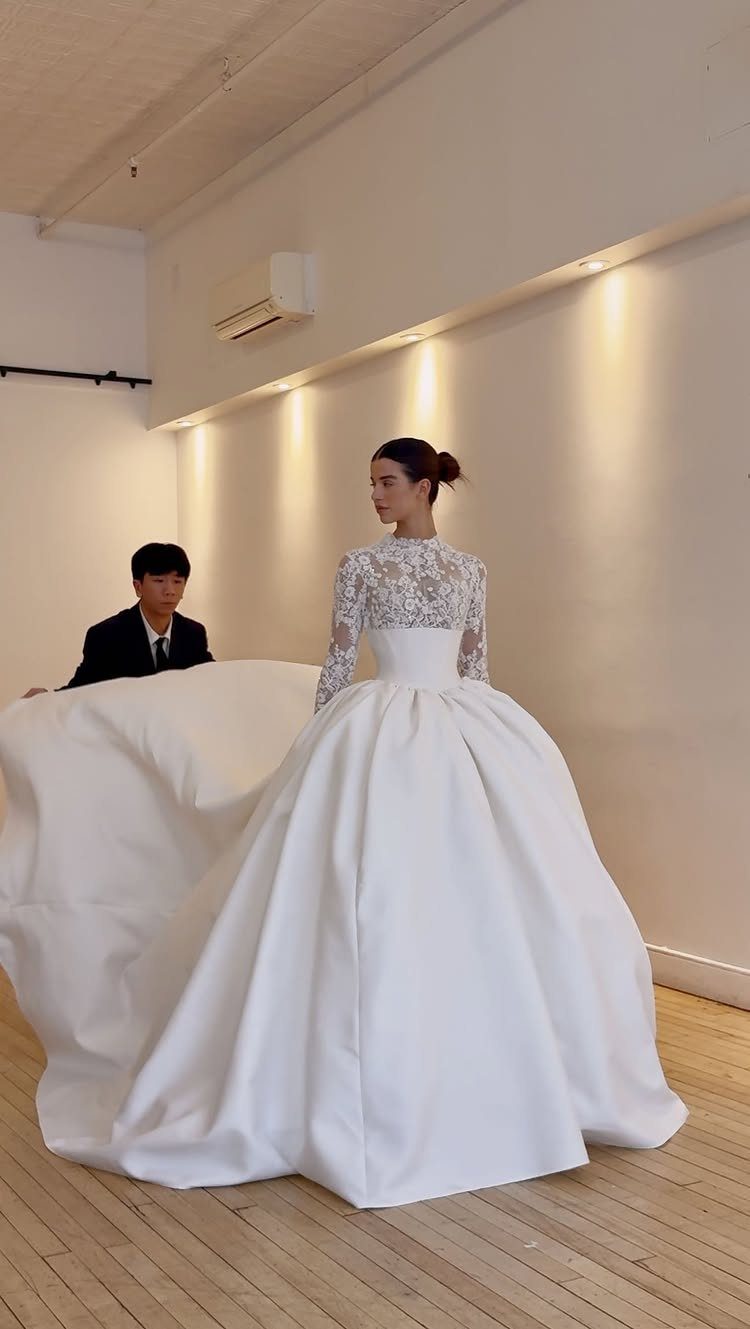
A ballgown is the shape most people picture when they hear "wedding dress," and satin keeps it from reading as costume.
The lace bodice and high neck here add detail that the eye lands on first, while the skirt does its job as backdrop and movement.
Intricate silver beadwork on the bodice catches light in photographs but adds hours to the finishing; this is not a dress that arrives quickly.
A skirt this wide is held out by structure underneath, not by its own weight, so ask what kind of petticoat or hoop is included and whether you will need to supply your own.
The assistant holding the train suggests the scale: this dress needs help to move, which means you need help to move. Budget for a bridesmaid or coordinator whose job includes managing your skirt.
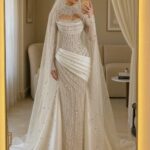
5. Cowl Neck Gown
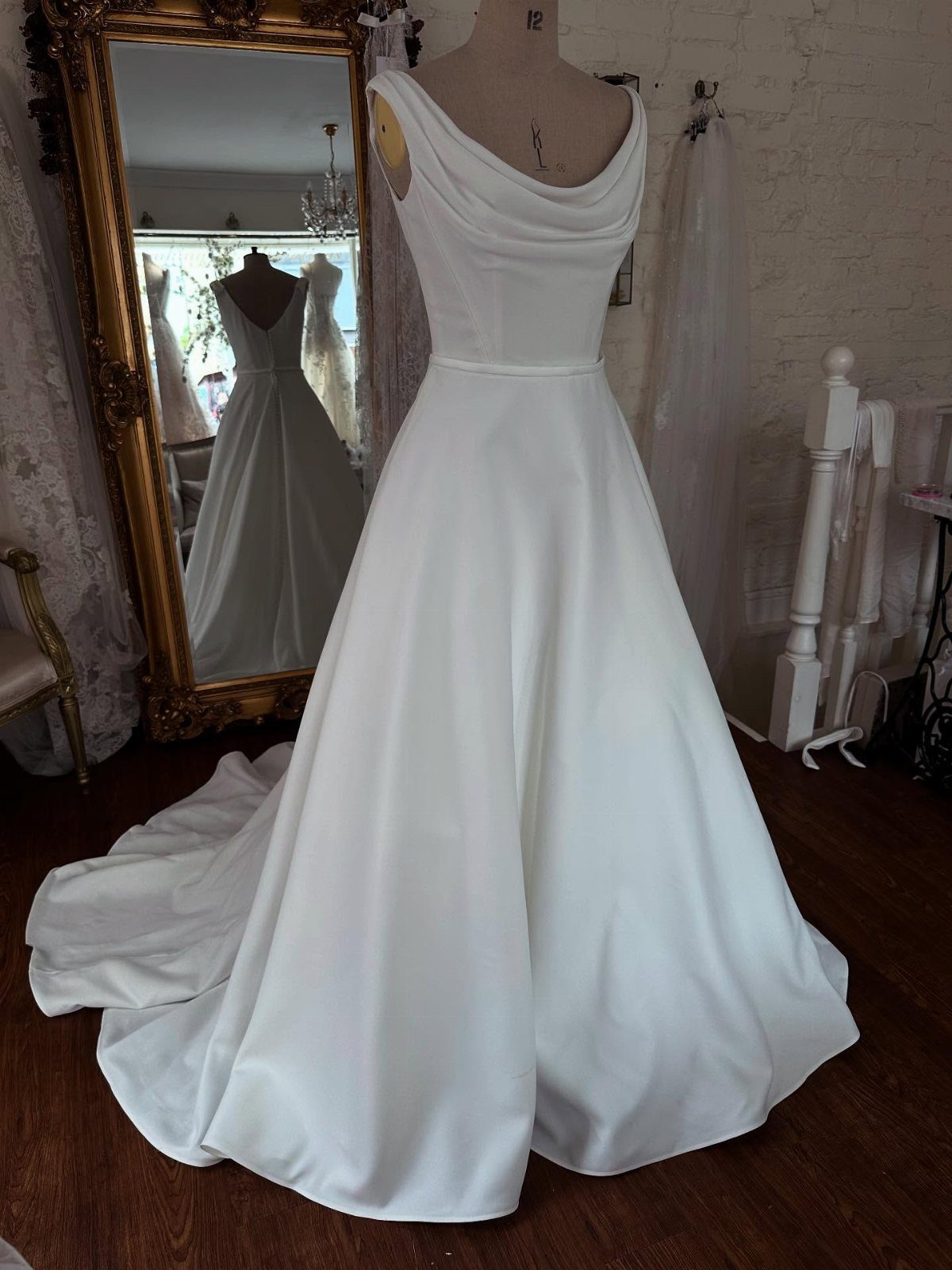
A cowl neck drapes in soft folds that catch light differently at every angle, which gives satin its reason for being here: cheaper fabrics puddle badly and read as wrinkled rather than intentional.
The flowing mermaid skirt keeps the line from feeling too heavy on the bottom.
This is a neckline that demands good posture; the drape opens toward the collarbone and any slouching shows.
A mannequin holds a shape a human body does not, so I would ask to see this dress on a person before ordering.
Long matching opera gloves are an option from the same material, extending the line of the arm; they add formality but also heat, which matters for a summer ceremony.
A sheer tulle veil with floral lace appliqués is a separate piece that could replace or supplement a blusher.
6. A-line Dress
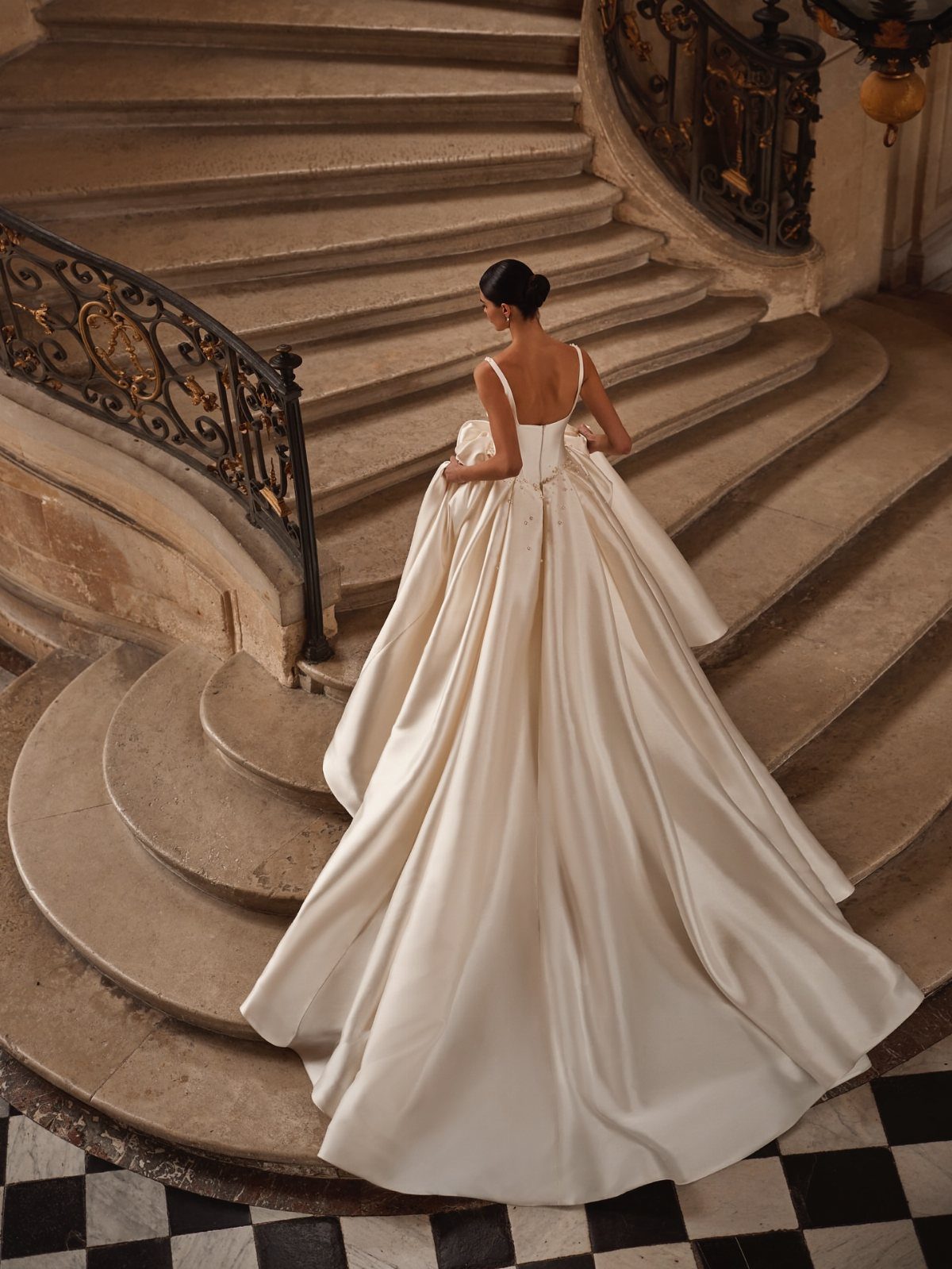
An A-line flows from the natural waist without clinging to hips or thighs, which makes it the most forgiving silhouette to fit and to wear.
Long sleeves, a boat neckline, and intricate lace details are the variables: this shape accepts nearly any top treatment without losing its balance.
Ivory satin with a sweetheart neckline and off-the-shoulder straps is one version; pleats in the skirt add structure that keeps the fabric from collapsing.
Floral lace overlays on a flowing skirt with a train add more detail than the satin version but keep the same fundamental shape.
I would choose between them based on the venue: more detail for a grand space, cleaner lines for an intimate one.
The A-line does not demand alterations the way a mermaid does, which matters when your timeline is tight and your alterations budget is already spoken for.
7. Ivory Satin Gown
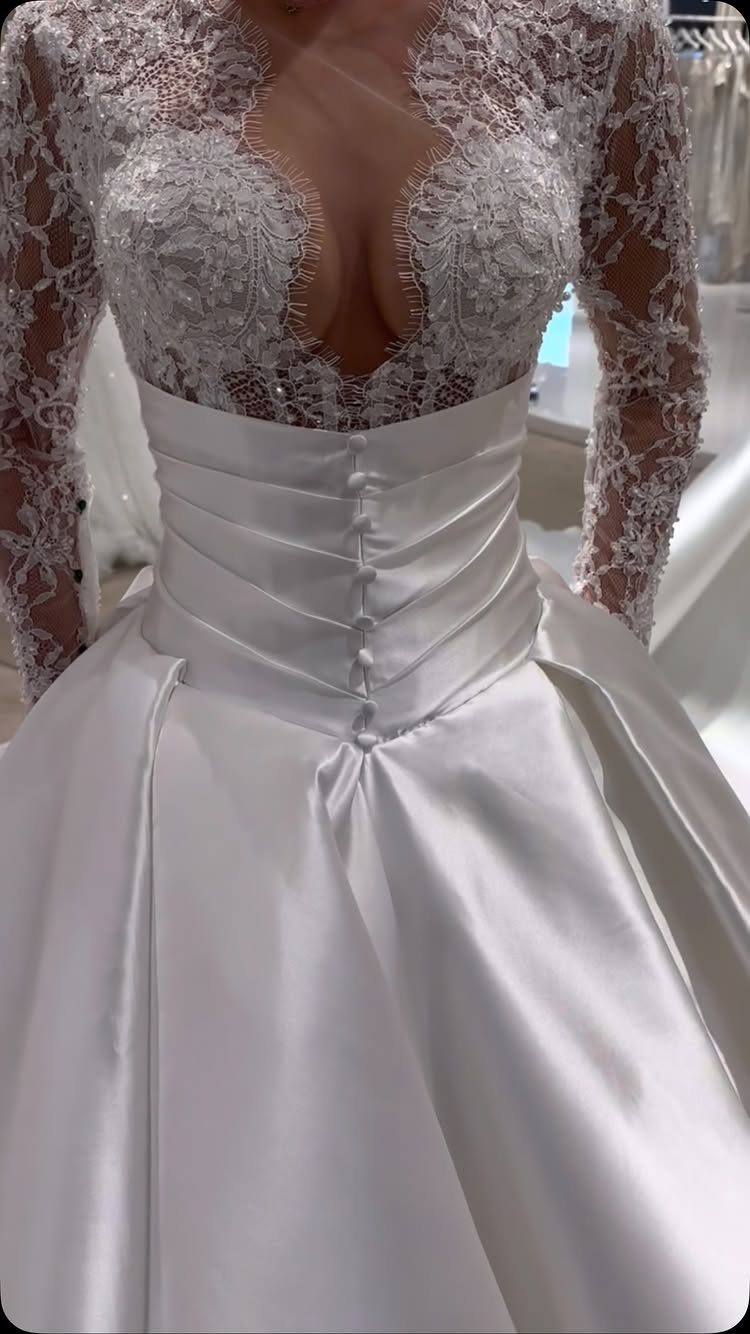
Ivory satin holds light rather than reflecting it sharply, which keeps a white dress from reading as stark in outdoor photographs.
Ivory satin stays cool under reception lights, and a sheer lace bodice lined in the same fabric gives coverage without the weight of built-in structure; long sleeves carry that texture up the arms so the look reads as one continuous piece.
A structured corset bodice shapes the waist but needs honest fitting; satin does not forgive gaping or pulling the way lace might.
The pleated skirt and train are held out by the cut, not by petticoats, so the whole dress moves as one piece when you turn.
I would ask whether the bodice boning ends at the waist or continues into the skirt, since that seam takes stress when you sit.
This is a dress that reads as formal in any venue size, though the train will need managing outdoors. Budget for a bustle or a wrist loop, or plan to change after the ceremony.
Fabric Choices
Satin, lace, and chiffon each behave differently under light and over the course of a day, so the choice is practical as much as aesthetic.
Satin wrinkles the moment anything touches it, so plan for pressing time before photos. I would not choose it for a destination wedding unless the venue has steaming available.
Crepe also has more give across seams than satin, which matters for sleeves and necklines that need to move when you raise your arms.
Chiffon and silk both skim rather than structure.
A chiffon skirt flows without petticoats, which keeps weight down for summer ceremonies or long receptions. Chiffon needs a separate lining layer to hold heavy beadwork or appliqué; satin backing carries that weight on its own.
Choosing Elegant Styles
A structured bodice anchors the softer skirt or train below it, which is the pattern running through most of these styles.
Intricate detail belongs where the eye lands first.
Beadwork on a bodice catches light in photographs; lace on a sleeve adds texture at a distance. Detail scattered evenly across a whole dress reads as busy rather than elegant.
Classic silhouettes repeat for a reason.
The mermaid demands exact fit but rewards it with proportion. Neither is inherently more formal; the choice depends on your timeline and alterations budget.
Keeping embellishment minimal so the cut speaks for itself reads as formal.
Accessorizing
A veil, tiara, or bouquet each shifts how the dress reads, so choose one to lead and keep the others quiet.
The length should relate to the train: a chapel-length veil balances a skirt with movement, while a blusher alone suits a clean A-line.
Long satin gloves add heat, which matters for summer; I would skip them for outdoor ceremonies after May.
A tiara reads as formal in proportion to its size. A thin band works with intricate beadwork on the bodice; a larger piece needs a simpler dress to avoid competition.
A bouquet is the one accessory you will hold in every photograph. The shape should echo the dress: cascading flowers suit a ballgown’s volume; a compact clutch pairs better with a slim mermaid.
Current Trends
Mermaid silhouettes with high necks and long sleeves are appearing in silk satin with puffed sleeves and fitted cuffs. The charmuese fabric carries a soft shine, and the blousant bodice gives a vintage reference without reading as costume.
Off-the-shoulder mermaid gowns with detachable overskirts continue to show in current collections. One dress doing two jobs matters when the budget is fixed and the timeline does not allow a change.
The combination of modest coverage with fitted shape, rather than either alone, is the pattern. A high neck with a mermaid skirt, long sleeves with a defined waist: the structure makes the coverage read as choice rather than default.
Frequently Asked Questions
What is the most elegant wedding dress?
Dresses with structured bodices and flowing skirts tend to read as the most elegant, since the structure anchors the shape and the movement catches light.
Ivory satin diffuses light instead of bouncing it back hard, so photos keep their warmth rather than turning clinical. A draped cowl or a panel of lace where the eye settles first raises the formality without piling on detail.
What makes a wedding dress classy?
Quality fabric that behaves well under light, a structured bodice that holds its shape, and detail placed where the eye lands first rather than scattered evenly.
When the cut does the work and the surface stays quiet, the dress reads as formal; too much ornament competes with itself. A-line and mermaid shapes come back because the proportions are deliberate; the body looks composed rather than decorated.
What are the biggest wedding dress trends for 2026?
Mermaid silhouettes with high necks and long sleeves are showing in silk satin with puffed sleeves and fitted cuffs, a vintage reference that stops short of costume.
Off-the-shoulder mermaids still carry detachable overskirts in current lines, one gown covering ceremony and reception when a second look is not in the cards. The through-line is coverage plus fit, not one or the other in isolation.
What style wedding dress is most flattering?
An A-line flows from the natural waist without clinging to hips or thighs, which makes it the most forgiving silhouette to fit and to wear. It accepts nearly any top treatment, long sleeves or boat neckline, without losing balance.
A mermaid needs precision at hip and calf but pays it back in proportion; the flare has to land at exactly the right point or the whole shape looks accidental.