A long sleeve dress can mean a fitted mermaid, a relaxed bohemian cut, or a high-neck vintage piece, and the difference in warmth and structure between them is what matters once you know your venue.
Tulle sleeves breathe at a garden venue while satin holds its shape for a December reception; the same lace, lined or unlined, spans two seasons and two budgets.
That single factor, fabric weight against the room’s actual temperature, narrows the list faster than silhouette or price.
[link-whisper-related-posts]1. A-Line Wedding Dress Long Sleeve
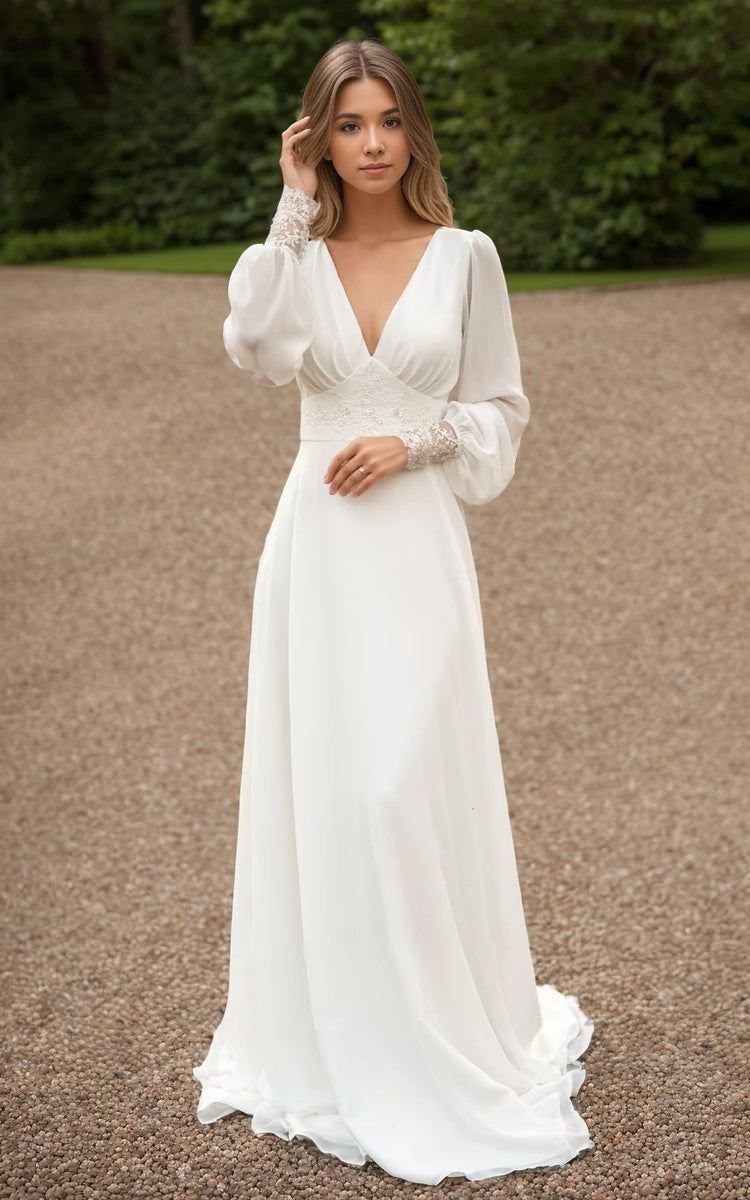
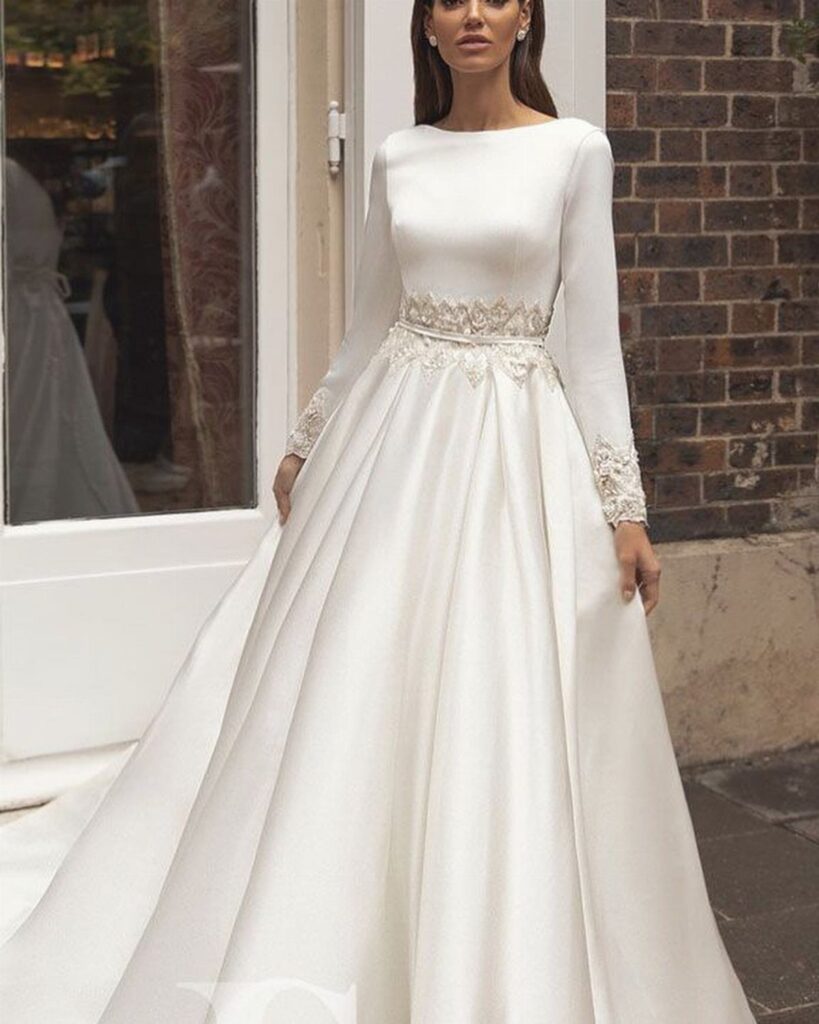
An A-line with long sleeves keeps the waist defined while the skirt falls loose to the floor, which suits most body types without needing custom structure.
Lace cuffs that billow at the wrist frame the hands for ring photos without adding bulk at the shoulder.
Sheer tulle or organza sleeves keep the line light for summer outdoor ceremonies; lined satin or crepe sleeves add weight for fall.
The deep V-neck in some versions sits lower than a standard bridal neckline, so check where the lace appliqués start before committing to alterations.
2. Long Sleeve Lace Gown
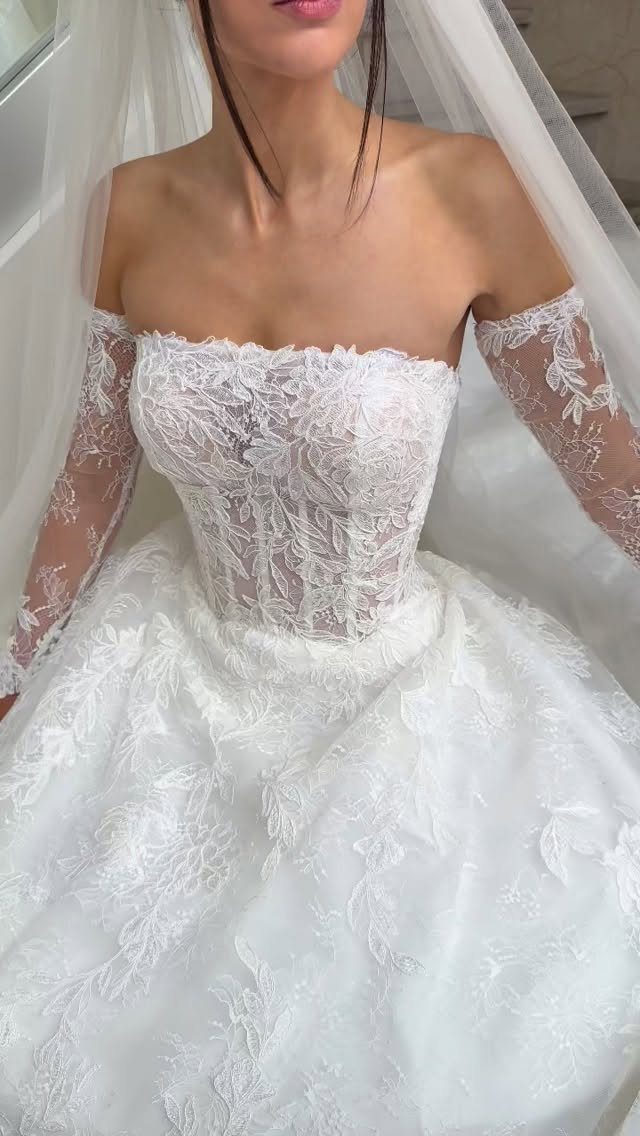
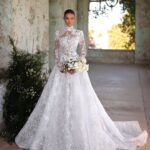
Lace over a fitted bodice and flowing skirt reads formal without the stiffness of satin or mikado. Detachable sleeves are the practical choice: wear them for the ceremony, remove them before dinner when the room warms and the dancing starts.
Intricate lace means hand-sewn appliqués or dense embroidery, which raises the price over plain fabric and limits how much the dress can be let out later.
Ask whether the lace is bonded or stitched; bonded edges fray faster with dry cleaning.
3. Mermaid Wedding Dress Long Sleeve
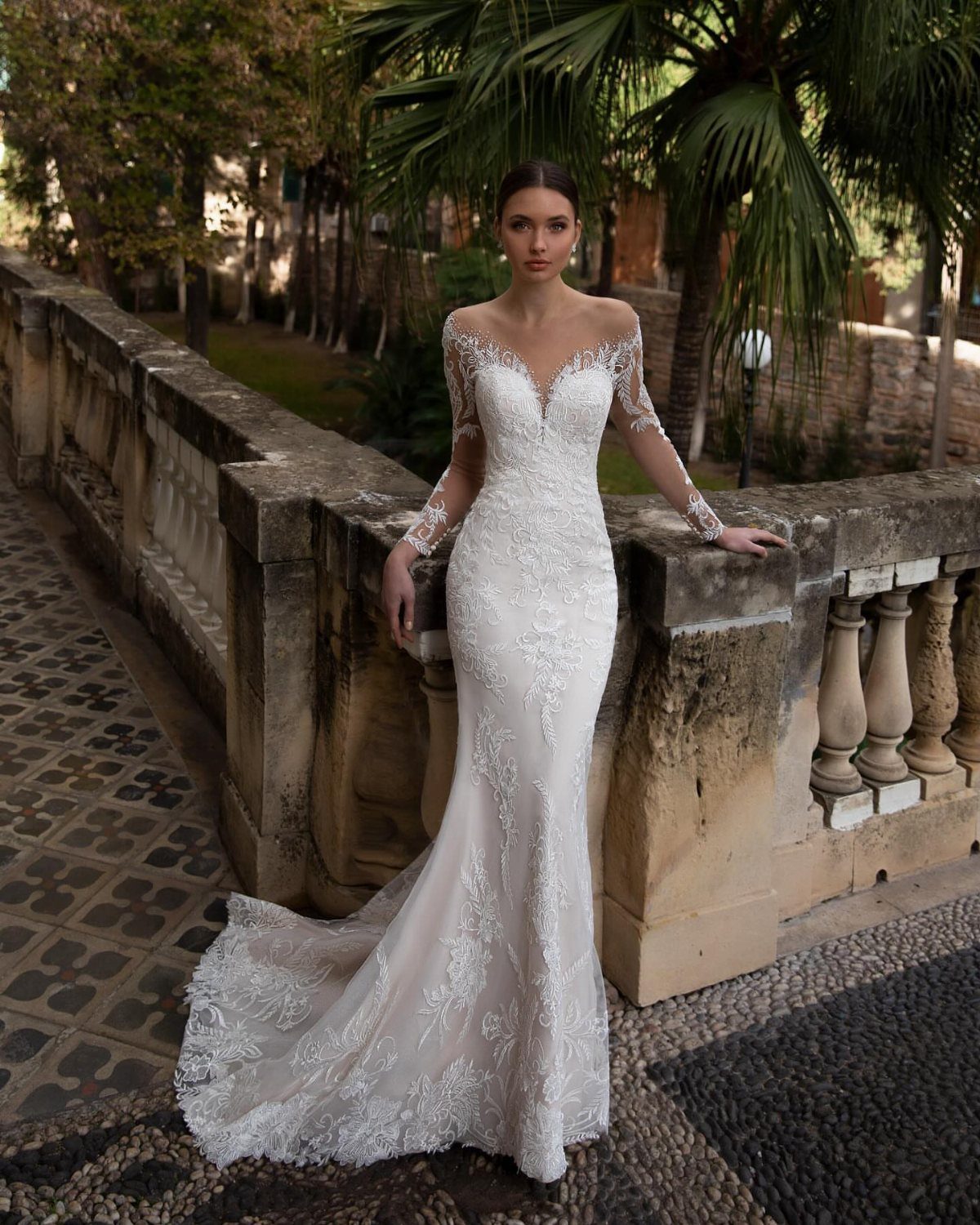
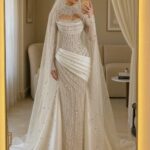
A mermaid silhouette fitted through the hip and thigh needs structured fabric to hold its shape, which long sleeves can balance by drawing the eye upward.
Three-dimensional floral appliqués add texture that photographs well but catch on chair arms and doorframes; a lower neckline with less structure moves more freely.
Sheer sleeves on a mermaid gown are usually lined only at the bodice, so check whether the arm length includes the same lace density as the skirt.
Alterations to the torso length are harder here than on an A-line because the fit depends on 3 points: bust, waist, and the flare point at mid-thigh.
4. Vintage Style Long Sleeve Wedding Dress
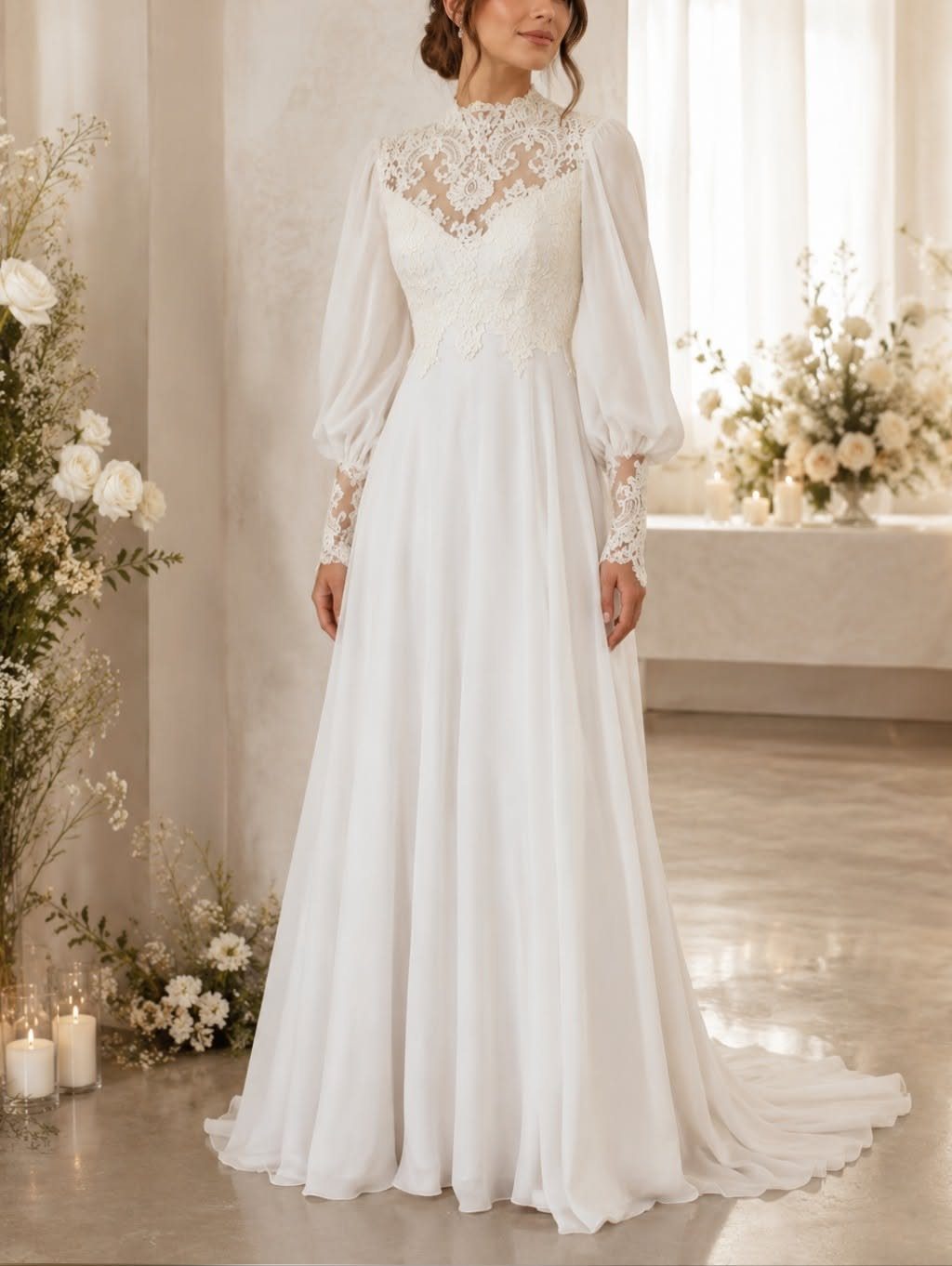
High necklines and bishop sleeves that gather at the wrist mark this style, with lace or satin that references earlier decades without full costume.
Puffed sleeves carry more fabric than a modern cut, which changes how you move through narrow aisles and how the dress packs for travel.
A true vintage gown bought secondhand will need cleaning and possibly restoration; budget for a specialist who handles aged silk and weakened seams.
5. Simple Long Sleeve Wedding Dress
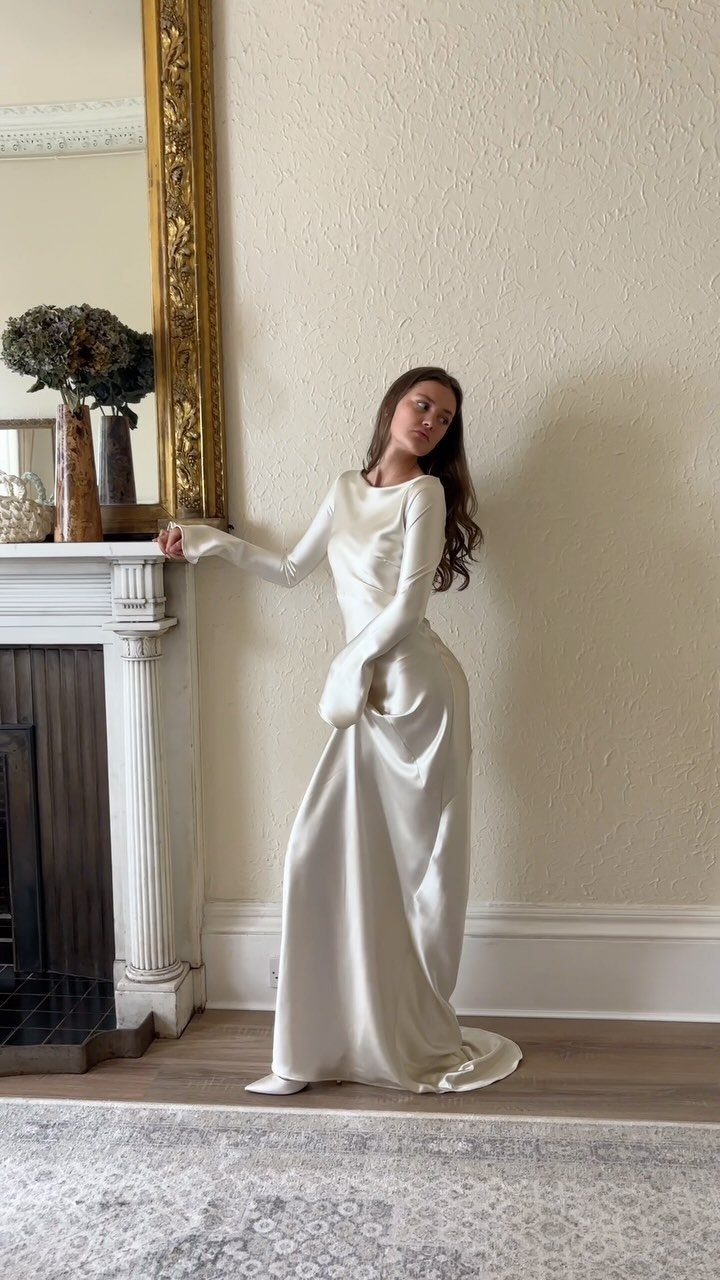
Clean lines in crepe or satin skip the beading and lace that drive up cost and alteration time.
A hem that pools at the floor means length matters: with no busy pattern to hide a slightly off cut, the line must fall straight.
Boat and square necklines sit wider than a standard scoop, so test arm movement when you try it on; long sleeves anchored at that width can restrict how high you raise your arms.
Lace cuffs add a single decorative element without breaking the minimalism; if the dress has them, confirm they are stitched on last and removable if you change your mind.
6. Bohemian Long Sleeve Wedding Dress
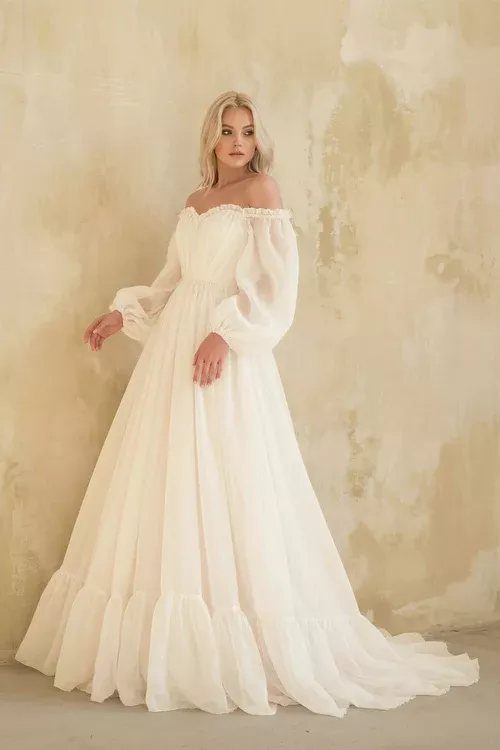
Voluminous sleeves and a ruffled hem move this style away from formal structure toward something you could wear at an outdoor or daytime ceremony.
An off-the-shoulder neckline shows more collarbone than a standard cut, which means the sleeves carry the dress’s visual weight; they need to stay in place without constant adjustment.
Tiered skirts and floral lace patterns add fabric that reads casual and romantic but also adds ounces the dress must hold up.
A backless lace detail, as in one variation, removes the structure a traditional bodice provides; check whether boning or internal corsetry replaces it, or whether the fit depends entirely on the lace tension.
7. Turtleneck Long Sleeve Wedding Dress
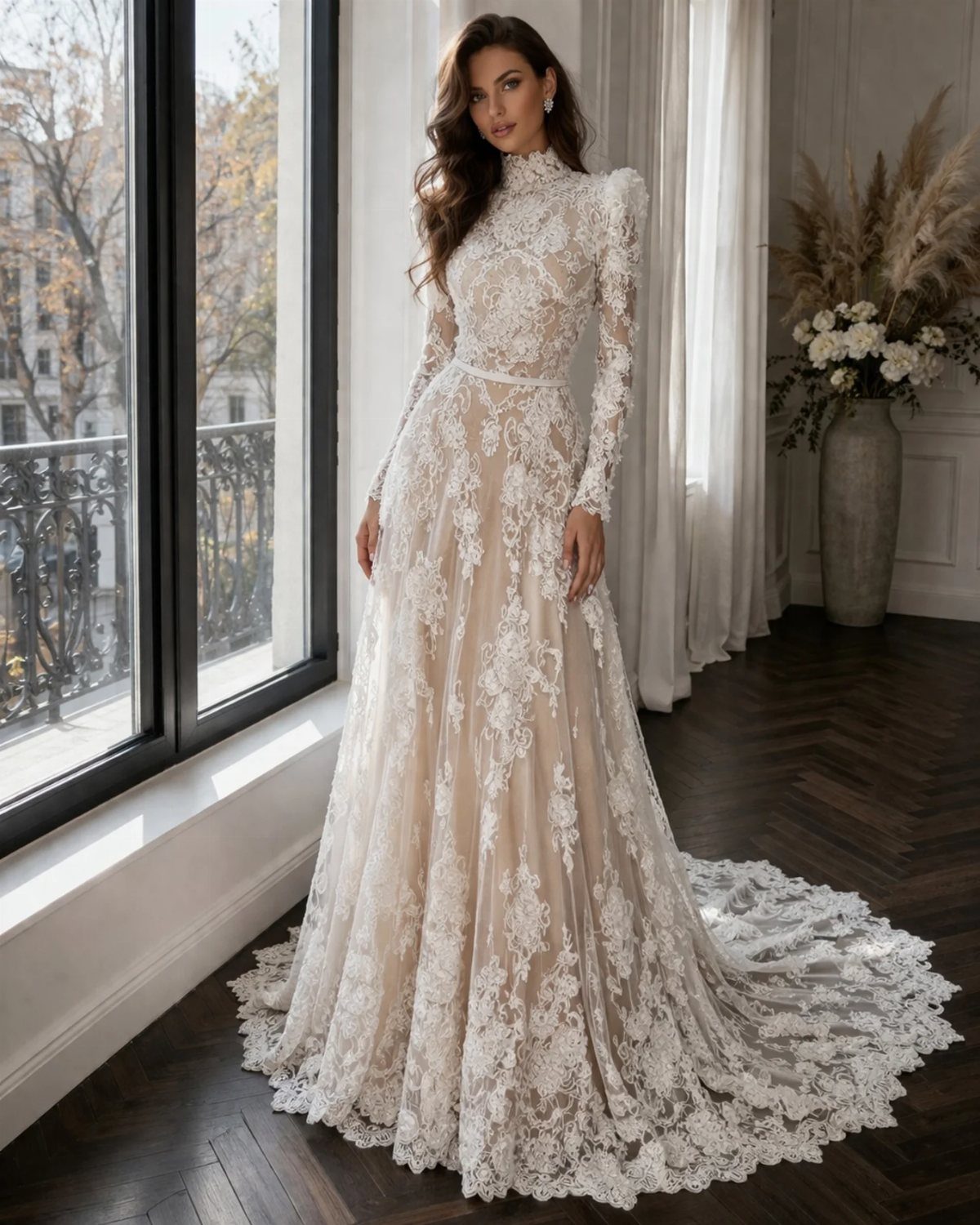
A turtleneck wedding dress brings the neckline up to the jaw, which changes how you carry yourself and what jewelry reads against it.
A lace turtleneck keeps the line going straight up from the bodice through the neck, so earrings are the only jewelry that reads; anything at the collar competes with the fabric itself.
This style suits brides who want coverage without a veil as the focal point, and it photographs cleanly from the side in profile shots.
The high neck does limit how you turn your head during the ceremony; practice the range of motion when you try it on.
Heat builds where the lace meets skin at the neck and wrists, so this is a cooler-season choice unless the fabric is sheer enough to breathe.
A backless variation, which some makers offer, removes the turtleneck’s usual structure; ask whether internal boning or a separate corset carries the fit, because the lace alone will not.
Choosing the Right Fabric
Chiffon sleeves let air move against the skin in July heat, though they catch on rough wood and stone at outdoor venues.
Satin and crepe hold their shape for December ceremonies but add ounces that a full day of standing and dancing will register by hour four.
Tulle and organza sit between these weights; they photograph as softly as chiffon but tolerate a breezy cliffside or garden better than the lightest weave.
The venue’s heating or cooling matters as much as the season.
A glass-walled greenhouse in March runs warm by afternoon; an uninsulated barn in October does not. Ask the coordinator what the thermostat read at last year’s event in that same month.
A lining changes everything. The same lace sleeve, lined or unlined, spans two seasons and two budgets; unlined costs less in fabric but limits when you can wear it comfortably.
Accessorizing Long Sleeve Dresses
A veil competes with a turtleneck or high neckline for attention at the throat; with those styles, skip it or keep it sheer and short.
A deep V-neck or off-the-shoulder cut leaves room for a longer drop that the sleeves will frame rather than crowd.
Belts work best where the waist is already defined, as in an A-line or mermaid shape.
A simple crepe dress with no waist seam needs the belt to sit exactly at the natural waist or it will ride up; long sleeves make that adjustment harder to feel by touch alone.
Earrings carry more weight when the neck and wrists are already busy with fabric.
A lace cuff or bishop sleeve draws the eye downward; a drop earring brings it back to the face for ceremony photos. Bracelets rarely read past fitted long sleeves, and a watch is out of place entirely.
Alterations and Fittings
Schedule the first fitting as soon as the dress arrives; this leaves time for multiple visits without rushing the last adjustments.
Long sleeves add one fitting most short-sleeve dresses do not need: the arm length check. Arms hang differently when you are tired or tense, so try to book appointments at the same time of day.
Lace appliqués limit how much a seam can be let out later, so ask during the first appointment what the maximum adjustment is.
Bring the shoes and undergarments you will wear. A long sleeve makes it harder to adjust your own strap, so test that reach at the fitting, not on the morning.
Budget Considerations
Detachable sleeves add to the initial price yet give 2 looks without a second dress.
A-line shapes generally need less structural work than mermaid fits, which translates to fewer billable hours at the tailor.
Frequently Asked Questions
Is a long sleeve dress appropriate for a wedding?
Yes. Long sleeves work for any wedding, whether you are standing in a candlelit chapel or under a garden tent in July.
Sheer tulle keeps the air moving in August heat; lined satin holds warmth when the leaves turn. The choice depends on fabric weight and venue climate rather than any rule about season or formality.
Where can I buy a long sleeve wedding dress?
Bridal shops, online retailers, and custom designers all stock long sleeve wedding dresses.
Construction matters more than the label on the door. Bonded lace frays where stitched lace holds, and sleeve density can shift between the sample and the one they cut for you.
What are bridal sleeves called?
Sleeve styles have names that describe their cut and shape. Sheer tulle or organza keeps the silhouette light; fitted sleeves in crepe or satin trace the arm close.