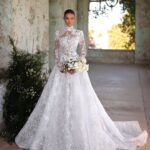
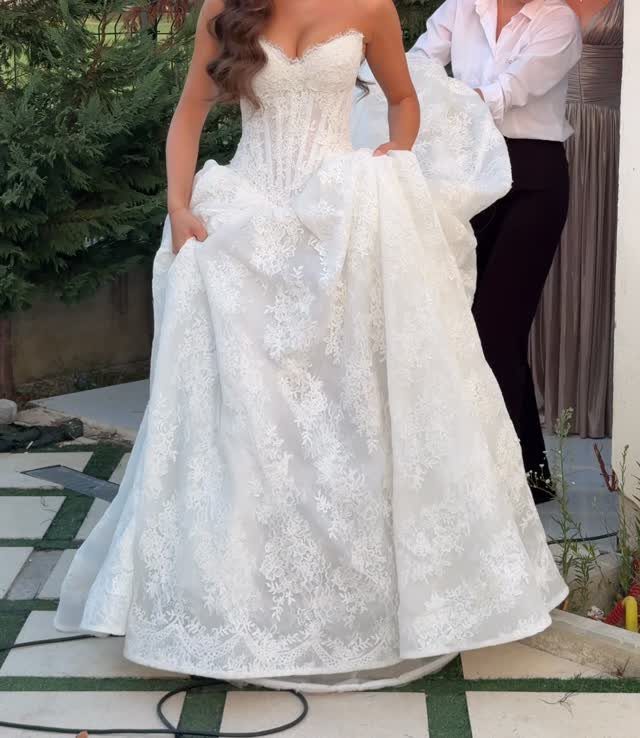
A strapless lace wedding dress can run from a fitted mermaid that flares below the knee to a full ballgown with a train long enough to need bustling, and the right choice depends on how much you need to move once the ceremony ends.
The detachable sleeves or overskirt versions let you strip back for dancing without buying a second gown, but only if the base dress satisfies you on its own.
[link-whisper-related-posts]1. Strapless Lace Wedding Dress
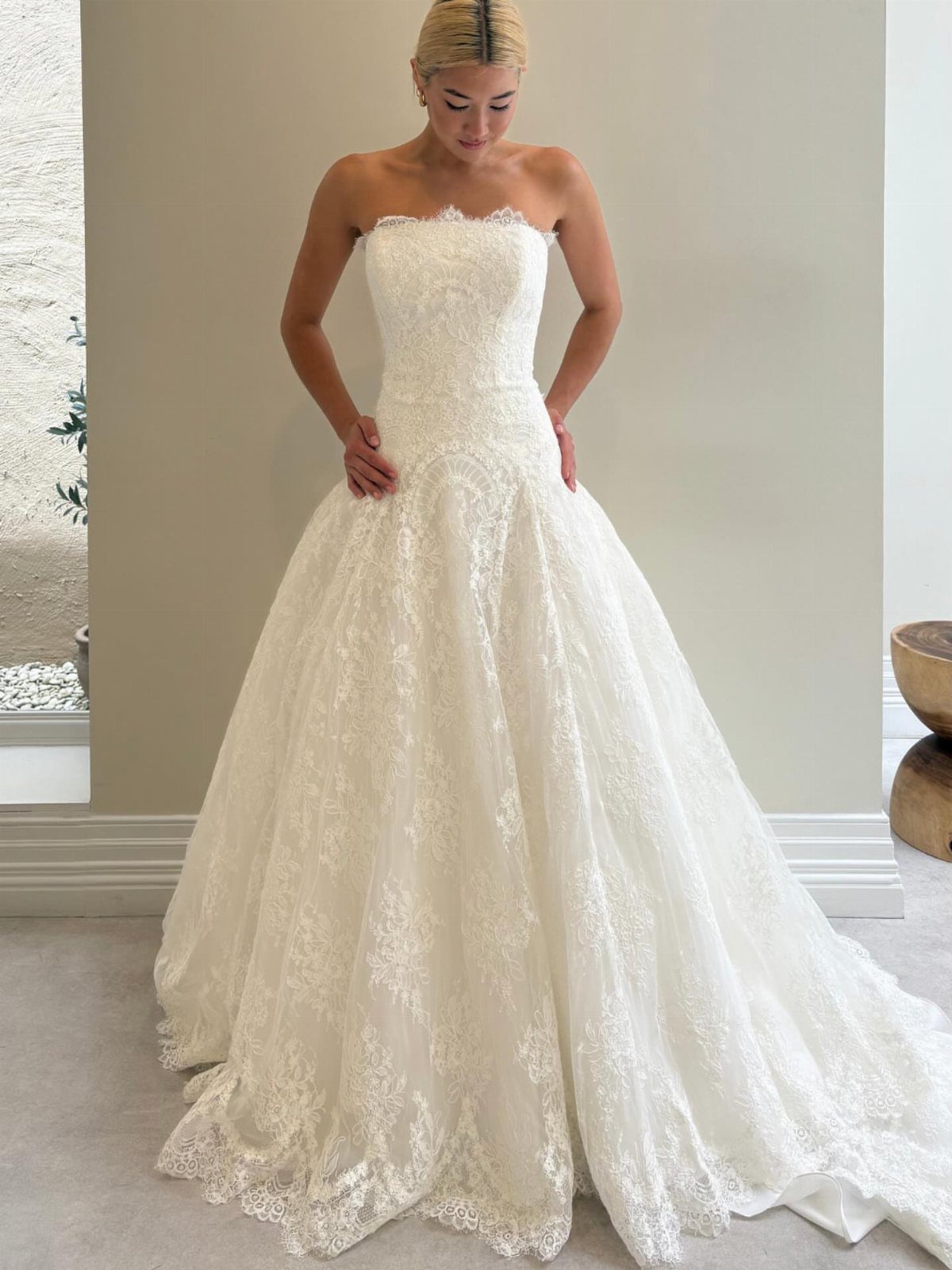
A strapless lace bodice draws the eye straight to the shoulders and collarbone, which is why this cut has stayed in bridal shops year after year.
Lace adds texture and interest to an otherwise simple neckline, and the strapless construction means you are free to move your arms without fighting sleeves during the reception.
Support matters most in a strapless bodice: it needs real structure underneath to stay put through hours of standing, sitting, and dancing.
I would budget for a longline bra or cups sewn directly into the dress, and I would test the combo at my fitting, not assume it holds.
2. A-line Strapless Lace Dress
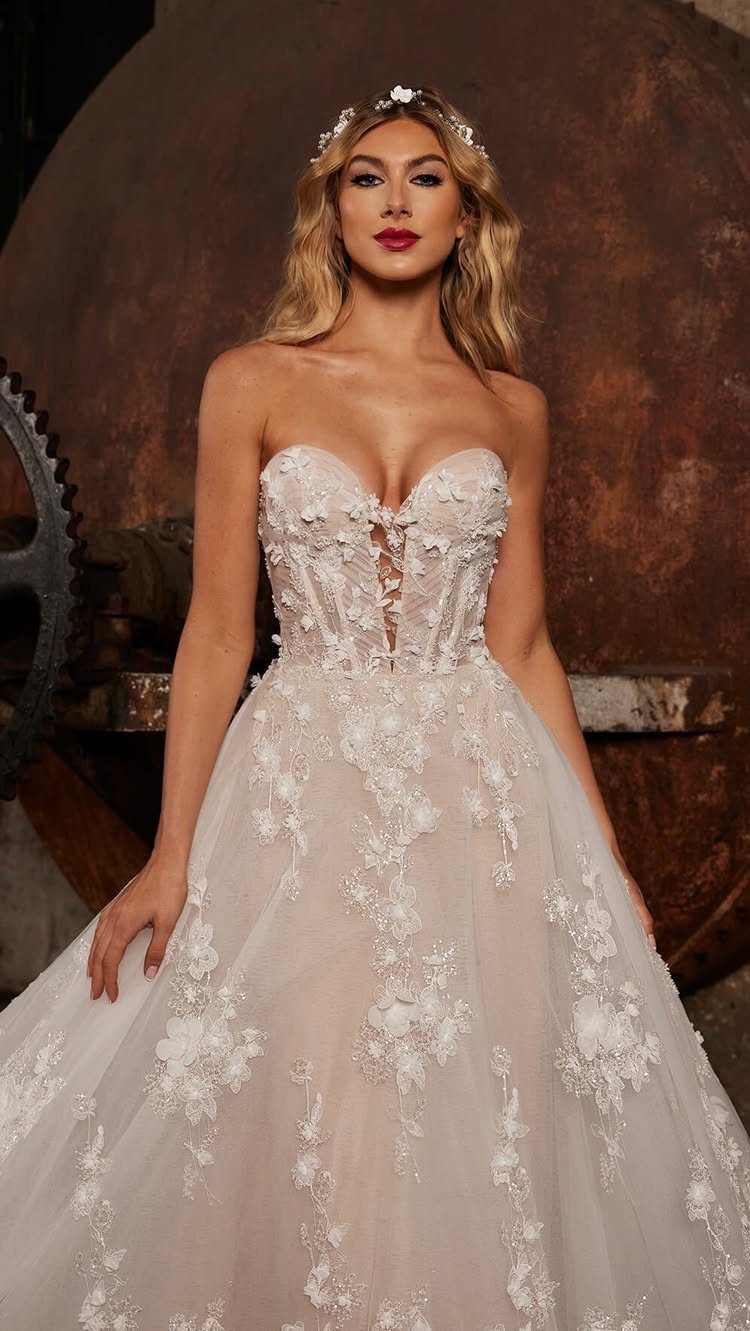
The A-line starts fitted at the waist and widens gradually toward the hem, which makes it one of the easier silhouettes to wear for a full day.
Lace on the bodice keeps the look bridal without adding weight to the skirt, since the tulle or organza underneath does the volume work. This pairing suits most figures because the waist is the only defined point; everything else floats.
If you are carrying the dress between locations or wearing it outdoors, the lighter skirt is easier to gather and move in than a full ballgown.
Check that the lace pattern scales to your frame: oversized motifs can overwhelm a smaller torso.
3. Mermaid Silhouette
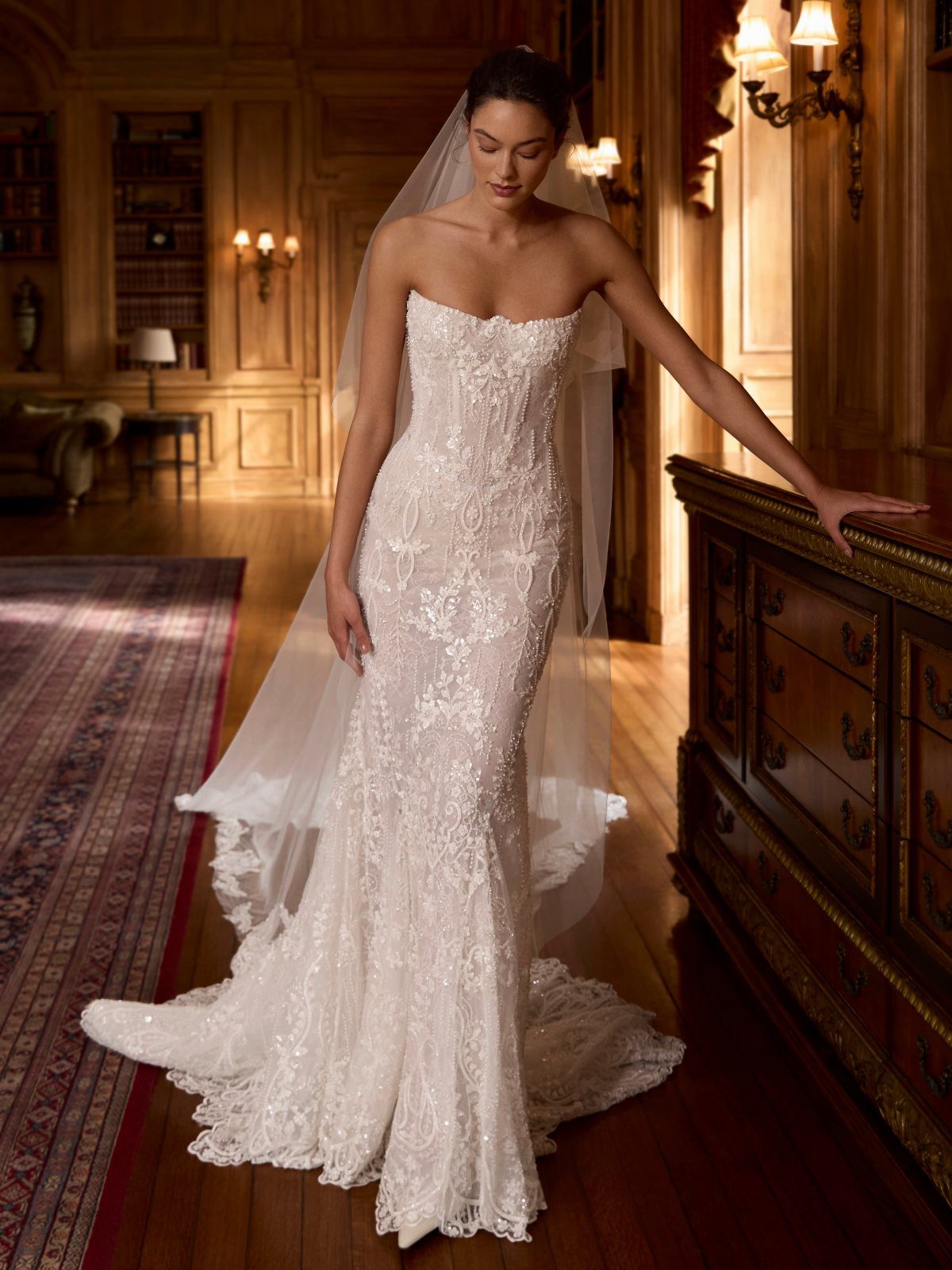
A mermaid silhouette fitted through the hips and thighs before flaring at or below the knee does not leave much room for error in sizing.
Heavy embroidery on the bodice creates structure, almost like built-in shapewear, which helps the dress hold its line without straps.
This is the shape to choose if you want the dress to read as formal and sculptural; it photographs well but limits your stride and your seating options.
I would plan on a second dress or a detachable skirt for the reception, since eating and dancing in this cut takes real effort. Alterations are nearly unavoidable, so pad that part of the budget.
4. Detachable Sleeves
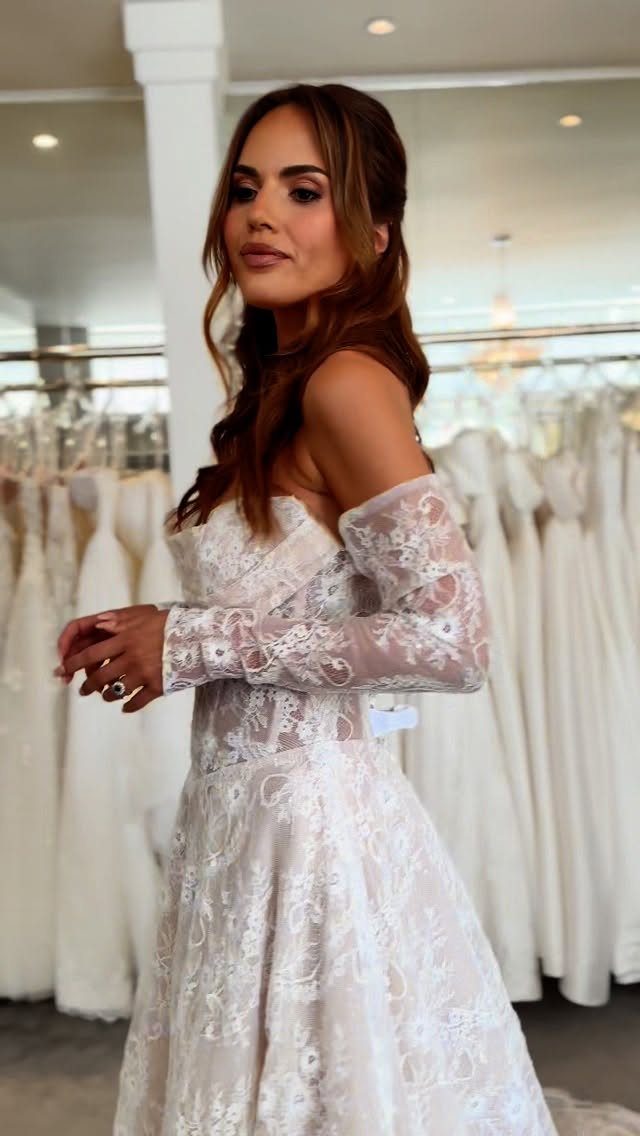
Detachable sleeves let you wear the strapless lace dress for the ceremony and photographs, then remove the coverage for the reception without changing the whole gown. Off-the-shoulder lace sleeves that match the bodice give two distinct looks from one purchase.
This is worth considering if your venue or season calls for more coverage than you want for the party, or if you simply like the idea of a reveal.
Not every dressmaker offers this option, so ask early in the shopping process; some brides buy a matching bolero or jacket instead, which achieves the same swap but reads as a layer rather than part of the dress itself.
5. Tulle Skirt
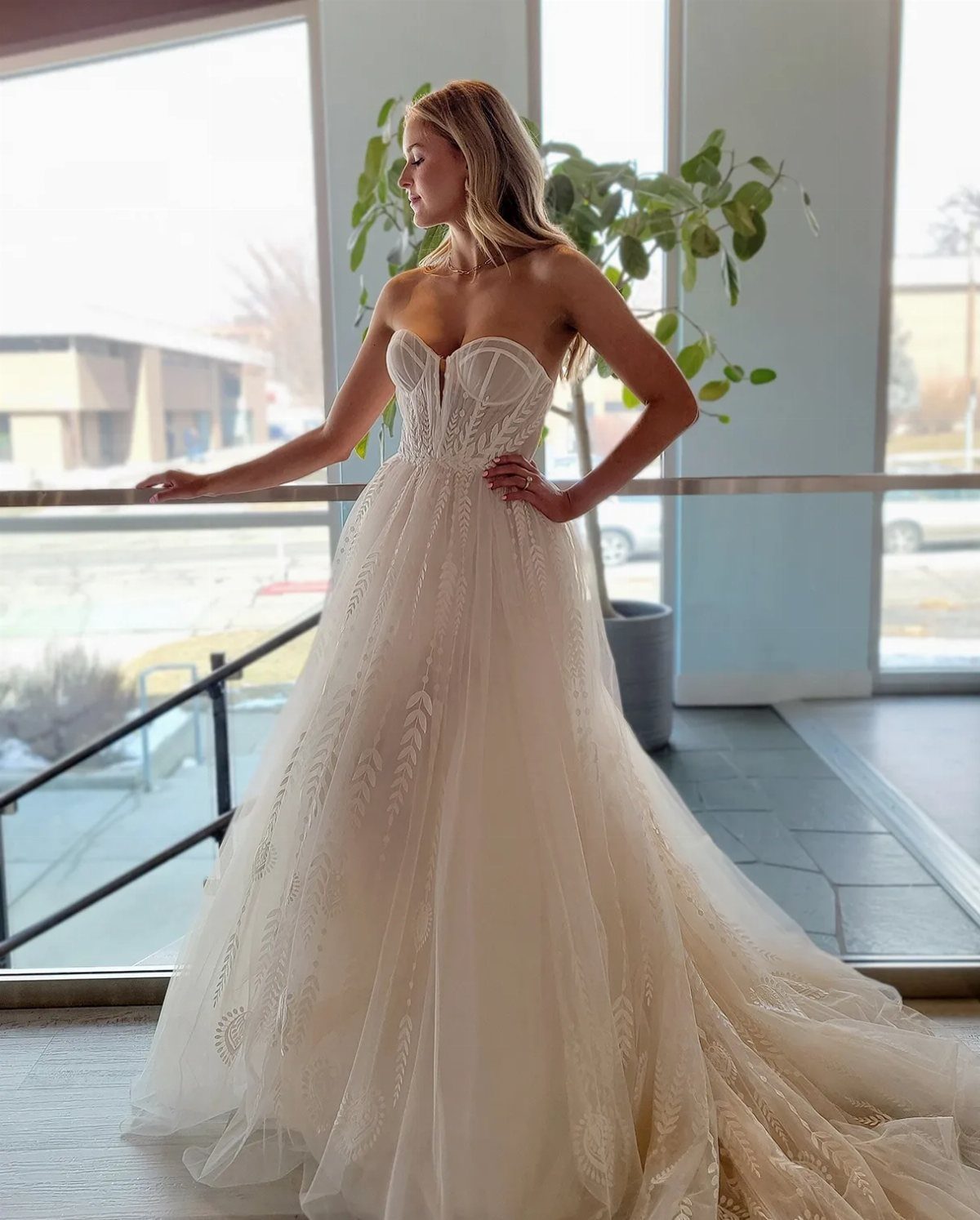
Tulle layered over a structured under-skirt gives the skirt its volume without the weight of satin or mikado, which matters on a long day.
A corset bodice in embroidered lace, cinched tight, balances the fullness below. Tulle catches light and air, so this combination works well in outdoor or well-lit indoor settings where the skirt can move.
Tulle snags easily and shows water spots; I would keep a steamer and a small pair of scissors on hand for loose threads. The train on this version is moderate, which keeps the drama without requiring a full bustle.
6. Strapless Ballgown with Lace Train
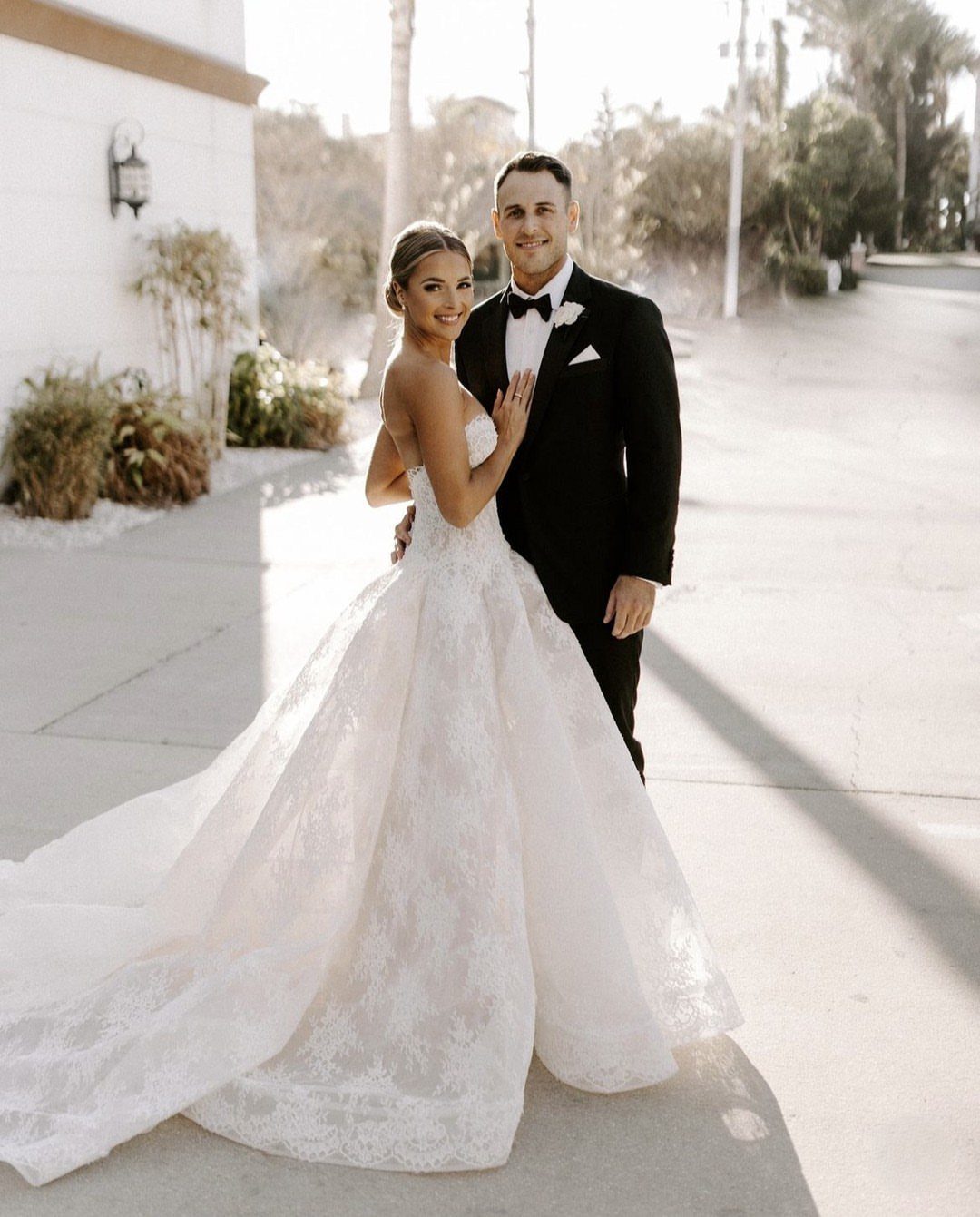
A ballgown skirt with a lace train is the most formal option, and the one that takes up the most space in photos, in doorways, and in your getting-ready room.
The strapless bodice keeps the neckline clean so the eye travels down to the skirt and out along the floor.
The train here is long enough to require bustling for the reception, which means built-in ribbons or hooks and someone who knows how to use them.
I would rehearse the bustle at the final fitting and again the morning of, since a dropped skirt in lace is not a quick fix.
This silhouette suits a grand venue with wide aisles; in a cramped space, the skirt becomes furniture you are wearing.
7. Lace Bodice with Satin Skirt
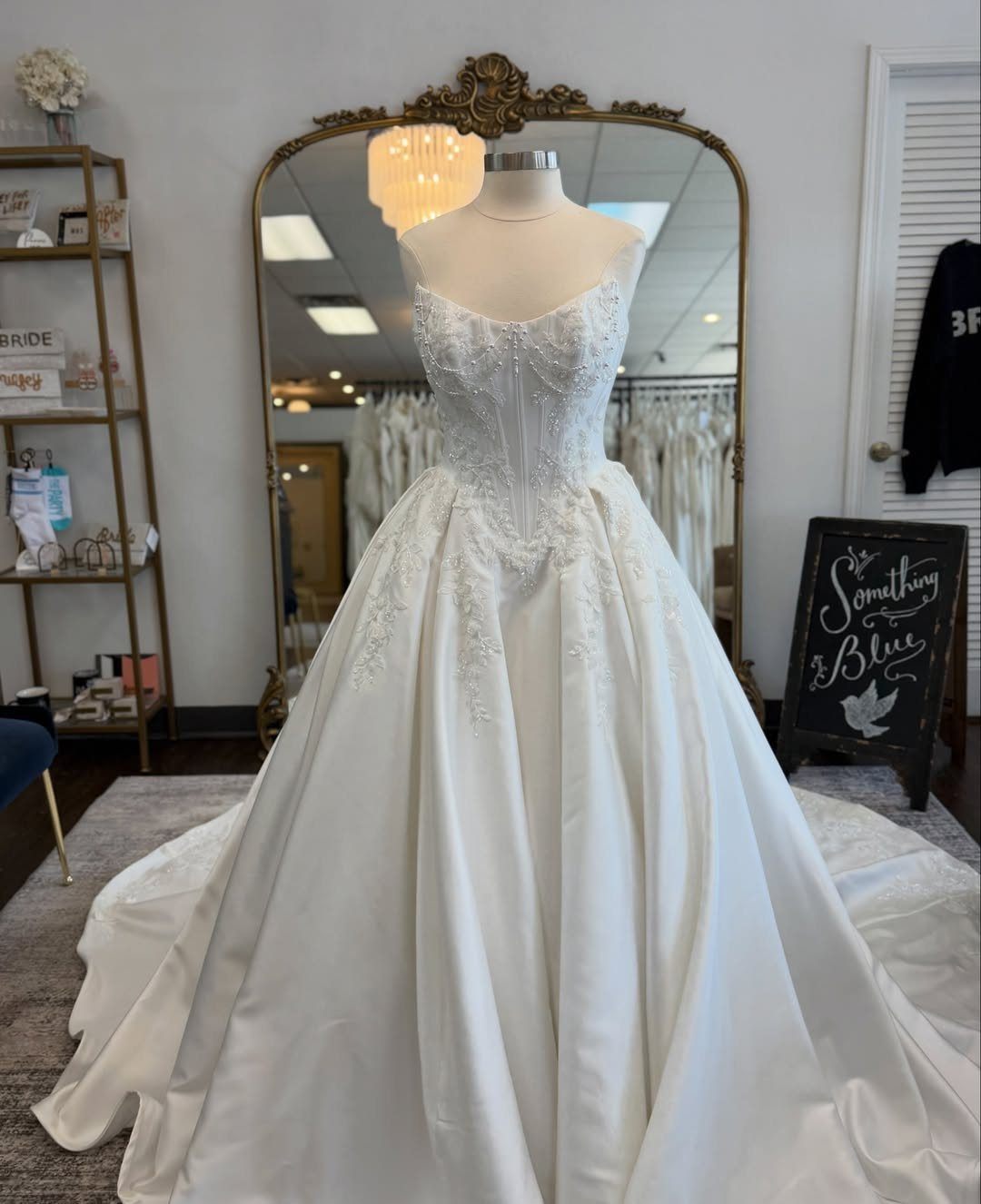
Satin carries weight and shine that lace alone cannot match, so pairing the 2 lets each material do what it does best. The bodice handles the detail and the structure; the skirt falls clean and heavy to the floor.
This combination reads as more formal than an all-lace gown, and the satin blocks light rather than filtering it, which photographs as a solid shape against busy backgrounds.
I would ask to see the dress under the store’s fluorescent lights and near a window, since satin shifts from warm to cool depending on the source.
A wrapped or folded bodice, like the liquid satin versions that show up in seaside collections, adds softness if the classic sweetheart feels too rigid.
8. Strapless Lace Dress with Overskirt
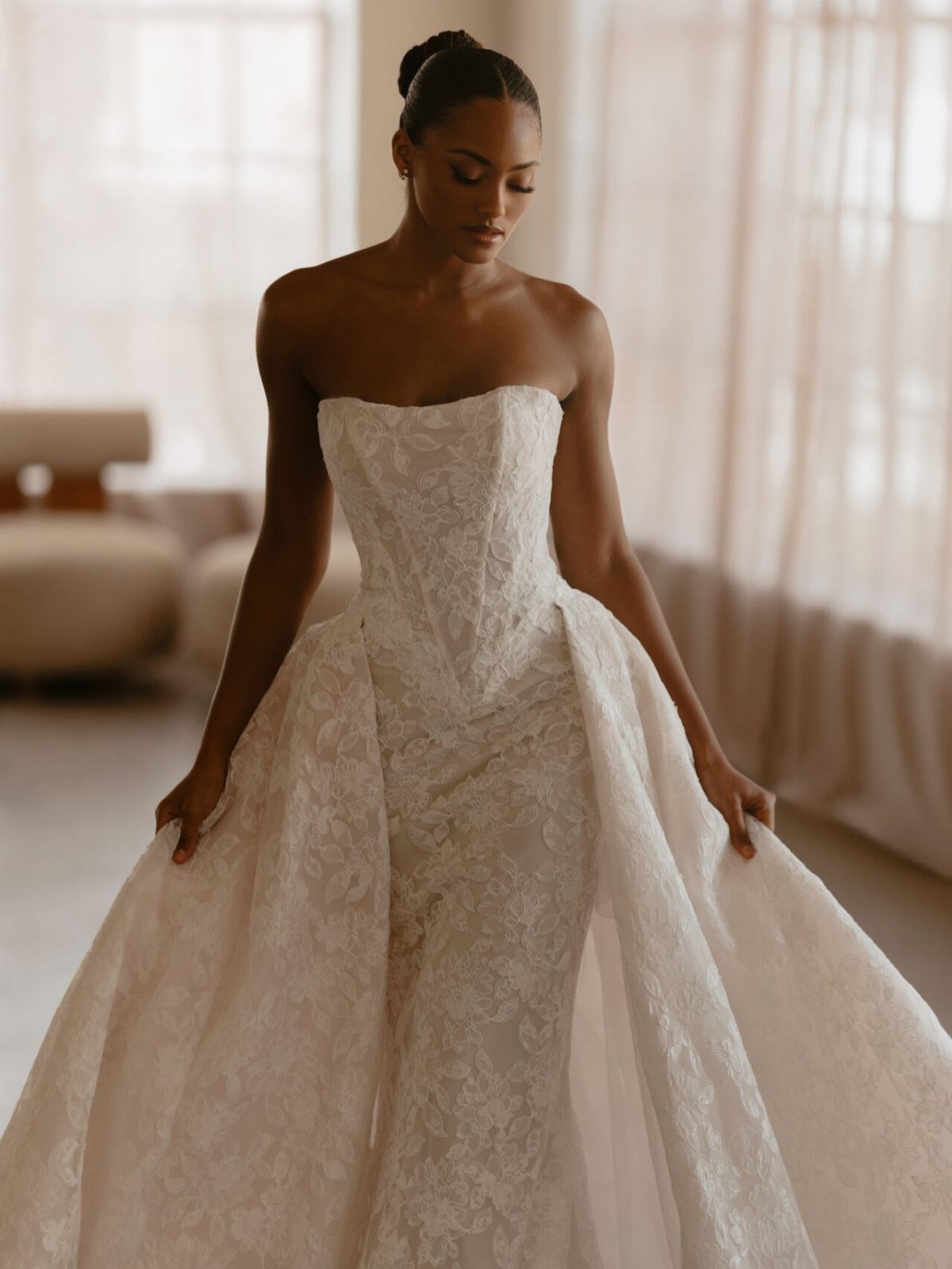
An overskirt turns a fitted lace dress into a ballgown for the ceremony, then strips back to something you can move in once the dancing starts.
The base dress needs to stand on its own: it is what you wear for the last half of the night, so the lace pattern and fit should satisfy you without the extra layer.
Tulle overskirts attach at the waist with hooks or a thin belt, which means no separate top to change; a helper can lift it off in under a minute.
I would confirm the attachment points lie flat and do not show through the lace bodice when the skirt is off.
The overskirt adds volume for photos but trades away some of the money you might have spent on a second dress; budget for pressing both pieces, since tulle creases in storage.
Choosing the Right Silhouette
A ballgown or princess cut with a fitted corset bodice draws attention to the torso by setting it against volume below.
Importance of Fit
A bodice that gaps or slides will show in every photo, and you will spend the day pulling at it.
Lace adds texture but does not add grip; the support has to come from inside. Some strapless lace gowns pair with a corset closure, which lets you adjust tension across the torso; others rely on boning and seam work alone.
Either way, alterations are where the fit becomes secure or fails. Budget for them, and bring the undergarments you plan to wear to every appointment.
Fabric Choices
Satin falls heavier and photographs as a solid shape, which helps against busy backgrounds but shifts color under different lights.
Silk drapes in folds that read as contemporary and smooth. Each material does a different job: lace for detail and structure up top, tulle or satin for weight and movement below.
Frequently Asked Questions
What styles are available for strapless wedding dresses?
The main silhouettes are A-line, mermaid, ballgown, and sheath or fitted shapes with overskirts. A-line stays fitted through the torso and relaxes into a wider skirt, which distributes weight evenly and keeps the dress from feeling heavy by hour six.
Mermaid hugs the body to the knee or mid-calf, then kicks out; the silhouette reads formal but sitting and dancing take more planning.
Ballgown gives the most volume and drama, while an overskirt lets you switch from ceremony fullness to reception mobility without changing dresses.
How do I accessorize a strapless wedding dress?
Detachable sleeves or a matching bolero give you coverage for the ceremony and a different look for the reception. A belt at the waist can break up the line between bodice and skirt.
Detachable straps or sleeves are worth asking about at the first appointment, since some designers do not build them in; a separate bolero or jacket works too, though it sits on top of the gown rather than finishing it.