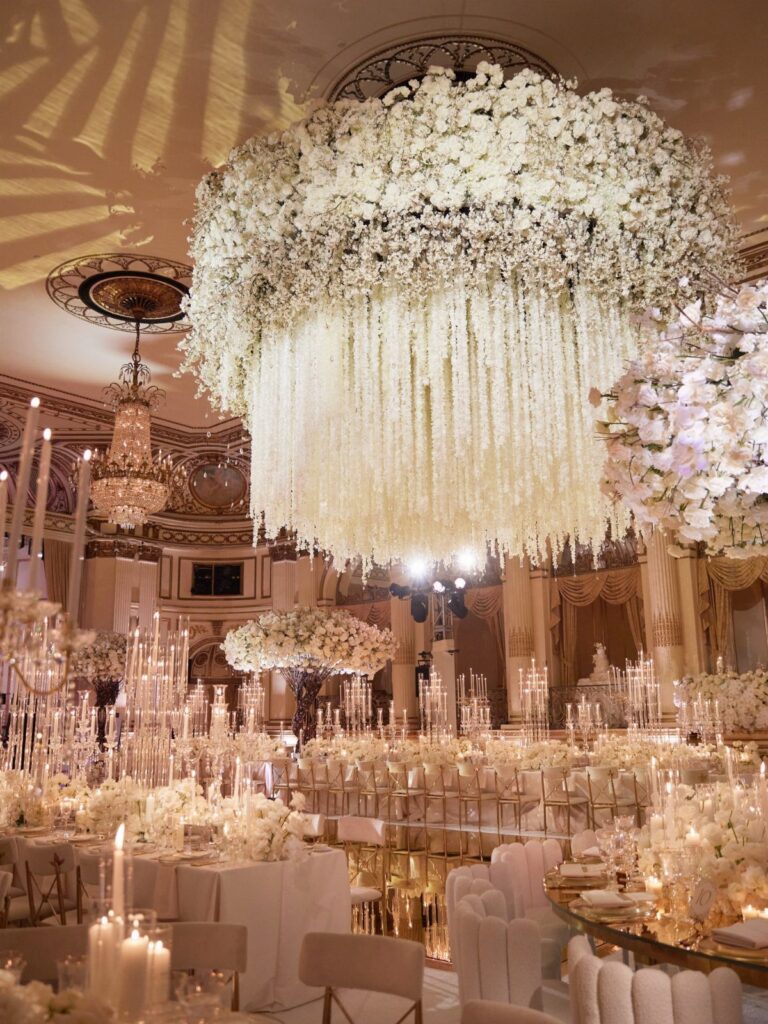
Luxury wedding decor ranges from rented fairy lights to a hanging chandelier that needs professional rigging.
What settles the choice is not the budget alone but whether the venue can support the weight and the scale, or whether a single wreath above the head table carries the same gesture without the engineering.
Bronson Van Wyck’s 3,000 candles for one entry show the far end of what patience and layering small sources can reach.
[link-whisper-related-posts]1. Fairy Lights and Chandeliers
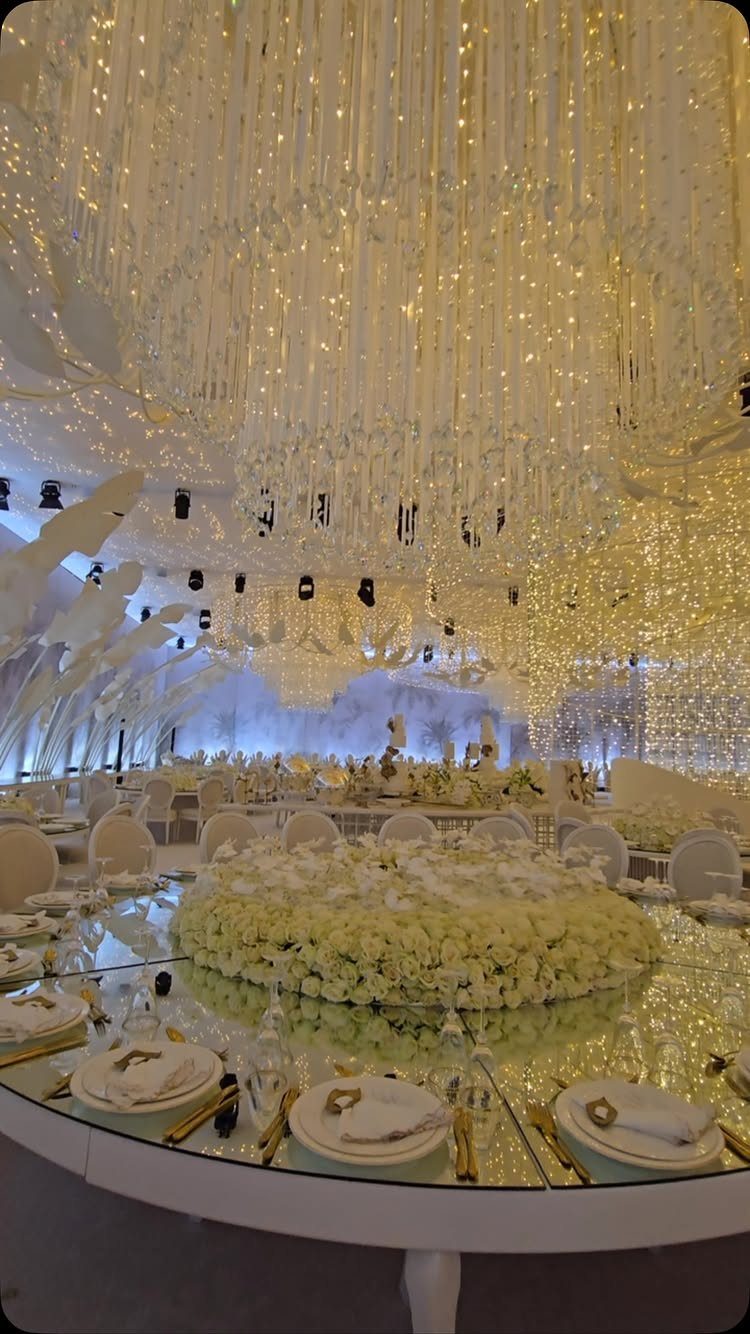
Mirrored tables catch what hangs above them, so the light doubles without adding fixtures. That is the idea here: a canopy of fairy lights and crystal installations low enough to feel intimate, high enough that guests stand straight.
I would start with the canopy, since it frames everything else.
String fairy lights in dense rows between beams or a temporary frame, then hang one chandelier or glass installation per table at varying heights. The warm light flatters faces; the crystals throw small rainbows onto the tableware at certain hours.
Bronson Van Wyck once used 3,000 candles for a single entry. Layer small sources rather than relying on overhead spots.
2. Table Settings
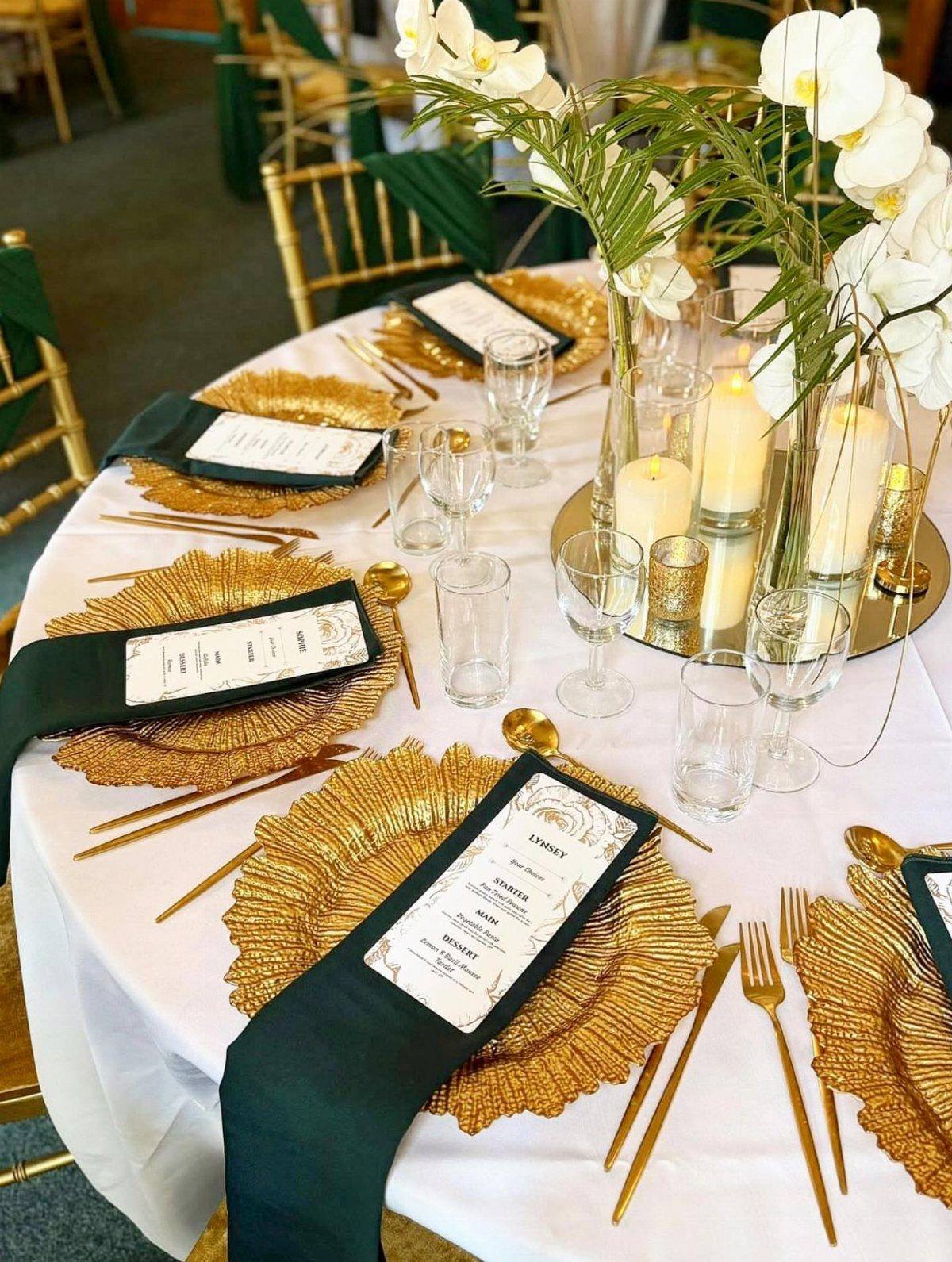
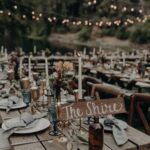
Gold charger plates, emerald napkins, printed menus, white orchids on a mirror round. The visible table sets a standard: each guest arrives at a place that was built for them by name.
The cost sits in the layers. Charger plates cost more to buy than to rent; gold-rimmed china and crystal glassware add more per head than the couple expects.
I would put money into the linens first, satin or velvet in a deep tone, since they cover the most surface and set the temperature of the room.
Metallic accents and personalized details, hand-painted initials or embroidered ribbons on napkins, come after if the budget holds.
Bryan Rafanelli’s mother used silver chargers in 1954. They still read correct.
3. Candlelight
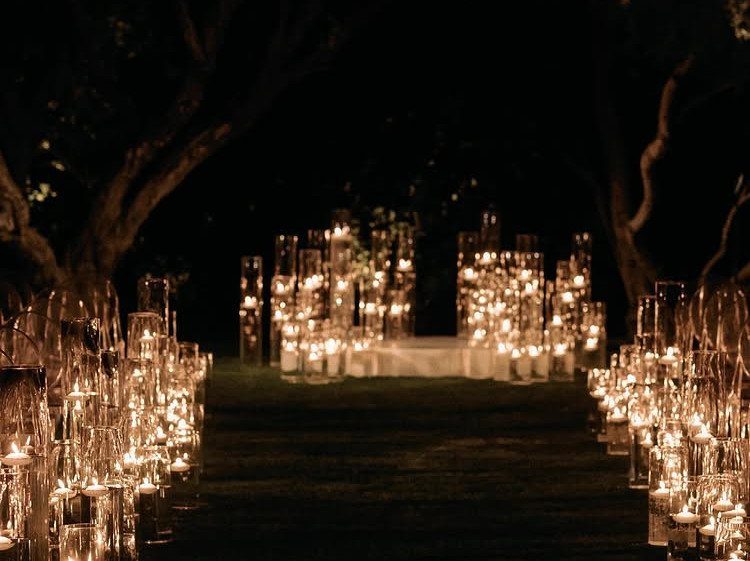
One hundred and forty-two floating candles in glass cylinders, marking an outdoor aisle at night. The maker counted them; the number tells you the scale of patience required.
Glass cylinders protect the flame from wind and amplify the glow upward.
I would use them in any outdoor setup, and cluster them in threes or fives rather than spacing evenly, which reads more like a path and less like an airport runway.
Indoors, the same cylinders on bare tables or mirrored trays give height without blocking sightlines across the table.
Cost stays low per candle, but the glass vessels add up. Rent if you can, or mix cylinder heights and fill some with flowers instead.
4. Hanging Floral Chandeliers
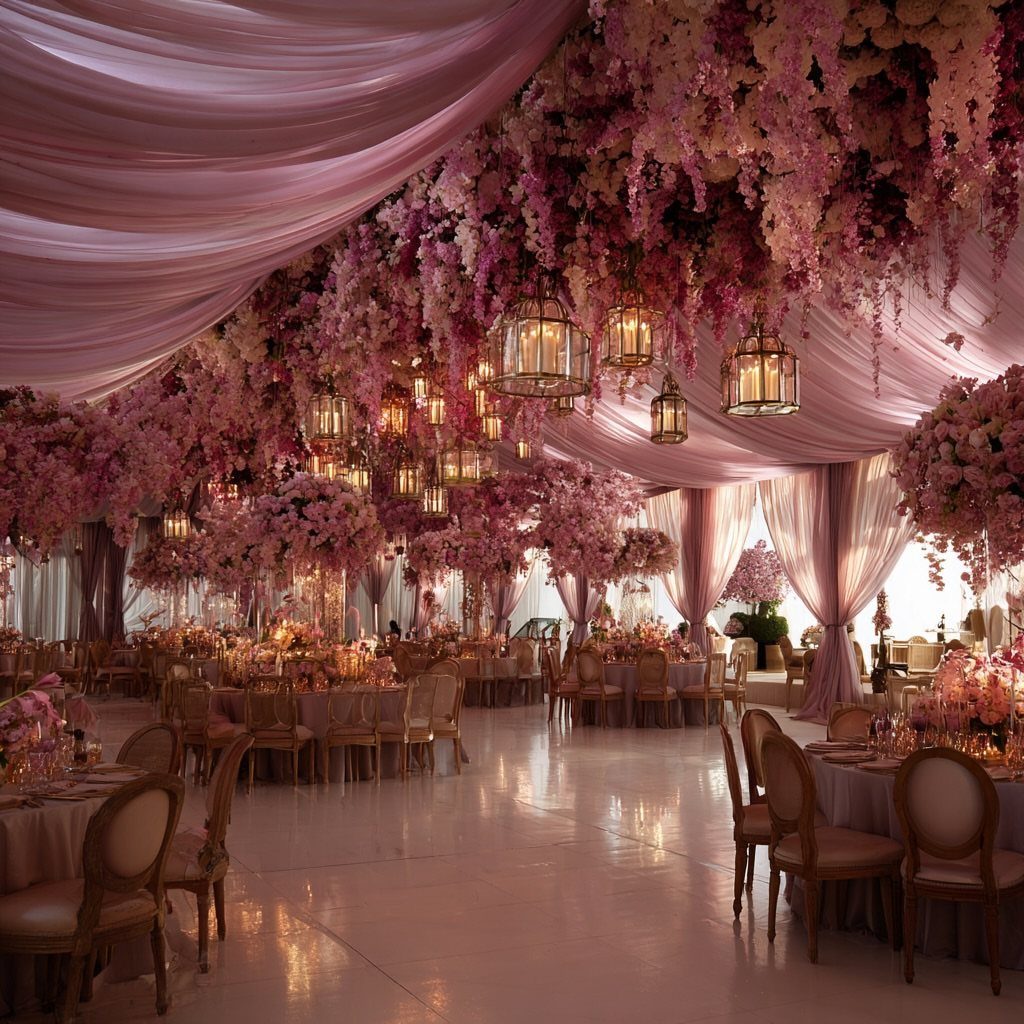
Flowers suspended from the ceiling reverse the usual arrangement: guests look up, not down, and the room feels larger because the center stays clear.
Hanging floral chandeliers work best in halls with draped fabric overhead and accent lighting nearby.
To do this, you need rigging rated for the weight, a professional install, and a ceiling height that allows it; low ceilings make the installation unsafe and the proportions wrong.
I would choose one statement area, the dance floor or the head table, rather than attempting full coverage.
Where the ceiling cannot take the load, a single floral hoop or wreath above the couple’s seats gives the same gesture at a fraction of the engineering.
5. Ceremony Backdrop
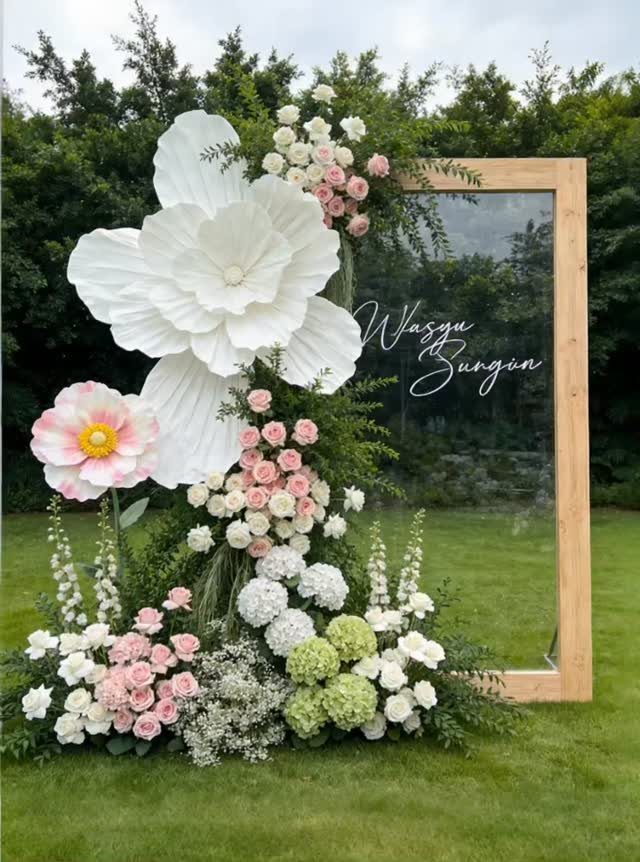
A clear acrylic board framed in wood, dressed with paper flowers and fresh roses, set on open lawn. The backdrop does its job when it photographs clearly and does not fight the setting.
Paper flowers keep their shape in humidity and travel well; fresh hydrangeas and roses add scent and variation in texture.
I would use the paper for large structural blooms, the fresh for filler and edge softness, which cuts the fresh flower budget by roughly half. The acrylic board reflects light and stays legible for written vows or monograms.
For indoor ceremonies, the same frame against drapery or a plain wall works; the technique transfers, the scale adjusts.
6. Grand Entrance
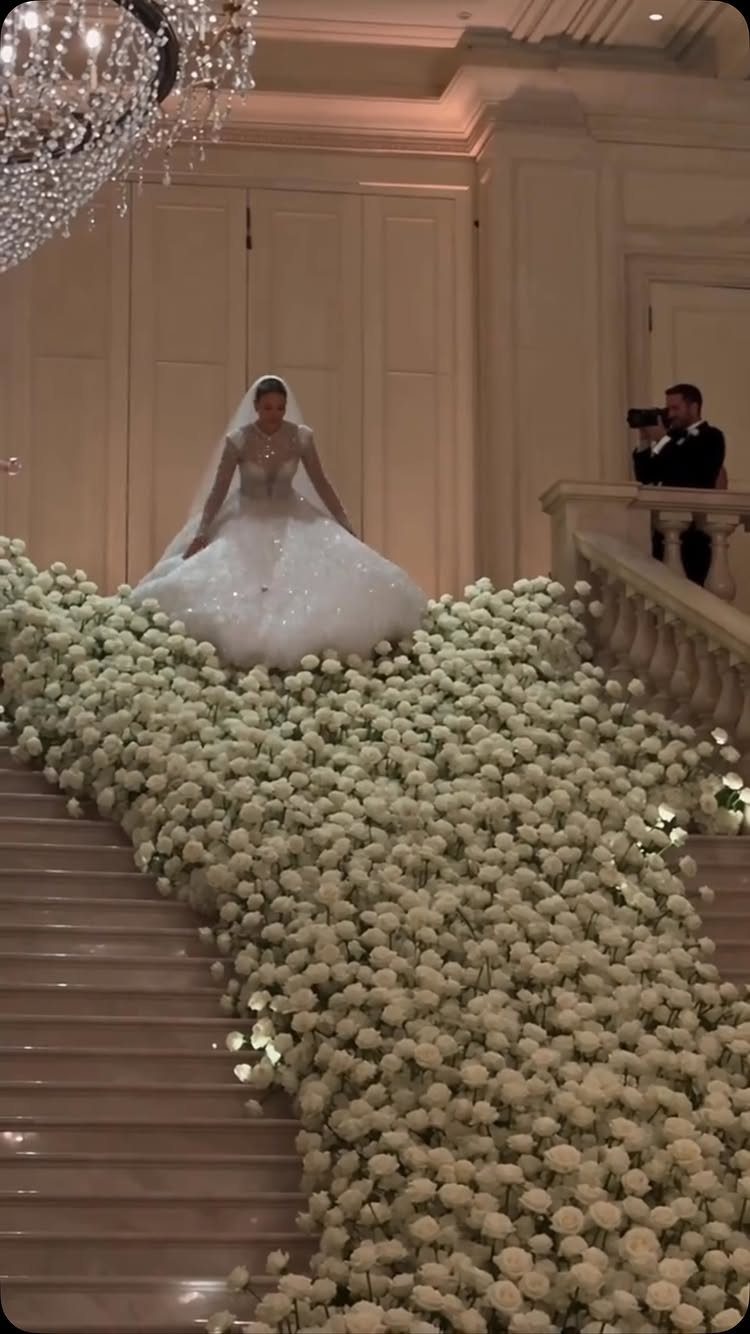
A staircase dressed entirely in white roses, the bride descending through them. The entrance is not a detail; it is the first sentence of the reception, and guests read it as promise or warning.
Cascading flowers on a staircase require structural support, water tubes or heavy foam, and installation time the venue may not permit. I would check load limits and cleanup terms before committing.
A simpler version: an archway at the entry to the reception space, flowers or fairy lights on a frame guests walk through, with a runner underfoot, mirror or crimson, that catches the light.
For a grand entrance, flowers dense enough to obscure the steps make the reveal more dramatic. That is the look; the safety check is your own.
7. Opulent Centerpieces
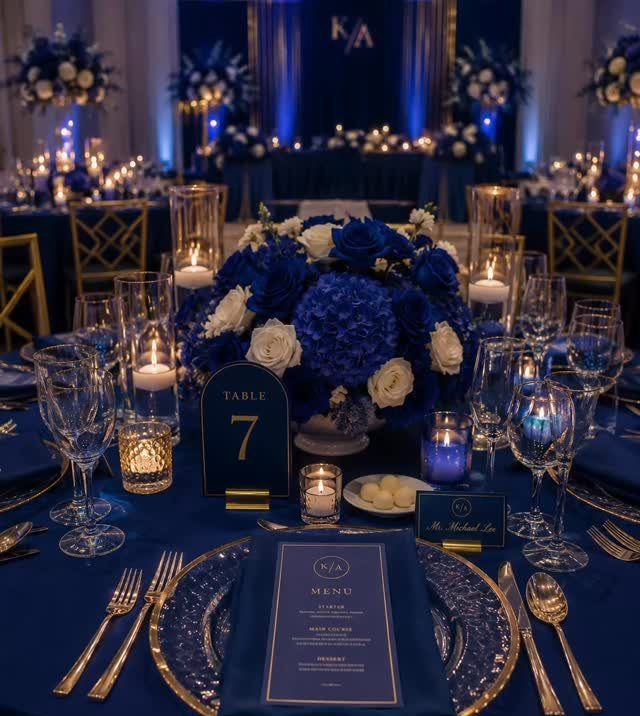
Deep blue hydrangeas and white roses against navy linen read intentional rather than safe. The contrast is what makes it feel considered.
Tall centerpieces suit rooms with high ceilings; in standard hotel ballrooms, they block conversation across the table. I would mix one tall arrangement per two low ones, the tall for drama, the low for talk.
Crystal candelabras between floral pieces catch and spread the light, though their weight needs stable bases and staff who know how to secure them.
Rented candelabras run less than bought ones; the flowers are where the money goes. Roses and orchids hold shape longest out of water, which matters once the reception runs long.
8. Personalized Decor Elements
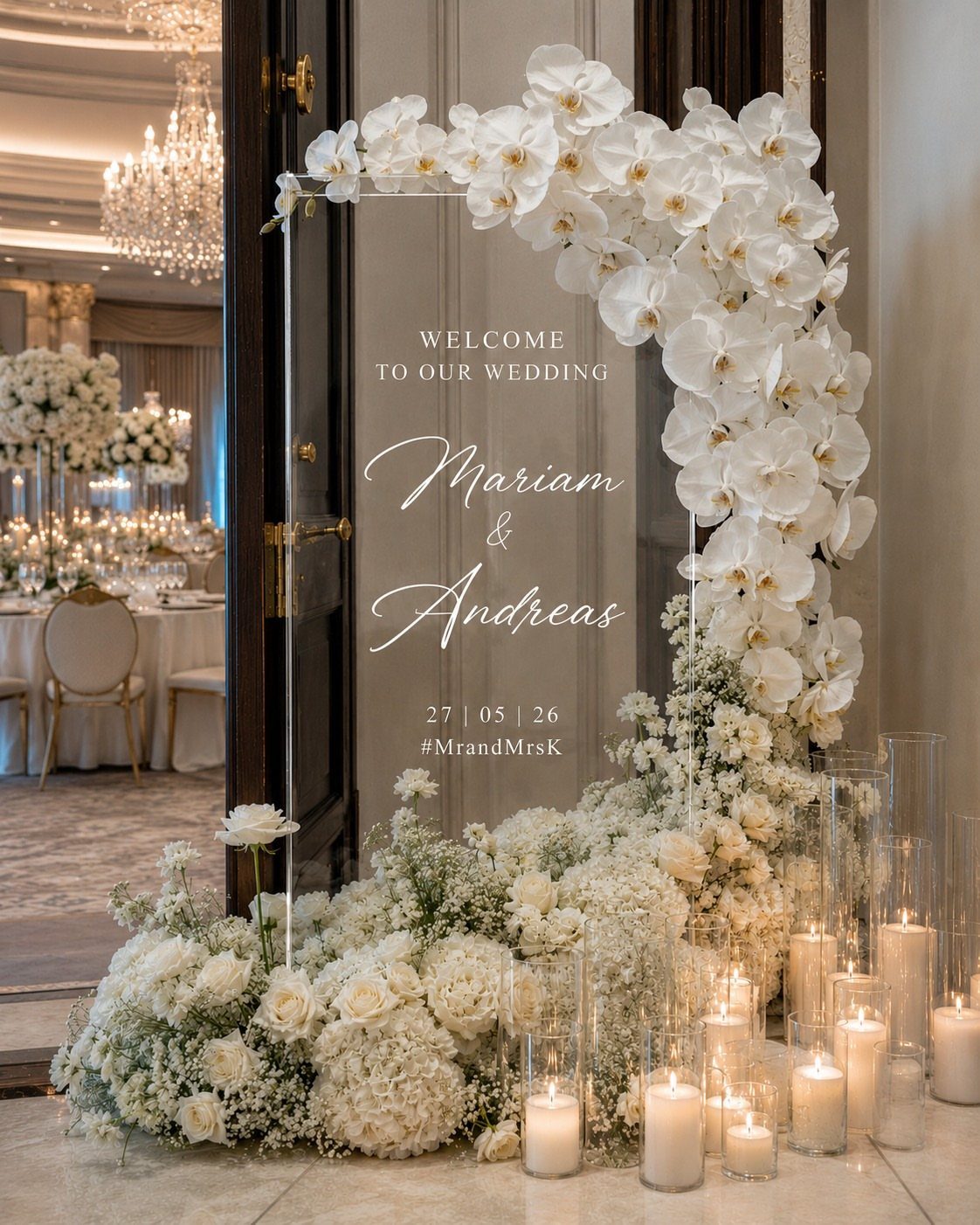
An acrylic sign with names and a date, framed in orchids and roses, does what paper cannot: it survives the evening intact and photographs without glare.
Custom signage works best when the lettering is simple and the text short; long paragraphs shrink to illegibility from across a room.
I would limit it to welcome signs, bar menus, and one seating chart, scattered enough to feel personal, not so many that guests stop noticing. Monograms on dance floors or napkins carry the same gesture at lower cost.
What you save in money you spend in hours.
9. Custom Place Card Displays
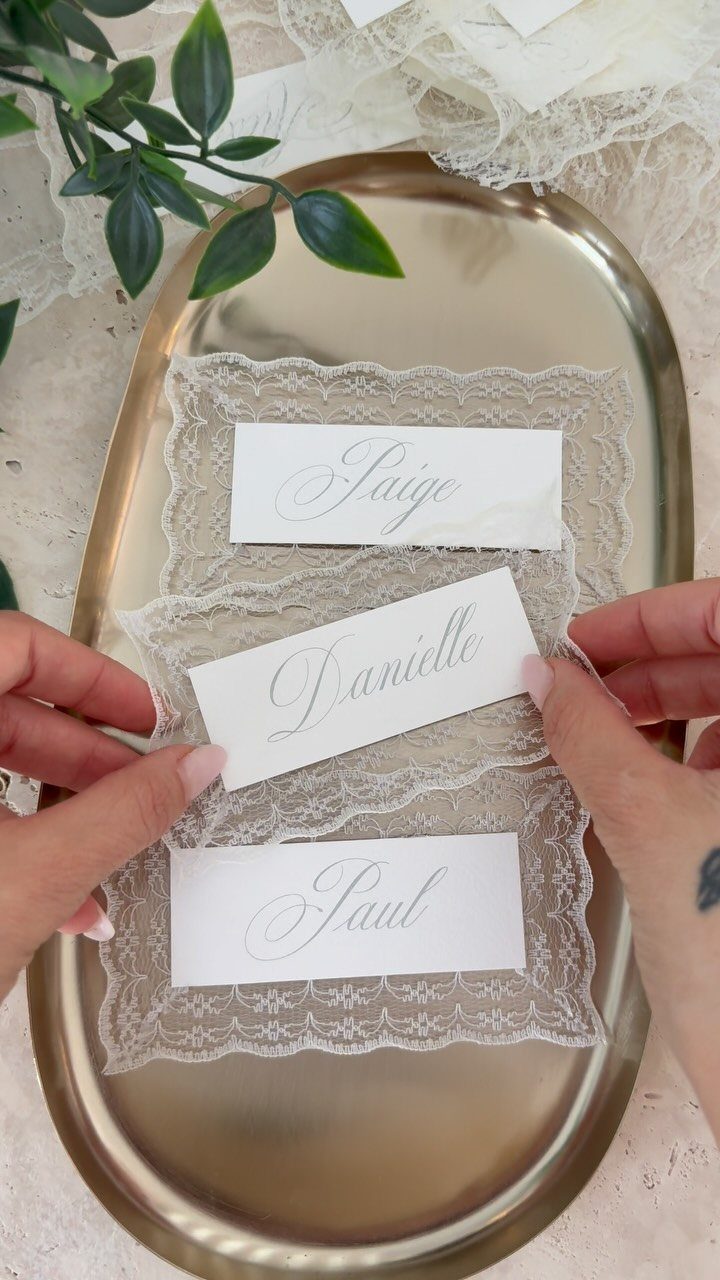
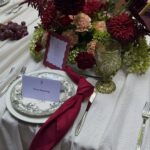
A calligraphed name on heavy stock, backed with lace, sits in the hand like a small gift before the meal even starts.
The display matters as much as the card.
A gold tray lined with the same velvet as the table linen ties the entry table to the room; the fabric is where I would put money first, since it carries the eye across both spaces.
Brunschwig & Fils fringe and Rose Uniacke velvet at a place-card table sounds excessive until you realize the cloth becomes yours, usable afterward.
Lace backing is delicate to handle in bulk. I would assemble these the morning before, not the day of, and keep a spare stack for rewrites.
10. Extravagant Cake Displays
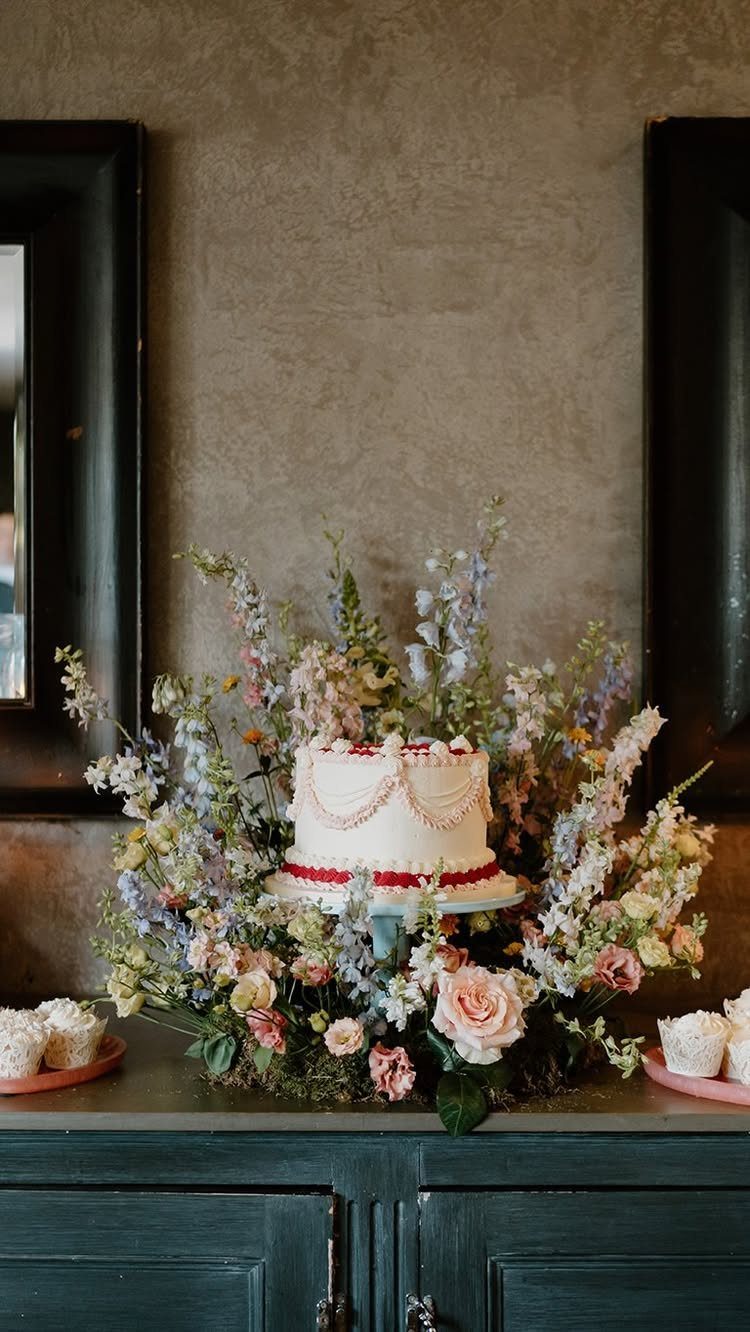
A single-tier cake ringed in tall pastel flowers reads as sculpture first, dessert second. The flowers do the height work so the cake itself stays manageable.
Multi-tiered versions need internal supports and a table rated for the weight; the load adds up fast.
Fresh flowers between tiers require food-safe stems and a florist who knows how to insert them without touching the icing. I would confirm the cake stand diameter against the table size, a common mismatch that leaves the arrangement looking stranded.
The lavish table beneath is half the effect. A dark wood cabinet, mirror, or velvet cloth underneath extends the display without more cake.
11. Fabrics and Materials Layered Textures
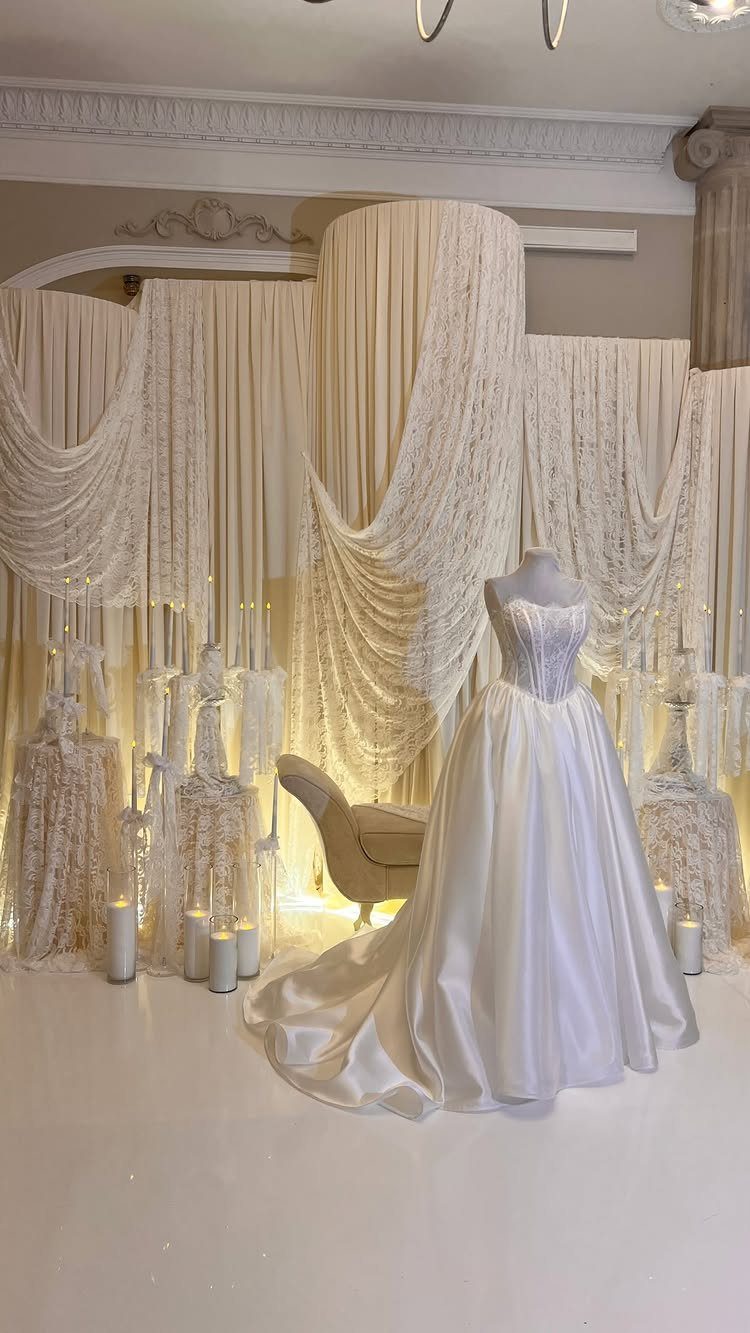
Pleated fabric, lace swags, candlelight: the layers create depth that flat drapery cannot manage alone.
Mixing materials works when each texture differs enough to read separately. Satin against velvet collapses into shine; pleated silk against matte lace, or raw linen against polished cotton, gives the eye places to rest.
I would start with one dominant fabric, the drapery that covers the most area, then add one contrast at the edge or in a single panel.
For a reception, the same technique behind the head table or cake area frames the couple without a separate arch.
12. Luxe Lounge Areas
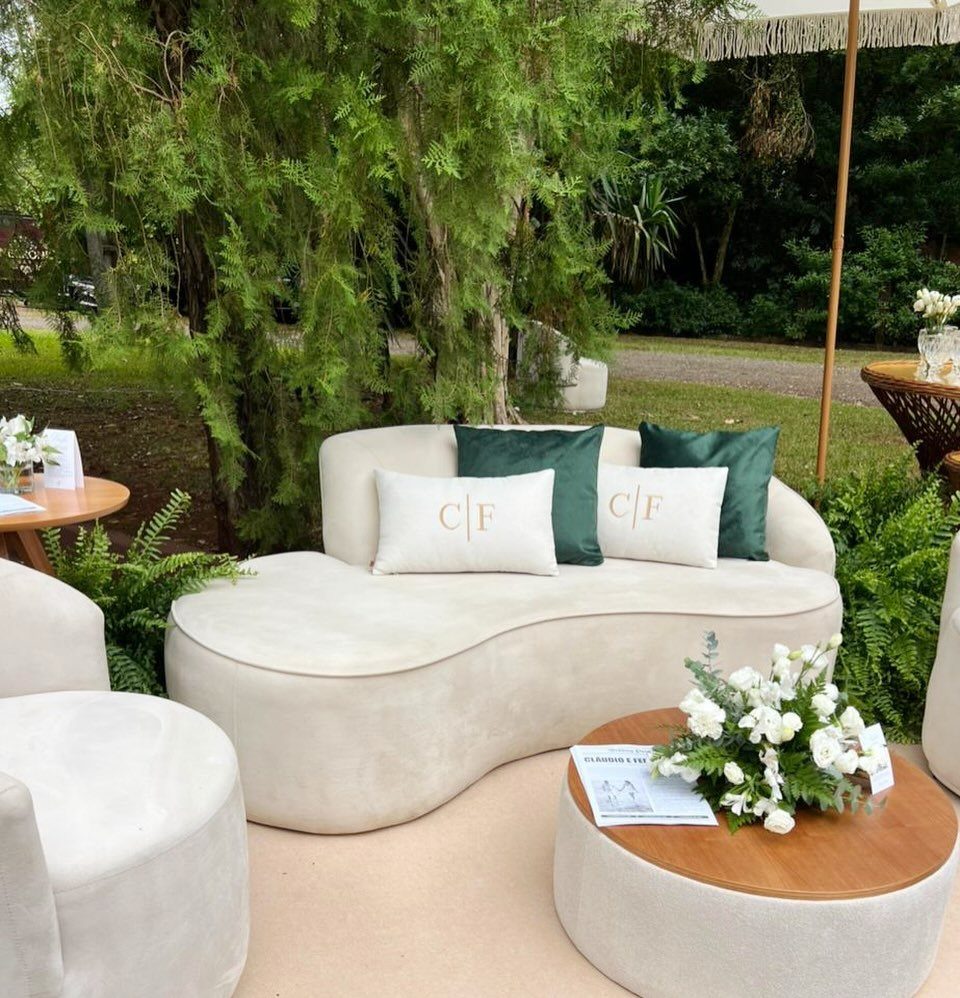
Outdoor lounges need weather planning. Velvet stains; I would reserve it for tented areas or confirmed dry evenings, and keep a backup plan that moves seating inside without rearranging the whole floor plan.
The monogram, "C|F" here, reads as ownership of the space, a small detail that photographs well and dates the event to this couple only.
Plush seating costs more per person than standard chairs, so I would limit the lounge to a small slice of the guest list, placed near the bar or away from the dance floor for conversation.
Budgeting for Decor
A realistic budget starts with the items that touch every guest: linens, lighting, flowers, and the entrance.
Luxury weddings run higher on floral arrangements and designer furniture, but the gap between modest and high-end often sits in how much is rented versus bought.
Experienced decorators can stretch a budget by knowing which elements carry the most visual weight. The canopy of fairy lights, the drapery behind the head table, the runner under the cake: these cover large areas with single decisions.
I would put money into those first, then add metallic accents or personalized details if the total holds.
Guest-facing pieces, the backdrop, the seating chart, the bar menu, deserve priority over elements guests walk past without stopping.
Timeless Decor Choices
Nearly every planner asked named candles and handwritten calligraphy as the 2 details that do not date.
Candles because flame flatters every face and needs no trend to justify it; calligraphy because the irregularity of a hand-held pen signals human attention in a way type cannot.
Yves Saint Laurent’s line about fashion fading while style stays eternal holds up for wedding decor too.
The parallel he drew was to a closet or a home, the things you keep because they say who you are without announcing it.
That is the test I would apply to any piece of decor. If it would look correct in a photograph from 1954, Bryan Rafanelli’s mother’s silver chargers still do, it probably passes.
Trending ideas repeated across receptions often ignore the setting itself. The detail you saw work online may melt in your climate or mean nothing to your guests.
Yves Saint Laurent said that ’fashions fade, style is eternal,’” he says. “The best decorations, like the best clothes, are the ones that tell your guests who you are without telling them who you are.
— Vogue
Sustainability in Decor
A venue with enough character of its own means you only bring in pieces that add to what is already there. The approach cuts waste and keeps the event specific to the place rather than interchangeable with any other hall.
Existing features I would use: architectural columns for draping, garden walls for ceremony backdrops, windows that provide their own framing.
Each reduces the volume of material trucked in and out. For flowers, Carter has used local flora gathered on site, which eliminates shipping and ties the color palette to the actual landscape.
Sustainability here is not a separate category; it is the decision to let the venue do part of the work.
Less fabric, less trucking, less to discard after. The authenticity follows from the same choice, a wedding that reads as happening in this room, this garden, this evening, not in a generic luxury template.
Professional Vs. DIY Decor
DIY works for elements you can assemble in advance without time pressure: calligraphed place cards, lace-backed name tags, small signage. The risk arrives on the day itself, when the hours shrink and the problems multiply.
Professional decorators earn their fee on coordination.
Hanging floral chandeliers need rigging rated for weight and staff who know the venue’s ceiling structure. Large-scale furniture, immersive lighting designs, and architectural installations have technical elements, electrical load, fire codes, that are difficult to handle without experience.
Most weddings I see use a mix: personal touches the couple makes themselves, complex pieces hired out.
The dividing line is not cost alone; it is whether a mistake on the day would be fixable in the time available. If the answer is no, that piece belongs to a professional.