The 9 ideas below run from a roll of tape on an aisle floor to permit fees for a European castle, with most falling somewhere between a potted sapling and a handler for your dog.
What separates one from another is not how pretty the photo will look but how much control you actually have over the conditions: church rules in writing, wind on a hill, a beach permit, or whether your venue allows pets at the altar.
The tape mark for a centered first kiss costs nothing and takes a moment to place during rehearsal, yet it does more to frame the shot than a drone hovering overhead.
[link-whisper-related-posts]1. Personalized Vows
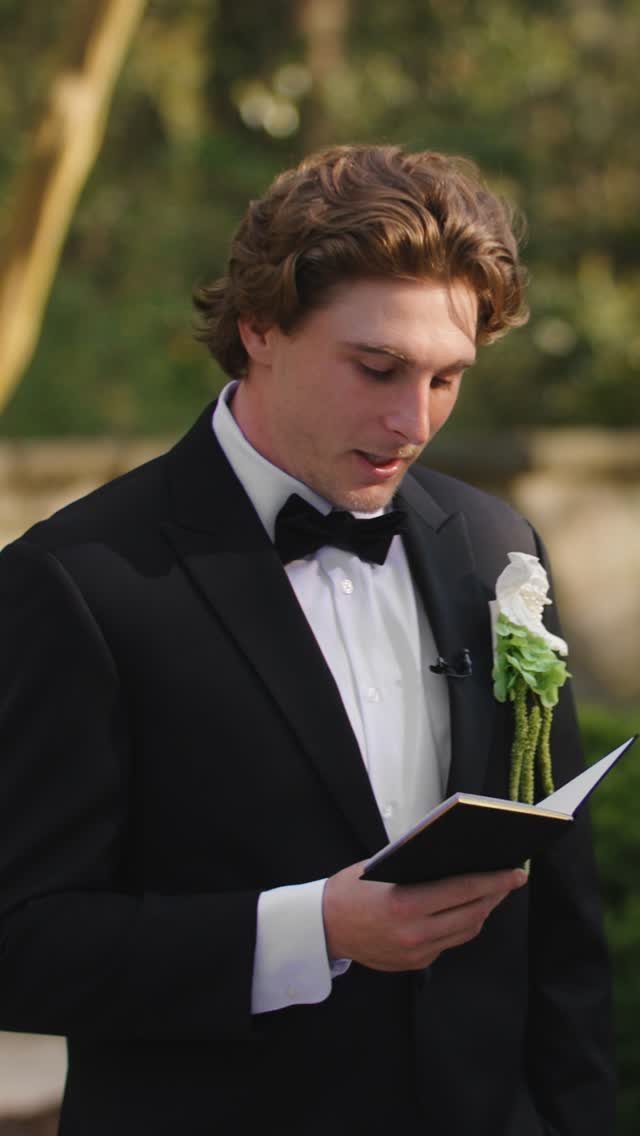
Writing your own vows turns the ceremony into something no other couple could replicate.
Humor lands well when it is specific: the way your partner reheats coffee 3 times, their hopeless navigation skills. The emotional route works better with one concrete memory than with abstract promises.
Keep them short enough to speak without rushing or losing your breath. That is shorter than it sounds until you time it.
Print them in a small book, or on sturdy card stock that will not shake in your hands. Bring a backup copy for your officiant to hold.
2. Planting a Tree Unity Ceremony
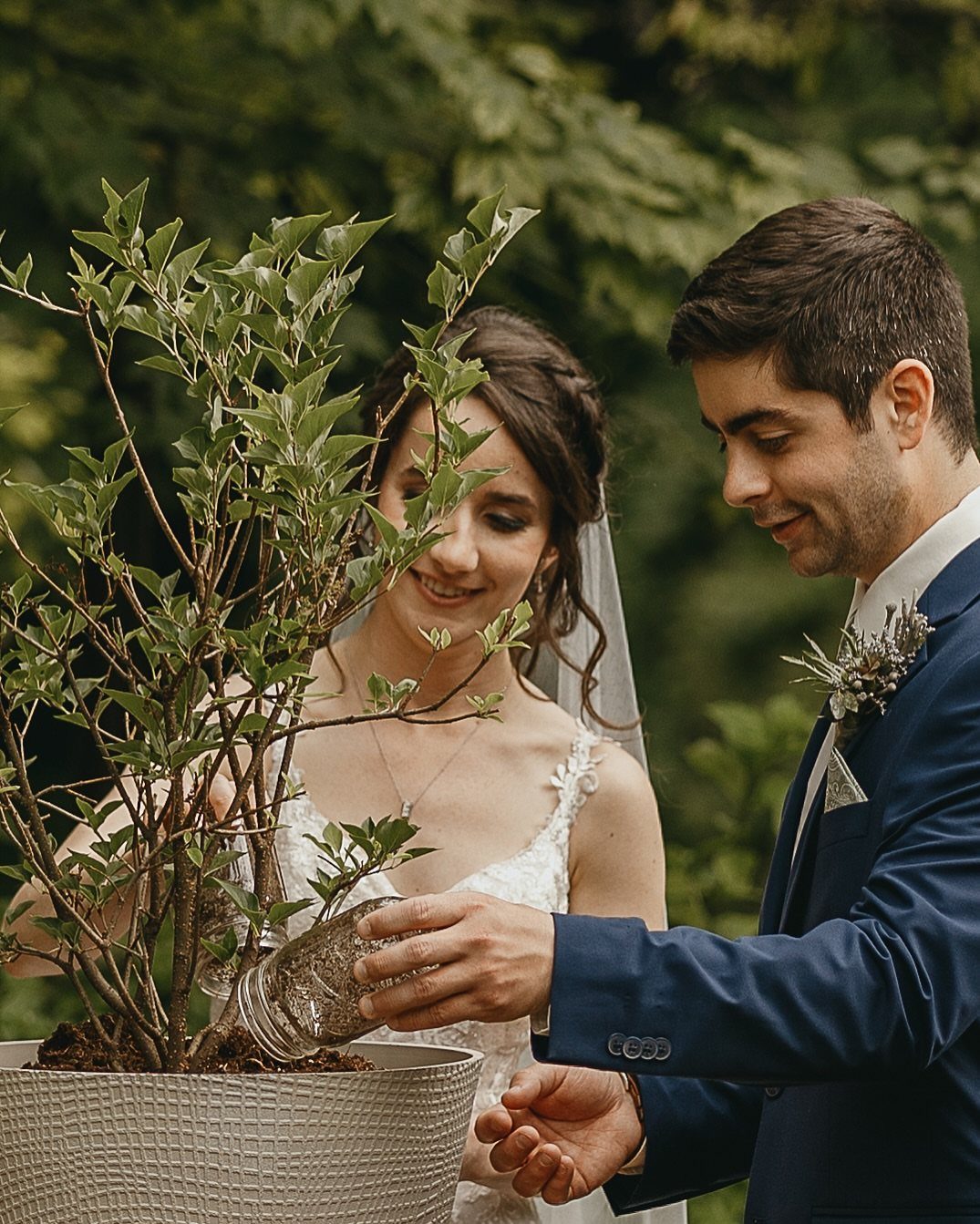
A tree unity ceremony needs a sapling in a pot large enough to handle during the ritual without spilling soil everywhere. Glass jars for the soil photograph cleanly and keep the moment tidy.
After the wedding, the tree lives on.
That is the point. Choose a species suited to your climate and eventual yard space, not just what looks good in nursery pots.
Evergreens work in most US zones; citrus wants warm winters. The soil you pour can come from both your childhood homes if someone can collect it, though standard potting mix is the practical fallback.
3. Centered First Kiss
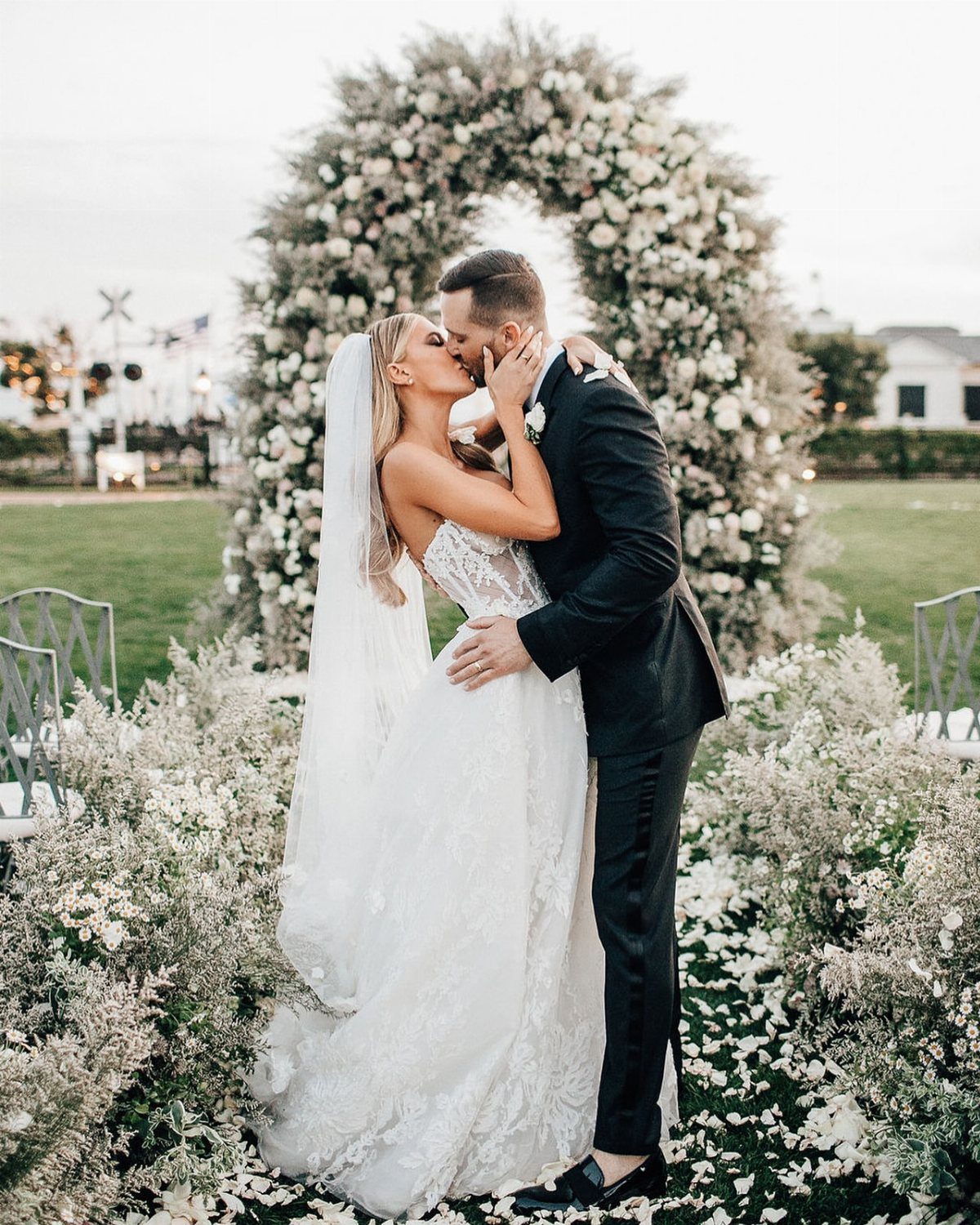
The photographer’s job gets simpler when the couple stands dead center of the aisle, aligned with the arch behind them.
This means checking the setup before guests sit down. Walk the aisle yourself during rehearsal, find the center point, and mark it with tape if your venue allows.
Tell your officiant where you will land for the kiss. A centered couple with the arch framing them needs nothing cropped or corrected later.
4. Rustic Arch Decoration
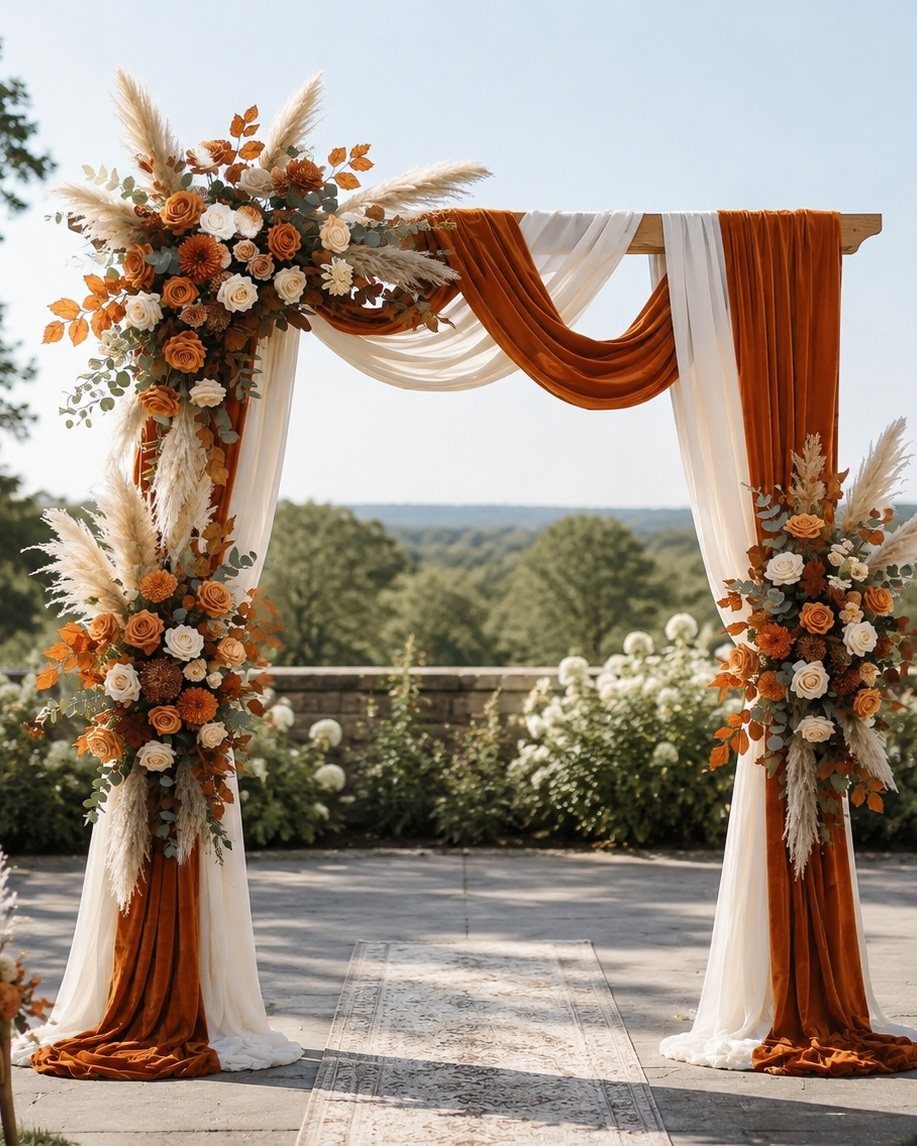
Intertwined branches and brambles form the bones of this arch; the rest is layering.
Rust-orange velvet and white fabric drape over the wood, and pampas grass adds height without the cost of full floral coverage. Draped fabric, flowers, and pampas grass on a wooden arch create the contrast that makes the look work.
Build the base from foraged branches if you have access to land and time to dry them, or rent a wooden arch and focus your budget on fabric and blooms.
Swap the palette of oranges and rusts for whatever matches your season. Flowy fabric and structured flowers together keep the rustic side from looking accidental.
5. Beach Wedding
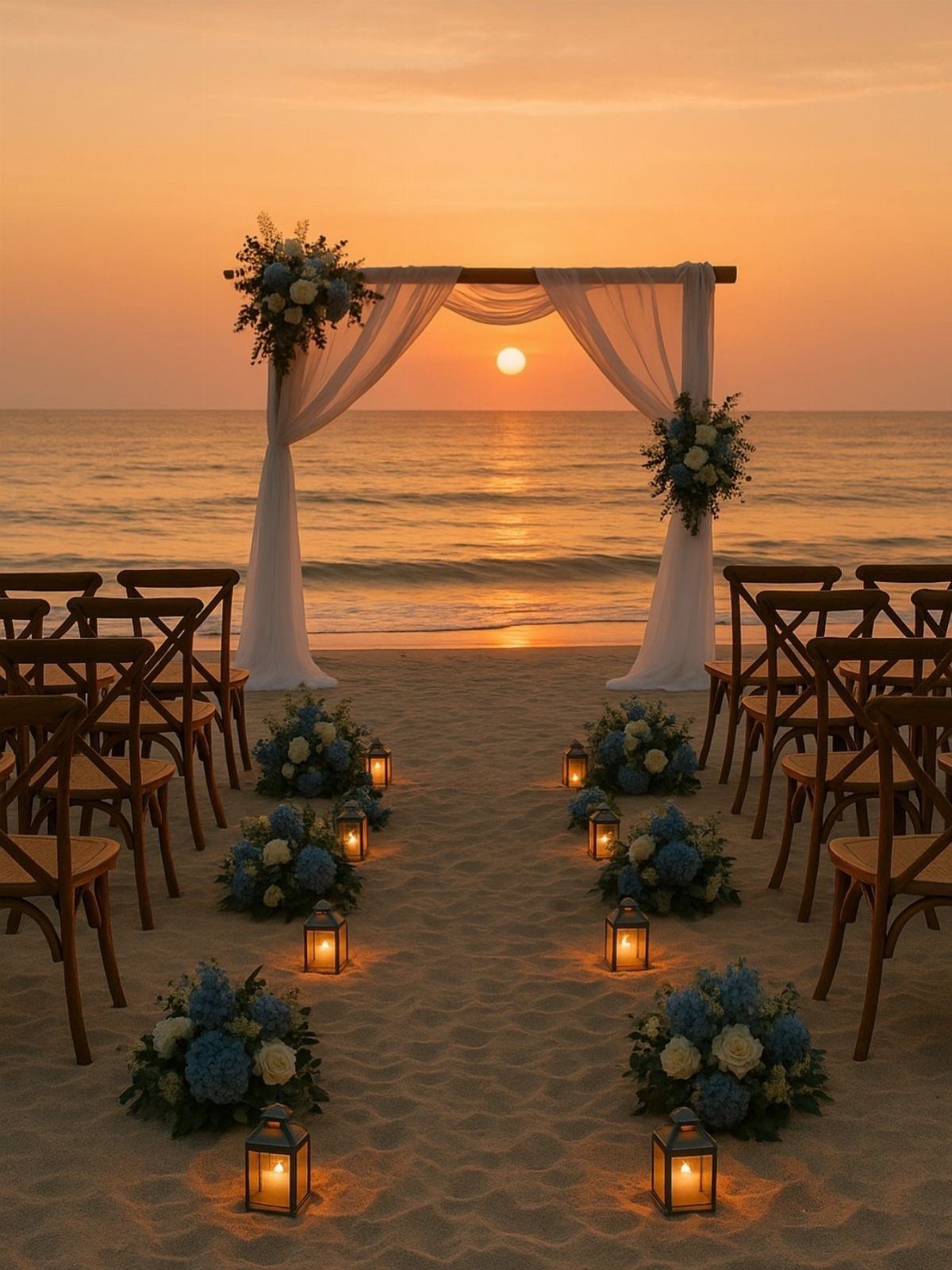
Sand, salt air, and sunset light do most of the decorating for you. The ocean behind the couple is the backdrop; anything busier would compete.
Tides and wind are your real planners. Check tide charts for your date and time, and have a backup location above the high tide line.
Secure every piece of fabric and floral weight with more than you think necessary; beach wind is unpredictable. Heels sink in sand, so tell guests or provide a boardwalk aisle.
6. Pet as the Ring Bearer
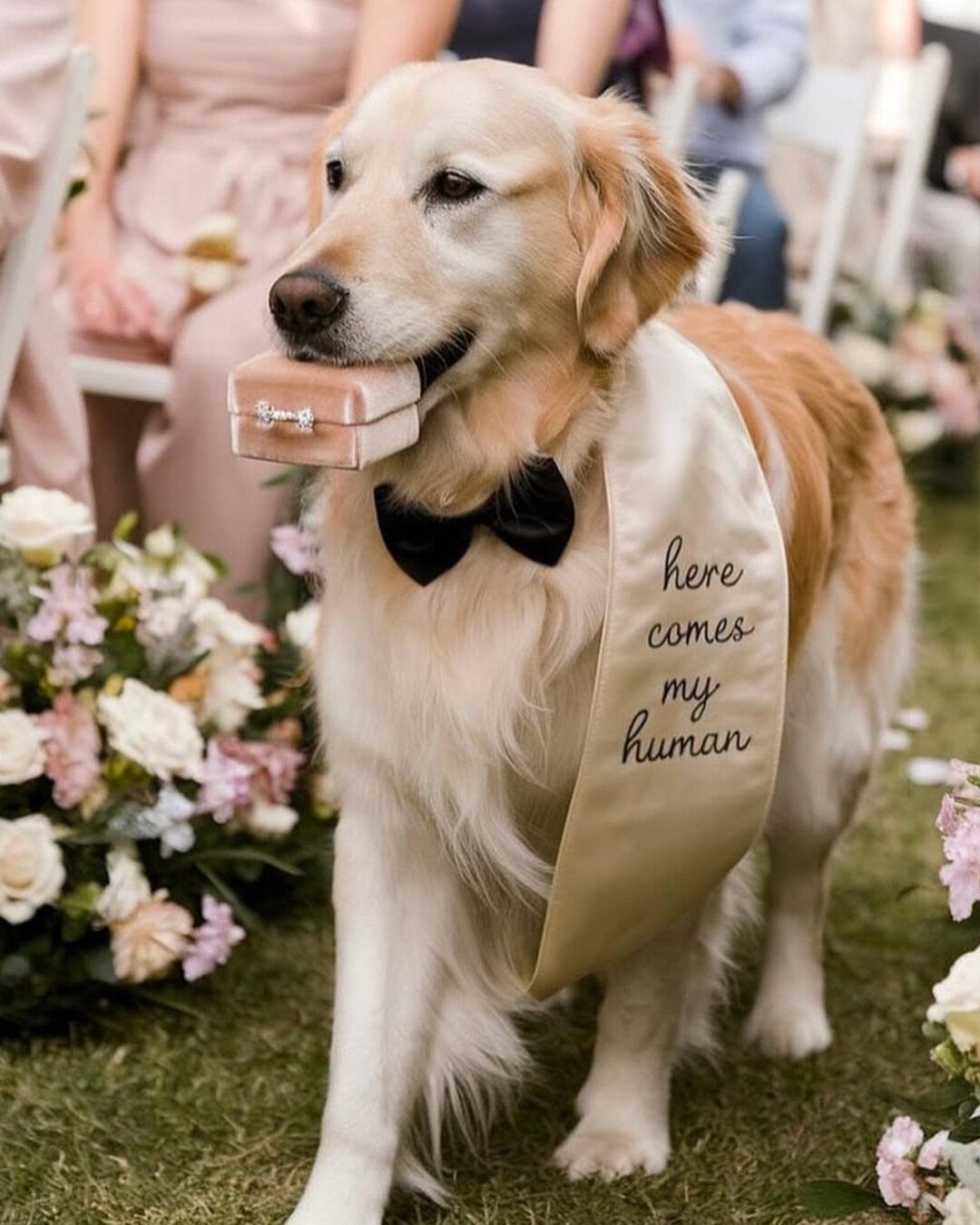
A calm, directed dog with a handler just out of frame is the setup you need.
Assign a handler who is not in the wedding party. The dog knows this person, trusts them, and will take cues from them when the aisle distractions hit.
Use a fake ring box for the ceremony, or tie the real rings securely inside. Practice the walk at the venue once if possible, with guests seated if you can arrange it.
Some dogs nail it; others bark at the flowers. Have a plan for both.
7. Aerial View of Ceremony Setup
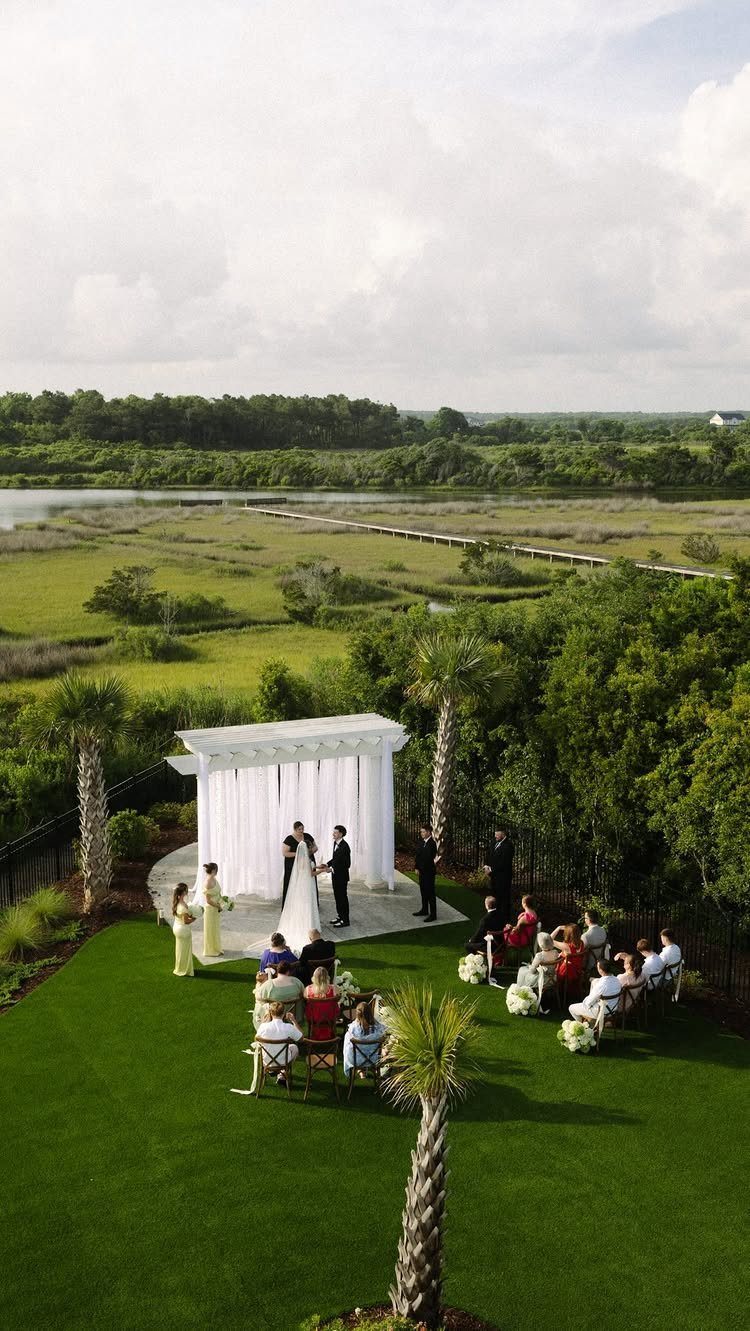
A drone shot gets the full geometry of your ceremony that no guest angle can: the aisle as a line drawn on grass, the altar marking its end.
This takes a licensed drone operator, not a guest with a hobby model.
FAA rules require commercial pilots for any paid event photography, and insurance matters if something goes wrong above a crowd. Book yours early; good ones fill Saturdays months out.
Coastal light like this, with water behind the lawn, needs morning or late afternoon timing.
Midday sun flattens everything from above. Ask your pilot to shoot both wide and vertical; the vertical crop fits phone screens and thank-you cards.
8. Castle Backdrop Ceremony Shot
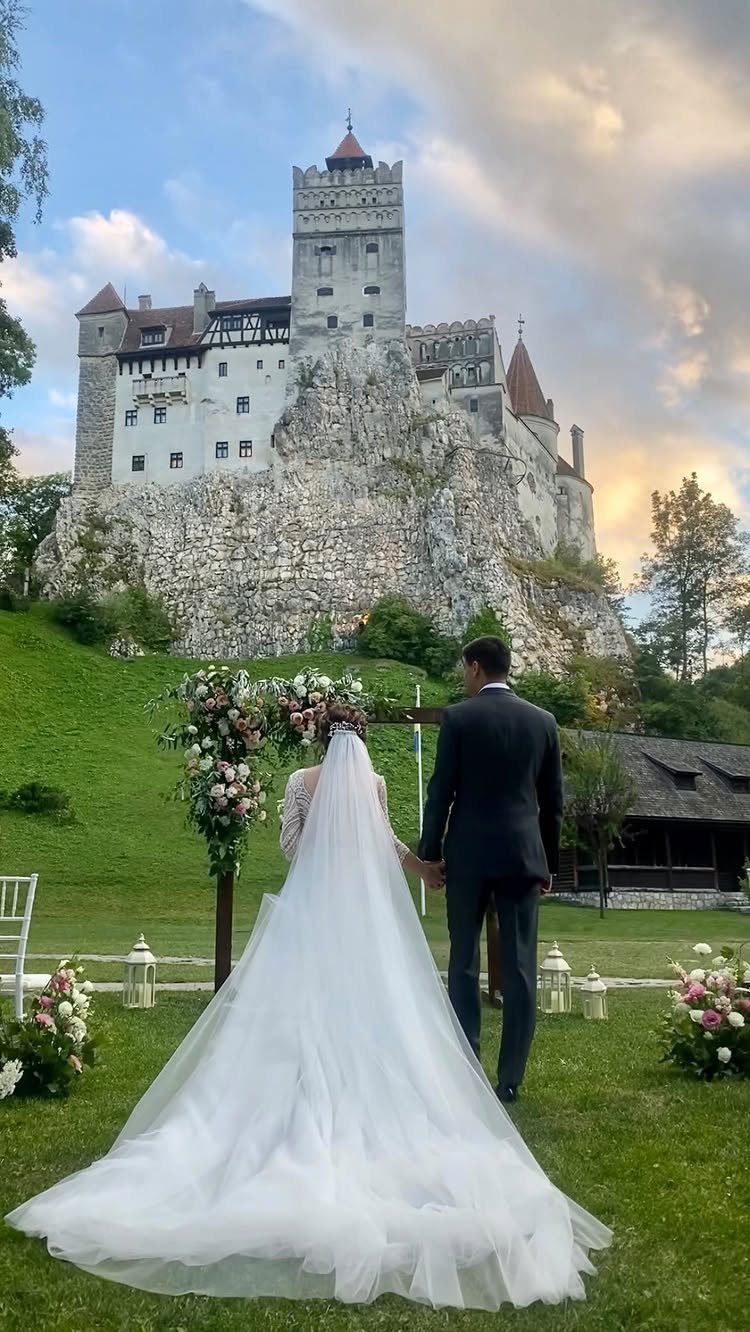
A real castle on a real hill gives a floral arch something no rental backdrop can match: depth that photographs as distance, not decoration.
Check access first.
Many European castles restrict commercial photography or require permits booked months ahead. Some allow ceremony use only on specific weekdays.
The walk from parking to altar may be longer than your aisle; plan guest transport and your own arrival time. Weather on hills shifts fast, so the arch and any fabric need anchoring that handles gusts.
This trades budget for impact. If the castle is the reason, keep the arch simple and let the stone do the work.
9. Stained Glass Church Altar
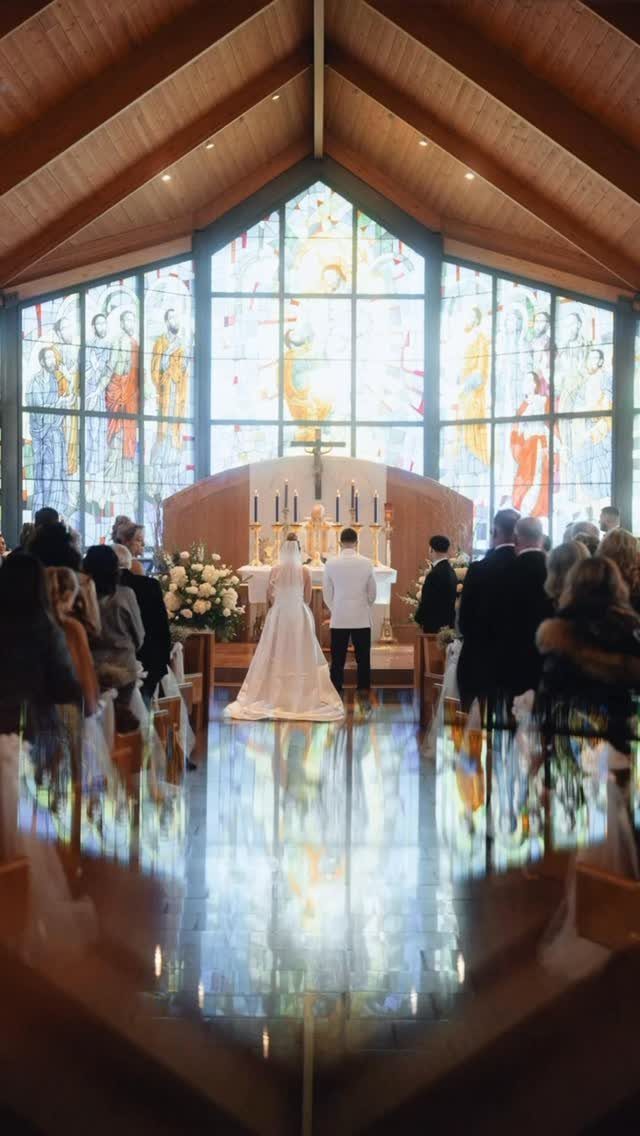
Modern church windows throw color in hard bands across polished floors, and that light is the photograph. Morning services get different hues than afternoon; check your time against the window orientation.
Not every church allows posed photography during the ceremony. Some permit only the official photographer, or none at all until after the recessional.
Ask directly, not through a relative, and get the answer in writing. Vaulted wood ceilings like this one echo sound; a handheld mic for the officiant helps more than a booming voice.
The windows are already there. Your job is timing and permission, not decoration.
Personal Touches for Ceremonies
Personal touches work best when they come from something you already do together. The couple with Koozies at their lake wedding chose them because they fit who they were, not because a list suggested it.
Family involvement means more than handing someone a reading. One option: have parents or siblings sign the marriage license as witnesses during the ceremony itself, turning a legal step into a visible moment.
Check your state’s rules first; some require the officiant and couple only, while others leave room for family signatures.
The license signing can happen at a small table set to one side, with a pen that photographs well and paper heavy enough not to flutter.
Light-hearted vows and a formal license ritual in the same ceremony is a combination that works when both feel true to you, not forced in for variety.
Importance of Venue
Your venue does half the work of setting tone before you add anything.
A stained glass church already has its color story; a beach has its light. My job is to notice what is there and get out of its way.
Nontraditional does not mean cheaper.
A European castle may charge permit fees that eat the savings from a simple arch, and guest transport up a hill adds line items a hotel ballroom skips. Count the full cost before the romance locks you in.
The same venue shifts dramatically by time of day.
Morning sun through east-facing windows, afternoon gold on a western lake, sunset behind an ocean ceremony: each is a different photograph and a different guest experience. Check the orientation before you set your time, not after.
Weather backup matters more in dramatic settings. Hilltop wind, beach tide, open field with no tree cover: each needs a real plan, not optimism.
Frequently Asked Questions
What are some good ideas for wedding photos?
Unique venues like beaches, castles, or churches with stained glass windows give your ceremony shots built-in atmosphere that needs little decoration.
Personalized vows and family involvement, such as having parents sign the marriage license during the ceremony, create moments no other couple could replicate.
What are the trends in wedding photography for 2026?
Drone aerials for ceremony geometry, pet ring bearers with dedicated handlers, and tree unity ceremonies where the planted sapling becomes a living keepsake are all directions worth watching.
Rustic arches layered with foraged branches, velvet drapes, and pampas grass continue, as do beach ceremonies timed to tide charts and sunset light. The emphasis is on personalization drawn from what you already do together rather than borrowed trends.
In what order should wedding photos be taken?
No strict sequence fits every wedding, but timing matters: morning or late afternoon for coastal drone shots, checking your ceremony time against window orientation for stained glass color, and scheduling castle ceremonies around permit restrictions and transport needs.
Rehearsing your center mark for the kiss and practicing a pet’s aisle walk at the venue beforehand are prep steps that happen before guests arrive.