Garden wedding ceremonies range from a simple floral gazebo tucked into greenery to a full tree chandelier rigging with suspended ferns overhead, and the list below runs through ideas for every scale and budget.
Your guest count is what narrows the field, since the same venue may host 200 at reception and cap ceremonies at 40 on its most fragile lawn.
Fairchild Tropical Botanic Garden keeps its intimate ceremony pricing for direct inquiry only, which is the kind of detail worth calling ahead for when you’re weighing venues against each other.
[link-whisper-related-posts]1. Intimate Ceremonies
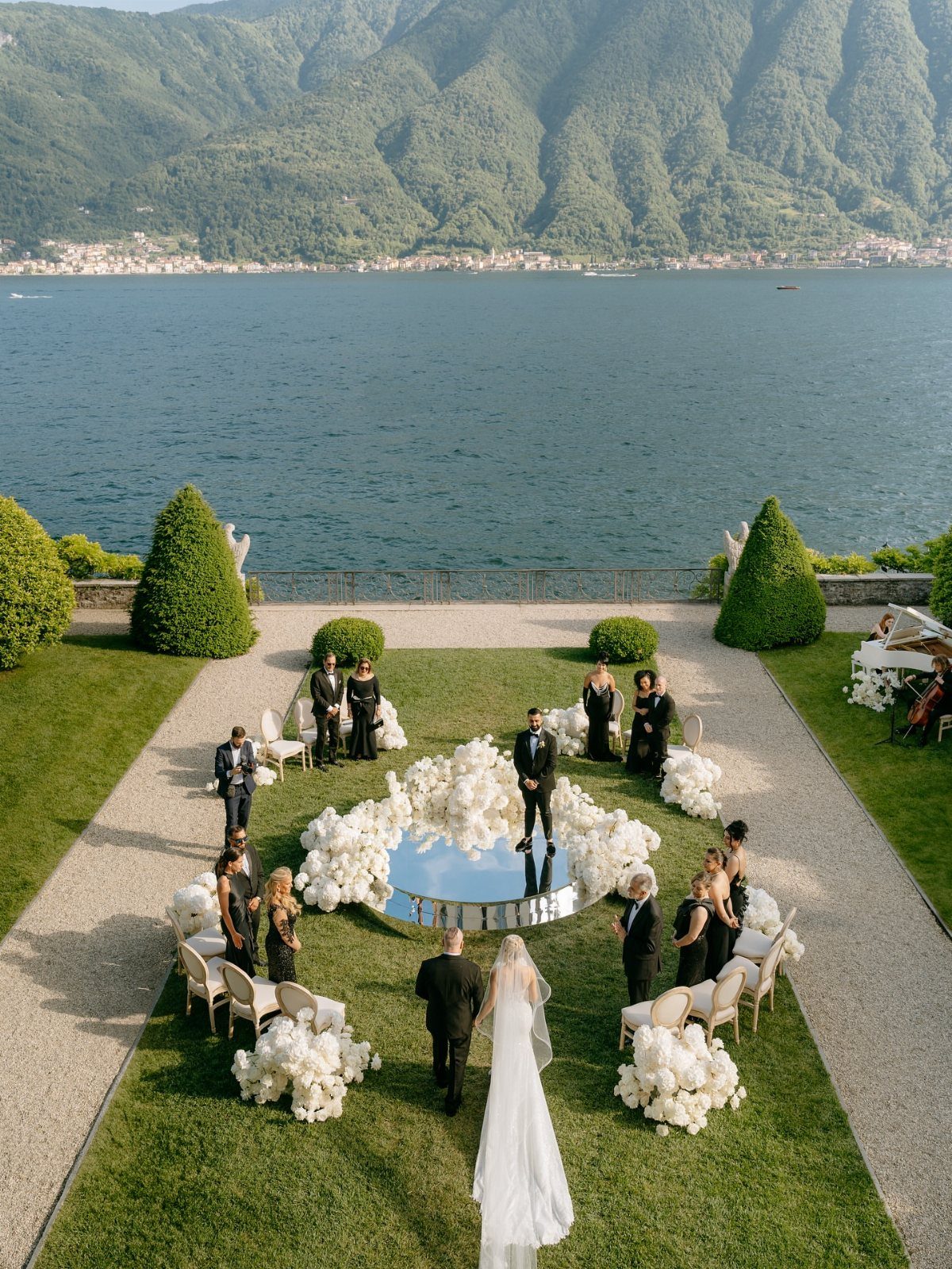
A garden wedding shrinks beautifully. I have watched guest lists halve and the relief on a couple’s faces double, because a small group you love lets you spend the ceremony looking at them instead of scanning a crowd.
A lakeside lawn with a dozen guests is the scale where you stop managing seating charts and start remembering vows.
No rented chairs means no delivery window to coordinate, no headcount minimums from caterers, no anxiety about who got which table.
What you trade is the big-party energy some people want. What you gain is the ability to hold the ceremony in a garden that cannot fit a crowd anyway.
Many botanical gardens and private estates rent their grounds for smaller events at rates that would be impossible for their maximum capacity. I have seen venues list their "intimate ceremony" pricing only in direct inquiry, so ask specifically.
Indeed, across the weddings published by Vogue, a garden has served as a perfect backdrop for many couples, from the grand landscaping of historic Lake Como villas and the grounds of English country estates to the intimate backyard of a family home.
— Vogue
2. Outdoor Seating Arrangements
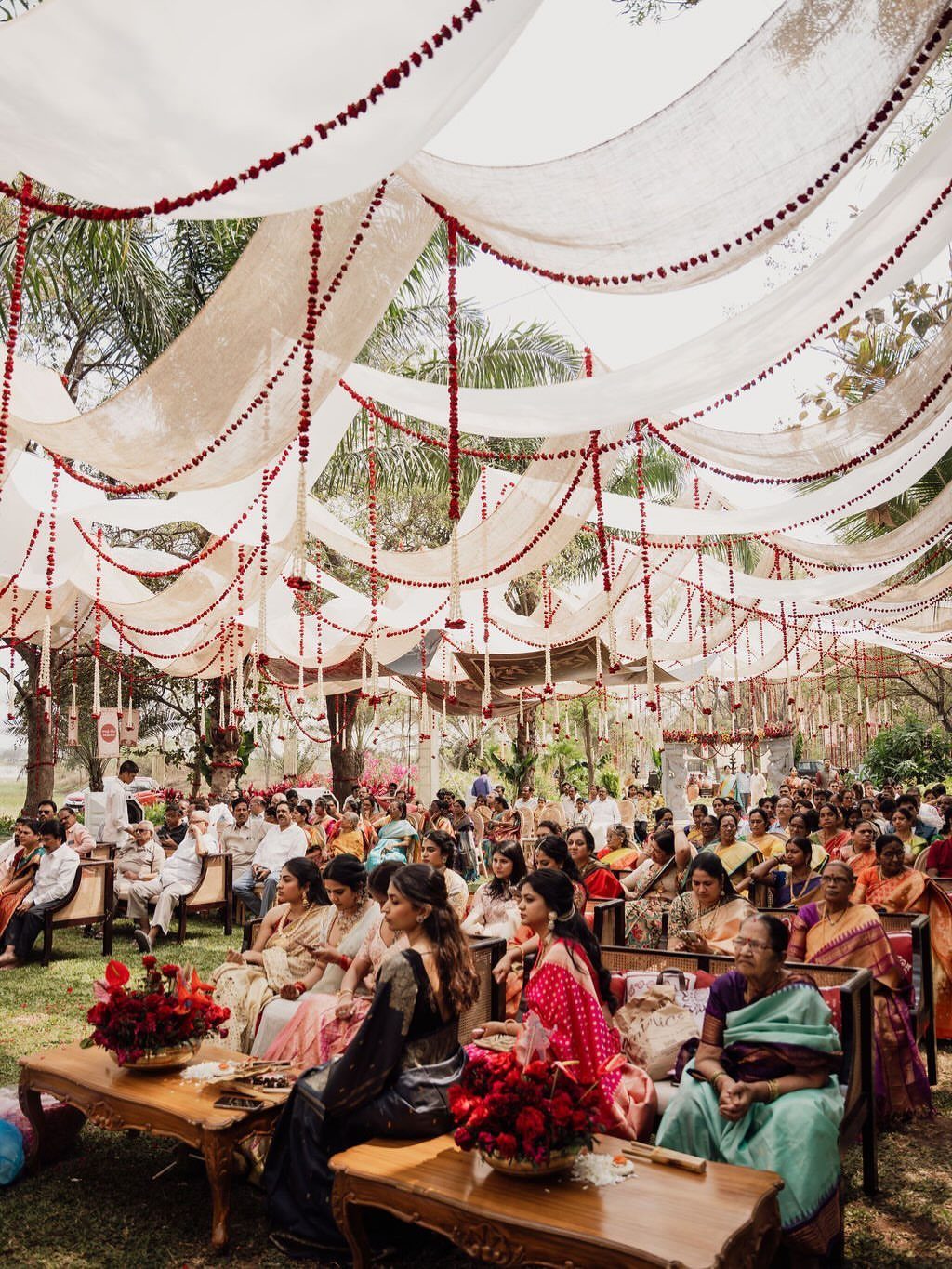
Wooden benches under a draped canopy give guests permission to settle in rather than perch. Sofas and chairs mixed with benches is the move I would copy: varied seating lets older guests choose back support while younger ones sprawl.
The fabric and flower garlands overhead do more than decorate. They mark the ceremony space when no walls exist, and they give guests a visual cue that this spot, right here, is where attention belongs.
You can rent pipe-and-drape hardware or ask your venue what they already own; some gardens keep seasonal canopies in storage.
Cost shifts fast with this one. Benches cost less per seat than Chiavari chairs but more than rental folding chairs.
Lounge furniture is the premium tier. My suggestion is to mix one statement piece, like a vintage settee for the couple’s parents, with simpler benches for everyone else.
The garlands overhead are where I would spend labor budget rather than rental budget, because fresh flowers on a fixed structure require less precision than centerpieces on moving tables.
3. Floral Gazebo Altar
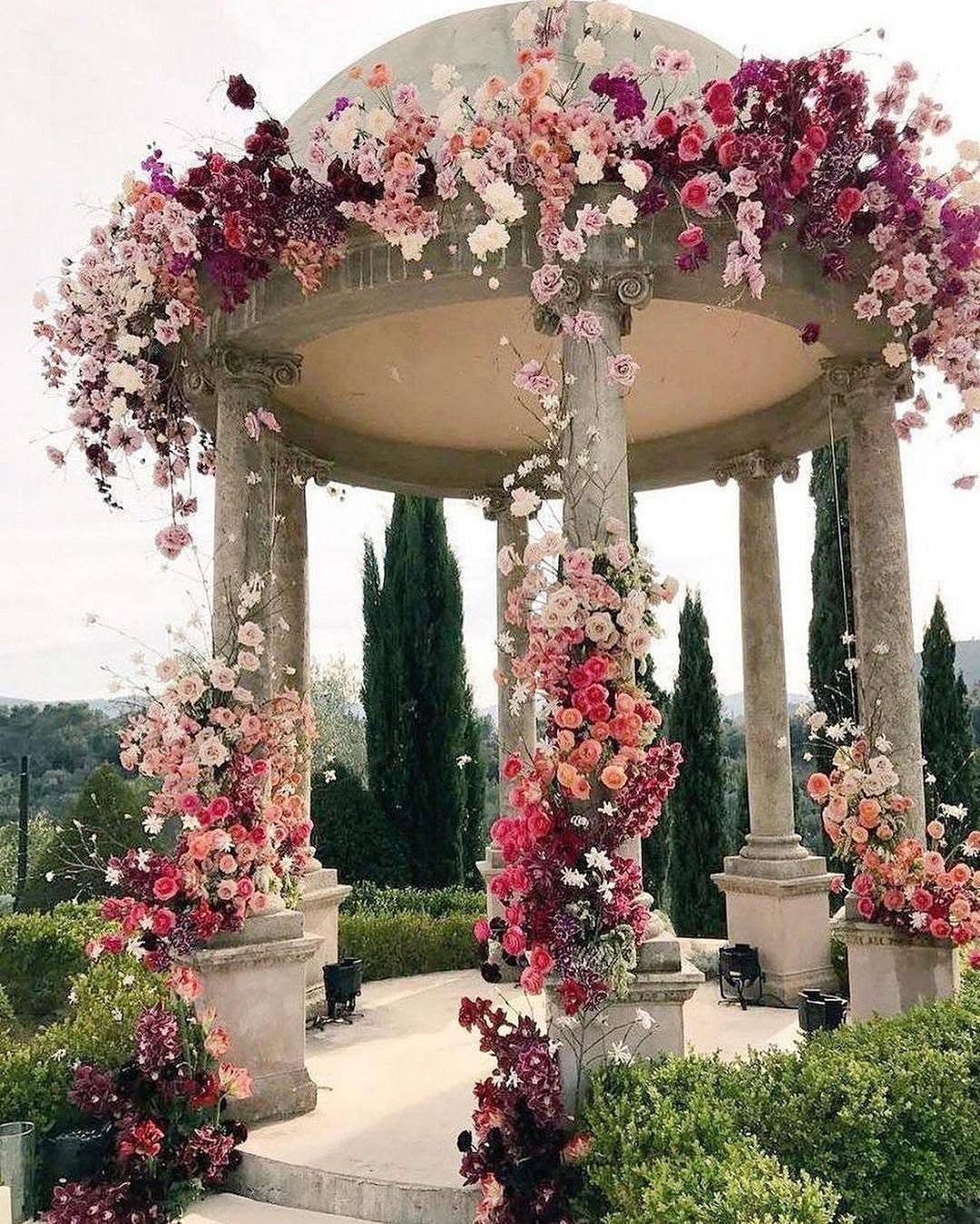
A stone gazebo in a garden is already an altar; flowers turn it into yours.
Cascading pink and white installations on columns and a dome show the scale that works: enough coverage to read as intentional, not so much that the architecture disappears.
Before you commit, check what the venue allows attached to stone. Some historic gardens prohibit staples, nails, or even tight wire wraps that could stain or chip.
Floral foam and cable ties on existing railings are usually acceptable. You will also need to decide who waters the installation if heat hits, because dome-topping flowers in July sun can wilt before the recessional.
The gazebo itself is doing the structural work.
You are not building an arch, just decorating one that exists. That saves setup time and often rental cost, though the floral budget may rise to match the surface area.
I would ask your florist to quote 2 versions: full coverage like the photo, and column-only garlands that leave the dome bare. The difference in price will tell you whether the dome is worth it.
4. Tree Trunk Backdrop Ceremony
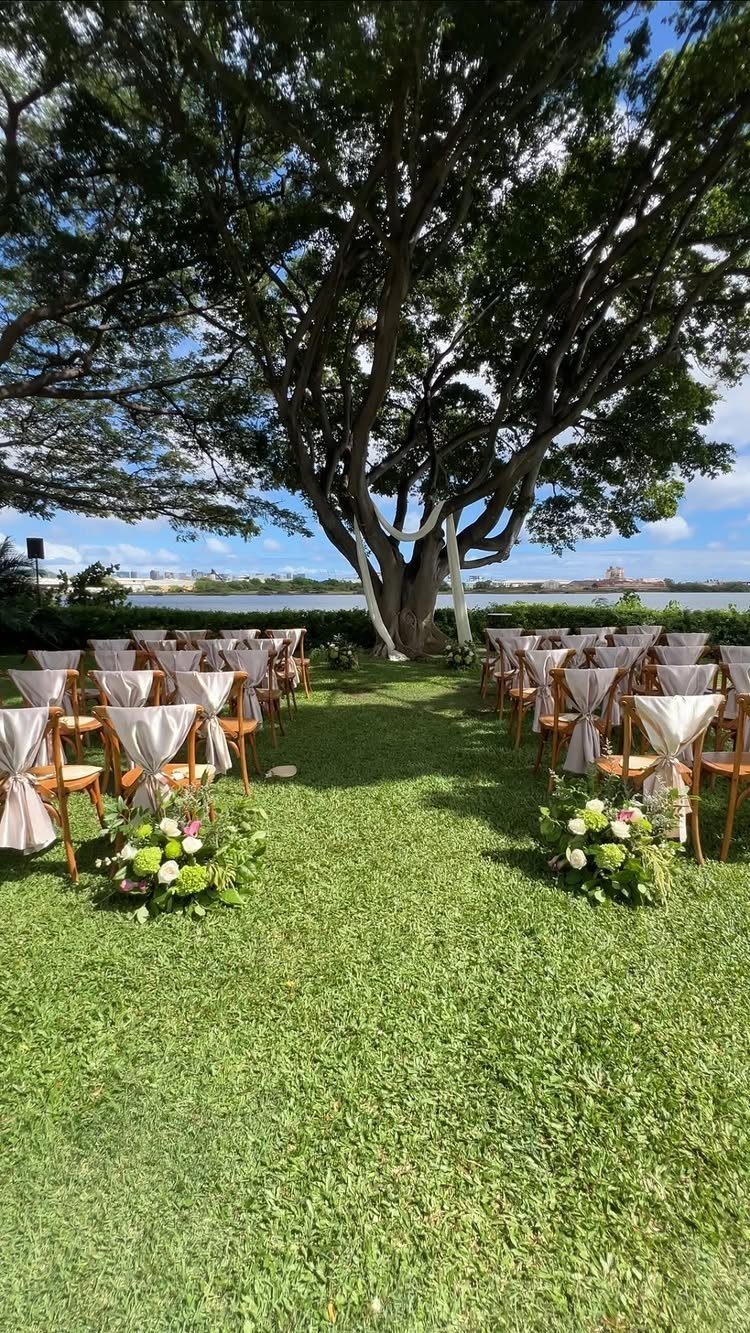
A single mature tree draped in white fabric needs nothing else to read as sacred space.
Chairs with fabric sashes facing the trunk like pews facing an apse is the simplest geometry for a garden ceremony: everyone looks one direction, the tree frames the couple, the water behind gives depth you cannot manufacture.
The white fabric on the trunk is doing the work of an arch or chuppah. It is cheaper and faster to install than either, but it requires a tree of sufficient girth.
A sapling looks wrapped; a trunk that size looks robed. I would scout the venue at the same season you are marrying, because leaf coverage changes the light and the background color dramatically.
If your garden has no water view, the idea still holds. The dappled shade of a large canopy tree, which Fairchild Garden notes for their Arboretum ceremonies, gives the same filtered light that photographers chase.
The trade is weather: no tree blocks a hard rain, so you need a tent plan or a date in the dry months.
5. Lawn Ceremony Overlooking Water
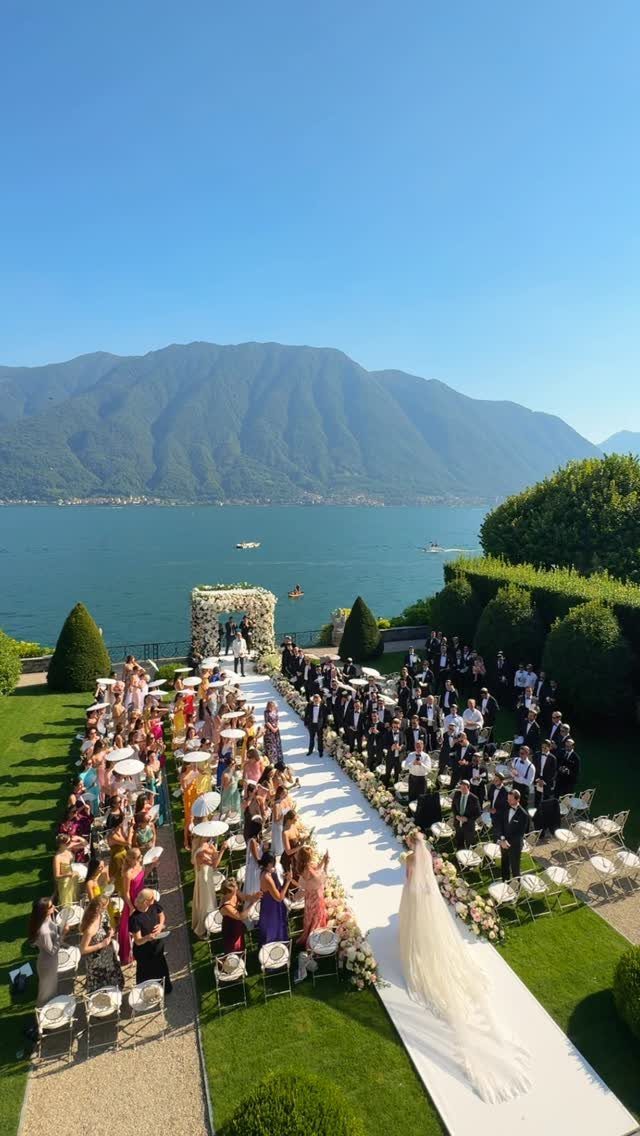
A lawn ceremony with a lake and mountains behind it sells itself to guests before you spend on flowers.
A long white runner is doing 2 jobs: it marks the aisle for the couple, and it gives guests a visual line to follow from entry to altar.
The runner is the detail I would check first.
Synthetic aisle runners on grass bubble and shift unless weighted or staked. Fabric that breathes, like a heavy linen, lies flatter and photographs better.
If the lawn slopes at all, which most lakeside sites do toward the water, the runner needs securing at intervals so it does not slide downhill during the procession.
You will also want a time-of-day plan. Mountains behind water means the sun sets toward one of those mountains, and an afternoon ceremony in June can leave half your guests squinting.
I would stand where the couple will stand, at the ceremony hour, and note where the light falls. A half-hour shift earlier or later is free and fixes more than floral adjustments can.
6. Tree Chandelier Ceremony Setup
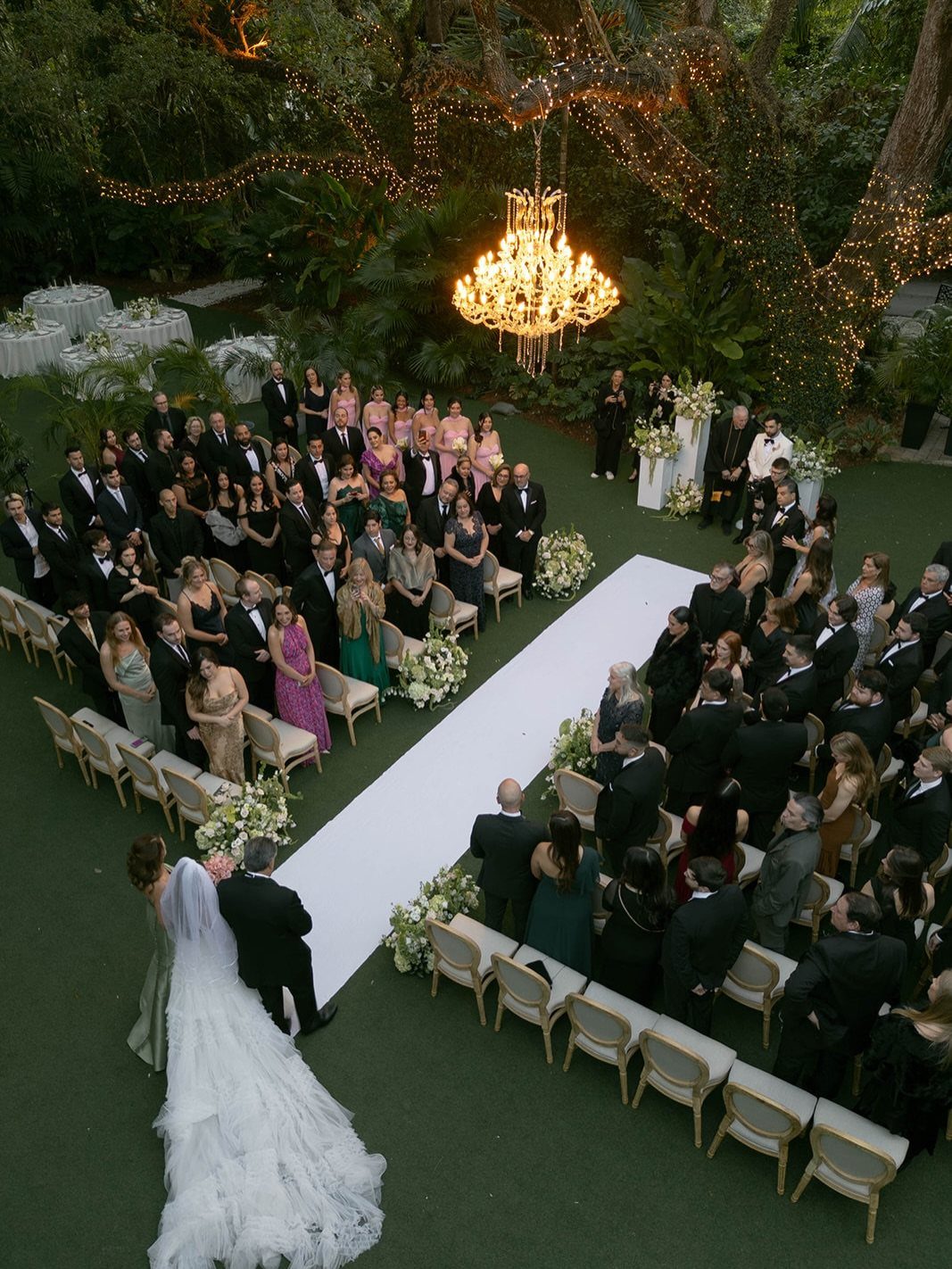
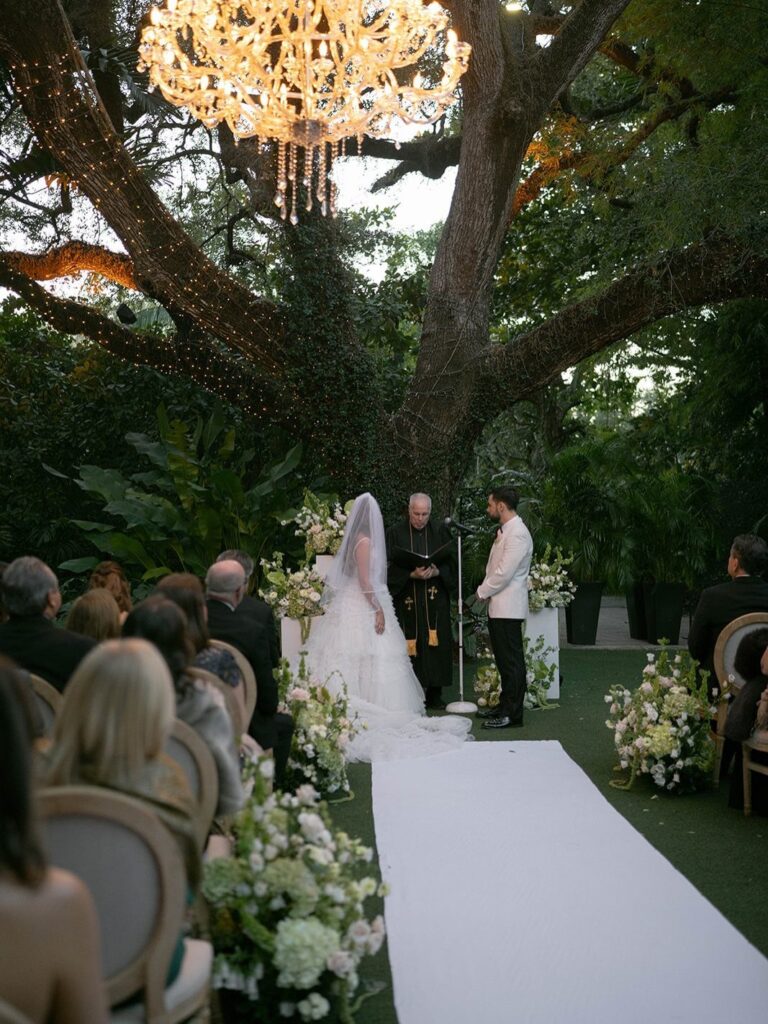
A chandelier hung from tree branches is absurd and then it is perfect.
A chandelier large enough to read as furniture, not jewelry, is the scale that makes the idea work: anything smaller would look like a leftover decoration, not a deliberate ceiling.
Power is the practical question. The chandelier needs either a generator, which most garden venues can place discreetly, or battery-operated LED candles inside a non-working fixture.
The twilight shift at Meridian House, where string lights on mature trees become the main illumination, suggests timing your ceremony to end as the chandelier becomes necessary.
That transition, from daylight to lit evening, is what photographers call the richest moment.
The tree itself must be inspected. A branch that can hold a swing can hold a chandelier, but you need an arborist or venue staff to say so, not a groomsmen with a ladder.
The rental cost for the fixture plus the rigging labor often runs higher than a floral arch.
I would get the quote early; this is the kind of detail that gets cut late in budget stress, and it hurts less to know the number before you have imagined the scene too fully.
7. Botanical Gardens
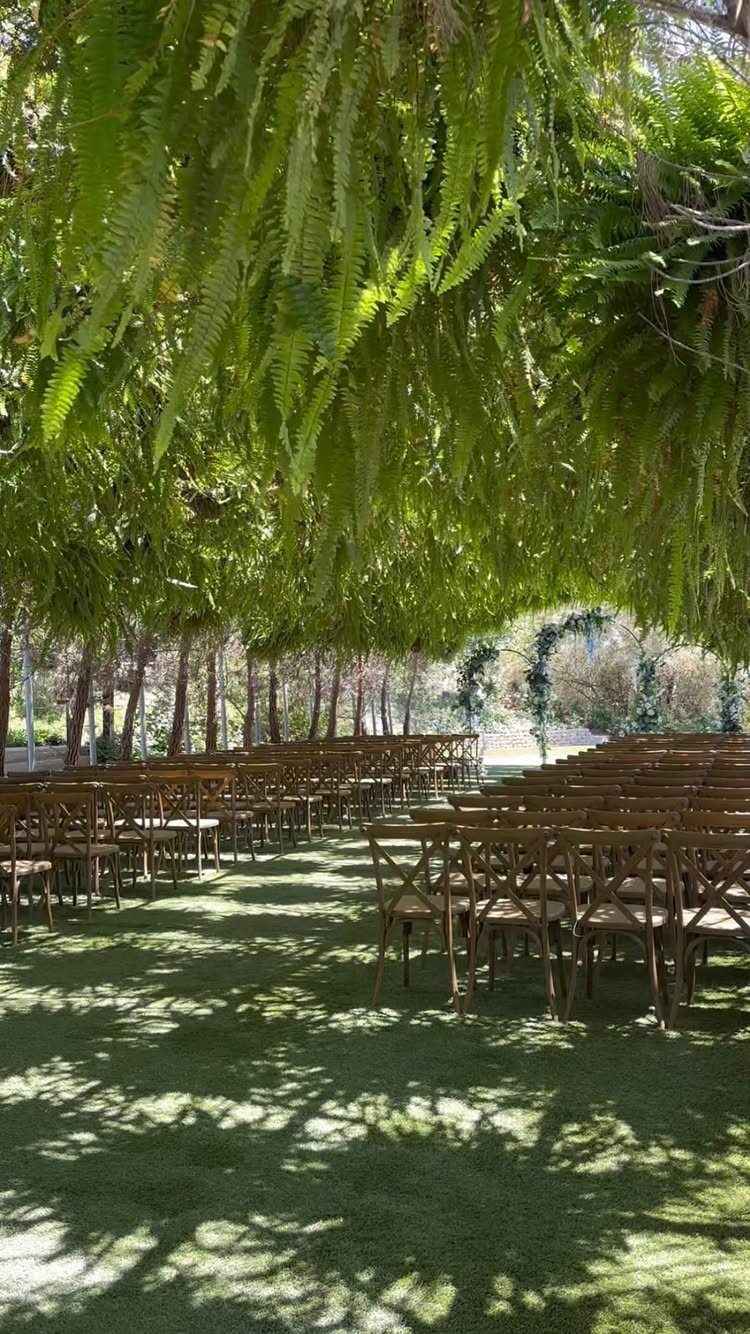
A ceremony beneath suspended ferns turns a botanical garden into a room without walls. Over 200 fronds, hung overhead by the venue, create shade and humidity that outdoor summer ceremonies usually lack.
Botanical gardens range from Fairchild Tropical Botanic Garden, with its customizable daytime and evening formats, to the Oregon Garden’s multiple indoor and outdoor venues, to smaller properties with a single sheltered lawn.
The common thread is infrastructure you do not build: irrigation keeping plants alive, paths already lit, staff who know where the sun falls late in the afternoon.
Most places have restrictions.
Limitations may apply to what you can attach, move, or time. I would ask specifically about ceremony-only pricing, because many gardens list full-event rates online while keeping smaller ceremony quotes for direct inquiry.
A small ceremony under ferns costs less than a full reception in the same space, but you have to ask.
8. String Lights
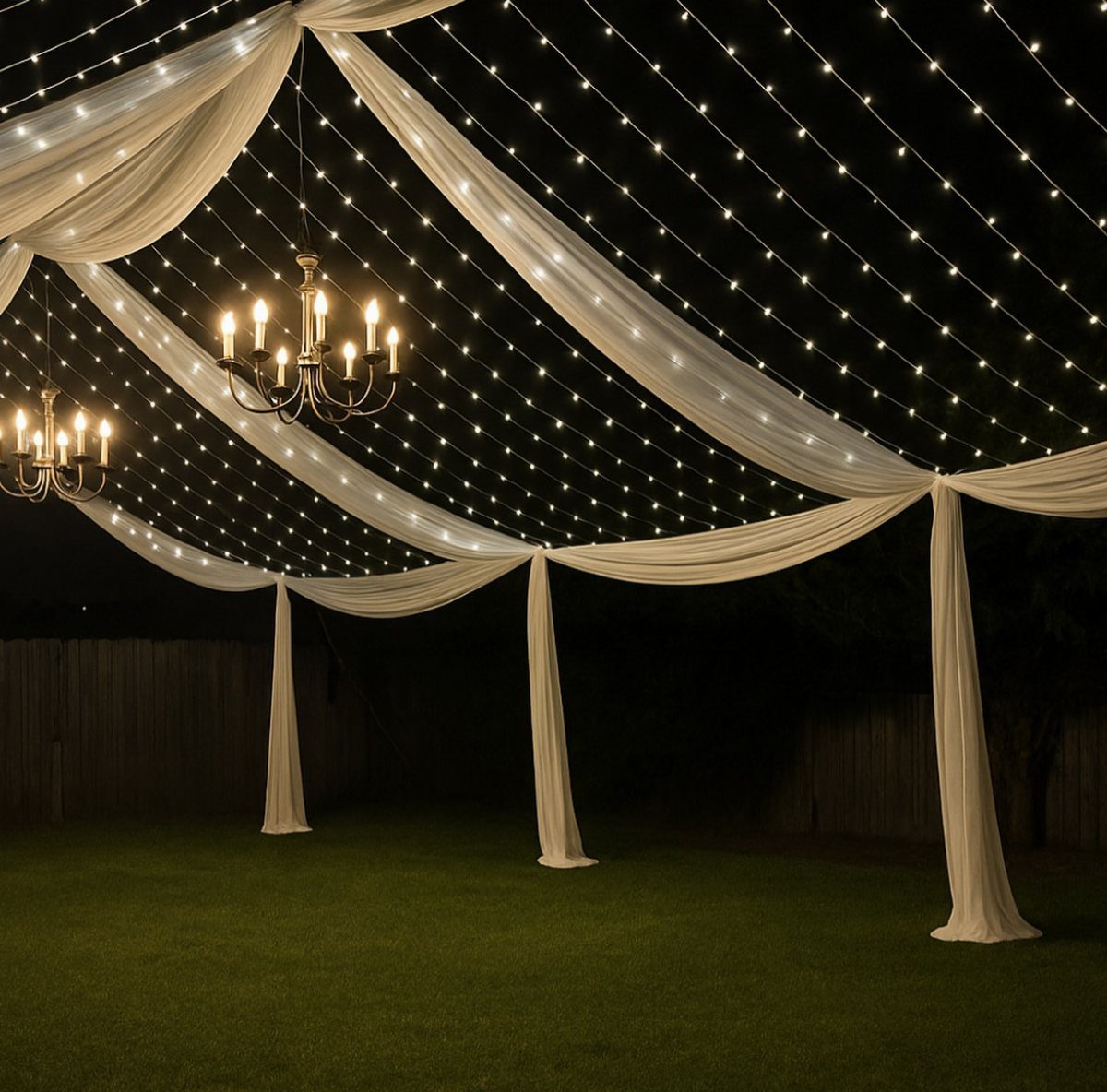
String lights in trees do not illuminate; they signal that night has been planned for. A canopy with fabric swags and suspended fixtures does the work of a ceiling at a fraction of the structural cost.
I would choose LEDs for a one-hour ceremony and a generator only if the reception stays in the same space.
The rental quote needs to include rigging labor; a tree branch that holds a child’s swing does not mean a rental company will trust it with their fixture.
The twilight shift is when this idea pays off.
Hartley Botanica’s setup, photographed by Valentina Glidden, shows lights that matter only after sunset. A ceremony timed to end as darkness arrives lets the lights become the scene rather than compete with it.
9. Cottagecore Aesthetic
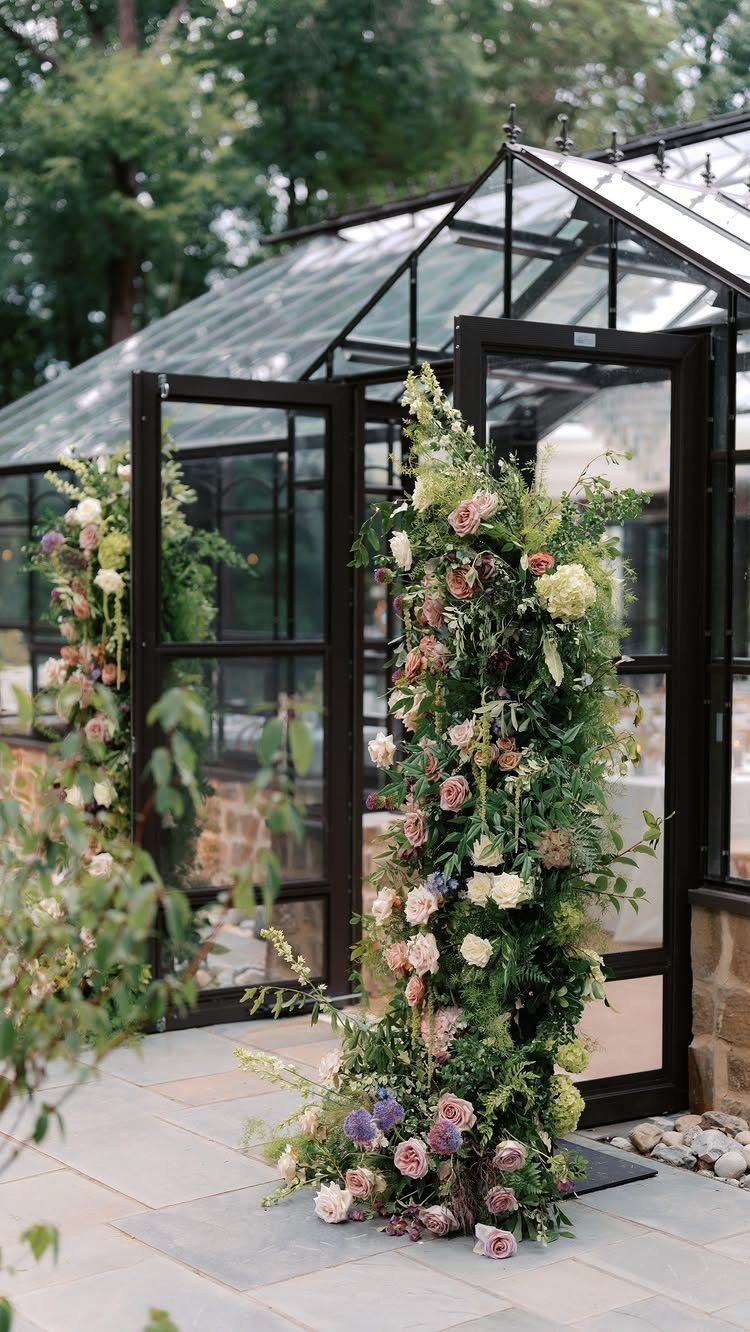
A greenhouse entrance flanked by freestanding floral pillars is cottagecore without the Pinterest overload: flowers doing architectural work, not scattered for atmosphere.
Pillars filled with greenery, pink and white roses, hydrangeas, and purple blooms, arranged dense enough to read as walls, turn a stone patio into a room.
Freestanding means no attachment to the glass, which matters when the venue prohibits tape, hooks, or leaning weight against fragile frames. The stone patio gives a base that grass cannot; pillars on lawn need staking or weighted bases that show.
I would check the greenhouse’s interior temperature before committing to a summer ceremony, because glass structures accumulate heat differently than open gardens.
The aesthetic trades grandeur for intimacy. Ivory & Beau’s planners note that garden party weddings remain popular because they photograph well; the risk is looking like a trend rather than a choice.
Choosing the Right Venue
Guest count shapes which garden you can use, not just how many chairs you rent.
A venue that holds 200 for a reception may cap ceremonies at 40 on their most fragile lawn. Before falling for a reception photo, I’d ask the venue for the ceremony’s hard maximum.
Budget splits differently in gardens than ballrooms.
You save on draping and uplighting because the setting does that work, but you may spend on tent backup, generator power, or irrigation-damage deposits the venue requires. Pastel peonies, cosmos, and ranunculus in organic arrangements read as intentional, not borrowed.
The atmosphere you want is the filter. A botanical garden gives infrastructure and restrictions both.
A private estate gives freedom and more setup labor. Match your tolerance for managing details to the venue type.
Photography Considerations
Natural light in a garden is your photographer’s tool and your timeline’s boss. The golden hour that produces those warm, dimensional portraits lasts roughly an hour before sunset; Mandy Star’s calculator puts it at a specific minute for your date.
I would plan the ceremony to end, not begin, in that window, so couple portraits catch the light while guests move to cocktail hour.
Backdrops that read as stunning in person can flatten in photos. A lake and mountain view needs depth; stand where the couple will stand and check that layers separate rather than merge.
Dappled shade under a canopy tree gives the filtered light photographers chase, but patchy sun on faces requires fill flash or reflectors. Ask your photographer if they have shot at your venue in your season before.
Guest Comfort
Shade is the amenity guests notice most. A ceremony at 3 pm in June without tree cover or rented canopy will have guests checking watches.
Bug spray at the entrance reads as thoughtful; bug bites during vows read as oversight.
Outdoor citronella candles near seating help, though they compete with floral scent. Fans near rows matter more in humidity than heat alone.
Footwear warning belongs on the invitation or website, not as an afterthought at the parking lot.
Grass and heels are a bad match, so guests who get the heads-up can swap in flats or wedges. The couple’s own shoes need the same realism: a long white runner on grass shifts under thin heels.
Seasonal Planning
In Florida, March through May and October through November are the specific months; summer evening ceremonies at 5 pm or later are the workaround when those months are booked.
Winter cold pushes garden weddings indoors or into heated tents; a tented space with garden styling is the alternative when the season does not cooperate.
Rain backup is non-negotiable in any garden venue.
Ask specifically what the venue provides; if the answer is nothing, tent rental becomes a line item, not a contingency. Pop-up storms in Florida arrive even in reliable months.
Frequently Asked Questions
What is a garden wedding?
A wedding ceremony held outdoors in a garden, botanical garden, or estate setting.
The setting itself does much of the decorative work, so couples often save on draping and uplighting while spending on elements like tent backup, generator power, or floral installations that complement the natural backdrop.
What is the best theme for a garden wedding?
Cottagecore and romantic garden party are the themes that fit this setting without fighting it.
Cottagecore uses dense, organic floral arrangements and soft textures to create an intimate, countryside atmosphere; a romantic garden party leans on pastel blooms like peonies, ranunculus, and roses with trailing ribbons.
Both work at scales from a backyard ceremony to a tented estate reception.
What is the dress code for a garden wedding?
Semi-formal or casual attire that works on grass and in variable weather. Guests should get a footwear warning on the invitation, since heels sink into lawns; wedges or flats are the practical choice.
For the couple, flowy A-line silhouettes, soft tulle, and sleeves in floral or jacquard fabrics match the garden setting without looking overdressed.