
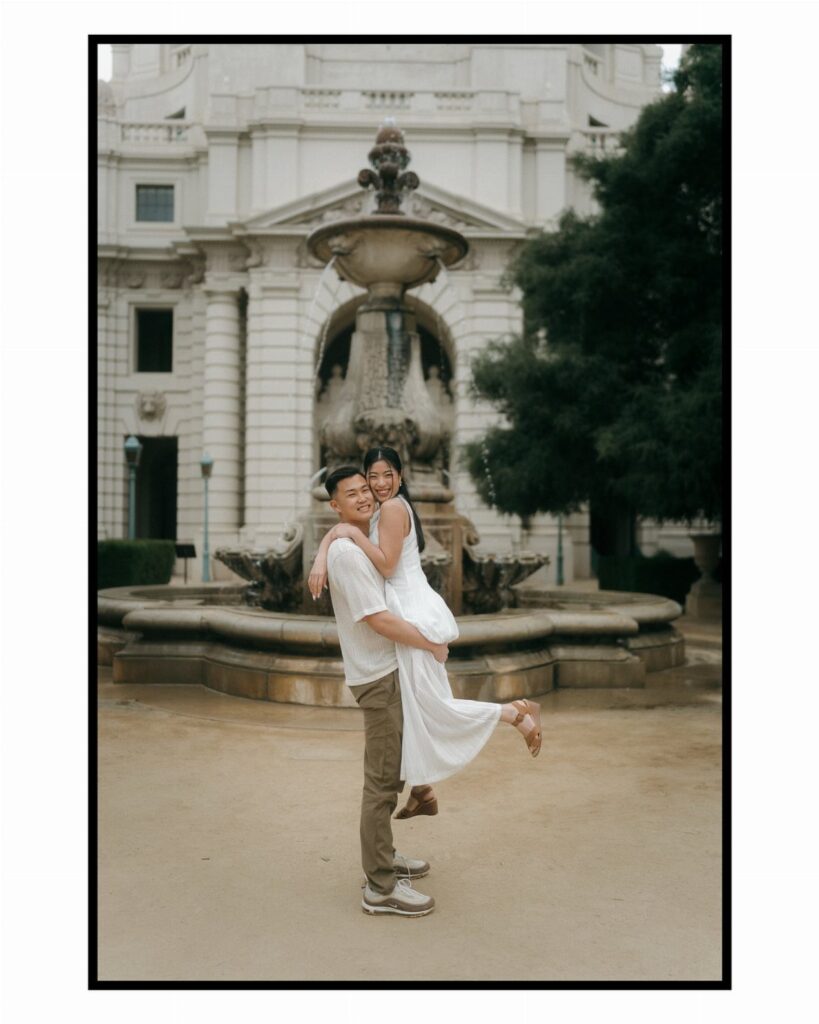
The 12 ideas below range from a bedsheet hung on a wall to embroidered silk on city asphalt, and from a cozy at-home session to a golden hour sunset embrace.
What separates one choice from another is what you already do together: the Saturday morning coffee run at an iconic city location, the Tuesday evening kitchen floor, the hiking trail you both know by heart in nature’s backdrop.
[link-whisper-related-posts]1. Iconic City Locations
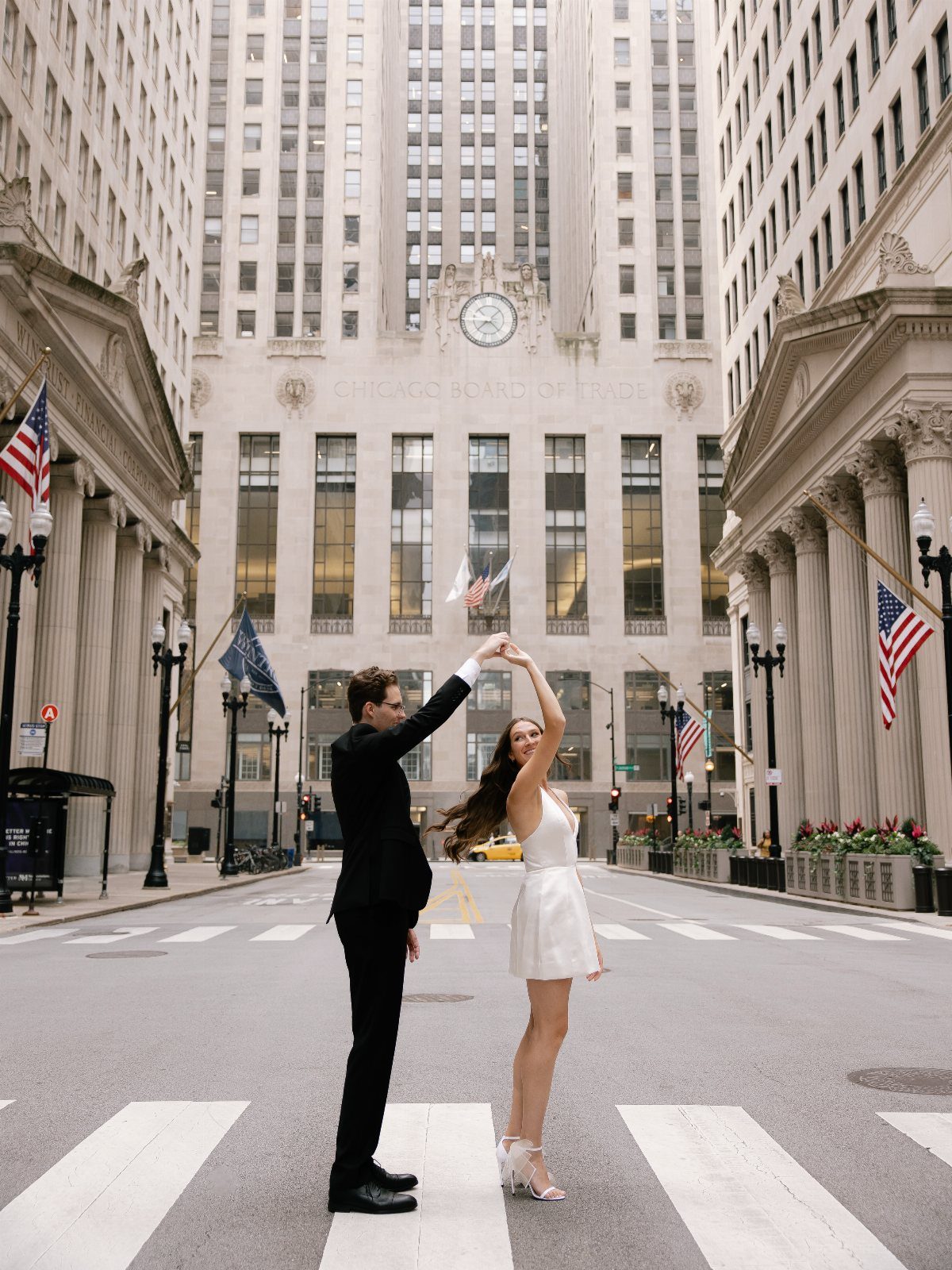
A twirl in a crosswalk with the Chicago Board of Trade behind you turns rush hour into your stage.
I like this for couples who live in the city and want their photos to say where they actually are, not just where they got engaged.
Timing matters more than location.
Empty streets need early morning or a willing assistant to halt traffic just long enough. Quick shots on public sidewalks usually need no permit, but private plazas and building lobbies do, and fees vary by landmark.
Dress for contrast against concrete and glass, not for blending in.
2. Nature’s Backdrop
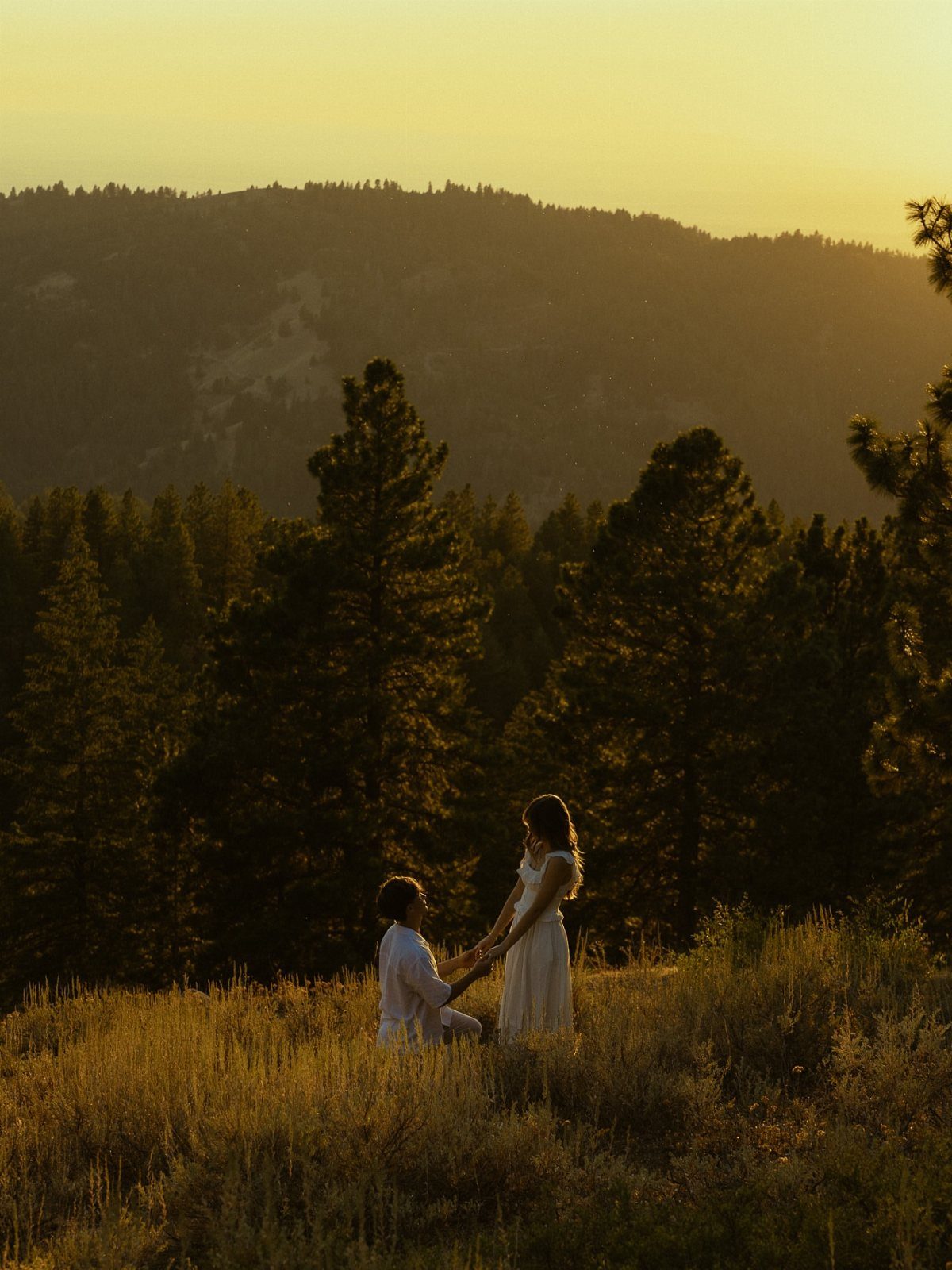
Meadows and beaches give you light that cities cannot buy. Pines and distant mountains go soft at the edges in the hour before sunset.
I would choose a weekday to avoid other photographers’ tripods in your background.
Bring a blanket or change of shoes; grass dew and sand have ruined more heels than ceremonies have. The wind that tousles hair also tangles it, so one of you should carry a comb.
This suits couples whose wedding venue is indoors and wants outdoor balance, or anyone whose budget rules out travel to a second dramatic location later.
3. Vintage Outfits
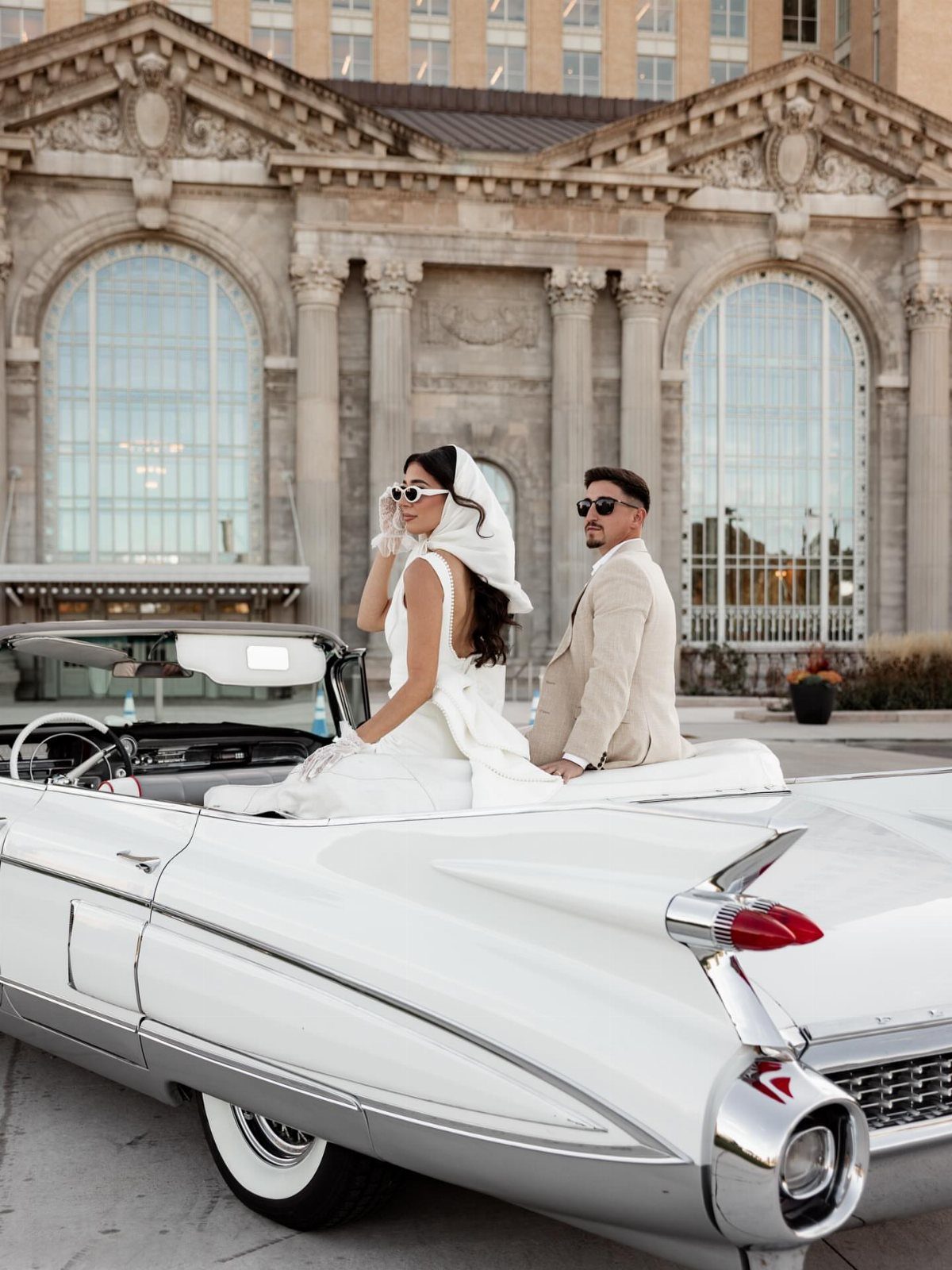
The ’60s through ’80s each read differently: ’60s reads sleek, ’70s reads free, ’80s reads bold color and bigger gesture.
Sourcing takes time. Estate sales and rental houses carry period pieces, but fit is harder than find.
Leave enough lead time for tailoring before the session. The car matters as much as the clothes; without it, you are in costume, not in scene.
This trades candid spontaneity for style control. If you laugh easily and move stiffly, try a different idea.
4. Minimalist Backdrop in Black and White
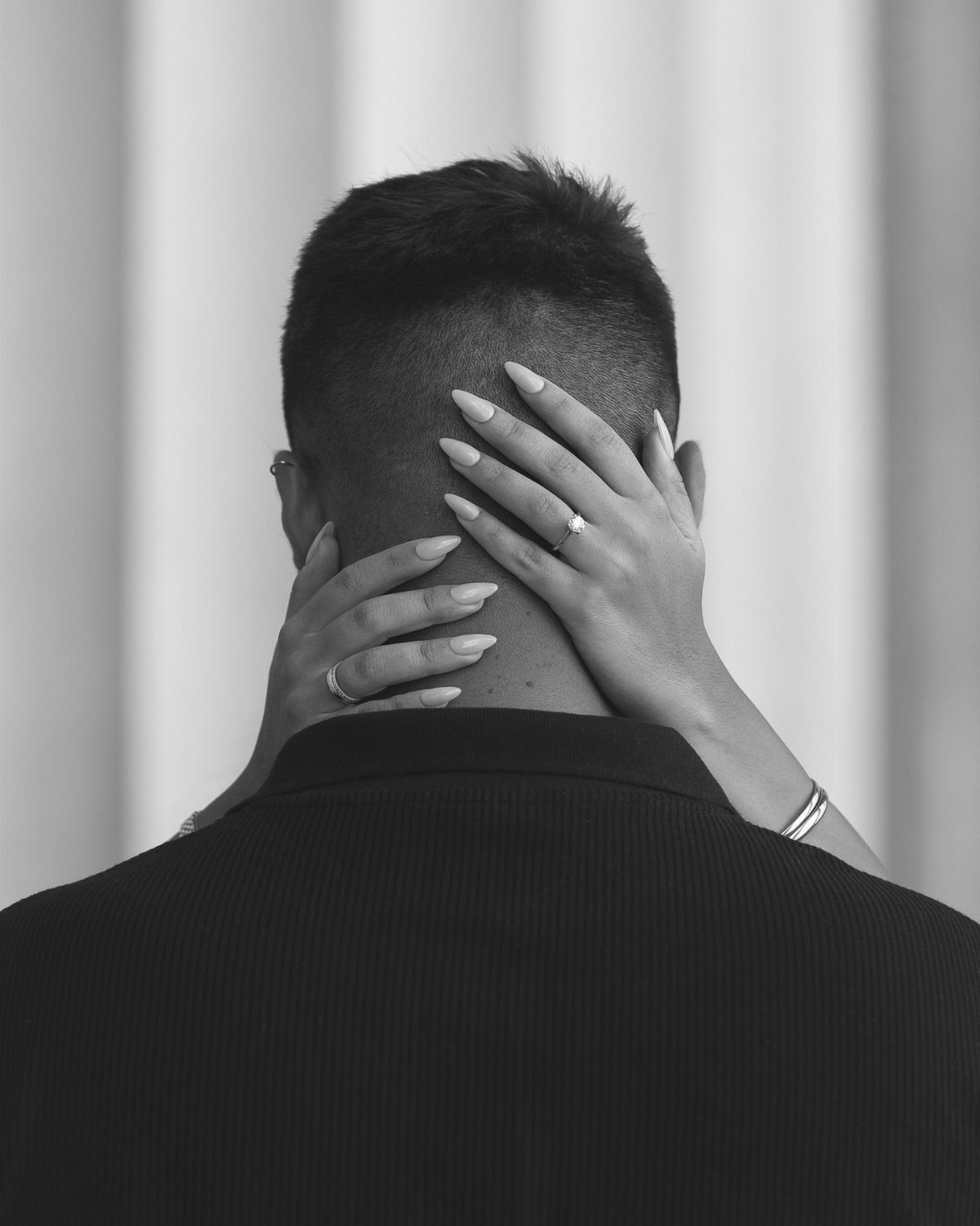
Black and white against a clean backdrop strips away distraction until only hands and ring remain. Shooting from behind the man’s head, her fingers at his neck, the ring catching what light there is.
I would ask any photographer about their conversion method.
Some shoot color and convert after, others set the camera to monochrome from the start. The second forces both of you to think in tone, not hue, which changes how you pose.
Minimalist does not mean empty. A draped cloth, a bare wall, even a bedsheet hung straight; the setup costs nothing if you already own the sheet.
5. Casual Attire
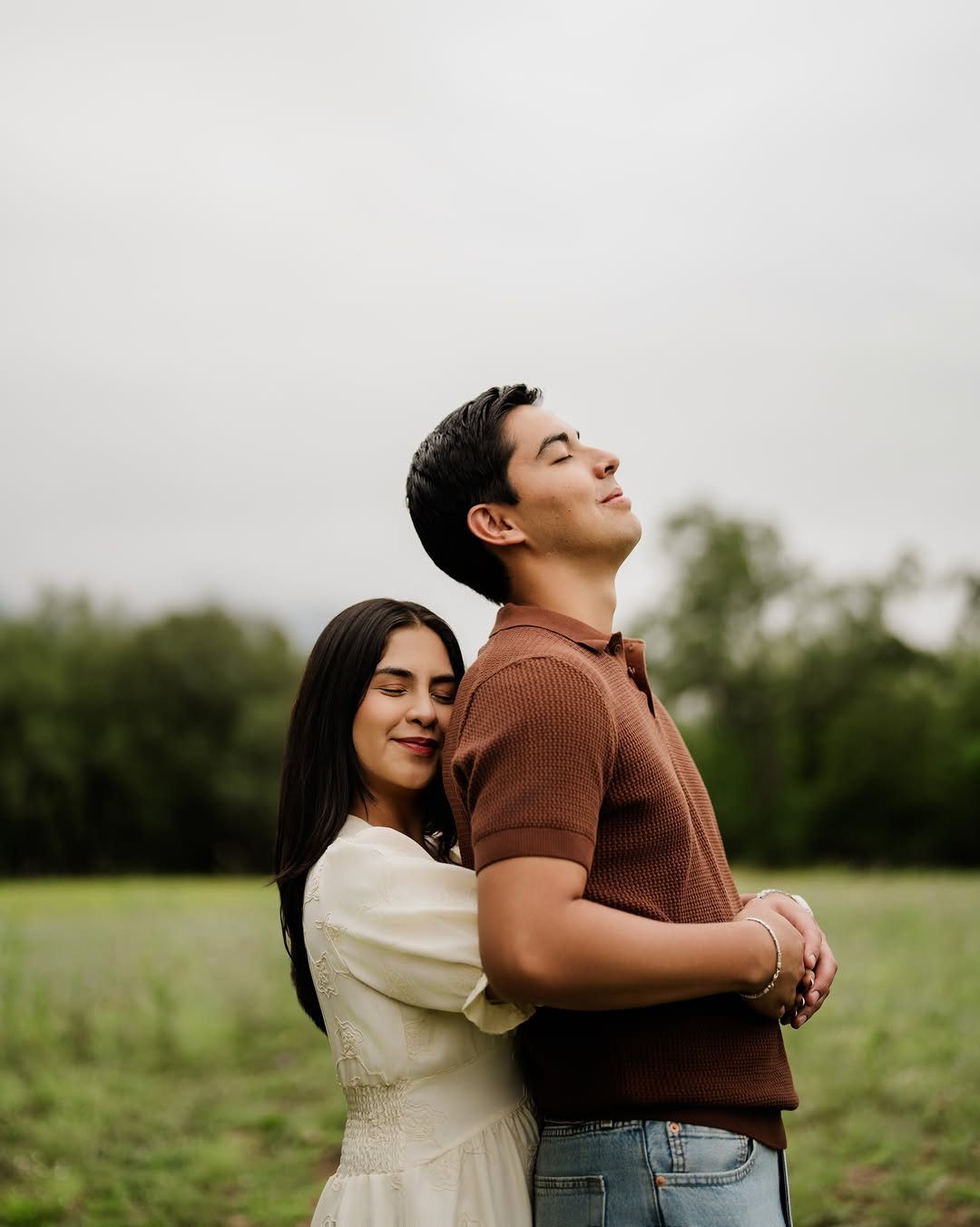
A brown polo and jeans against her white dress in an open field reads like Sunday morning, not Saturday appointment. The overcast sky above them is doing half the work: soft light, no shadows under eyes, no squinting.
I would keep one element slightly elevated so it does not read accidental.
His polo is fitted, her dress has shape; neither is gym clothes. Both partners should match in formality level, since mismatched dress codes confuse the frame more than full formal does.
This idea costs nothing extra and suits couples who feel watched in stiff poses.
6. Engagement Ring
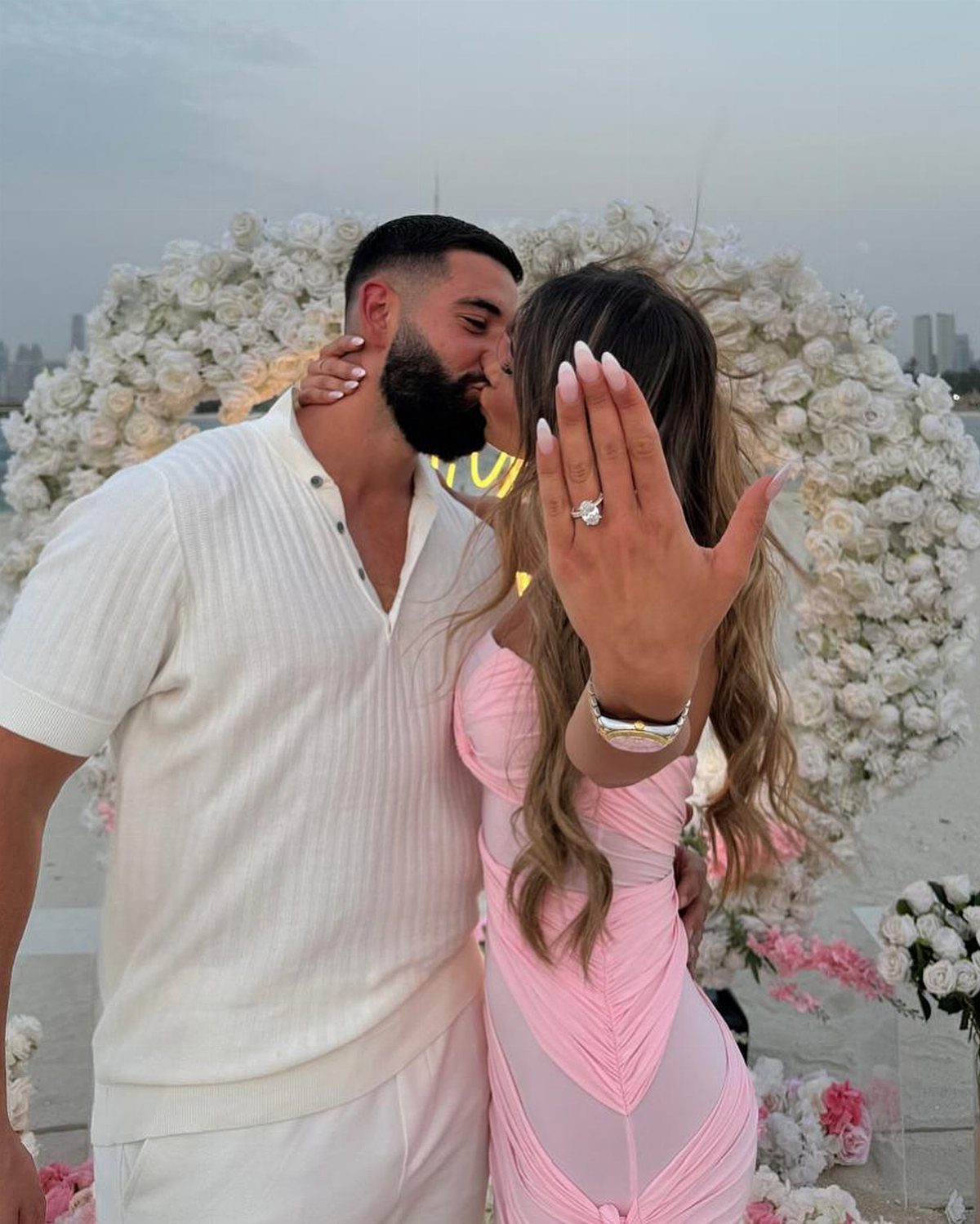
A kiss in front of white flowers with her hand forward, ring prominent, gives you one frame that does three jobs: couple, emotion, jewelry.
The pose is simple; the timing is not. You need the ring hand visible, the kiss still natural, the light catching stone without blurring to white.
I would bring a small cloth to wipe fingerprints off the band between takes. Oils from skin catch light worse than dust does.
This suits anyone with a ring they want documented, but it is not the whole session. Plan a few ring-forward shots among many more where the ring simply exists, not performs.
7. Kissing
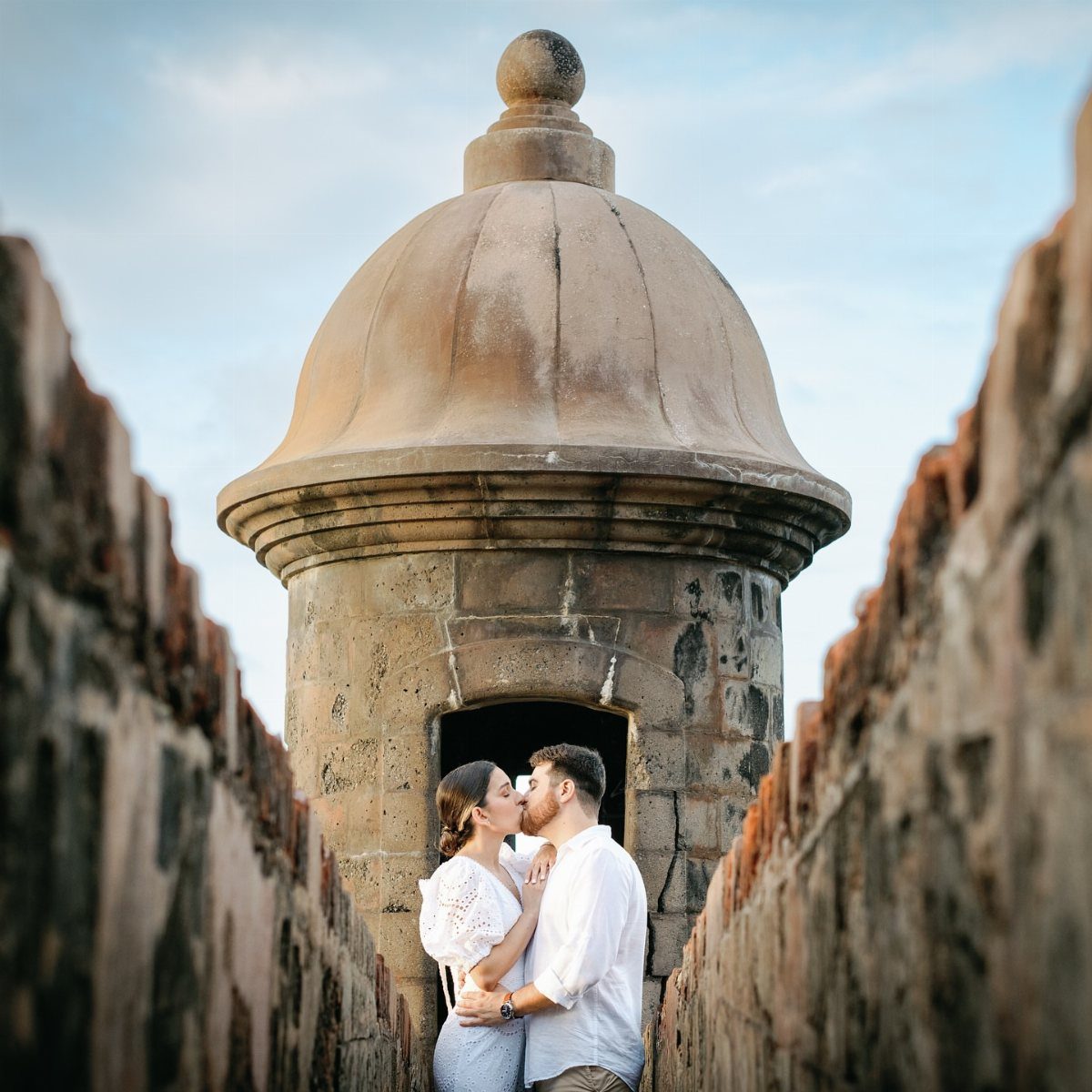
A kiss framed by old stone reads timeless in a way green fields do not. Historic walls and towers give the couple scale and weight; the kiss becomes part of a longer story rather than a single moment.
I would ask the photographer to shoot the approach, not just the kiss itself. Walking toward each other, the pause before contact, the laugh that breaks it: these outlast the pose in an album years later.
This suits couples whose wedding venue is modern or plain and wants some architectural gravity to balance it.
8. Playful Lift Pose
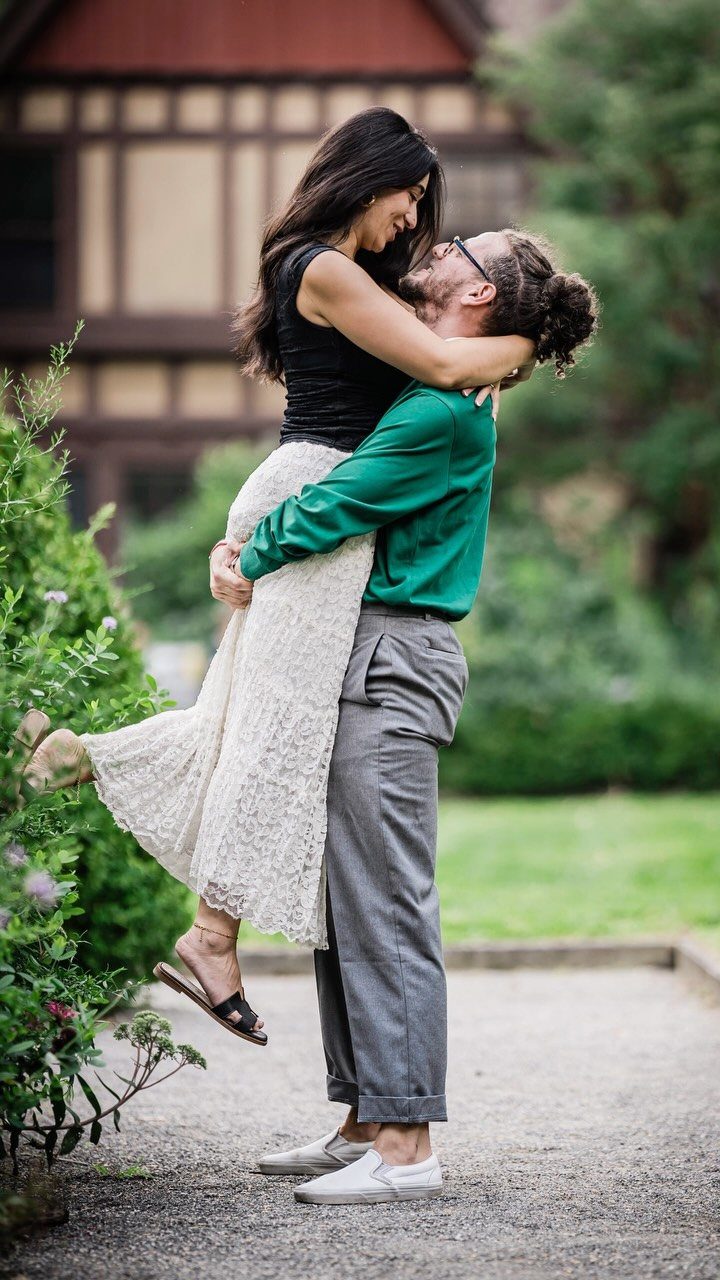
A lift on gravel needs 2 things checked before the camera rolls: footing and fitness.
Gravel shifts; he needs stable boots, not dress shoes, and she needs to know how she will be caught. Practice once without the photographer watching.
The smile comes from trust, not instruction.
If either of you hesitates, skip it. A half-committed lift looks like a stumble, not play.
9. Cozy At-Home Session
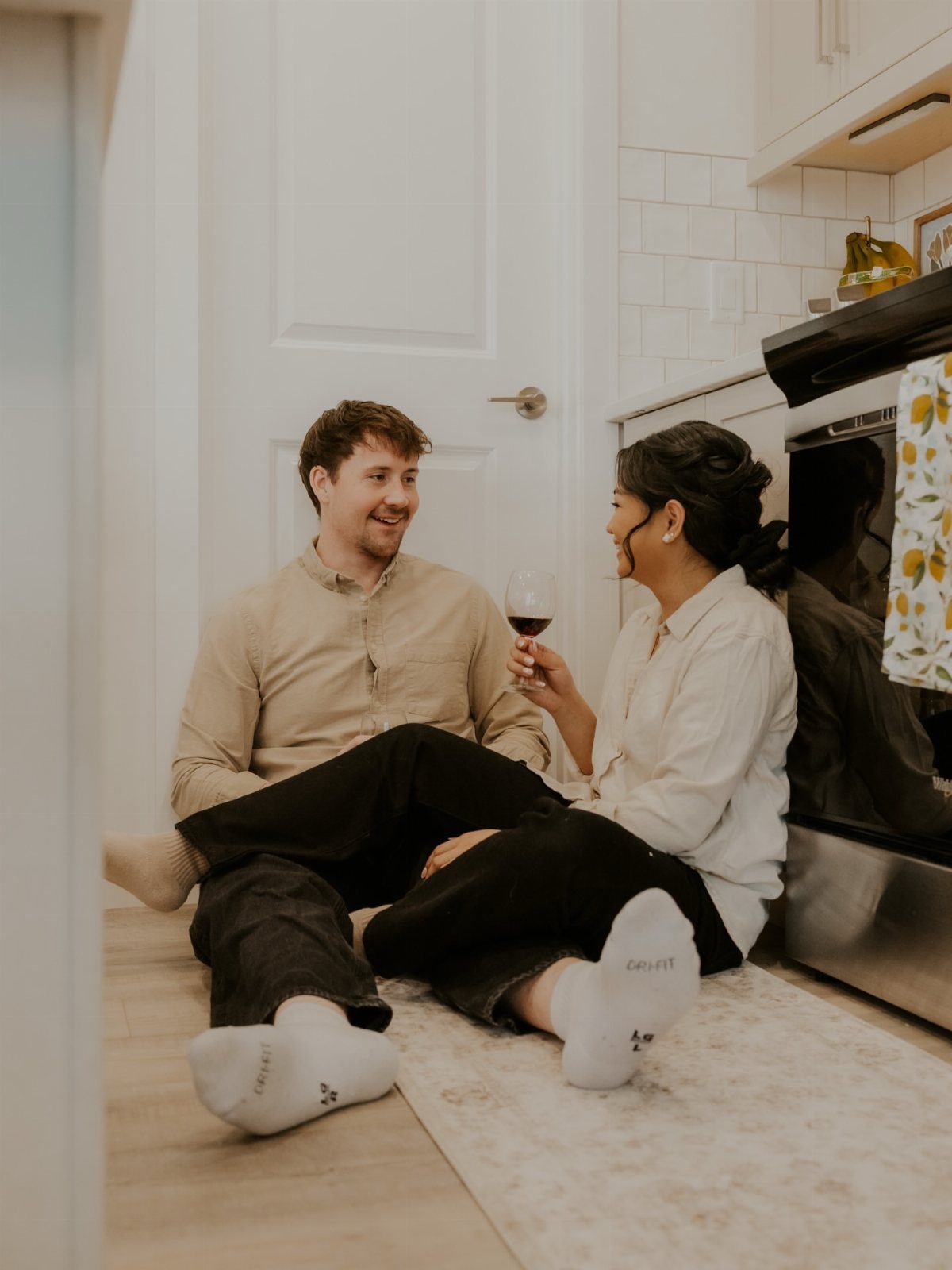
Your own kitchen floor, a rug, a glass of wine between you: the setting cost nothing and the time of day is yours to choose.
Printed socks and unmade hair are the point; this is the version of you that exists on Tuesday evening, not Saturday ceremony.
I would clear the counters behind you and turn on every light the room has. Domestic clutter reads honest in person, busy in a still frame.
This suits couples whose apartment is the place they actually live in together, not a staging ground for elsewhere.
10. Detail Shot of Holding Hands
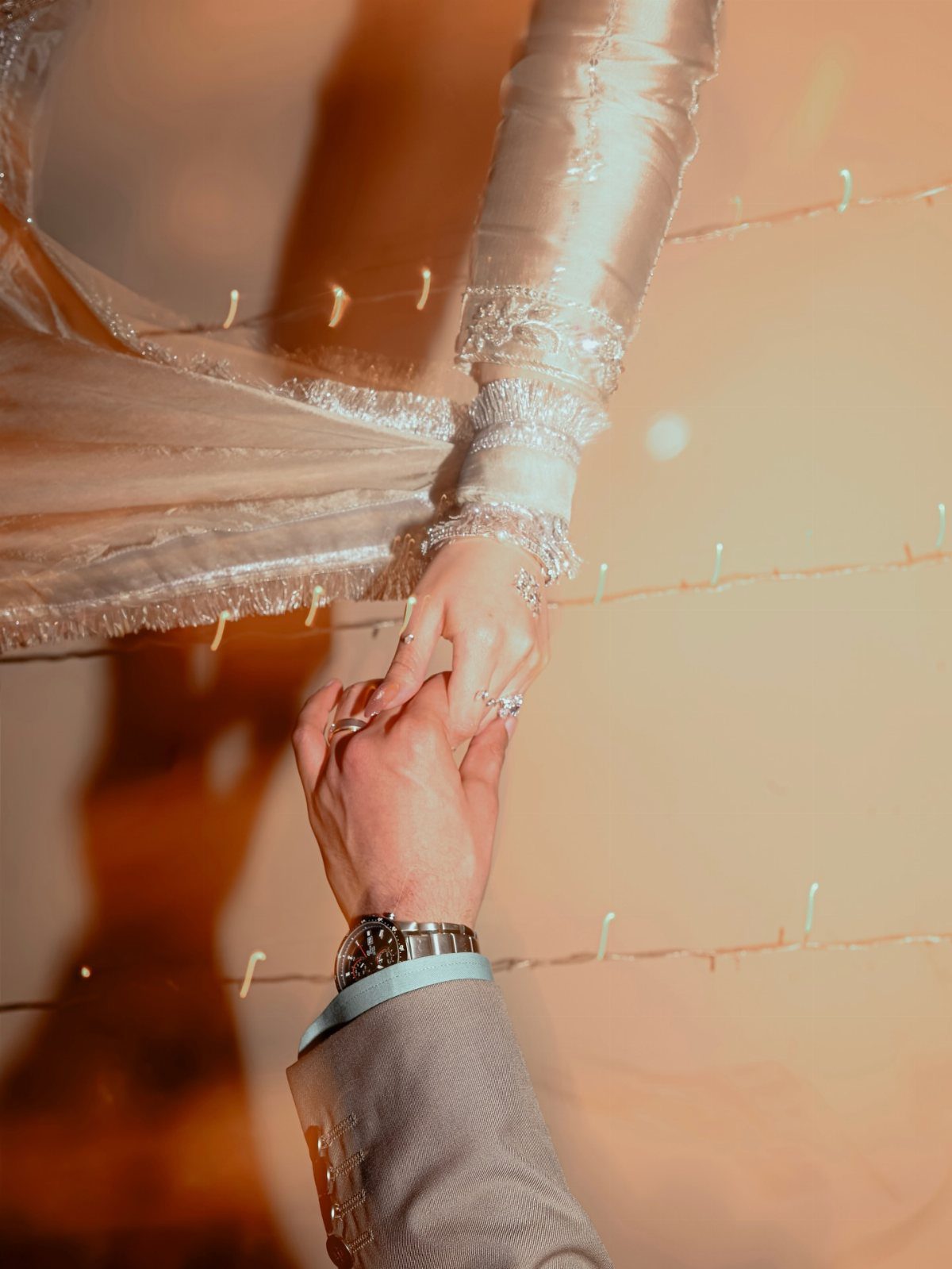
A close frame of hands interlaced, one sleeve lace and one wool, rings catching light: the small crop carries a lot of information about texture and choice. Fabric texture, watch face, manicure, metal finish; every choice shows.
I would decide beforehand whose hand goes on top, and whether fingers interlock or simply overlap. The difference reads intimate or formal from 2 inches of adjustment.
Light matters more than location for this shot. A string of bulbs at wrist level does what window light cannot.
11. Golden Hour Sunset Embrace
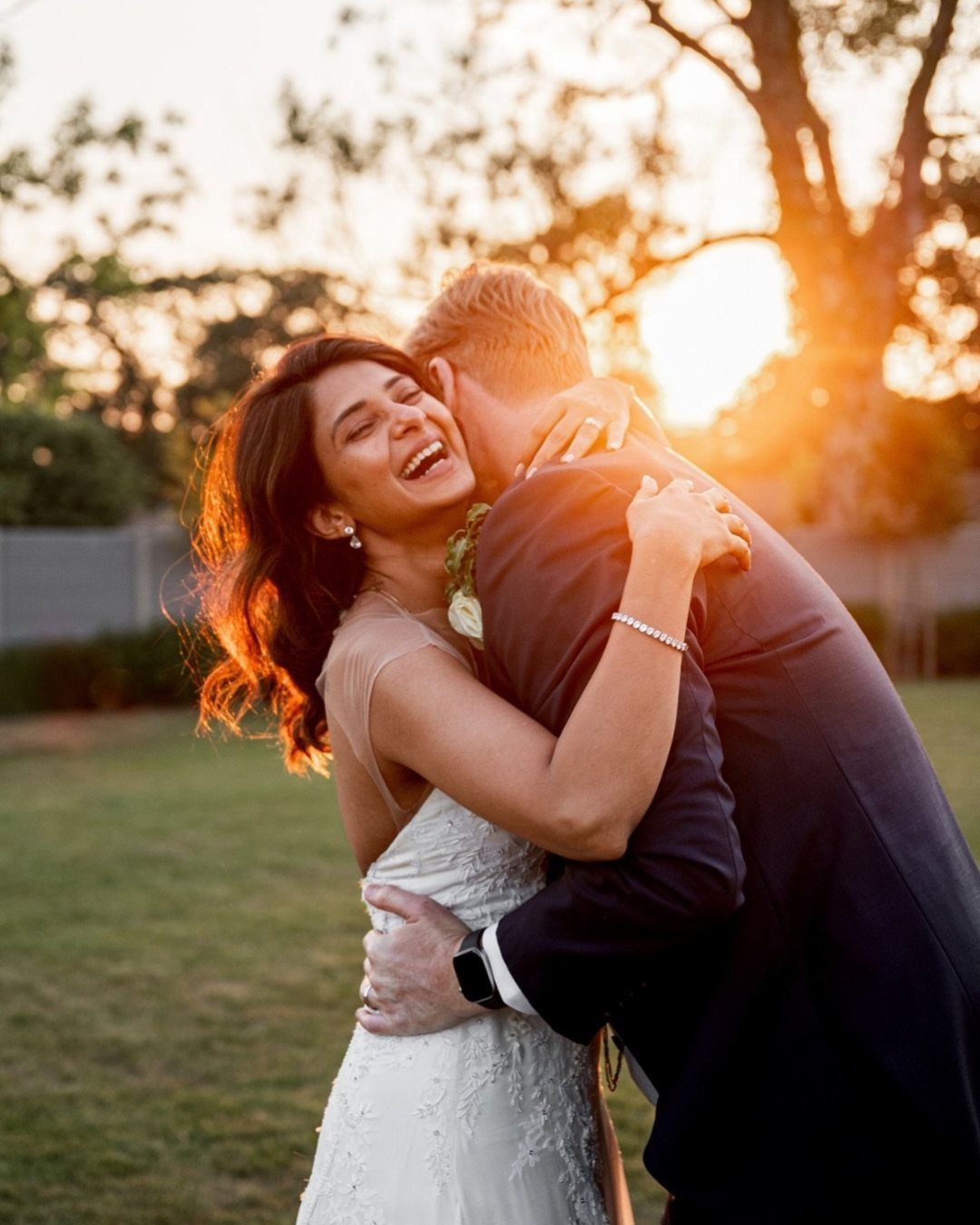
Open grass and low sun behind you turns a white dress translucent at the edges and wraps the couple in one shared glow.
The field needs to be empty of other figures; one distant dog walker becomes a silhouette that competes.
Arriving well before sunset gives time to settle in and catch the light while it lasts. The light changes faster than couples adjust, and the best stretch is not predictable.
This suits anyone whose venue lacks outdoor ceremony space and wants nature in the story somewhere.
12. Traditional South Asian Outfits
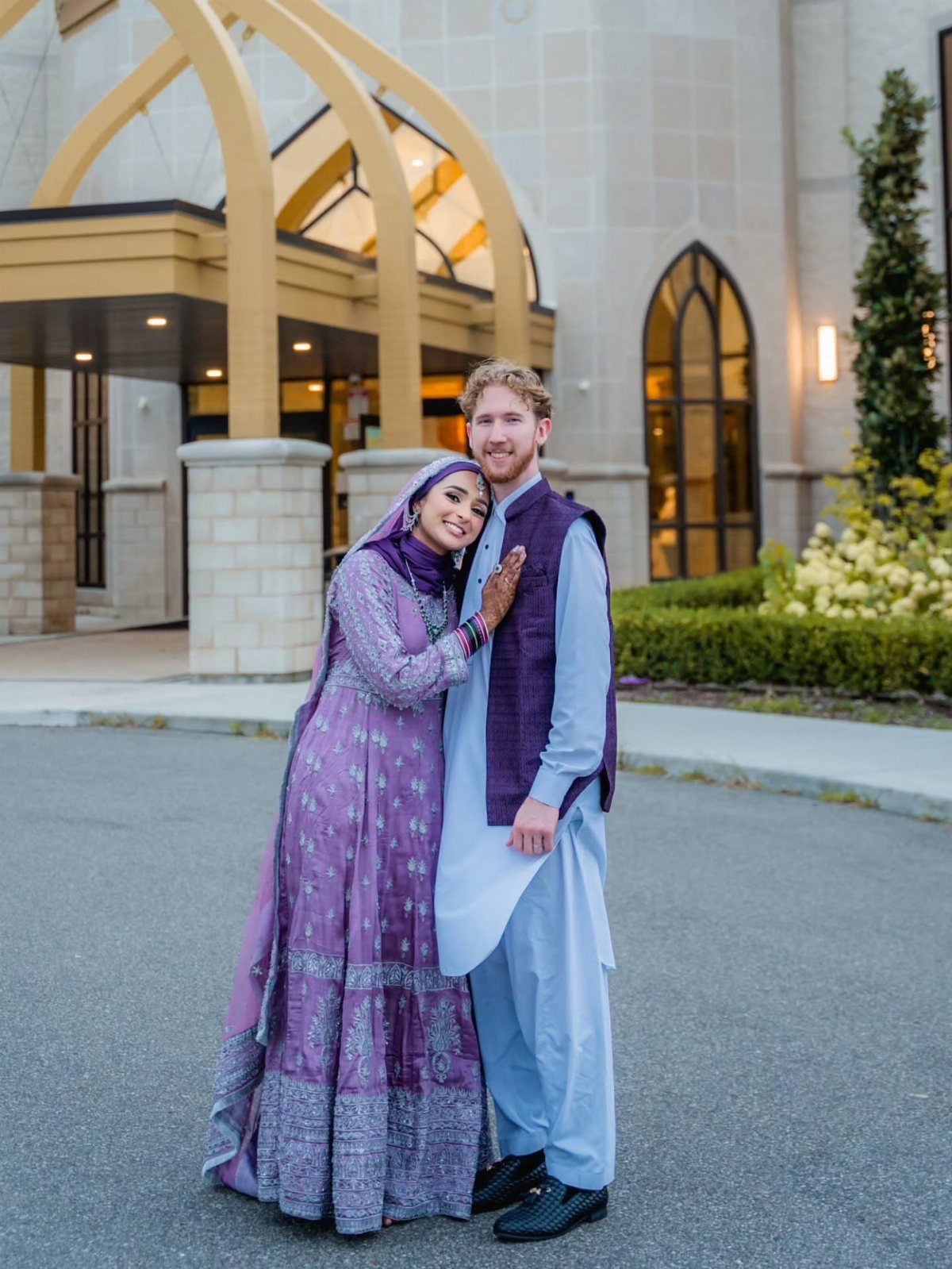
Embroidered purple against asphalt, hijab and shalwar kameez in coordinated tones: traditional dress on an ordinary street claims the public space as yours. The driveway is not the point; the confidence of wearing full formality where cars park is.
I would check the weather and bring a change of shoes. Embroidery catches on rough ground, and salt stains from winter roads do not brush off silk.
This suits couples whose wedding day will be Western dress and wants heritage represented in the record, or the reverse.
Importance of Engagement Photos
An engagement session is the one practice run your wedding day does not offer.
You find out whether your photographer’s directions make sense to you, or whether you stand there nodding while silently hoping for different words. Send inspiration images beforehand; the test is whether they respond to your input or override it.
Body angles matter more than most people expect.
The shoot teaches which turns of your shoulders flatter you and which smiles read genuine rather than performed. That knowledge cuts stress on the wedding day, when the timeline does not allow for experimentation.
The prints themselves have value beyond the wedding. Couples who display photographs of each other report higher relationship satisfaction in longitudinal studies, a finding that surprised me when I first read it.
The cost varies widely: one bride I read about paid an art student $100 for an hour. Quality at that price is not guaranteed, but it is possible.
Budget-friendly Options
The easiest discount comes from bundling. Photographers often include engagement sessions free when you book wedding coverage, a line item worth asking about even if it is not advertised.
If you are near a university, art or photography students work for student-range rates.
The risk is inconsistent output; the savings run significant. A hobbyist friend with a decent camera costs nothing but a thank-you dinner, though the same caveat applies.
One couple I read about used a friend for an hour and got usable results; another paid a student $100 and considered it money well spent.
The trade is composition: no one to catch you at your best angle, no one to notice when the light shifts. Polaroids add material cost but give a specific vintage look that some couples want for its own sake.
Professional versus amateur is not a binary of good versus bad. It is a choice between predictable quality and unpredictable savings.
Choosing Locations
The location should answer what you actually do together, not just where you look good.
A hiking trail makes sense for couples who hike; a restaurant booth works for those who mark weekends with long dinners. The photographer tags along to an existing plans rather than inventing one.
This differs from the list entries, where location serves the photograph’s style.
Here the location serves the relationship’s reality. The same street corner can read "our Saturday morning coffee run" or "we drove here for the brick wall"; one carries memory, the other only texture.
Urban, natural, or domestic settings all work when they match your shared life. The mistake is choosing a place for its visual interest alone, then spending the session performing familiarity you do not feel there.
Posing Tips
The most useful posing advice I found turns the session into a date.
You do something you already enjoy; the photographer documents. The result is posture that relaxes because the activity is real, not because you were told to relax.
Public displays of affection feel different when they are your idea.
The camera catches the gesture you would make anyway, not the one you hold for inspection. This matters because stiffness reads in still images more than people expect.
Specific poses from the list entries, the ring-forward shot or the interlaced hands, still require planning.
But the base of the session should be movement and interaction you do not have to think about. The practiced pose layered on top of genuine ease looks better than either alone.
Frequently Asked Questions
What do brides wear for engagement photos?
Most brides choose between two directions: elevated casual with one polished element, like a fitted dress paired with his polo and jeans, or full formality such as traditional South Asian embroidered dress against an ordinary street.
Both partners should match in formality level, since mismatched dress codes confuse the frame more than full formal does. Stiffness reads clearly in still images, so wear something you can move in naturally.
What poses show intimacy in photos?
Interlaced hands with fabric texture and rings visible carry intimacy through small detail rather than broad gesture. The almost-contact moments before a kiss, shot from approach through pause, outlast the posed kiss itself in albums years later.
For genuine ease, the best base is an activity you already enjoy together, with a practiced pose layered on top rather than replacing it.
What is the 20 60 20 rule in photography?
This composition guideline suggests 20% of the frame for the subject, 60% for background, and 20% for negative space.
A minimalist black-and-white shot of hands and ring strips away distraction until only the essential remains. The best shots usually prioritize the real moment between two people over any compositional formula.
What are the must-have wedding photos?
Engagement sessions work as practice for the wedding day; the ceremony, first kiss, and family portraits remain standard expectations for that later list.
For engagement sessions specifically, the must-haves include one ring-forward frame, one architectural or natural backdrop with scale, and candid movement shots that will outlast posed images.